


MikeGrahamT21
-
Posts
1919 -
Joined
-
Last visited
-
Days Won
2
Everything posted by MikeGrahamT21
-
Yeah that’ll be why, wouldn’t need it til post june22.
-
is this an extension you have built on with building regulations? If so depending on the width of the cavity you will require some internal wall insulation in order to get it passed as 100mm of any type of insulation in a cavity won’t cut it these days. Make sure all of the external walls if there are more than one are all done the same, which again you’d have to do for BR.
-
I’d agree with that if it was a solid walled property, but cavity which is filled should in theory hold its heat reasonably well, which is why like I’ve done, external wall insulation is a good addition to cavity, allowing the block work to even out the temperature. Aside from calculations though I don’t know of a property with IWI to compare with. At the same time I’m not in total disagreement with you, internal wall insulation will give a good reduction in u value but you’ll be left with a lot less specific heat capacity in the build up, meaning it’ll take less energy to heat the room to a specific temperature, but will need top up heat more frequently. I’ve a feeling that the heat will soak into another surface or pass through another element which is colder/higher u value, and IWI can create problems with cold bridging which could make even more problems. I never asked, what kind of radiator is it you are putting in (does it have fins on the back or not?), and have you tried any of the radiator panels/foil to reflect the heat into the room and away from the wall? An option like this should give a good outcome with no risk. What was the reason for replacing the radiator? Another question would be are you sure the cavity is properly filled with no gaps? Having recently taken bits of my roof off I found numerous empty pockets and ended up using a long length of timber to push it further down and fill the gaps before topping it up
-
It’ll help the heating respond quicker, but it won’t help the room hold it’s heat for as long once the radiator is no longer emitting heat.
-
Properly chuffed with myself how far i've progressed this year, but its a good time to take a break i feel, before the last huge job of doing the new bathroom, hopefully next year. Finished the external wall insulation off in the courtyard area, and got my new set of water butts all connected, should provide enough for the front garden and car washing (when i have the energy!) during a prolonged dry period. Just got the silicone to do on the corner and the join. Probably the most important job was the lower parts of the roof, to ensure the insulation was all good, and to stop any mice from getting in, which has been an issue the last couple of years around this time. Took off 3 rows of tiles and pushed the 4th row up, which got me to the natural overlap of the second row of felt, allowing me to take off the old battens, and put a new layer of felt under the overlap and down to the bottom. Also replaced the end of the dry valley, with a correct formed end, tiles need a little tidy up at some point, but its watertight. This was the mesh i used. It was then fully packed with insulation and overlayed with some ventilation trays which i didn't take a photo of. And the front was even worse, including the weather, of course it decided to pour it down the second i had the old felt off. Front existing felt was in very bad condition, and one of the battens appears to be fire damaged, no idea how The valley needs repointing, still on my to-do list. And a small indulgment, a bit of colour for the driveway, also filled with spring bulbs so hopefully will remain colourful right through to next summer
-
Fibre Optic vs Cat 5 or Cat 6
MikeGrahamT21 replied to laurenco's topic in Networks, AV, Security & Automation
Yeah I came across this not too long ago, when I first heard of it I thought someone was making a joke, but no, it’s a real thing. many times faster than current wifi and barely any interference, so I guess my job of network engineer will turn into lighting designer before I know it 😂 -
I've heard quite a few reports of these exact trays coming bowed/bent too, i'm definitely staying away from them
-
Eurocell profile: Can someone interpret this u-value calculation
MikeGrahamT21 replied to MoDo's topic in Windows & Glazing
I was going down the modus route, but when I finally got to placing my order, they didn't do the glass anymore that got it down to 0.7Uw, was nearer 1.0Uw, so I decided to go elsewhere. If you are buying from a uPVC wholesaler you may well be able to mix and match frame and glass, but unless things have changed, Eurocell now supply AGC glass, which isn't as good on the uvalue front. -
im lucky to not have any radiators on aircrete walls, but yeah would definitely need a different approach to the ones mentioned above.
-
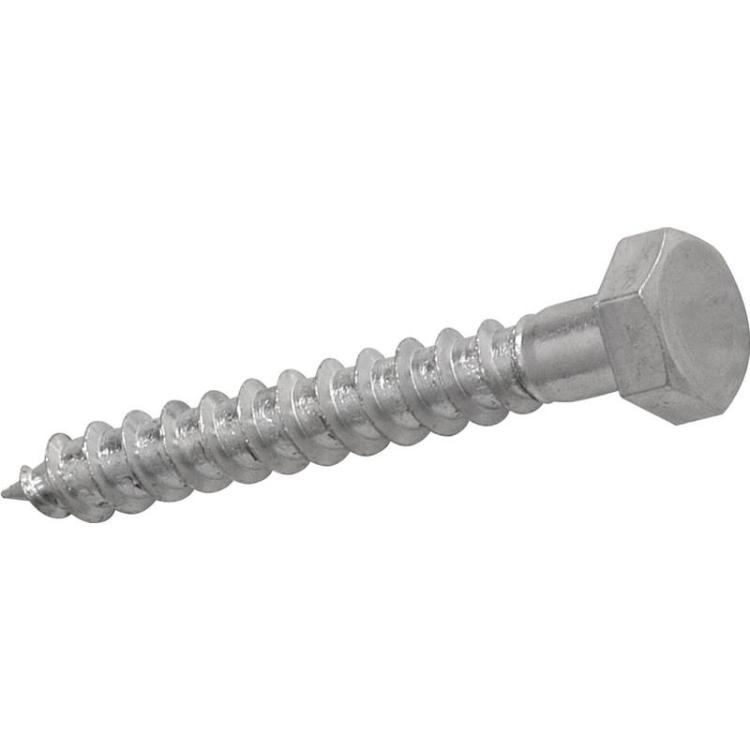
it’s what they usually provide you with to install a radiator Be no more than £5, job done. All my radiators are installed with these into brick, solid as a rock
-
Why go to all that expense? Just get some cheap long coach bolts and job done
-
I would say they aren’t long enough, the top layer 40mm+pb +plaster will be near on 55mm, your old plaster will be likely 20mm overall if it’s traditional wet plaster, maybe more depending how many layers is on, and then you need min 40mm in the brick. get yourself some long coach bolts, smaller plug on the end (length wise) and first hammer it in til it goes no further, followed by tighten up
-
Brick efflorescence and brick face erosion on gable end.
MikeGrahamT21 replied to ianmoone's topic in Damp & DPCs
North facing so it will never be baked by the sun. I suspect those bricks will be almost non porous too given their age. I wonder if the problem is actually further up, maybe on the chimney stack, and the visual representation is only being seen at ground level, there must be a large amount of water getting in somewhere. Also check the roof integrity near the verge. if it’s built on slate rising damp shouldn’t be adding too much to the problem. lime mortar will make a big difference once the cement pointing is out, but I feel there is an issue somewhere else also -
Brick efflorescence and brick face erosion on gable end.
MikeGrahamT21 replied to ianmoone's topic in Damp & DPCs
It has to be the weakest area for the water to get out I’d say. Probably where the coldest temperatures are too, ground level is always a bit warmer. What’s on the inside roughly where the efflorescence is happening? And what’s below it where it isn’t happening? which direction does the gable end face? -
Brick efflorescence and brick face erosion on gable end.
MikeGrahamT21 replied to ianmoone's topic in Damp & DPCs
Well spotted! I’d not seen the tiny slither on view. It’s likely full of crap behind it too, may need removing cleaning and a new plastic one putting back -
Brick efflorescence and brick face erosion on gable end.
MikeGrahamT21 replied to ianmoone's topic in Damp & DPCs
I’m no expert but thinking this may be due to the pointing being done with cement, and perhaps a more suitable material would be lime mortar which can deal with the moisture much better. the solid surface at the bottom of the wall is probably not ideal either, be ideal to have a foot from the wall of gravel, and dig down as far as you can which should aid drainage -
Definitely use the PIR be a shame to sell it and lose money, it’s perfect for the job. Ensure the eaves are well ventilated as they will experience a big temperature drop in winter once the habitable space is insulated
-
Very snazzy. Any scope for digging it out a little to get the required concrete depth? You'll probably want to leave a gap on the edge opposite the door/window and put a slight slope on whatever you put down to channel water away from the building
-
Looking for help installing my network
MikeGrahamT21 replied to Triassic's topic in Networks, AV, Security & Automation
I’ve seen server rooms with less cables than that! 😂 -
It gets so complicated all this, and I’m a Systems and network engineer 😂 my solis ac connected inverter for the battery doesn’t have the options I need really, and trying to get them to understand on support is almost impossible. I’ve got time of use so can set timed import and export up no problems, have 3 slots for each, but then you have to specify your charge in amps, so you have to guess in DC what the battery will get if you want specific power. Tonight I don’t have enough charge for my hourly discharge so I’ve had to disable it, but asked support if they can implement say a SOC setting by which force discharge won’t go below, but once it hits that only the force stops and normal discharge resumes, but so far they don’t get what I’m on about 🤦♂️
-
I've just got on to flux, and yeah was disappointed by the coming drop in export, but hopefully it'll still work out, if not i'll switch back. If you want 15p export, go with Octopus Outgoing Fixed, assuming its a solar install?
-
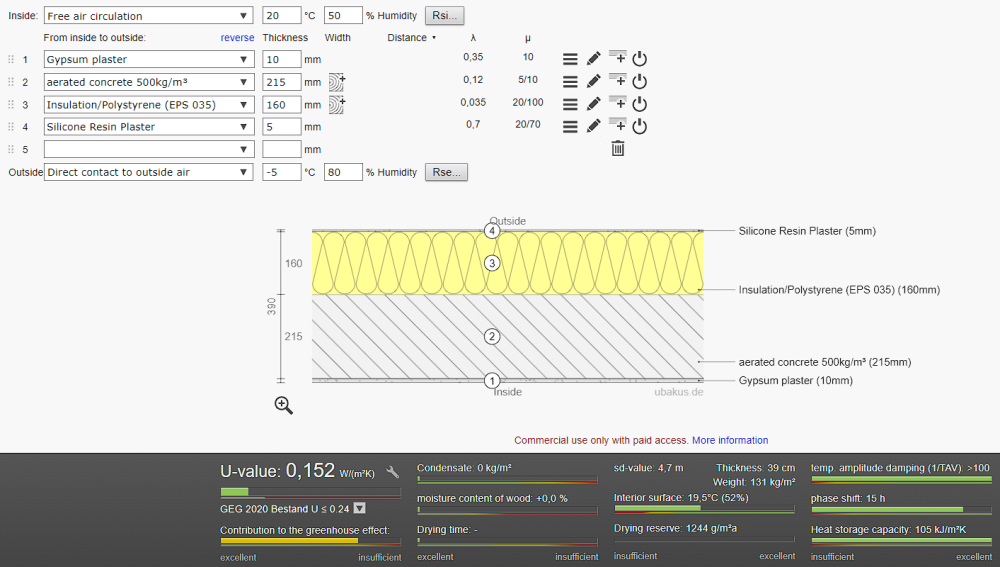
If you swap out the aerated blocks for dense blocks on both leaves, then you won't have any risk of condensation at all. Or the alternative method, with 215 blocks:
-
To save worrying about it down the line, go with another set of nails of the correct variety then you can forget about it
-
Another method, you could go 215mm block and 150/160mm EPS on the outside. you risk interstitial condensation with that build up, and would need some kind of check on the inside to avoid, I think you must have specified some wrong values on u-wert for it to not show.
-
Minimum clearance underneath the timber is 150mm, that said parts of mine are as small as 110mm in places, but having cleared all of the rubbish out from under the floor, and ensured the gaps in the sleeper walls are free of obstruction it gets good airflow. one tip I learnt along the way, if you aren’t using a membrane to sit the insulation in, friction fitting PIR can be problematic with suspended timber due to movement, and I’ve had it drop through, so make sure you have something to hold it in place, I used metal clips every 300mm both sides staggered 150mm which has done the trick and foam the gaps up as any air movement negates your insulation. I totally get not being able to use enough insulation for underfloor heating, my maximum is 100mm. Couple of things you can consider… if you are doing the whole ground floor, you could consider adding another timber on top of the existing to increase height, either 50 or 100mm glued and screwed to existing, or (and) use an insulating product on top of your subfloor, so you can get boards which have grooves in for wet underfloor heating, or something like a marmox board to reduce the thermal bridge between subfloor and underfloor heating, depending on the type of UFH you are going for. internal wall insulation, as long as your walls are straight, consider full boards of insulation direct to the wall, with battens on top of them to hold it in place, or use insulated plasterboard, which if memory serves me you can use adhesive to bond to walls, but check the installation guide to confirm that



