


Andrew
-
Posts
198 -
Joined
-
Last visited
Everything posted by Andrew
-
Yeah, this. You also probably don't want to get the bricks too wet if you can help it. I've got 4 packs sitting in a big muddy puddle at the moment (they were delivered back when it was dry and sunny) and the telehandler has gone so I can't easily move them.
-
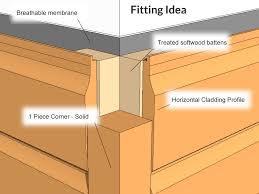
We are having Siberian Larch cladding over most of our timber frame house and we want a corner post detail similar to this :- Ideally, the corner post needs to be flush with the cladding, or protrude slightly. The battens we are using are 47mm and the cladding is 21mm thick, so really we need a corner post around 70mm square. I've been looking everywhere (including the supplier of the cladding) for a 70-75mm Siberian Larch corner post but haven't been able to find anything (most seem to expect a 20mm batten so have a 44mm x 44mm corner post). Anybody know of any suppliers who might be able to do a 75mm square Siberian Larch post?
-
Ufh manifold, blending valve with ASHP.
Andrew replied to Russell griffiths's topic in Underfloor Heating
Thanks, that’s good as I have the Wunda pump set (as yet uninstalled) which has a mixer with a lowest temperature setting of 30 degrees but plan to run the ASHP a bit less than that when in UFH mode. I like the idea of keeping the mixer as a protection for overheating the floor just in case something goes wrong. Of course, wasn’t thinking. -
Ufh manifold, blending valve with ASHP.
Andrew replied to Russell griffiths's topic in Underfloor Heating
With these blending valves, if the temperature of the hot is lower than the temp set (e.g. blending valve set at 30 degrees, hot feed at 25 degrees) will they just let the hot through unrestricted and not mix in any cold? -
Interesting comments, thanks. Its quite a big house, 320 m2 with 6 bathrooms, so a combi probably isn’t going to do it. We’ve UFH throughout the ground floor but no plans for radiators upstairs. We’ve just finished the roof, doors and windows are going in now, so could easily change plans at this point. Even keeping the unvented cylinder, a decent sized system boiler seems to be less than half the cost of the ASHP, so I’m sure there’d be a saving on the build cost as well as the ongoing running costs. We’re not in passive house territory, although the house will be fairly well insulated (it’s a 140mm open panel timber frame fully filled with frametherm + 50mm PIR on top across the studs) and good airtightness. According to the SAP calcs we need about 12,000 kWh of heat input per year for space heating and hot water, so with some rough calcs using a very conservative COP for the heat pump, I reckon there’s about £200 annual saving for gas. But as some have said it’s not just about the pounds and pence and electric has much more potential to allow us to meet some of the environmental goals of the build. Hopefully the gas connection quote will come back really expensive and it’ll be decision made!
-
Before we started, in fact, before we bought the plot I obtained plans from all the utility companies and the nearest gas main was a very long way up the road. No problem, we made all of our plans based on only having electricity. That included ASHP for UFH and hot water with an immersion boost. We were pleased that there is potential for lower carbon emissions with an ASHP, especially as the grid continues to de-carbon. We had an as-designed SAP done, with an A 94 rating including the ASHP, our Ecology mortgage has a discount if we achieve this. The plan was made, all was good. So I was talking to my neighbour the other day (who is building on a plot next door) and, with a glint in his eye, he said I'm getting a gas supply. I immediately asked the obvious questions, "How much?" . "£800" he said, clearly delighted with this small victory. Turns out a couple of new builds up the road had paid mega bucks to bring the gas main down the street and as such my neighbour had benefitted with a relatively modest cost for his gas supply. Now this got me thinking, surely given that they will need to extend down to my neighbour, my cost to connect gas should be similar to his, so I've submitted an application for a quote. But, I'm really in two minds - I was set on having an ASHP and whilst I know the running costs with gas will be lower, the higher environmental cost really troubles me. Moreover I think there's an element of being reluctant to change plans at this late stage. I have already buried all the ASHP ducting and piping through the slab, researched and selected the ASHP unit and supplier, the plumbing tender has gone out with the ASHP in it and our accepted electrical quote includes connecting the ASHP up. So I'd welcome any thoughts, am I just been too inflexible, unwilling to make a change at this late stage or is there merit with sticking with electricity only. What's the likely impact on the SAP assessment, will using a gas boiler lower our rating massively?
-
Yes, thought as much, thanks. I think I'll wait and order it when we need it.
-
Really useful information thanks @nod. We're not going to be ready for plaster until August but everyone (builder, timber frame company, roofers!) is telling me to buy plaster and boards now. The merchants I've used for other stuff is offering multi for £7.25 a bag (ex vat) which seems a little more than it should be.
-
Thanks, that looks spot on. I'd be really happy if ours ends up looking as sharp.
-
That's really helpful, thanks for posting.
-
Thanks, that detail make a lot of sense. You do see quite a few pictures with all the reveals protruding out from the cladding slightly which looks good but I don’t know how they prevent water build up on top of the top reveal. Do you have a more straight on photo of the window?
-
I’d be really grateful for this too, thanks.
-
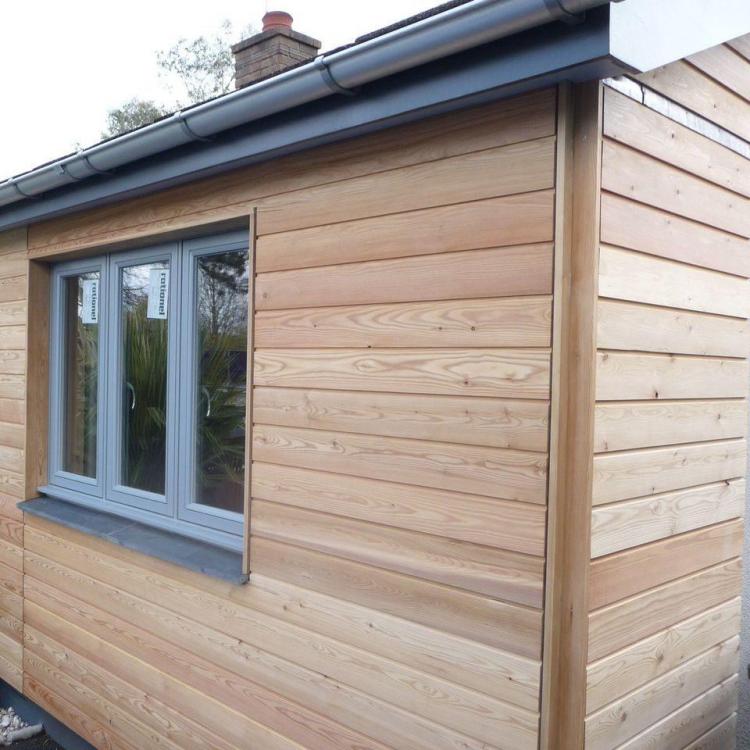
Just trying to get my head around the detailing around the windows for our build. We have timber frame with horizontal Siberian Larch cladding counter battened onto the frame. This is a picture from the internet and looks like a fairly typical detail with wooden reveals around top and sides with a cill at the bottom. But I'm trying to understand what happens at the top with regards to managing moisture. Our windows will be set back into the timber frame, so there will be a fairly deep reveal across the cavity and into the top of the window. I have seen some details with a metal flashing on the top of this top wooden reveal but there are plenty of pictures like the one above without. Also is anything special needed with regards to draining the cavity above the window. Unless I'm missing something there seems a high likelihood of water pooling above the window in the cavity on top of the reveal? Has anyone done this or know how this is normally done?
-
I'm probably being thick, but not sure I follow. As I've understood it @eandg price is :- Your £8.26 / board is for the plasterboard itself? It's £7.25/m2 for carrying the boards inside and the labour for fixing. £1/m2 for the fixings (the cost of the actual fixings) £7.25 / linear metre for the timber strapping. Presumably these are battens for masonry builds - not needed on timber frame? @nod - are you paying £2.50 / m2 for the boards or is that your labour cost? Does there exist a simple example of cost per m2 to board and skim including labour and materials? We've got massive vaulted ceilings upstairs and I've rather surprised myself that there's 1200 m2 of area to be boarded and skimmed and I can't work out if I've budgeted enough (probably not). Thanks.
-
Any need for Structural warranty (no mortgage)
Andrew replied to gc100's topic in New House & Structural Warranties
Reading the small print of our structural warranty the scope of what's covered is very limited, albeit the things that are covered are high impact. Moreover they seem very risk adverse during the construction process so the chances of something that's covered happening is very low. I guess there's an argument for this scrutiny having some value but it's mainly been a pain in the arse due to the poor communication between the private building inspectors (who are inspecting for building regs and the warranty company) and the people providing the assurance to the warranty provider. If I didn't think I'd need a mortgage in the future that required it, I definitely wouldn't bother. Edited to say @Russell griffiths put it much more succinctly than my feeble effort! -
Semi permanent ladder setup for a stairwell.
Andrew replied to epsilonGreedy's topic in General Self Build & DIY Discussion
I’ve just ordered a straight simple 2850mm staircase (13 treads - 219.3mm rise) from stairbox to serve as our temporary staircase. £235 ex vat delivered. Once it arrives should take about 5 mins to put in place and fix temporarily. I’ll ask the chippies to put some temp handrails on. Only downsides are it’s taking just over 2 weeks to come and it may put me on a sticky wicket with the VAT reclaim as I’ll try including both the temporary staircase and the real one in the claim to see if they notice ?. -
Thanks for explaining. I hadn’t considered having the UFH circulating pump going without heated water from the ASHP. Like you say other than a bit of wear on the pump it wouldn’t do any harm. Looking at an apparently suitable 3 port / 2-way valve it looks like there is a micro switch that could be used to sense the position of the valve - https://salus-controls.com/files/PMV3238-Quick-Guide.pdf . Presumably this could be wired up in such a way to control the circulating pump to only come on when the ASHP is supplying water to the UFH?
-
I’ve been looking at this setup recently as need to start looking for someone to install the ASHP and DHW systems. The heat pump I have my eye on (Samsung) does similar to this but the controller uses a single 3-way diverter valve to route between UFH and DHW. The bit I’m struggling with is how the UFH circulation pump is controlled. The UFH has a timer / thermostat which connects to the ASHP controller to make a demand for heat. Presumably the UFH circulation pump connects through the Thermostat and diverter valve and only runs when there is a demand for heat and the diverter valve is in the heating position? is that how it’s normally wired?
-
First costing of project, opinions required
Andrew replied to Spainy86's topic in Costing & Estimating
I've just spent £5k on fascias and soffits, fitted. Budget was £3k including the gutters. Went for plastic as don't want the maintenance but was amazed how quickly the cost of the materials added up. Valley boards and noggins - had no idea what these were two weeks ago. Turns out the roofer doesn't do them and they weren't included in the timber frame package. Fortunately the lads on site did it for beer money but it's all these little things that add up really really quickly. -
We have clay, an oak tree and two ash trees within 10m of the house. Soil investigation was 4 trial pits to 2.5m cost £1330. Soil investigation confirmed piling was best option (to SE). Piling company weren't that interested in the soil investigation - said they wouldn't know how deep they need to go until the piles go in. In the end the 50 piles were between 5.0 and 6.0 metres deep. I don't see anything in this NHBC document that mandates a depth other than trial pits being at least 3m - http://nhbccampaigns.co.uk/landingpages/techzone/previous_versions/2011/Part4/section1/default.htm#D5 Are you planning to have an NHBC warranty?
-
Install looks great. I spent a couple of hours yesterday trying to find an image of a plenum in a stud wall and today one shows up on build hub. Thanks for posting this, has really helped me visualise a couple of things. How did you find the wall mounted plenum - looks like a tight fit and you've had to put in a bit of hanging stud to fix it to? I'm also a bit concerned about drilling a 75mm hole in a 89mm stud but it seems to be the way it is done. What height are your posi-joists, they look like PS10 / 253mm?
-
Looks great.
-
I don't think any of the smart meter installers are working at the moment. We've been waiting for a new smart meter to be installed on our temp supply since lock down (it was due to be fitted a couple of days after lockdown started). I did get a call the other day to tell me they have made a list of people they would visit first when they start up again but had no idea when that would be. I guess we'd need some change in guidance from the government before that happens.
-
No I decided not to bother mainly from reading threads on here, although opinion is divided. I helped the builder lay the pipes out and we did it the day before the concrete, so I know it was good when the concrete was poured. Thanks Jeremy that looks perfect. Will order for click and collect and head over to SF and stand in the socially distant queue. Yeah I lost my shit with them to be honest. The TF company are spot on but sub out the erection to a couple of gangs they use all the time. The guys in the gangs are used to working on social housing sites and I’ve had to keep a very close eye on them. I’ve had a sincere apology and a promise (which I trust) from the MD of TF company that they will fix it if it is damaged but that’s going to be a nightmare. I’d like to know sooner rather than later if it’s damaged so will test next week.
-
Is there a quick and easy way to check the integrity of the UFH piping in our slab? The timber frame installers have been firing nails into it to hold up bracing. I’ve removed a few today as they have taken the bracing down and although they swear they only went into the floor ‘a few mil’ some were really deep, deep enough to penetrate the buried pipes I think. The pipes are 16mm and just taped over at the ends. The manifolds are not fitted yet. We don’t yet have water or power on site (despite my best efforts). I’m thinking a pressure gauge and hand pump to compress the air in the pipes and see if each loop holds pressure - can I buy such things?

