Andrew
-
Posts
198 -
Joined
-
Last visited
Everything posted by Andrew
-
Good idea to buy the big stuff now?
Andrew replied to Andrew's topic in General Self Build & DIY Discussion
Very true and I admire those with the time and energy to make the most of them. At the moment I'm just pleased with the face value discount from the Velux rewards. Ahh eating out at a restaurant and leaving the house, those were the days... Good idea, I hadn't quite got that far but easier to check on delivery than the electrical stuff. Does require making some decisions on finishes though. I did think about buying the bathroom stuff but given that most people seem to have at least one damaged item and a couple of items missing in their delivery it didn't seem like a good idea to order this until it can be fully checked when it arrives. Do you know anyone selling any? ? Good point, the roof is all supply and fit, meeting the roofer tomorrow to finalise things, so hopefully that's all in hand. Windows and doors are sitting at the Window company waiting to be installed. I do need to buy about 220m2 of Siberian Larch fairly soon and prices of that seem to fluctuate a lot. I've only been tracking it the last few weeks so I'm not sure if that's normal or not. I also need about 10,000 bricks but we haven't even managed to choose the brick yet. The brick the architect specified has been discontinued since we put in for planning (2 years ago) and 'we' don't like any of the 40 or so samples we've received. We ordered a sample of the most promising looking one to date the day before lockdown and of course they closed before it could be sent. I'll get back on to them today to see if there's been any change. -
Good idea to buy the big stuff now?
Andrew replied to Andrew's topic in General Self Build & DIY Discussion
Yes indeed. £525 of Tesco vouchers is pretty good and I'm counting it as a discount as we'll use the vouchers for our normal family shopping. So that makes the windows £200 each including the flashing kit (excluding VAT) for GGL MK04 070s. -
Good idea to buy the big stuff now?
Andrew replied to Andrew's topic in General Self Build & DIY Discussion
Good point, that's the downside, I won't be able to test it until it's installed. However most stuff seems to fail either early or late in its lifecycle so might be worth a gamble as long as it can be installed early enough to have a few months use before the warranty expires. -
I'm very pleased to see our build start up again today with the timber frame company back on site. They got the ground floor up before the shutdown and have started again today installing the first floor joists. So I got thinking, is it worth buying some of the expensive stuff now. The cash is in the bank and I've got room (to a degree) to store stuff in the double garage of our rental which is 2 minutes up the road from the site. I'm thinking :- 15 Velux windows + flashing kits (I've actually already got these in the garage) Solar panels, inverters, mounting kits (I'll need these fairly soon anyway) ASHP + controls Unvented cylinder MVHR unit + associated kit (already specced and designed) Other stuff? I'm trying to guard against both price inflation and potential supply shortages when things get going again. I've been keeping an eye on most of these items and prices don't seem to be going up yet, but I think they inevitably will. What do others think?
-
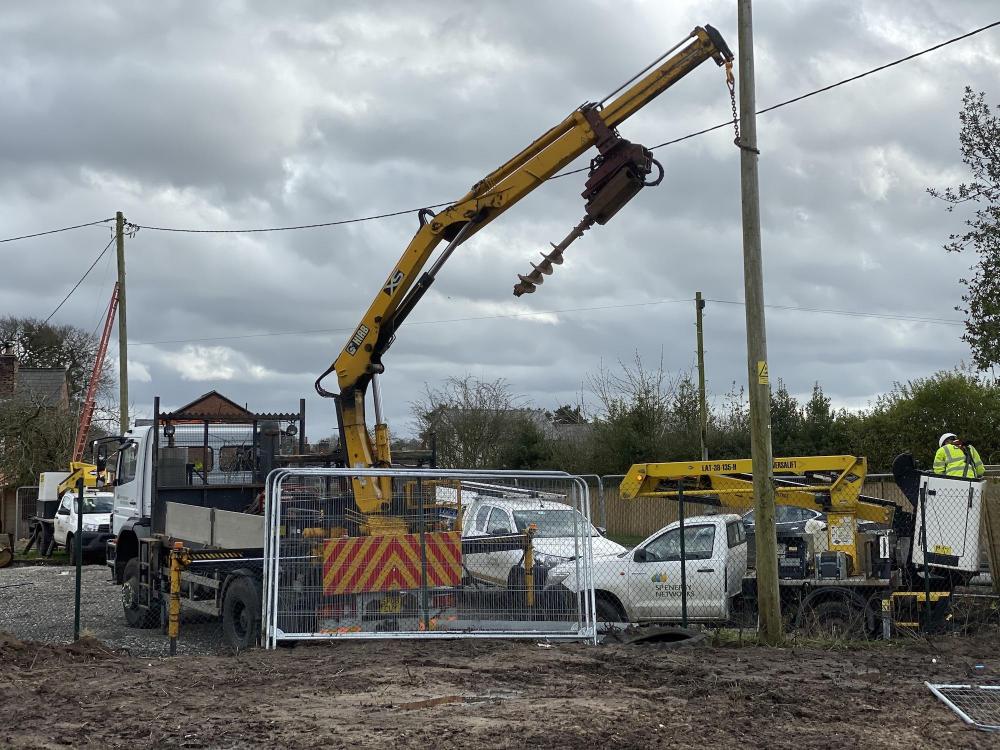
Sorry to resurrect an old thread but I got the answer to my own question today. The LV cable across our site has now been diverted underground and the old poles removed.
-
We have 71m2 of windows (including two 2.8m x 2.4m sliders) and 8m2 of entrance doors on order currently from Rationel (through a local dealer). Including installation and cills we are paying £380 / m2. Cills were about £1,500 from memory and although the current dealer hasn't split it out, from a quote from an earlier Rationel dealer (who went bust) the installation was about £5,000. So without installation and cills we'd pay about £300 / m2 supply only. Yours seem very expensive @ £760 / m2 supply only.
-
This is relevant to our build and good news, so thanks for the confirmation @vivienz. Did you mange to get this in writing or was it just a verbal confirmation?
-
JCT Minor Works Contract with Contractors Design 2016
Andrew replied to Tabitha's topic in Introduce Yourself
Depends on what the JCT contract says about termination or anything specific to this situation. However even if you did go to the trouble of taking action and you won, chances of getting a small builder (I’m assuming your contract isn’t with Balfour Beatty) to actually cough up would be slim. If they do it’ll be on a lengthy payment plan no doubt. Good advice from @nod I would say. -
Our contractors mentioned a recent job with 32m piles which was in their experience exceptional. They said most were between 5m and 10m, but of course it depends on the local conditions. The depth also depends on how much load you need on each pile, which will be determined ultimately by the weight of the building, the line loads and the number of piles. Ours at 150kN per pile was fairly modest, I was told. If we'd required a greater loading then the piles would have needed to go deeper to get the greater resistance on the pile to take the higher load.
-
Protek asked for the specification of the piles and a schedule of piling. I supplied the piling plan which showed the number and location of the piles and ground beam along with the details of the piles we used (150mm tubular steel driven to set for 150kN). They also asked for details of any party wall agreements required which didn't apply in our case. Once the piling was complete they wanted to see the piling log. Just to clarify my comments above, we did have a soil investigation carried out which involved 4 trial pits down to about 2.5m. I am assuming this is what you've already had done for the soil analysis. In our case it was very clear from these that piling would be necessary. If we were borderline and a further investigation could possibly remove the need for piling I would have carried it out. Moreover if the SE or piling company would have said further investigation were necessary I would have had it done. I think it's also worth mentioning that we had a selection of piling quotes, all of which quoted a price to a certain depth and then an additional cost per meter per pile thereafter. All of them made it clear there was no discount if the piles didn't go as deep as their initial depth. With the quotes we gathered the one who quoted the smallest initial depth was also best value at deeper depths but I imagine there may be situations where one company is cheaper at shallower depths and another cheaper at deeper depths and in this case it may be worth having more investigation up front to determine which route would be best value. Finally there's no guarantee that the piles will go to the same depth across the whole site and there can be large variations. I'm not sure how may boreholes a typically geotechnical survey carries out but even with this data there's still a chance the actual piles will need to go deeper (or less deep) in parts of the site as the conditions vary.
-
Depends on the piling method I guess. Our mobilisation cost was £1200.
-
Our piling company were quite clear we wouldn't know how deep the piles were going until the first one was driven to set (and even then the conditions could change across the site so whilst the others would most likely be in the same ball-park they may differ). The cost of mobilisation and the first pile will most likely be around the price of the geotechnical survey - you can always say stop if the first pile goes down to 30m. I wouldn't waste my money on the survey.
-
House naming..need inspiration
Andrew replied to SuperJohnG's topic in General Self Build & DIY Discussion
Just about sums up our stage of the build :- deep.unsightly.drainage -
That makes a lot of sense. I've done some more digging and as far as I can see the only difference is that the sanitary pipe has a slightly thicker plastic in the pipe. The manufacturer actually says the heating pipe is suitable for potable applications so I'm going to use the heating pipe.
-
I'm just in the process of sourcing some pre-insulated pipe to run DHW between our main house and garage. It's only a short run (~6m) and will be buried underground. The pipe that I'm looking at comes in two flavours, heating and sanitary. It's all fairly expensive but the sanitary pipe is more expensive than the heating pipe. I'm curious what's likely to be the difference and would it be okay to use the heating variant for hot water given that hot water isn't generally considered potable anyway. Link to the pipe - https://www.bhiveunderfloor.co.uk/watts-microflex---single-pipe---cut-to-length-1685-p.asp
-
We found an unmapped and unexpected LV cable running diagonally across the plot (it now threads between two piles underneath the ground beam). I pointed it out to the project manager from the DNO, who was visiting site. He shrugged his shoulders and basically said 'so what'.
-
We've mostly dug down for the beam, although the ffl has also been raised a bit. The plan is to get the foundation masonry done and then fill in and grade the ground to slope away from the house. They'll also stone around the house at that point to give a firm base for the scaffold. Drains wise there are 4 internal SVPs. Current plan is to drop these out through the masonry at the top of the beam (which will be 375mm below ground level) and then drop these down further for the runs. This is in the hands of the ground workers so tbh I'm not exactly sure how this will work.
-
No problem at all. Yes it was the piling company we were talking to last year. It took a long time to get our planning conditions discharged and then for the ground workers to become available. The piling guys were happy to wait until we were ready and I got the impression could mobilise on a new job within 2-3 weeks.
-
Ha, the piling lads called it the moat. They mentioned that their boss had recently bought them all new wellies. However the strong implication was that he was a bit cheap as every single boot had a least one hole in it. You don't want freezing cold moat water in your boots. Work is starting on the foundation masonry on Monday, they are pretty pleased that they won't have to bend down so much as the beam is out of the ground. I'm planning to be nice and go and pump out the moat at the weekend to make things as dry as possible for them.
-
Time for another blog post as we now have 50 piles completed and a nice shiny ground beam linking them all together. The pilers took 6 days to drive the 50 bottom driven steel cased piled into situ just before Christmas, this was two blokes and a fairly shiny new looking piling rig. The rig, in its simplest form, was a 500Kg weight on a string that was capable of being raised and dropped repeatedly. It had some very fancy hydraulic outriggers and a track that could vary its width, but ultimately it was a weight on a string. The pilers said our required loading on each pile (150kN) was fairly modest and explained how each pile would be driven to set. This involved piling away until either a new 2m section was needed to be welded on or the pile started to move less with each blow. When they felt it was getting there, they sprayed a vertical line on the pile and used a welding rod held at one end, to draw a series of 5 lines on the pile, one after each blow. If the spread of these lines was less than 100mm then the pile would be capable of taking the 150kN load. Interestingly I only ever saw this done when I was on site and watching, not one of the piles done when I wasn't there had the vertical white line and marks - I'm sure that's fine.... From a cost point of view, the piles were £1,200 for mobilisation then £127 per pile down to 4m, anything beyond that was £30 per meter per pile. In the end we had 27 piles at 5m, 2 piles at 5.5m and 21 at 6m, which was a total add-on cost of £2,160. So the total piling cost was £9,710. After Christmas the lads returned and were joined by another crew of 2 and the 4 of them started work on the ground beam. The original plan had been to excavate a trench for the beam and just set the steel reinforcement into the trench. When the pilers first saw the site they said this wasn't going to work due to the water and soft ground and we'd need to dig down to the bottom of the ground beams, so they could shutter the beam. After having a concrete blinding delivered and placed level around the route of the beam, they spent the next week placing and tying the rebar along with positioning the shuttering. By the Friday morning it was ready for our first building control inspection. As we are having a Protek structural warranty, the idea of combining the warranty and building control inspections appealed to me. Protek assigned a private building control firm to oversee the inspections, so our approved inspector, a diminutive Welsh lady duly arrived to look at the work the piling lads had done. Happy with everything we were good to pour the ground beam the following Monday. Monday arrived and the concrete pump and wagons arrived at 9.00am, ready to go. The pour was uneventful, but I was badly unprepared for the splatter so had to pop home and get changed into some clothes I didn't mind getting covered in concrete. In total, I think it was about 35 cube of concrete, so a fair amount went into the piles and beams. The lads returned the following day and took down the shuttering and much to my surprise took away pretty much all of their rubbish. That left us with the ground beam in all of its glory. The ground beam was the most costly aspect of the endeavour. The cost for beam itself was £100 per linear metre, of which our beam was 124LM, for a cost of £12,400. The shuttering was unexpected (well not completely, but you can hope) and an additional £4,000. So the overall cost for the ground beam was £16,400, giving a total spend with the pilers of about £26,000. I'm including the costs in the blog as they might be useful for others as comparison. I'm really pleased with the job that they did, the whole thing is obviously very solid and I know we have a decent foundation for the house. It's so substantial it feels like it should be able to be seen from space.
-
Paving unexpected additional cost
Andrew replied to ultramods's topic in General Self Build & DIY Discussion
I use a similar strategy, I'm pretty good at scruffy anyway but I make sure I take my wife's 5 year old permanently filthy car when meeting someone for a quote. -
These details might help too - https://www.rationel.co.uk/media/1708641/rationel-auraplus-typical-interface-drawings.pdf
-
With my 7kW charger I could pump in 28 kWh in four hours at a total cost of £1.40 (5p per kWh and ignoring losses). My Tesla model S will do 3 miles per kWh at normal speeds, so that’s 84 miles / 1.66p per mile. Btw I owned an old Leaf for about a year and 220 Wh/mile would need very steady driving, forget going faster than 55mph. The figures above for the Tesla are perfectly doable at 70mph on the motorway.
-
I tried to submit ours twice. The first time was about 6 months before we started work and during the time we were discharging the pre-commencement planning conditions. The CIL people emailed back to remind us that we still had undischarged planning conditions and it might be better to submit the notice once this was done. I didn't fancy picking a fight with the CIL people so duly replied that was what we would do. The second time was after the conditions were discharged but about a month and half before work actually started. This time I just got the confirmation email back saying they had received the commencement form and reminding me to submit the next form (Form 7) within 6 months of building control sign-off, otherwise the exemption will lapse and the full CIL payment will become due. I have printed a few copies of this email out and keep them in safe places ?
-
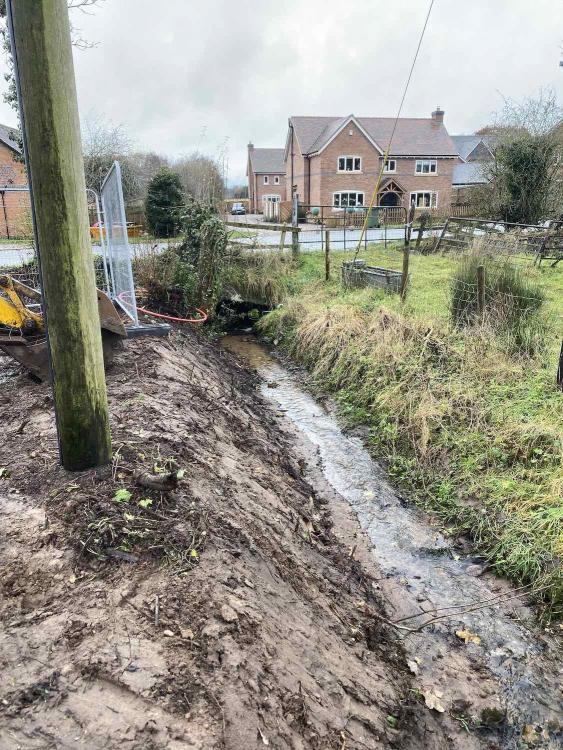
There's a handy brook just the other side of the mounds of soil on the left of the photo. (This photo was taken a little while before the ones above, hence no mounds of earth).