


Bramco
-
Posts
796 -
Joined
-
Last visited
-
Days Won
1
Everything posted by Bramco
-
Indeed... The butt doesn't overflow if the pipe is level - in that case the water overflows internally in the diverter and goes down the drainpipe.
-
New extension - air coming through electrical sockets
Bramco replied to S_P's topic in House Extensions & Conservatories
And they may have been - but as @ProDave says there are many ways they can prove useless even if fitted. Sounds like you might need to send a small child into the loft space to crawl round the edges of the roof space to see if there are any obvious issues. -
New extension - air coming through electrical sockets
Bramco replied to S_P's topic in House Extensions & Conservatories
We had this on an extension in a previous house - and in the winter the cold draft was a gale when it was blowing outside. Ours wasn't specced anywhere near as detailed as yours but was a similar build. In the end, I worked out that the air was getting in through the top of the wall which wasn't sealed adequately from the roof space. So the cold air simply ran down the inside of the plasterboard and out wherever there was a socket or light switch. Which meant that we were losing a lot of heat. Our new build was specced a lot better... -
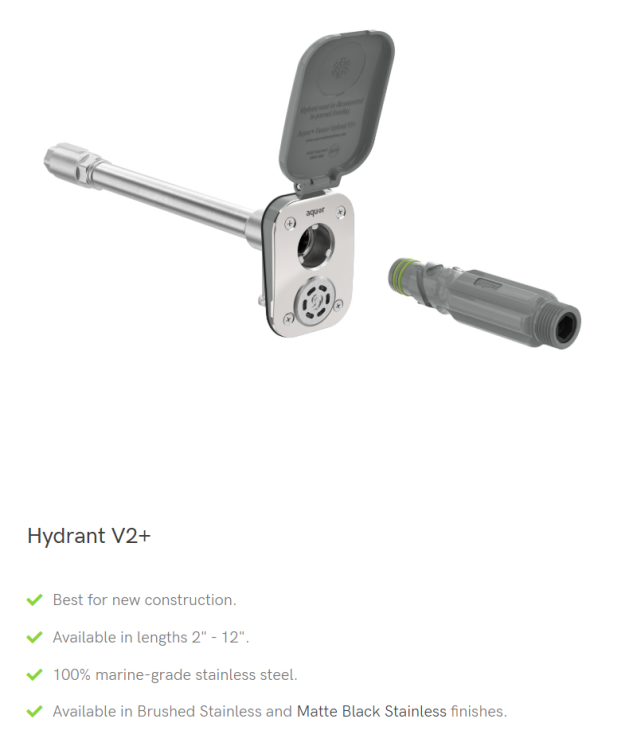
If you really want a half day job, get yourself one of these. Aquor water systems, also comes with an angled tap with an on/off bit. Never freezes, you just take the thing out of the socket and all the water dribbles out. The half day is spent trying to locate all the plumbing bits needed to convert from a US format 1/2inch NSF to metric...... They do look the dogs though
-
You need entangled bits.... Go quantum - few bits in the postbox entangled with some in the house. And hey presto the latest in postbox sensors. Powering the entangled bits on the street might be an issue but in the house must be a breeze...
-
Done - we're very local @CemCet, so if you want a more detailed discussion, hop on the number 1 bus and call in. DM me if you are interested. Simon
-
external 4G antenna - recommendations?
Bramco replied to Tom's topic in Networks, AV, Security & Automation
Ha! We're also black corrugated tin! So reception inside is dire.... We used one of the pucks you linked to - but mounted on top of the pole for the TV aerial which is on the back corner of the garage. I'm guessing it would work just as well mounted on the roof somehow - the instructions show it mounted on a truck roof, so a similar structure to a tin roof. We only needed it for the 4G signal, so only got the version for mobile signal. I bought extension cables from Amazon wasn't easy to compare and contrast with and without the extension cables @JohnMo but we do get a good signal. Just trying out a 5G router since our local mast has been fixed (took EE since June to sort it out!!). Tp-link seem to be the ones people are using. I tried the Archer NX200 based on info about the difference with the Deco but with our setup (we have Google Nest mesh wifi) the Archer wouldn't work because it can't be put into Bridge mode. I think the problem is down to the way Nest and the Archer handle NAT. So the Archer has been returned and a Deco should arrive today. The 4G router we used was the GL-inet 4G (Spitz I think it's called) - which works fine and GL-inet are better at having a router that is properly configurable - their 5G router is twice the price of the Tp-link ones though, so that's why we went with Tp-link. I guess if the Deco doesn't work, it'll go back to Amazon as well and we'll then have to decide if £400 is worth it for the much higher speeds of 5G. -
Here's a recent one for a plot just down the road from us... Condition 10 The residential unit ('unit') hereby permitted shall be constructed as a selfbuild dwelling within the definition of self-build and custom build housing in the Self-build and Custom Housebuilding Act 2015 (As Amended): i. The first occupation of the unit shall be by a person or persons who had primary input into the design and layout of the dwelling; ii The Council shall be notified in writing of the persons who intend to take up first occupation of the unit hereby permitted at least two months prior to first occupation. [In order to comply with Regulation 8 of the Biodiversity Gain Requirements (Exemptions) Regulations 2024 and the statutory biodiversity gain condition required by Schedule 7A to the Town and Country Planning Act 1990 (as amended)]. But some small print after the conditions states that according to the Self Build Act, the permission doesn't require a demonstration of BNG He'd have a heck of a time though trying to sell the plot as a plot with planning permission....
-
Given the huge resource here - would it be possible to integrate Notebook LM or another AI tool into the search results, in such a way that as well as the list of search results, an AI summary is given. This would be extremely helpful. I'm thinking something like the paragraph you get above the list of reviews on Amazon - the AI there gives a good summary of what the reviews say.
-
Is that an ASHP throne I see there? Better not show it to ours, in case it gets the hump and wants us to build one for it.

-
same here..
-
Have a look at stone warehouse - basically AFAIK longstone quarry in Derbyshire. We've had black granite from them - not sure how small they go.
-
The guy building a couple of doors down says his architect will handle it. Given he's on his 3rd pretty picture architect, I strongly doubt it. I've tried to explain how it's easy to do and also the consequences of not doing it but.... Could be little windfall for the council coming up!
-
We used key clamp poles and joints. Simply whacked two lines of metre long poles into the ground, then built the frame from there, with a couple of bits for fastening other material to the poles - round clamp with a tail with a hole in it - between each pair of panels. Standard PV module clamps, can then be fixed through the holes. I found a commercial product on-line and simply used their plan. Great thing about this method, is you can set the angle of the panels to suit your needs. We set ours at 45deg which pvgis showed would give us about the same annual kW as a shallower angle but would give peak output in the spring and autumn and higher output in the winter. So output spread more over the year, rather than peaking in the summer. When the sun was shining yesterday we were getting 4.5kW from our 6.5kWp array.
-
Not sure if this is fixed already but try posting on the open energy monitor forum - there's a lot of discussion about Daikin's on there. More about getting them set up properly but there's a lot of experience.
-
Why not use white square section downpipe with the pipe inside and some lagging shoved in.
-
Our installers came out to re-do the outside insulation on the pipes - as in do it properly, instead of using cheap materials. They agreed to do a service while they were here - the plumber asked for some warm water. He then washed the outside of the case, checked the pressure dials and had a quick look inside - service done - glad i didn't pay £100 for that!! Talking to the supplier, when the unit has occasionally thrown an error, they said, just find a local ASHP installer, or look for an airco installer if the system needs recharging with gas.
-
Congrats - a bit faster then ours but that was a few years ago. I laughed about the 'need to sit down'. We were on a trip in the camper van in eastern Europe somewhere when ours came through - we were so nervous opening it. Had a weeks worth of celebration from there on in.
-
We used express bifold in Leeds -> https://www.expressbifolds.co.uk/our-products/sliding-doors/xp-glide/
-
What next for heat pumps after BUS and MCS?
Bramco replied to joth's topic in Environmental Building Politics
Another interesting take on this is the date from the Electrification of Heat trial. The data has recently been published and Trystan Lea from the Open Energy Monitor crew who run the on-line HP comparison site has input the data into a parallel database so that the results can be analysed. Doesn't make good reading as the CoPs are very low, mainly down to poor installations and oversized systems - but I'll bet that the headline of 'poor CoPs' ends up being what drives any future legislation. More detail at -> https://community.openenergymonitor.org/t/electrification-of-heat-trial-data/27445 And the on-line data from running systems is at -> https://heatpumpmonitor.org/ some systems were also on the trial - the installed HPs on here do considerably better as, in the main, they have been adjusted to run well. -
OK @SteamyTea, here's some data for you.... Not sure about the 28% line!! But this shows in general that a low draw in the inverter runs at about 20% loss, while a high draw runs at a much lower loss in the region of 6/7%. Quite low, the last line is still 11%. So given your maniacal focus on parasitic loads, batteries will never be for you!! 😄 Obviously, these need to be taken as a general rule of thumb, I don't think the data from the inverter on the grid is v accurate for example. Also apologies for the shift in the headings - this is as it came across from Excel. First 3 columns are what is what is being generated, next 3 columns are what is being consumed. Total Load less PV Battery Delivered Grid Load Grid Loss %age Battery to house 0 397 397 17 340 323 74 19% Battery to house + ASHP 735 2452 3187 18 2971 2953 234 7% PV to battery and house - low PV 1529 -1139 390 58 374 316 74 19% PV to battery and house -high PV 4237 -3862 375 55 325 270 105 28% PV to diverter with export 4747 -17 4730 -1107 3353 4460 270 6% PV to diverter low PV 932 -21 911 -49 759 808 103 11%
-
@Marvin We had them do the install and obviously the BUS application - this was in 2023 under the £5k scheme. If I'd known they would supply and then inspect and commission, I think we'd have gone down that route as well. We had a few issues but all in all v pleased (touch wood as it's winter!) with the HP.
-
Marvin, have you written this up - might be very useful for anyone just embarking on the ASHP/MCS BUS thing. I'm guessing it's not that widely known about.
-
Our house is similar size 250m2 - MCS insulated slab with UFH, timber frame, triple glazed, v good airtightness, MVHR, warm roof. All electric, it cost us £45/month last year for all electricity imported. That's hot water, heating, everything. But we do have 6.kWp of solar and 15kW of battery storage and we're on Oct Int G0, so try (successfully most of the time) to only use the 7p rate. We had the ASHP installed on the old BUS grant of £5k. It's a Cool Energy unit, similar to this one -> https://coolenergyshop.com/collections/air-source-heat-pumps/products/cool-energy-invertech-high-temp-air-source-heat-pump-ce-ivt9-evi so 9kW. Total cost to us, installed was £250 but we already had the cylinders in place for UFH buffer and DHW tank. We had a heat loss analysis from an M+E engineer and Cool Energy were more than happy to use this for the MCS calculations. Unless it's really cold outside, we only run the ASHP at night on the 7p rate - we don't use it for DHW, only for heating. This works fine and even on really cold days, if the sun shines (we get plenty of solar gain) then we don't need to boost the heating during the day. So 9kWs is fine for a house like ours and I'm guessing yours. Have a look at this deal -> https://coolenergyshop.com/collections/air-source-heat-pumps/products/free-heat-pump-kit-for-self-builds-renovations. You get all the kit for free if you qualify for the BUS grant. I wonder if you completed the heat loss spreadsheet that's on the forum and provided proof of the U values of your wall and windows etc, whether they would accept these in place of doing the heat loss calcs themselves - they're a small outfit, so it might be worth a try.
-
Interesting read - like lots of us on here, I'm always working out ways to reduce our usage and make the most of off peak electricity prices. Like @Marvin we're all electric, with PV, ASHP and in our case batteries not an EV. Now we're in the new year, I'm just working out what we've used this year. At one point in your analysis @SteamyTea, you say a 20% efficiency loss on batteries would be a best guess. This is one thing I was concerned after I'd installed our batteries. What I've noticed is that at low wattage the losses are higher. If this is the case, then there's probably a base loss due to the inverter being 'on' so to speak and then a %age of the actual wattage being delivered. An example from this morning, with a house load of 323W the inverter was actually drawing 397W from the battery, so 19% - which is about your best guess. Later in the morning with the ASHP drawing power, the house load was 2953W and the inverter was using 3187W from the battery (2452) and PV (735W), so about 7%. Unfortunately for all battery users the lowest loads will be the most common and higher loads more intermittent, so losses would be closer to the 20% than the 7%. I'll have to try to dump data from the inverter to get more data points, for example when the batteries are being charged, either from the grid or from the PV etc.




