Gus Potter
-
Posts
2155 -
Joined
-
Last visited
-
Days Won
26
Everything posted by Gus Potter
-
Like your train of thought @JohnBishop On the face of it you can use vermiculite for plant pots, good for retaining water apparently. I'll defer to others on BH but I don't think it is hydroscopic.. has been use a lot in the past for house insulation. So yes it will hold water if it gets in. I suppose you need to make sure your chimney is in good order, capping, flashings, pointing render and so on. In some ways it may be good that it can hold the water, if not.. it's going to run out the bottom and onto the top of your stove or appear somewhere in the chimney breast above the stove as a big damp patch. If you have your stove on regularly it should drive off any moisture, even if just on a slow burn. The question is what else can you use to insulate a single skin liner that will get round all the contortions in a flue also given that a single skin liner when installed does not centre it's self in the flue. Folk these days want to have a stove that will just tick over but still draw.. thus you need to keep the flue pipe warm.
-
That's interesting. Did they explain why it leads "flue rot" and who does not recommend it? Is it because often the flues are in bad condition and they end up getting the blame or is there a fundamental reason not to insulate using vermiculite? After all it is common to line a flue if it is a bit "leaky".. in less than perfect condition. If you can find out as would like to know, Ta.
-
You are thoughtful. What about some acidic fruit near the top to encourage pitting, further down a satchel (fibre of your choice) with artefacts from different corners of the world.. and right at the bottom (assuming you are going to bury it standing) a Timex watch.. made in Dundee?
-
Handling/Negotiating minor changes mid-build
Gus Potter replied to puntloos's topic in Project & Site Management
Roundtuit has hit it on the head and good point / thread @puntloos Any competant builder knows that 99.9% of jobs will involve some changes at some point. Maybe a starting point is to put yourself in the builder's shoes when priicing / selling the job. Do you know much about the Client? Have they got a good reputation for paying? What is their personality? Do they listen to you and what kind of questions are they asking? When you seek clarity on say a detail.. how do they respond? If technical.. do you get a quick response from their design team? A lot of domestic Clients just won't do anything to help themselves here and this introduces uncertainty to the builder. If you don't know something just ask the builder and see how they respond, don't be embarressed. An experienced buildier when pricing up a job will often spot design / buildability flaws / opportunities for improvements. Do you tell the Client at this stage? You risk getting off on the wrong foot with the Architect / SE etc or just coming over as knowing too much.. trying too hard to get your foot in the door! In other words builders are looking for indicators on how smoothly the relationship will develop, if they get the job. Good relationships often = greater security on the expected profit margin thus a builder may be a bit less heavy with the "hassle factor" element of their price. If you go for the fixed price then have the conversation about making changes. The context is important. Again in the builders shoes. Say the price was based on two storeys with say a 30 -36 week programme and you turn round and say you just want one storey and the builder knocks off a lot less than you expect. Now the builder still has the over heads, needs to find other work and so on, hence not the price reduction you expect. The otherside is you ask for say a larger hot water cylinder that can be easily accommodated architecturally and structurally and the builder says this will result in a two week delay and the scaffold needs to stay up for longer.. daft example but.. have seen some daft arguements made in the past. One simple way is to say to the builder.. look I may want to make some changes that won't impact on the critical path of the job. Give me your day rates for the different trades and what uplift you want by way of profit on any extra materials you supply. Also give me the rates if we make a change that involves a bit less work.. if we say use a cheaper slate / tile or a larger tile (thus less of them) on the roof say. Ask.. will you knock off the difference or the difference plus profit? Just ask them innocently (no smiling) how this works and how they have managed this on their other builds. Best to get this out in the open early and then you can decide if this is someone you would employ. A good thing here is it lets you set out some ground rules / bench mark should you later want to make a major change, you can refer back to the early discussions, just make sure you have it writing somewhere. If you can, make sure you have a good understanding with you design team. Even if you got just a basic design, went for the cheapest to get you this far go back and ask your SE / Architect what they will charge to keep a watching brief, be at the end of the phone. It will be money well spent. Often if the builder knows that your design team are keeping an eye on things it can be enough to keep them in check. It can avoid both you and the builder doing something that in all honesty you think is ok but turns out to have a major impact on the structural or Architectural design. Common mistakes folk make are indeed moving a doorway / window, adding extra load to a floor / ceiling by way of extra plasterboard etc. You and the builder may look up and say, no change in the vertical load so ok.. SE may say.. I was relying on this to provide sway stabiliity (stop your house moving sideways) or restraint to a major load bearing wall. Architect may say.. you have breached the fire regs, changed the daylight, ventilation, compromised an access / activity space or some other clause in the building regs and BC are going to pull you up on this etc. Lastly you mention a fixed price contract. There is a big difference between the builders own contract and a recognised industry contract! The former is to be treated with extreme caution! -
Sorry if any offense caused . Did not wish to come over as patronising but have , wrong choice of words from me, on reflection would have used different language. Bet you could, it's not just the building theory you learn it's all that tacit knowledge you've gained on the way that you can't put a price / value on. All the best. Gus
-
Like your train of thought Mike. Having reflected on this over the years and reading the posts on BH I'm minded to conclude that professional / sage advice can help a lot if sought and given at the right time. Having been through the self build journey myself, then been a contractor building other folks houses and now a designer on reflection I would encourage all those starting out to get a bit forward under their own steam then spend the 300 - 500 quid finding someone who will tell them what they need to learn next and where the big pitfalls lie. I would not have done this at the time but on reflection life would have been much easier if I had done just that! But the reality is that the younger generations always think they have invented a new wheel.. the older generations just need to suck it up..and let the younger folk get old and learn the hard way. But unless they learn the hard lessons in life they will never grow up.. and we need the younger generation to grow up so they can pay our pensions!
-
Ceiling cracks - could this be structural?
Gus Potter replied to Novice894's topic in General Structural Issues
Good question. You see this cracking pattern often in houses in the 50's to late 60,s where they did not put in noggings / dwangs in the ceilngs. To give confidence in the photo you have posted I would look at some other things as a starting point. Go outside and see if the outside walls have any cracks. Has the attic space if any been " converted" Are there any other cracks you can see inside.. around the window and door openings. Do all the doors and windows open and shut ok? When you walk over the floors do they feel level? Have a look at the other houses round about. Has this house been altered in some way? Often you can dig up similar house floor plans that have been on the market and compare with yours. If so post some photos. Hope this helps give you some pointers and will hopefully help reassure. All the best. -
For a bit of fun.. but seriously. As a ball park on TF to start a comparison spread sheet does this fly? A joiner + labourer will make about 3-4 wall panels a day on site, some may be 4.8 m long, some 3.6m long if they have the panel drawings. The idea is that you can lift them into place with two men and brace. Say a joiner cost £220 a day and the labourer £120 / day. For your spread sheet say labour is £340 per day for 4 panels at 3.6m long .. each panel costs £85 to put together plus the cost of material. The panel consists of the timber, the ply / osb sheeting, lintels, breather membrane and crucially the poly prop straps to let the brickie identify where the nails for the wall ties need to go. But it rains and mistakes get made so allow £150 per panel. When a mistake gets made the timber gets recycled into noggings. Yes I said £85 per panel but just go for £150.00 per panel for now. To make this work you need to set up a saw bench on site, spend time reading the drawings so allow £500.00 for that. Next look at the stud height. For basic initial pricing go for a 145 x 45 (C24 grade timber) deep stud as this lets you go to a 2.7m ceiling height structurally without drama (covers most parts of the UK in terms of wind loading also) and leaves you plenty room for insulation of your choice. Yes you can go a lower grade of timber say C16 but stick with this C24 for now. Now if you have a house that is of reasonable size then you'll need some internal racking walls to stop the thing blowing down in the wind. Now two folk can erect about six panels a day by hand.. does not sound like much but there are other things they need to do.. put in temporary bracing, read drawings, have lunch..talk about things..fix it down so £ 340 / 6 = about 60£ quid per panel to erect, fix and have a fag and a bit of a think about what you are going to do next. A common mistake folk make is that when they go to get their roof priced is that the don't tell the truss designer where the the internal supporting structural walls are.. that is one reason for all the confusion on roof truss pricing. For all. When you are trying to do your reasearch on how much things cost.. try this.. start from basics. measure the perimeter of your outside walls. Just as an aside.. the truss manufacturers use a high grade timber TR26 grade ( they test their nail plates with with this timber grade) but often with attic trusses we need timber depth to get insulation in anyway.. so we can use a lower grade timber in a cut roof! In summary from following what BH folk are saying I get a feeling that the cut timber roof and stick built TF may be up for revival? I wonder if the numbers above float the boat.. of course you need the panel drawings / cutting schedule and material list.. allow £1.5k - 2.0 k (plus support and professional advice on the other aspects of the build for that and compare with the TF supplier. I think you may be in for a pleasant surprise! I have a suspicion that the TF and Truss suppliers are milking it..why.. because I have a load of my domestic builder Clients at my door asking me for stick built panel drawings and design calculations..
-
Great posts from everyone also. Just pondering what everyone has written about their experiences, how different they are and what you need to do to get to the completed build. One theory behind this could be taken from marketing theory.. called the FUD factor, maybe not that acceptable in this day and age but hopefully the mods will take my historic ref in the right context. See Motorola sales training manual. FUD = Fear, uncertainty and doubt. The fear comes for example when you are just about to sign with the Lawyer to obtain usually the plot.. big money commited. You know that to back out will / could possibly bankrupt you or cause big trouble. Once you secure the plot you start to become uncertain about your decision making process. Have I done the right thing? Lastly you start to doubt you own ability to deliver. Now there are a lot of seasoned self builders on BH, some just starting out on their first journey. Some of the seasoned may claim not to suffer from this but.. answers on a post card.. Reasons for self building.. well there are many. My first self build was driven by the desire to own a house that we could not otherwise afford off the shelf.. then we tweaked it to make it an "Architecturally designed house" that made it a bit more special. To insure / mitigate the risk that bad things will not happen you need to grasp the nettle and realise that there is no free lunch. You need to research, again and again. You can further mitigate risk by seeking out professional advice Architectural / SE / Contractor advice for example. Just be honest with yourself.. be willing to pay 200 --500 quid up front say.. it will pay dividends. You can spend half a day / two half days with someone who knows what they are doing and chew the fat.. then go back to work. To get the same knowledge and pointers / tips could take you weeks / months to learn. Play to your stengths. There are some that think they know it all but they are set up to either fail or not make the best of what they have.. which is.. a glass half full... The older I get the more I realise how much I still have to learn and this is part of my day job. In that context you maybe have to recognise that by the time you learn it all the ship may have sailed. If you try your very best, keep a sense of humour and so on often this will often be enough to get you over the line. Yes there is still a latent risk but there is agueably just as much risk in buying an off the shelf house. Why.. when you can by a developer house with the guarentees? I have a pal who has a pal who works for a major developer. They get a heads up for example on the houses that will be air tested! I'll leave you to draw your own conclusion.
-
Can you post some of the SE's drawings and a couple of elevetion drawings? Are you trying to go off piste here? Advise you don't go off and do your own thing as there is much to consider.
-
external insulation External insulation on a 500mm+ solid stone wall
Gus Potter replied to Chris HB's topic in Heat Insulation
Hi Chris. Had a look at the photo's.. what a great project.. many challenges but the main thing is to enjoy the journey as well as the end result. Just to touch on some basics.. you may have got a handle on this already. What about things like drainage.. septic tank soak away or biodigester. Get stuck into the ground and find out what you have under the top soil. Don't quite know your exact location so have not had a look at this end but some places have deep peat (or really soft sands) interspersed with granite dykes (called igneous intrusions).. great for building on but really hard to excavate for modern sewage tanks to achieve ground porosity for soakways. Have a look about the island and ask about. Local knowledge coupled with some basic research should give you clues here. See link below. https://mapapps.bgs.ac.uk/geologyofbritain/home.html The photos of the internal render are interesting. Hard to tell from the photos but do you think they have a bitumen content.. like an early attempt at waterproofing.. like mastic asphalt? You may actually be still able to smell "oil / hydro carbons" when freshy split or put the sample in a bit of petrol and see what dissolves. Don't taste it.. stick to the whisky. I would really try and find out more about the walls, the founds, there may just be a partially failed damp course! .. could be a slate / pitch (tar) one. Also what is under the floor.. are there any solum vents? may be hidden but look closely. In the 1930's things construction methods were changing fast and costs were getting driven down so don't assume that just because it is a mission hall it will be more traditional and that it is dressed stone outer layer / random rubble with a rough stone inner skin. In fact if it was a mission hall they would have maybe aimed to get the cheepest building on the market at the time so they could spend their money on the "mission" thus this could be an ideal case where you may find that innovation has occured. Do research here on the original intended use and who paid for it to get built. You may find this in the deads.. but that is cheating! You may just be able to squeeze a quazi mezzanine / gallery up there but post a dimensioned cross section. It will need a bit of design flair and an understanding of the regs etc but don't rule it out for now. Lastly what about these out buildings.. any chance of doing something with these? Could you link them to the house? If done sympathetically you just may be able to incorperate this into the habitable space with a link concept at some stage. Is any part listed grade C say? Try and really spend time being "Columbo" now and it will pay dividends later when you come to the design of the insulated envelope and subsequent structure / finishes. Plenty folk like @saveasteading and myself for example are interested in this so please keep posting. Lastly keep a photo diary of this as it will great great interest to all both now and in the future.- 19 replies
-
- 1
-

-
- solid walls
- stone walls
- (and 3 more)
-
Generally a single skin liner will be ok in an old brick flue that is not totally wrecked. Go for a good quality one. Make sure you install the liner the right way up, see manufacturer's instructions at all times. Have a look at the flue exit height. If you live in a town then other things may have been built round about later (taller buildings within say 200m distance, if near the Shard say in London then the vortices will extend much further) that will cause down drafts, if in the country you may have large trees that were not there when the house was built. For the cowl have a look at an "OH" cowl.. more expensive but they do work and are great for counteracting down drafts and promoting a more stable draw in the flue. If the flue is going to be long then to keep a good draw at low burn rates you can often put a single skin liner in an old brick chimney and pour in vermiculite. It keeps the flue warm so you don't cool the gases on their way up the flue. Important when you are just letting the thing tick over. Just make sure you have another baffle or rockwool above the register plate so when you service the stove the vermiculite does not all fall out. Again, ask your stove installer and find out what you think you will mostly burn in the stove and how you will be using it.. full blast occasionally or for mostly regular background heat.. big difference so choice range of stove performance is important. Best thing to do is to take advice from a registered stove installer then feed back the info to the roofer.
-
Yes it's essential. As we are introducing lots of insulation into buildings we need think carefully about trying to stop air with a high water gas content getting into places where it will later condense into a liquid and not be able to get back out easily. A VCL is essential.. Alutrix is one of the products you can research.
-
Confusion!! The glasscrete and lime screed should let the clay breathe similar to how it has done for the last hundred years. Some folk may be inclined to dig out the ground, fill it with type one or a suspended floor, field drain round the outside and thus dry out the clay. This invites the "big trouble". I think your approach is good and worth exploring. Historically the clay would have been able to breathe a bit, say if there were old flag stones with wide joints. Each season the moisture content in the clay will change and from year to year too. The glasscrete, although a modern material should not be an issue as you have the lime screed on top. It's the lime screed that I think will dominate the rate of moisture loss. The key will be your floor finish? No point in doing it if you put down limestone flags say and then seal them with oil to stop staining as the sealant works both ways. same with slate.. we put it on roofs to stop the water getting in. If you really want a breathable floor then you need to fully embrace it all the way. Now that may not suit you.. you need to think this through.. before you spend your money. As an SE with interest in old buildings the thing for me is to start with the ground.. what is outside.. trees, the natural and built landscape, then work your way up, enjoy old structures and appreciate what they are. Then explore options but always recognise that you will need to compromise and that you are just a custodian at this point in time. Then look to see where you can say uprate insulation elsewhere to "balance the books". I know it's hard to make the economic arguement but please try and design / alter your old house in a way that can be reversed later unless it is necessary for the long term life of the building. For all on BH. Many want to design in an environmntally friendy way, preserve our heritage, but we also want to make some money. If we go for floor makeups ect that rely on it breathing how do we later sell the house, do we caveate it.. such as.. the floor is breathable so no lino tiles etc.. how do we ensure that this is in the title.. few will do this.. so while it may make you feel good while you own the house what about the future?
-
Don't try and dry out the clay as it will shrink and probably result in a bad outcome.. the drying effect will continue outwards and could affect the founds. You have a lovely old house, be sympathetic. One aim is to continue to keep the moisure content of the clay as it has been for the last hundred years. In terms of drying time, programme your works so buy as much time as possible. An old rule of thumb is that for things to really settle allow for 25mm thickness a month for a slab to settle down. In other words, give slabs time to bed in, settle a bit, cure properly and develop a few cracks before the final finish. Hard to do but try as best you can to go old school. Post a few details and some photos and folk will give you good advise on BH, maybe save you some money and a bit of grief.
-
Have you tried working from the other end and asking the folk that are doing the superstructure who they recommend and like to work with. By "like to work with" I mean things like how what do the piling folk leave behind in terms of setting out, finish etc.. are they on the end of the phone and so on if there is a query. Have confidence in yourself. Yes it's not a box but you can set stuff like this out ok with the right approach. Ring beams / piles are generally designed assuming the top of the piles are up to 75mm off the intended line. Great interesting ground in Norfolk by the way.. you are lucky. Keep us posted.
-
Great approach Keymon. Just before you embark on this what kind of soil are the base stones of the walls founded on. If clay you don't want to dry it out or it will shrink and cause you big trouble. At the other end if sand then you want keep some "ballast" to keep the sand confined around the founds. They key here is to look hollistically at this and work to conserve / preserve what you have.. but improve using least risk options. Anything you do to alter the conditions of 100 year plus walls and their founds always carries some risk, just think it all through before acting. The "glasscrete" concept is great. To go back in time. We think we have come up with something new but for thousands of years folk have been creating damp proof floors that are breathable. The concept is so simple. You use boulders, single size aggregate that is angular with a low contact surface area and top that off with smaller aggregate and maybe compacted clay. It's (aggregate) shape creates the maximum amount of air voids ( good insulator) while creating a layer that can breathe and so on. Now glasscrete I think is a bit like the stuff you have in a living flame fire, bit more dense / better cemented so it can carry load. 40mm single size granite railway ballast is surprisingly similar? Granite aggregate is for all intents impervious, can't get damp rising through the granite stones. I do wonder just how thick the glasscrete needs to be to achieve the same level of performance as say a layer of PIR insulation. The R value is starting point. That said on BH there are threads about insulating floor slabs and the effect of the perimeter area. See @saveasteadinget al. Glasscrete may have developed this idea where you can heat the soil dumpling in the middle and use perimeter insulation. Now that concept has potential when we come to look at old buildings and how we let them breath but make them warm enough and energy efficient for modern living. Maybe you can extract some calcs / technical data from glass Crete that are applicable to your project? Keep posting, maybe some more info on the walls and founds?
-
Hi Jilly. Have they referenced the clause in the regs. They should have, but if not ask them to ref the clause on which their request for information is based on... as this will "help you" answer their query in a direct manner. Next examine said response and the regs. Is there a reference to say "as far as reasonably practicable" on the point they are focusing on. Post more info on what their actual response / query is. It could be a officer on a fishing expedition so you don't want complicate things by providing extra info that opens other doors you may not wish to open. The as "far as reasonable practicable" is a grey area. If you have time on you side and can't lift the phone to BC (almost impossible these days) then ask them what they would consider to be "as far as reasonably practicable", if it could be sensitive then hold back a bit, but give them some info like you are engaging and let them make the next move.
-
external insulation External insulation on a 500mm+ solid stone wall
Gus Potter replied to Chris HB's topic in Heat Insulation
Hi @Chris HB That sounds great. My Sister lives on Tiree. Questions.. What kind of stone do you have. Is it granite / imported stone from the mainland or local stone off the beach? What are the walls founded on? sand or rock? Wall construction? Have you exposed what is under the roughcast? Is the outer leaf dressed but just weathered hence the render? inner core of random rubble and rough stone on the inside? What is the roof made of, construction and how does it sit on the walls? Lastly don't go hacking off the render before you have fully understood how the walls / their bearing (hesitant to say founds) are constructed and their condition. Post more if you can.. photos would be great and anything else you can think of.- 19 replies
-
- 1
-
-
- solid walls
- stone walls
- (and 3 more)
-
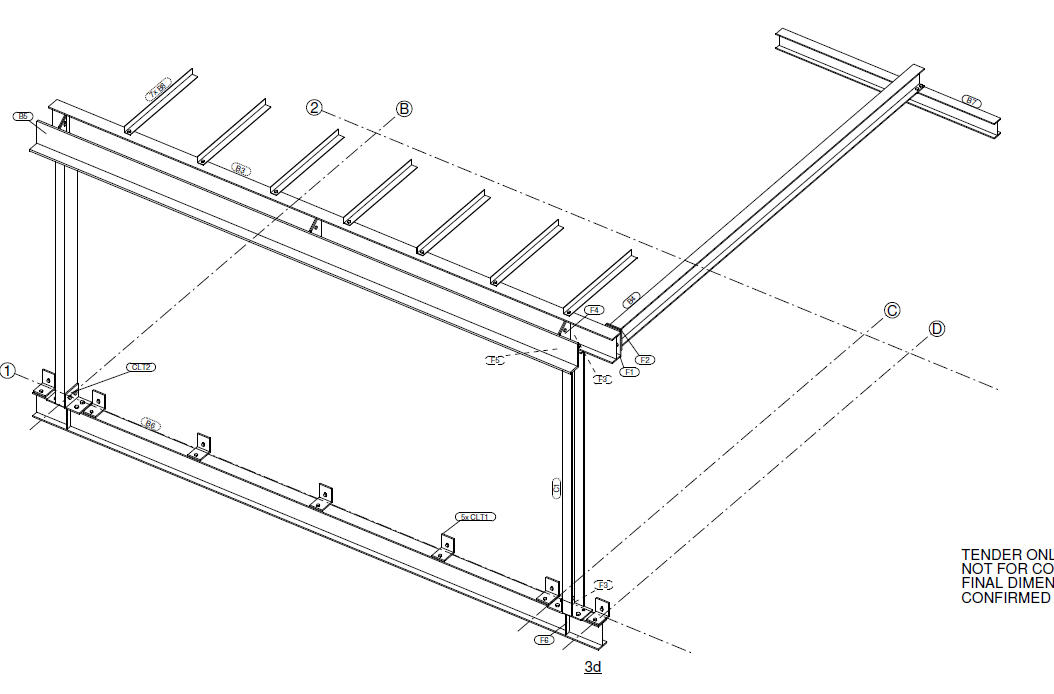
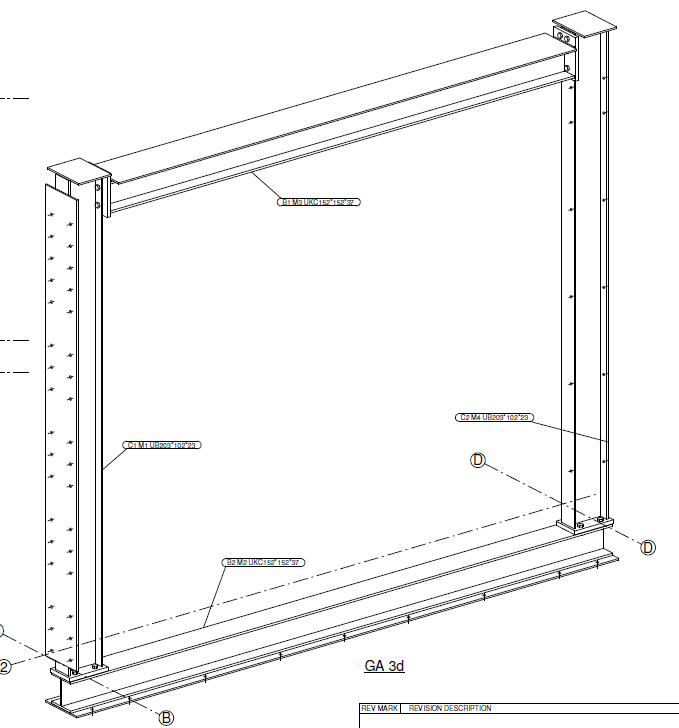
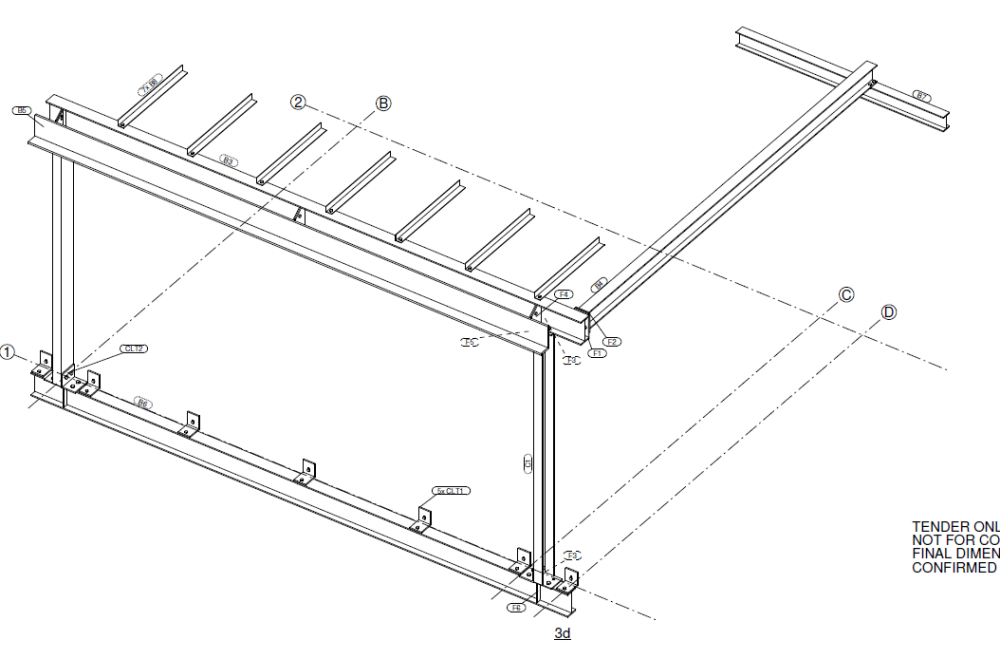
Seems a bit odd at first glance that the outer blockwork support is not designed and detailed. But if the TF company have just designed the TF and the steels directly associated with it they may have put a bit in the fine print that the blockwork lintel over the sliding doors is to be "designed by others". They may have done this to avoid what can be complex to design calculation wise (you need to do part of it by hand rather than being able to use standard SE software, or you can do it all by hand if you have time), time consuming and a challenge wise to detail.. a cost is a attached to this. To explain. After making sure the inner steel (portal in this case) over the doors can carry the loads safely and does not deflect too much to jamb the doors you also need to make sure that the outer leaf intel will also deflect by roughly the same amount give and take. What you don't want to see is a bow in the outer lintel over the doors, no unsightly cracking of the blockwork or of the mastic joints and over stress any wall ties above. Now at 5.0m span things like a sensible cost "L" shape Catnic / Keystone single leaf lintel is ruled out. The next options are.. weld a plate (bottom plate) to the bottom of the inner portal header beam or try to use something like a 200 x 100 x 12 /15 galvanised angle if not too much load above, tight on 5.0m but that is one starting point. There are other ways if the angle does not work out but I'll stick to this solution for now. Go back to the bottom plate idea. What happens here is that the plate acts like a cantilever and introduces a twisting (torsion effect) in the portal header beam. This twisting force needs to be resisted. One way of doing this is to use the floor say above the beam to resist the twisting.. but the floor needs to be right over the beam top flange or very close to it.. then you need to design the top flange connection to the floor diaphragm.. not in the TF manual and it can be hard / sometimes not possible to do.. it's tricky! You'll see in the regs that floors can bear on beams.. simple bearing and be ok but not for beams subject to torsion. You can maybe see that the TF company are thinking the same thing? I'm talking about a pretty stiff connection here.. bespoke. not available off the shelf from say Simpson or Sabrefix. Now if you can't connect header beam to the floor to resist torsion you need to design the header beam to resist the bending / shear and torsion forces. Some SE software packages do torsion design and you can do this by hand if need be using the Blue book with a few extra steps to check torsion. But if you can't rely on the floor the torsion ends up at the beam ends where you have to connect it to the columns. This is where the TF folk probably don't have the time to design a portal frame type connection by hand to also resist torsion as it's a non standard connection and not really covered in the design codes.. which refer often to "Engineering judgement" and "first principles" fine if you have time on you hands but for a TF designer they are working on the clock. What often happens is that you are tight for space to get a 5.0m spanning beam to fit in head room terms at the outset. You want to keep a nice clear square opening for the doors for the fitters and so on.. @Marc can probably fill in on the detail. But when you need to design the portal header beam end connection for torsion you sometimes need to extend the end plate. It can be extended up.. but this can breach the continuity of a TF head binder say, or you can extend the end plate down and put bolts below the bottom line of the underside of the header beam flange.. fitters not happy! In other words you need keep iterating and refining the detail so the structure works and the fitters can do their job. Below is some info showing a couple of way I have done this. The first is from an extension job where I used a single portal frame to support both leaves of the wall with different loadings.. which introduces torsion just as above. This shows a connection that is designed for torsion with the end plate extended upwards. You can equally extend the end plate and bolts down but you then have to check the door detailing and fixing method. This is a box frame that is doing quite a lot of "other things" which is why I have used this for and example.. will expand if there is interest from BH folk. The second detail is where I have used an inner beam with a steel angle on the outside probaly akin to what @Ericneeds. It's not a portal but has other stuff and shows the gusset type connection between the angle and the inner beam. Yes there is a cold bridge but cut me a bit of slack? , the bridge was mitigated in the insulation details. The angle is about 4.4m long and supporting a storey of single skin masonry above. To stop the angle from twisting it's connected back to the inner portal header beam with bolted gussets plates at the ends and in the middle. All these are doing is to stop the angle from twisting and this way you get the best performance out of the angle. There some other what is called "second order" effects happening.. for another day. Again this second detail has a bit more going on.. maybe a bit more interesting? @Eric Hope this helps, post a few more details if you want to follow up.
-
6 bar pressure daytime to my house - do I need a PRV?
Gus Potter replied to Question's topic in General Plumbing
Lucky you! I can see where you are coming from in that 6 bar is 90 PSI. 3 bar ~45 PSI is a good bit of poke but you need flow "delivery" and it needs to be fairly stable. If you have a direct cylinder the pressure relief valve is usually set at 3 bar as are say combie boilers. I wonder what pipe diameter your incoming supply is. Old 3/4 inch or less. If less than 3./4 inch ~ 22 mm) then I would increase the incoming pipe diameter for say 1.0m up to 22mm or more then fit a 22 mm PRV with a double check valve and mains stop cock. The 1.0m before all the gubbins stabalises the flow. After that you can work out the in's and outs. -
My thoughts in line with your text and in italic. So, in summary, the advice would be to - see Actis Hybris's total R results as being inflated, but not grotesquely so Check the fine print. Your starting point here is the European Technical Approval (ETA) Here you should see the test data that complies with the Eurocodes.. pretty much the raw test approval that is signed off. I can see you are putting a good bit of effort into this so hope this helps point you towards what you want to know. - assume one can get as much gain from air layers in the case of BioFib trio as for Actis Hybris An air layer has insulating properties.. yes. If the air layer runs from top to bottom of the the wall then you will get some small convection current within this. But in practice you may have noggings / dwangs and this creates a barrier mid height of the wall. But the main thing is air tightness between the layers. You want to stop convection currents bypassing the insulation. That is where you need tapes if say using PIR insulation.. wool type insulation is more forgiving. The timbers shrink so you can get a gap.. hence air tapes. For starters at early design stage don't place to much (hang your hat) on the air layer. Stick to the basics as later you may need to do a compensatory u value calculation.. if say you have lots of glass. Keep this up your sleeve for now as if you cut it too fine you may have to change the structural design and that won't be fun. - *not* bother to use reflective surfaces on both sides of the air gap for BioFib trio? Or bother (what kind of reflective surface should we use?) and just be realistic about its helping only a little? Again.. keep your powder dry.. cut yourself a bit of slack here as you may have say structural stuff / cold bridging to deal with.. you can always go back to taking advantage of reflectivity later.. An off-the-shelf thickness of 120mm of BioFib Trio gives us an intrinsic R=3.15, which, when taken together with an air layer, would give us R=3.8 (a threshold level in French regulations), assuming the air layer works as for Actis Hybris and assuming also that an air layer helps as much as Actis Hybris's documentation implies.... something that is not necessarily very likely. Of course BioFib Trio is meant to be installed with *two* layers of air, as the diagram above shows. Keep it simple stupid for now, see how the rest of the costs build up overall. Don't try and design too tight for now until you get the whole structure nutted out. Then if you want, go back and refine the insulation once you have have got some prices back.
-
A few thoughts. A few years back on say timber frame the insulation regs changed. We used to use as standard a 95 or 89mm stud, worked fine structurally and still does, the basic generic loadings have not changed significantly. When the regs changed the TF folk were complaining.. we need to go to a 138 of 145 deep stud (before a 89 or 95 stud was the norm) and this will make us less competetive. So they came up with the wheeze on bubble wrap, reflective membranes. I am being harsh but the consequence of this was that the folk on site had to spend a lot more time with attention to detail than before and this comes at a cost. The buck was passed to some extent. Oh.. and if you want to realise the full reflective effect then the surface has to be clean and free of dust and debris.. as per the manufacture's test conditions. I have yet to see a builder who hoovers and wipes down the surfarce of the insulation.. then a brickie that does not cover the lot in dust from the Sthil saw. In reality on a domestic level this is not realised. I see it regularly on the some other sites I visit. I don't on my own sites as I specify stuff and design for what I know can be practically build, what is off the shelf.. sounds boring but this leaves extra cash for the finishes and Architectural flair. It also leaves folk with a warm house as I know I'm not relying on the Builder understanding all of this, even if they do I know they won't really price for it.. they just hope to get away with it. This is good pragmatic design for self builders in my view. If your builder does get the hoover out then you get a bonus. I think the best way is to go back to basics. Look at what you can buy cheeply. Standard off the shelf insulation thickness. What services you need to run in the wall. Get your services runs sorted then check your overall U value. Make sure you can get the fixings you need for the thickness of insulated plaster board. Once you get this basic arrangement sorted go back and check you dew point/ condensation profile for due dillegence. In summary the best advice I can give is to stick to the basics. The big money gets lost in the founds and the risk lies in the ground..spend most time on these aspects and this will allow you to increase the insulation thickness etc and not have to worry too much about quality control on "reflectivity". In terms of detail and workmanship you need to concentrate on the junctions / interfaces.. that is where the moist air will get into your build up. and cause trouble.
-
You are not alone. My practical suggestion is this. The R value is linear and based on an infinite surface area. That is your starting point. You use this to get the U value of your build up. You can get into perimeter effects, try and delve into the manufactures' test data.. but they don't give away the family jewels and the underlying research data. If they do folk will post it on BH and it will get ripped by the likes of @SteamyTeaetc. You have two choices.. 1/ Torture yourself doing calcs, trying to piece together obscure data. 2/ Recognise that that constuction process is pretty rough and go for a thicker / higher performing off the shelf insulation, cover your bases and march on with the build. If in doubt up the thickness, go for standard thickness off the shelf insulation, easy buildable details and that way you can save money for the things you will see on a daily basis. I say this as have been involved in development and research in a commercial environment so will bet you'll struggle to get to the bottom of it. We don't spend loads of money on research and then give away the secrets! One of my jobs was to make sure you publish enough but never enough to let you competitors see in the black box!
-
@George Hi George. Good summary but where folk get confused is when say a beam that on first appearance seems to be carrying only vertical loading suddenly needs a lot more fire protection, often jumping to one hour when you have a boundary condition. The reason is that often it may be providing lateral restraint to another element of the structure that relies on this lateral support to maintain stability during and after (not covered in the regs but good design should consider keeping our emergency services safe) a fire. I posted earlier some extracts from the English regs earlier (not checked the NI regs yet but assume they say the same). Clause 5.2 covers this. The Scottish regs are similar in this respect. The dormer? My starting point would be to ask.. is the dormer part of the roof / rafters? Is it sacrificial like the rest of the pitched part of the roof. I makes no logical sense that you can let the rest of the roof burn away but have to fire protect the dormer cheeks to a more onerous level as the support stucture for the dormer would have burnt away.