


Gus Potter
-
Posts
2383 -
Joined
-
Last visited
-
Days Won
34
Everything posted by Gus Potter
-
Beam helper on stair stringer
Gus Potter replied to MortarThePoint's topic in General Construction Issues
Ah now I see! Have to say.. you're quick with the representations and thinking on your feet.. do you want a job? The more screws / nails you put into the head of the stringer the more likely it is to split... leave it alone. We have all sorts of rules for timber fixings, edge and end distances, the load direction and how the load is orientated to the direction of the grain. What you propose is messy. Can you.. Using a structural glue and screws (provides clamping for the glue and a bit of redindancy in case the glue is duff) to thicken the stringers on the inside with MARINE PLY not OSB. The grain of the outer ply should run horizontally. Say stringer is 33mm thick + 18 marine ply = 51mm. Make the ply cover a good area of the stringer, may past the next tread down. Bolt a 70 x 50 x 6.0 thk steel angle to the vertical leg of the angle that sits inside the bottom flange of the UB. Suggest 2 no M10 8.8 bolts though the short leg into the angle section you show. The 75mm leg runs parallel to the stringer. Drill the 75mm leg of the angle and fix that through the ply and into the stringer using short M8 x 40 long coach hex head screws. My first guess is that you need 4 coach screws per angle as the stringer length is pretty short I seem to remember from your previous posts. The long leg keeps the fixings away from the end of the stringer. The ply prevents spliting of the stringer end. Below is a screenshot of the edge and end distances you need to comply with based on BS 5268 part 2 2002. Note the load direction.. you have clocked that earlier when you recognised that some of the fixings may not be doing much. If in doubt always assume the worst load direction. d = the diameter of the bolt. Some bits from the table are key.. edge distance.. the top coach bolt needs an edge distance of 4d so it doesn't split the top of the stringer off. The bottom fixing is pushing into the grain (meat of the stringer) so only needs 1.5d. You want to keep the coach screws 7d from the end of the stringer (as the grain is at an angle to the load direction) to be conservative. 7 * 8.0 mm dia = 56mm. For steel with a drilled hole the edge distance is 1.4d = 1.4 * 8 = 11.2 mm... say 12.0mm 12mm + 56 = 68 < the 75mm leg of the angle.. and there you have a compliant connection even once you take into account fabrication tolerances. If push comes to shove we can use more detailed calcs to refine the connection design.. keep it simple and avoid. I mentioned 4 screws. They need to be 4d apart vertically = 4*8 = 32 mm. If you draw that out you may have room for more fixings in the vertical plane if need be so. For all. The above table is a handy reference if your learning about TF construction.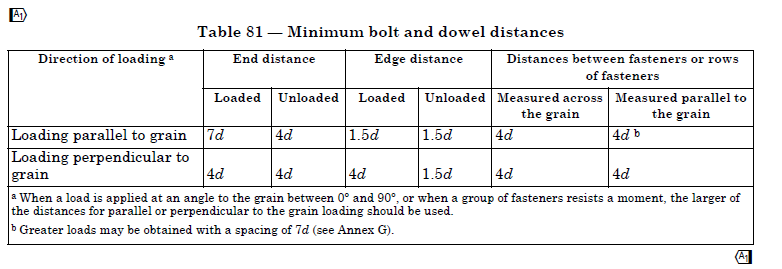
-
Beam helper on stair stringer
Gus Potter replied to MortarThePoint's topic in General Construction Issues
Hiya.. The glue thing is ringing alarm bells here! I'm not saying it can't be done.. just before you do something like this you need to really understand how the materials are behaving. Also imagine you came back to me and said.. Gus can you prove that is ok by calculation? Now that would cost you a lot and it may not be possible without physical testing. Try and seek out an alternative if you can.. do one of your great 3D models as can't quite picture what you intend at your end. Simpson et al have a huge range of bracketry so keep looking and you may find one that fits the bill.. with some load data tables. -
Good for you. There is lots to learn, but if your approach it in the right way it can be great fun, personally and financially rewarding. Have you had a look at your permittted development rights? You probably have but that is a good starting point. Even if you don't comply they help you identify where you don't and that leads you to the next step as to what you need to do to remain compliant with the regulations. Where are you in the UK as PD rights differ.
-
Combining EWI and Cavity wall construction on a New build
Gus Potter replied to Iceverge's topic in Brick & Block
Spot on. The truss I show needs some adaptation to make it cost effective for the light loads and thin heavily insulated walls that you encounter in a domestic job but with a fair wind an a bit of lateral thinking / understanding of this type of structural truss it can be the perfect solution on occasion. It's not an unusual concept as we use this from time to time on tall buildings and you see it all the time on motorway foot bridges etc. One of the big costs of these type of trusses lie in the welding cost. No fancy welds that need tested (keeps in the realm of the local fabricator), also don't skimp on the steel section wall thickness at the early design stage as later you could get tripped up when you come to the do the energy performance calculations. Would be interested in hearing what you SE pal has to say and if said has a better idea. -
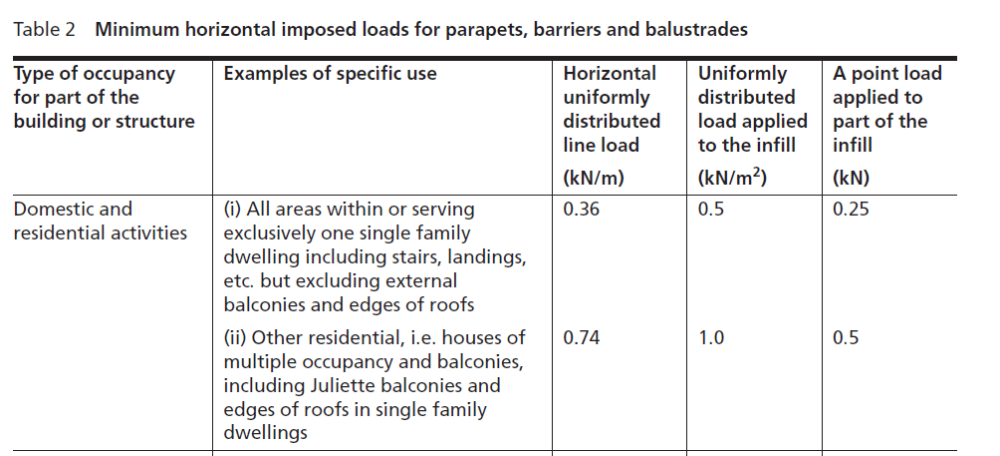
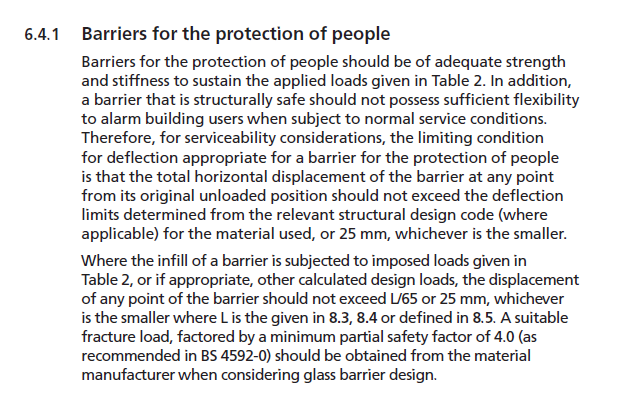
Well that's a good start! To keep you on the right side of things below are the design loadings from BS 6180 for domestic internal stairs, landings etc. Your on the top line. Often the governing load for the hand rail is the horizontally uniformly distributed load of 0.36 kN/m (~36 kg per metre run of hand rail) and this load usually get transferred to the top of the hand rail. An important point here is that these are unfactored loadings.. thus no factor of safety built in. The other important bit is the deflection of the overall asssembly, from the same code The 25mm deflection is a key requirement. If you want have a test of what you have. Take your hand rail length just say 3.0m and calculate the horizontal force at the top from the hand rail 3.0m x 0.36 kN/m / 2 = 0.54 kN (~54 kg) Get a spring scale ( for weighing fish or something) and apply that load to the top of the uni strut. See how much it deflects by < 25mm Next test for strength using the Eurocode factors of safety. Take the 0.54 kN load and and multipy by load factor of 1.5 = 0.54 x 1.5 = 0.81 kN ~ 80kg Also make an allowance for material defects that may manifest later. Apply a material factor of 1.3 thus 80kg x 1.3 = 104kg ~= 1.02 kN test load. Two things to remember. You are testing the newal post in isolation here and I'm not taking into account the potential bracing effect of the handrail running perpendicular to the newal post down the sloping part of the stair. Some may and rightly say.. it's always stiffer than that once you put things together. I say.. your often right but can you imagine how hard that is to prove? and also you can often shift the problem somewhere else if you shed load from the newal post. On the other hand 104 kg is about 16 stones.. there are plenty folk that are heavier than that.. and if you have a Rugby team partying, a couple of big lads could push the thing close to its design limits. Report back.. check the deflections first in case the strut fails early.
-
Good to see we have both identified how flexible the rod appraoch can be. The zip bolts work in a different way I suspect where they work in tension and the edge of the newal post is compressing against something solid... but few things are that "solid" and often your bog standard stair is far from solid. I made a post a while ago about the forces that you encounter when designing glass ballustrades.. they are significant.
-
Bricks or dense block at this point?
Gus Potter replied to Post and beam's topic in Bricklaying, Blockwork & Mortar
@ETC interesting detail, thanks for providing. -
Heads up.. darkest hour is before dawn etc.
-
A 16 dia rod is too bendy. The amount it will flex is related to it's second moment of area Ixx = pi *radius^4 / 4 = 3.142 x 16*16*16*16/4 = 51478mm^4 A 40 x 40 x 5.0mm thick SHS section of has a value of Ixx = 134000mm^4 134000 / 51478 = 2.6 = about 260% stiffer than the rod. A 50 x 50 x 6.3mm thk section 328000 mm^4 328000 / 51478 = 6.3 = about 630% stiffer than the rod. You can see from the above why I mentioned a 50 x 50 section as being something that looks promising. For handrails and the like we need them to not just be strong enough but "feel strong and stiff" to the touch.
-
That's the easiest way!
-
You could do it with the lugs and bolt. I would need to check if 40 x 40 would still work, probably would but not going to say yes without checking. But there is an argument to be made that it is braced both ways by the handrail? .. but then the lower post needs to do more work... technically. The lug welds on the inside will foul the underside of the top flange of the beam. It looks like the beam you have could cope with having a "scuff" taken off the under edge of the top flange locally to let the SHS sit in tight. M10 grade 8.8 bolts should be fine. Mind you I would add a lock nut with a touch of Araldite glue to make sure they don't come lose later. Cut a piece of wood the exact lug spacing you need and take that to the welder. They will use it as the template. I think they will clamp the lugs to the timber and then weld them to the SHS... or something like that. A tip.. the bolts are 10mm nominal diameter. The holes usually 12mm nominal to allow for fabrication tolerances. Squeeze the glue in and around the bolt to fill in the gaps. From memory Hilti do a system like this where you flood the thing with resin so there is no slip.
-
Combining EWI and Cavity wall construction on a New build
Gus Potter replied to Iceverge's topic in Brick & Block
It's a bit whacky for a domestic building but you can use what is called a Vierendeel Truss embeded in the inner leaf / as the structural frame . The base sits about the level of the ground floor ceiling... still in the insulation envelope, the top carries the roof loads. There is a bit of a cold bridge in terms of the inner skin but you can compensate for that by using insulated plaster board etc and treating the steels a bit like the inside of a window frame. You can then use a shelf angle to support the outer skin. Now if you have a 9.0m span this could be economic. But the shelf angle introduces a nasty twisting effect into the truss so you need to span the first floor joists perpendicular to the truss and use the joists and their connections to resist the twisting effect. It all takes a bit of thought and you need to get a grip on the how this type of structure behaves early on. If you plan it right it can be a very elegant way of doing it. These frame are usually made from square box section steel but for this span and the relatively light loads it needs to carry the section sizes can be quite modest with a bit of discrete stiffening. The above is a basic one but in a fair wind you can adjust the vertical struts a bit to coincide with the internal walls and window openings. The other main issue is lateral stability of the building. I can't make any more meaningful comment without seeing some floor plans etc.
-
That's a pig of a detail! Thanks for thinking of me. Questions.. 1/ Is there any risk of you making the effective width of the stair to narrow? probably not but check anyway. 2/ Is that a glass ballustrade or just a sketchup thingy? 3/ What are dimensions of the newal post? Would this concept work? It sounds a bit odd but on occasion we embed steel in timber.. like fish plates. Say the newal is 80 x 80mm Get a bit of 50 x 50 x 6.0mm SHS box section and weld that to the top of the steel. Make it extend 2/3 of the height of the newal post and get it bang on plumb. You may need to check the box section and carry the leg down to the botttom flange.. will take time but it should work. Cut a chase in the newal post say 51 - 55 mm wide x 60mm deep so it fits over the box section. You could resin (maybe use a slightly flexible construction adhesive) it in or secret screw it. I would go for resin / adhesive as the screw penetration will be small. Then fit a ~ 10mm cover piece to hide the steel and give it a bit of a sand, it will test your marketry skills but could be fun! Now you still have plenty meat of timber at the top at the top to fix the handrails etc. You'll know but few folk will spot it as the eye is drawn to the ballustrade / glass / spindals especially as the chase is cut on the top landing ballustrade side and not facing into or down the stair. Now you can check the post as much as you like below the level of the top of the steel to get the visual appearance you want. The 6.0mm thickness is partly so you don't burn through the section when welding and mucking about. To add a bit.. using the SHS up to two thirds height means that you reduce the bending force in the timber where the timber is thin by ~ 2/3 compared with having thin timber at the bottom subject to all the bending forces and the associated onerous forces on the fixings.
-
Bricks or dense block at this point?
Gus Potter replied to Post and beam's topic in Bricklaying, Blockwork & Mortar
The founds are not that deep. Don't forget that the top of a found tends not to be quite as flat as you may hope for. You could maybe get one course of block on the top of the found but I would wait a bit until you see the found cast and check the levels, especially if you have any steps in the found. One way is to use concrete comon brick to level the coursing before you use the more expensive facing brick. If you don't use all the concrete commons they are very handy thing to have lying about anyway. Good spot @ETC I'm guessing so correct me if wrong. Away from the cranked vent you normally run the timber frame (TF) vapour barrier (not shown on your detail as it at a larger scale) down past the timber so any condensation runs down into the cavity and into the ground. But the cranked vent partially blocks the cavity. Also when the brickies work they inevitably drop some mortar down the cavity which lands on top of the cranked vent and bridges it. This could lead to the bottom rail of the TF and sole plate being exposed to damp locally. To solve this where you have cranked vent you introduce a bit of DPC which acts like a cavity tray. The vertical leg of the DPC goes up and behind the vapour barrier, the horizontal leg goes over the cranked solum vent so any water coming down the cavity gets directed away from the timber. -
Hi all and thanks for the input, much appreciated. Nice idea, will consider. Yes it's been looked after, was completely redone I think circa mid sixties and maybe again after that.. but no one seems to know for sure. Not an option in this case, need to work with what is there. The truth will set you free! ..but thanks for being sensitive. As above. There is a suggestion that it may be a gypsom based product thus asbestos is not a problem. Futher investigation is in hand... hopefully it will be a false alarm. Client's Indead, listed building consent application in hand, there is no charge in Scotland.. one of the few things that are free these days. Will report later as project progresses. Thanks again all.
-
Well done you for giving this a go.. If you want I can give you a few pointers on what you need to do to get the preliminary sizes for you timber frame (TF) and the grades of timber you may need. To do that I would need to know.. A: The floor plan dimensions, location of the internal load bearing walls roof pitch and need to know about any funny loads you are introducing.. pool tables ect.. B: The ground, first and second floor levels. C :The sizes of the openings.. windows and doors. D : Your post code so I can assess the wind and snow loading. I'm minded to give this a go with my SE hat on as.. 1/ You have made a good effort. 2/ It may help other folk on BH understand what goes into the preliminary sizing of a timber frame.
-
Using muck away to level a paddock
Gus Potter replied to WannabeBob's topic in Landscaping, Decking & Patios
My pragmatic view. Your starting point is to spend a bit of money investigating the ground up front and in particular the behaviour of the ground water if considering a basement This is where the cost uncertainty lies and the big risk. If you don't do this now you'll spend countless wasted hours trying to figure out the superstructure design.. and then you may have to revisit all of that once you learn later about the ground. Now that and the following may seem a bit of a lecture but if you go to a TF company / basement company for example with limited information they will suss that out and inflate the price to cover the added risk / uncertainty. There are basically two rates.. if you have a Client that has not got a clue.. there is a risk there.. so you add more to the price. A well informed Client with good drawings and a bit of professional backup.. you charge less as the risk is reduced.. in the round you end up making the same profit as a Contractor. How? well... if there are extras the professional team often play fair with you so you get a fair days work for a fair days pay. Mind you if you a Contractor who does not recognise fair play.. then the gloves come off. To give you a ball park figure. You could get this kind of preliminary advice for about £1500.00. But once you get chatting to the person who is giving the advice they will tell you loads of other stuff, point out the pitfalls and engage with you... after a couple of conversations you'll probably realise that you have got value for money. For me all I need to do to wash my face is to save you one weeks labour on site for two operatives. The sum is a bit like this this.. 1 x a skilled operative at 8 hours per day @ £250.00 per day for a week = 5 x 250 = £1250 A labourer at £120 per day x 5 = £600.00 £1250 + 600 = £1850.00 > my £1500.00 Now that is my rough sum.. but I know I can easily save folk that. It's just that folk don't believe it until they find out later that they maybe went about it the wrong way. I know some BH folk are a hostile towards Architect's but @ETC is one and very experienced... just speculate.. how much someone like that could save you but still achieve the same in terms of Architectural design if you get them into the fold for the whole project! Now imagine if you got both the SE, Architect and you all on the team early on.. The savings can be massive.. In some ways the professionals self regulate for the benefit of the project if they are committed. There are some folk on BH that don't need this level of support, some are essentially highly experienced developers with a professional construction background. But most folk on BH are not like that.. I'm trying to look at it in the round. I did a self build many years ago and certainly did not know what I know now.. also at that time there was no internet and no Buildhub where you could go for advice.. I made mistakes / lost money based on what I know now. In summary get an impartial professional in early who can guide and give you the information you need to make an informed decision, you still have control over the process. -
Read the attached first.. once you get a handle on the basics you may find the solution is staring you in the face. If this guide is not enough then you'll be much more informed when you call the lead association, they will appreciate that and will tend to recognise that you have made an effort yourself to solve the problem on your own... but just got stuck. Calder guide to leadwork -GTGLW-210213(5).pdf
-
Here is a puzzle. I'm doing an upgrade job on a listed thatched house in Scotland.. there are only about 200 of them left that are meaningfull in Scotland. To cut a long story short the thatch was relaid completely in about 1950 - 1953 by a new town development corporation.. think Milton Keynes. In their wisdom they thought it would be a good idea to guard against fire. To that end they overlaid the rafters with asbestos cement sheets and thatched on top of that. Now I truck up and want to knock a lot of the ground floor walls out to make it open plan. But to do that I need to support some big point loads from chimneys etc. That means I need to tie the structure back into the top part of the roof. But the Client wants to add insulation on the first floor above the ceiling chords, near the shoulders of the chimney breast you can see below. I'm thinking.. hey Gus leave that alone as I could make things even worse! If I insulate the ceiling in the upper floor I'll shift the dew point in even further and could end up with a compost heap on the roof. Any thoughts folks? I'm appealing as there may be BH folk that can give a bit of advice.. am I being too cautious? The climate up near Glasgow is not condusive for thatch in general. I can't show you the front of the building as it would make it identifiable, the front looks great, Crittal windows etc. The chimney is one of the point loads and there is not a lot to stop it falling into the garden. My steel design and temporary propping involves pre bending (pre loading) the steels to make sure nothing moves.. post for another day on how you do that with off the shelf DIY stuff. Mind you if I get this wrong you'll read about it in the papers as it's right in the town centre.

-
Look forward to your performance report in a few years. Keep us updated on that one.
-
Lead at times is not that forgiving. The more you try and fix it.. the more of a hole you can dig for yourself. Don't use heat as you'll need a lot and could set light to the roof. Would foam fillers work for you! It's probably the wind driven rain / snow your worried about as your roof seems to be a pretty low pitch? Set the fillers back 25mm back from the end of the tile on dry day and wet the tiles with a hose, then see how far the water gets up. Once you have got the set back right then run a bead of silicon under the bottom of the fillers, not top and bottom. Try that as its a reversible process.. where as trying to reform the lead is not a it becomes work hardened. Have a look at the below and see if that might work for you. https://www.roofingsuperstore.co.uk/product/lightweight-tile-eaves-foam-fillers-pair.html
-
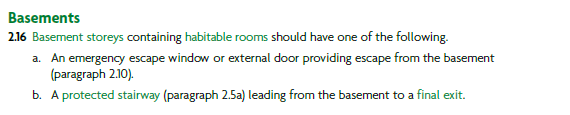
You've opened a can of worms here! The Scottish regs are a little different but here is another part of the English regs: This is where it gets complicated by the need for open plan living. Let's say you have a stair leading up from a single storey basement onto the ground floor (GF) area that has a kitchen / open plan area, then another stair leading up to attic rooms. Now you can't make a protected corridor as you have that open plan GF. I agree with you all but just digging into this in my own way. Lets go back to basics. If a fire starts somewhere you need to get from the apartment you are in (usually a bedroom or principle living space, bathrooms are excluded as you should not be in them that long! as are other parts where you may not be spending a lot of time in.. balances occupancy rate with time spent = risk to a place of safety (outside normally for a house) without having to essentially go though another room then a corridor to exit the building. Now if you have an open plan kitchen on the GF that is a big fire risk.. you could get easily get disorientated and trapped in the basement. Remember, few folk have been in a fire and when panic sets in folk can behave in odd ways. In terms of saving lives. It's the smoke that kills most folk. I've not yet delved too deep into the English regs yet but in Scotland the regs have recognised that lots of developers want an open plan space on the ground floor. To get round this we are using sprinkler systems (the ones that don't need a big storage tank) and often what we call enhanced grade D fire protection. I don't think the English regs are requiring sprinklers yet. An enhanced grade D system often means we put smoke / heat detectors everywhere and get it serviced by a professional, that includes the consumer unit cupboard.. anywhere a fire could possible start and interlink them all. The idea is to detect smoke as soon as possible, then heat... as by the time there is heat there tends to be a lot of killing smoke. Now if you are intending to use your basement as a plant room only then the regs get relaxed I think. As I said I've not checked that part of the English regs yet. But to call it a plant room you can't go putting wall paper up and a bar with the full optics and 40 oz bottles of your choice etc! But pragmatically if you're going to be down there a lot I would want another way out if push comes to shove. Maybe a light well with an opening window that you could get out and clamber up to ground level.. you would have an element of encouragement especially if your pants were at risk of going fire! You could navigate the regs by keeping the basement as a plant room / storage space but still keep you safe. In this my guess is that you would need a fire door at basement level to protect the area above. In the round for me it's about creating a safe space for all your family and visitors. Yes comply with the regs.. but also apply common sense.
-
Correct. What about sitting on the fence. Plan your UF slab on the basis that you are going to polish it. Design it, cure it and turn the heating on. If you have made an error.. not achieved the correct quality control etc, lay a timber floor / carpet over to hide the cracks. If not cracking what about using a polished concrete overlay, yes I know it's not the real deal but who is really going to know? I was at a job where they used an overlay on a normal reinforced concrete wall, you could not tell the difference and in fact looked great cf some (a lot of) the rubbish concrete jobs you see. It's one of the few times I've see a concrete finish good enough that I would have in my own house. Below is a random link to overlays. https://nichepolishedconcrete.co.uk/overlays/
-
Mine is wtf! Look folks.. If you are educated then you state what the abbreviation means and bracket that, then use it later in the text. Using abbreviations is of no use to new folk coming on Buildhub.. they are keen to learn, also there are folk joining BH that have particular skills.. they may have abbreviations that we have not got a clue about! Imagine you are a someone trying to learn and look back on previous posts.. I try and make my posts simple and easy to understand as best I can.. sometimes I may come over as a bit odd / dafty.. but in my day job.. you'll find me a bit more concise!
- 55 replies
-
- 3
-

-
- acronym
- abbreviation
- (and 4 more)
-
CLS or general carcassing timber for studwork
Gus Potter replied to BadgerBadger's topic in General Joinery
Two things you need to watch out for.. If the wall is load bearing a standard British or EU section will be 95 mm deep, the equivalent CLS section depth 89mm and the widths are also different. CLS can be cheaper but the amount of wood you get is less.. you get what you pay for.. don't complain later if what you bought does not fulfill it's intended function. An 89 mm deep stud has about 12% less bending capacity than a 95 mm deep stud and I have not included the width reduction .. buttttt.. it's only a quarter of an inch>> who would have "thunk that? Ruskin the common law of business: "It's unwise to pay too much...but it's worse to pay too little. When you pay too much, you lose a little money - that is all. When you pay too little, you sometimes lose everything, because the thing you bought was incapable of doing the thing it was bought to do.



