


JohnMo
-
Posts
13292 -
Joined
-
Last visited
-
Days Won
200
Everything posted by JohnMo
-

How many (low-temperature) radiators are enough?
JohnMo replied to Garald's topic in Central Heating (Radiators)
I would use no doors, just use the area of the external walls and windows. Floor u value? What's your insulation, have a play with something like this, others available. https://www.recticelinsulation.com/en-gb/u-value-calculator -
ASHP heating parameters for UFH
JohnMo replied to Happy Valley's topic in Air Source Heat Pumps (ASHP)
Forgot to mention once set you may have to adjust to compensate for the floor covering. That should be the flow for the lowest out side air temp -
How many (low-temperature) radiators are enough?
JohnMo replied to Garald's topic in Central Heating (Radiators)
Cells B7-12 -
How many (low-temperature) radiators are enough?
JohnMo replied to Garald's topic in Central Heating (Radiators)
So LL, meant to type 'all' Ceiling, just use 0.1m2 for area to keep the calculation from throwing a miss calculation. Floor just assume it settles to 8 degrees the same as the ground above the shop. Then make an alteration to compensate for the area of the bike shed, which will cool to your lowest temperature. -
How many (low-temperature) radiators are enough?
JohnMo replied to Garald's topic in Central Heating (Radiators)
It does LL the white cells. Just size to suit room. Assume internal walls have no heat loss, as they are heated on the other side. -
How many (low-temperature) radiators are enough?
JohnMo replied to Garald's topic in Central Heating (Radiators)
You have the spreadsheet, so easy enough to calculate. U value is 1/R, so R of 4.5 is 0.22 U value. Double glazed window U value 1.4, single glazed U value 5. -
ASHP heating parameters for UFH
JohnMo replied to Happy Valley's topic in Air Source Heat Pumps (ASHP)
This will tell you your mean flow temp. Mean flow temp half your delta T between flow and return taken away from the flow temp. House total loss divided by UFH area. To get W/m2. Get your pipe spacing a draw a line, as illustrated..thumb.jpg.e6f5b10749b0a8b28a782f83356b9791.jpg)
-
What are you trying to do, how many UFH zones do you intend to use. How thick is your screed?
-
Where is the kWh price heading in 2022?
JohnMo replied to epsilonGreedy's topic in General Self Build & DIY Discussion
Definitely think sitting on your hands is the way to go -
Where is the kWh price heading in 2022?
JohnMo replied to epsilonGreedy's topic in General Self Build & DIY Discussion
Just read this on Which? If you’re on a fixed tariff that is at a higher rate caused by recent energy prices, the government has said that your unit prices will be reduced by 17p/kWh for electricity and 4.2p/kWh for gas. Energy suppliers will adjust fixed tariffs automatically, so you do not need to take any action to get the benefits of this scheme -
ASHP 'Service' - what exactly are they doing?
JohnMo replied to gc100's topic in Air Source Heat Pumps (ASHP)
Ask the installer what he plans to do what parts are replaced etc. -
You really need the heating and boiler capable of giving different temperatures for DHW heating and central heating, otherwise it's pretty much a waste of time. If you set it up well it may be worth while. For WC to work properly you run the heating 24/7 with a setback of a couple degrees overnight. So ideally you heat DHW at night when the boiler isn't doing much work.
-
I used spray foam, then a coat of CT1 adhesive/sealer
-
I'm with Dave on this keep it simple. Operate as a single zone, single thermostat controlling pump. Manual valves, will allow you balance any temperature difference provided by each loop. Self balancing actuators will run at a set delta T so may not add any value in this situation. I would use a wireless thermostat then once the heating is functioning you can move the thermostat about to find its best location.
-
How many (low-temperature) radiators are enough?
JohnMo replied to Garald's topic in Central Heating (Radiators)
All u values look too good. Your min temp in Jan is only +3.2, so no frosts ever? -
How many (low-temperature) radiators are enough?
JohnMo replied to Garald's topic in Central Heating (Radiators)
Quick look. Floor u value, looks low unless you have 200mm of insulation in the floor Wall looks too low also based on their value you have talked about. Wall area looks extremely low for a three storey building. -
Looking at you new thread, the areas don't match the areas you have in the heating spreadsheet. The heating spread, should be the total, floor looks ok, but roof and walls seems very small. Maybe post the heating spreadsheet on the other thread.
-
I would check the your areas and u values, and window and door sizes.
-
Not sure if I am missing something, but from what I can see the worst case heat input is January, where at min OAT you need 1kW at your highest internal temperature. Some perspective - A small electric panel heater would heat the whole house. So no idea why 14 radiators would be required, or why you are even discussing a HT HP. If you want cooling, radiators don't work. You would need fan coil units. Low temp heat pump, a small fan coil in each room, heating and cooling fixed.
-
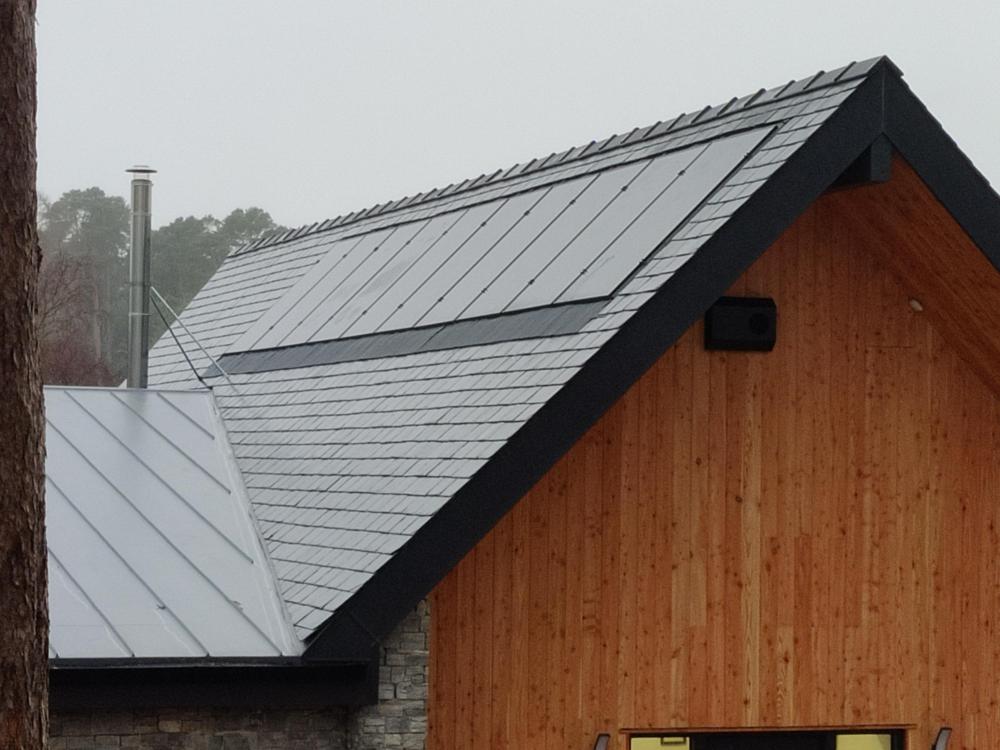
Sorry not the best photo
-
Where is the kWh price heading in 2022?
JohnMo replied to epsilonGreedy's topic in General Self Build & DIY Discussion
Standing charges are staying at the old/new October rates. The £2500 cap applies to the gas and electric kWh price not the standing charge. The cap sounds great, but in reality there is still quite a hike in prices gas 7p to 10.5 a 50% increase. Electric about 26% increase. Obviously making the numbers more favourable for a heat pump. -
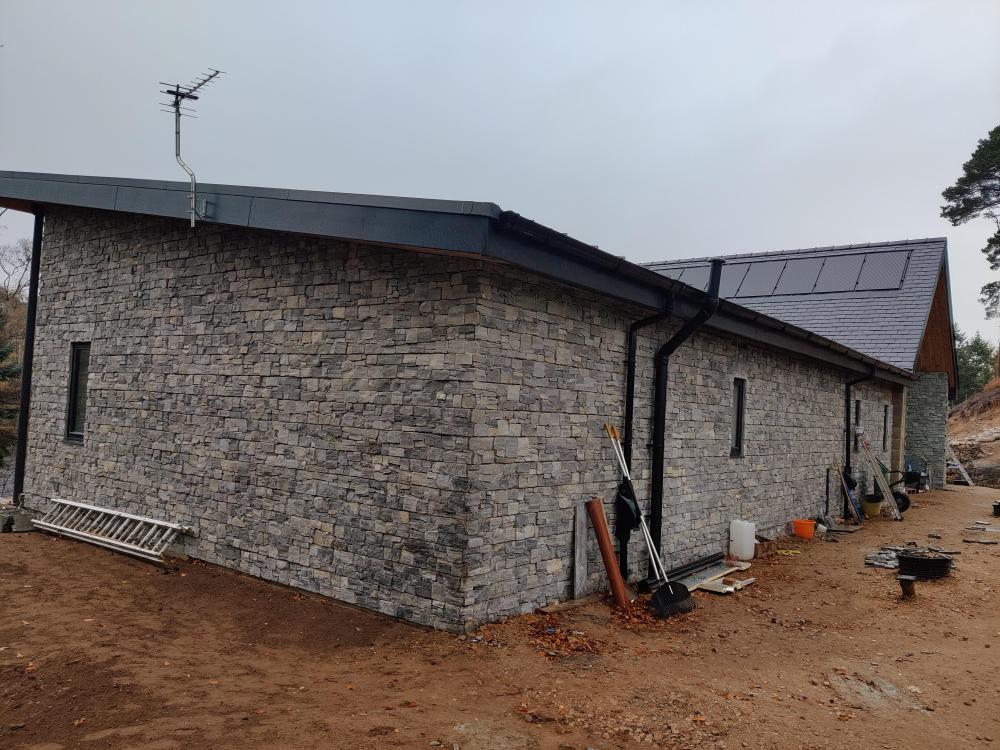
I purchased 142m2 from real stone cladding, directly adhered to Durisol blocks. Took about 3.5 weeks (full time) for me to install, with wife helping out. Having never done it before, would expect a couple of guys to do the same amount way quicker. Assume you will scaffold also.
-
Just make a decision and get on with it. Asking for opinions and public blogs doesn't get anything done. Just goes round in circles.
-
MVHR condensation trap type
JohnMo replied to cwr's topic in Mechanical Ventilation with Heat Recovery (MVHR)
Wet one will dry out at times and smell, dry one doesn't care, it doesn't smell. If your trying to save a few pounds it's not worth saving on this. -
It's bit like saying shall I have a red or blue one, its down to your choices and what fits in best with the rest of the house. Only way to choose is to go look at samples.

.jpg.87d6d75adaec59a22c40fcf0ea8d2464.jpg)


