
JohnMo
-
Posts
12469 -
Joined
-
Last visited
-
Days Won
179
Everything posted by JohnMo
-
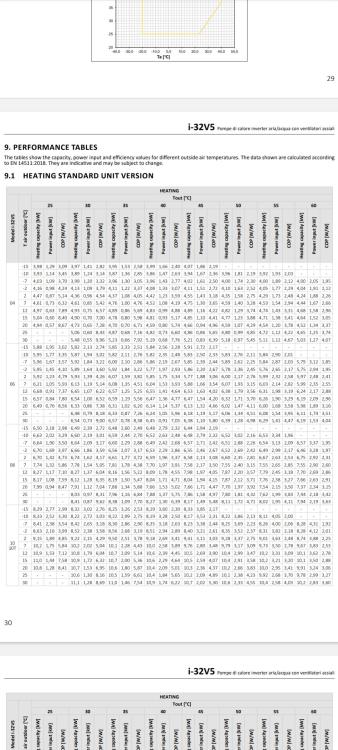
@LiamJones Not easy to modify the spreadsheet to get the full picture. As I am a little late amending this, I have had to do a new post. Although the water flow temp is directly related to the heat loss of the floor, it only occurs where the pipes are, so you are better to use the average floor temperature. But that is affected by how well the floor is insulated and the rest of the house. The floor will transfer heat at a rate of 7ΔtA = W into the house (as stated by @TerryE ) Δt is the difference in floor to room temperature. Or rearrange to Δt = W/(7xA) So for my house at the heat demand is around 3kW and floor area is 192m2. 3000/(7x192) = 2.2, so my floor needs to 2.2 degs warmer than the room at design temperature. Once calculated you could add this figure to the calculation in cell B51. But in well insulated house there is little advantage.
-

Heat battery for just underfloor heating?
JohnMo replied to Tilbert's topic in Energy Efficient & Sustainable Design Concepts
-
Basically the dT for the floor moves from being internal room temp compared to ground temp, to water flow temp to ground temp. You basically need double the insulation for UFH compared to radiators to have an equal downwards heat loss.
-
The logic could be You have a demand for cylinder heating ASHP starts and heats the cylinder, if the cylinder fails to get to full temperature (50), before the heat pump gets to its max temp, the immersion will start. Its not ideal if the immersion is stating every time you have a demand for cylinder heating. Can you see the flow temperatures to and from the heat pump and the cylinder temperature? If so, it would be helpful to record what is happening to max sense of exactly what's happening
-
Valves for towel radiator when it's the safety radiator.
JohnMo replied to Square Feet's topic in Central Heating (Radiators)
So the radiator is always open when the CH is on? The radiator would have just the normal lock shield valve and a manual valve. Or you add a automatic bypass valve between the flow and return from the boiler. -
Sorry to say this the insulation depth is not very good, so your UFH will not be the cheapest to run. 7mm isn't much in building terms, just add more screed.
-
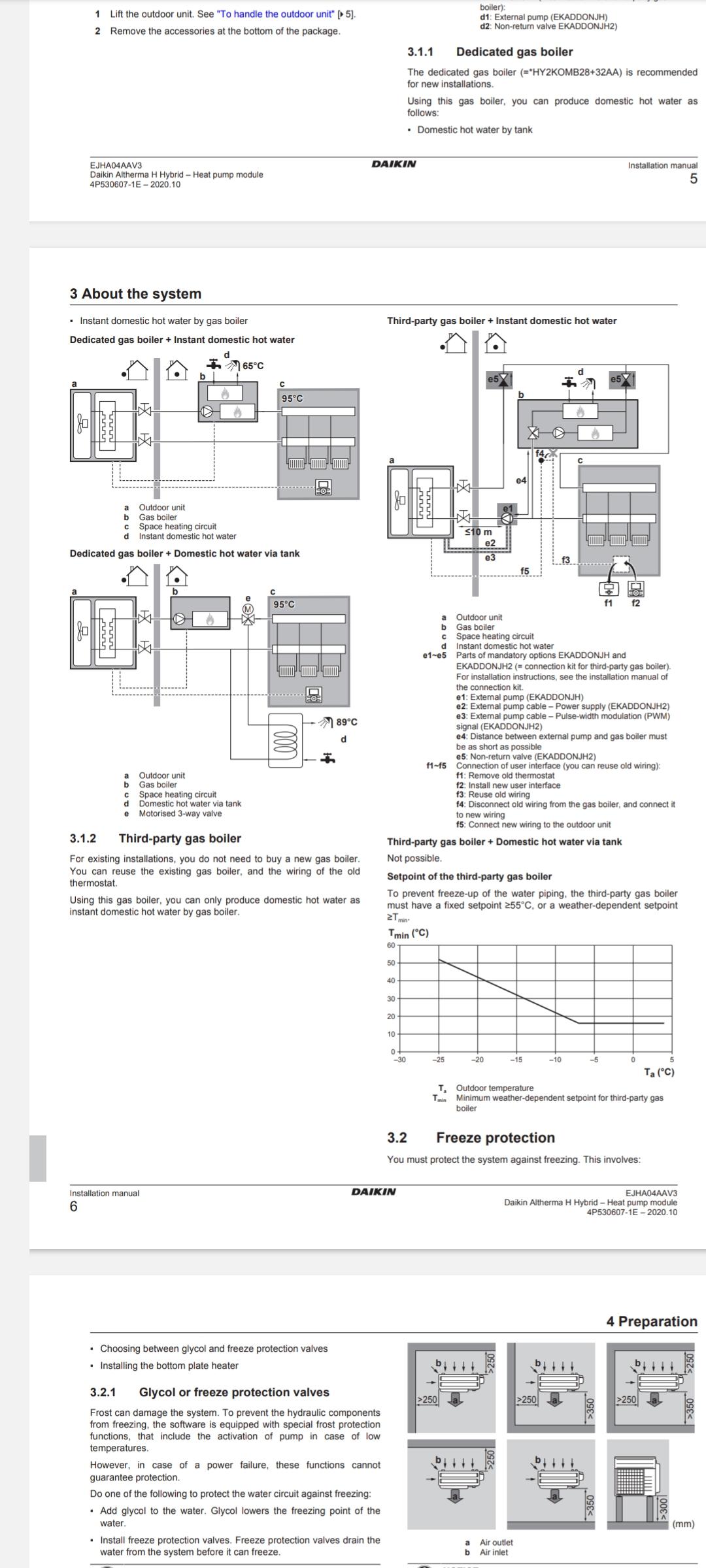
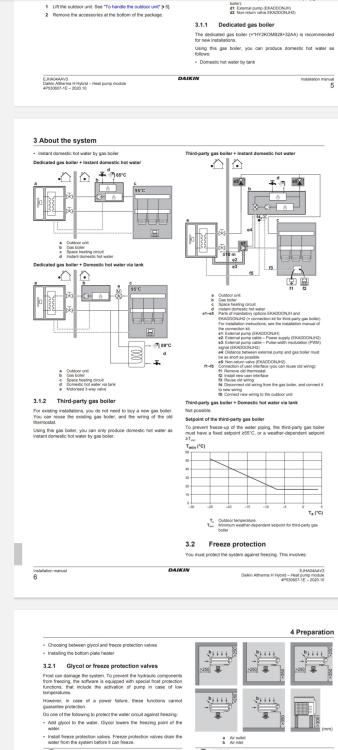
Not always true, for example Daikin hybrid, the heat pump just ties into the existing boiler. The Alpha one is just copying what Daikin have been offering for a decade. My ASHP (Maxa/Viessmann) has all the controls built in, with full control if how the circulation pump responds, so hydraulic sepereration isn't needed. It's all run weather compensated, so smaller, original radiators are fine, the really cold weather the original boiler takes over. However if you go hybrid no grants are available, which puts most off.
-
The ideal temp is as low as it will go without actually running out of hot water. The other thing is set your timing to heat the cylinder, either in a low price period if you have a low rate tariff or towards the middle of the day when it's likely to be warmest outside so you get the best CoP. Worst time to heat without a low tariff period is first thing in the morning, when it's likely to be the coolest outside.
-
These were in cooling mode, usually a low (ish) output speed, the high speed settings bugged us even more. No idea of models, sorry. One may have been a Mitsubishi the other a Toshiba. Efficiency is great, coming home to a nice cool space is good, when it's mid 30s outside, we only really noticed the annoying drafts when we we sat watching the TV and in bed. We ended up getting used to sleeping with the unit off in the bedroom.
-
Your bog standard multi split with wall units
-
Recommissioning/Certification of Solar Install
JohnMo replied to James SHS's topic in Photovoltaics (PV)
I think some pressure being exerted from external to octopus. MCS will not disappear without a big fight. To many folk been royally... Plus installers been forced to go through hoops for months and spend big to certified. Good advertising from octopus bet they got a few people to transfer across to them, on the off chance they get something for nothing. My prediction A few will pay to get on the trial, the trial will last 6 months, they will spend 12 months in an evaluation period, everyone will move on with their lives and it will all go silent. Spend the money on more solar or add towards a battery. -
Having lived with one (a few) for a couple years, I found them annoying and the wife hated them. As much as the blurb says they don't blow at you, they always seemed to be aimed at someone. A2W gets my vote (radiators or better UFH), A2A doesn't get my vote. If you want a hybrid system, have a hybrid system, keep the old boiler, most if not all A2W, can be run in hybrid mode, boiler just gets used when it's really cold. Especially useful for a combi.
-
I fast forwarded and lost the will to live, my vote is snake oil
-
Solar - Where to start?
JohnMo replied to DazRave's topic in Energy Efficient & Sustainable Design Concepts
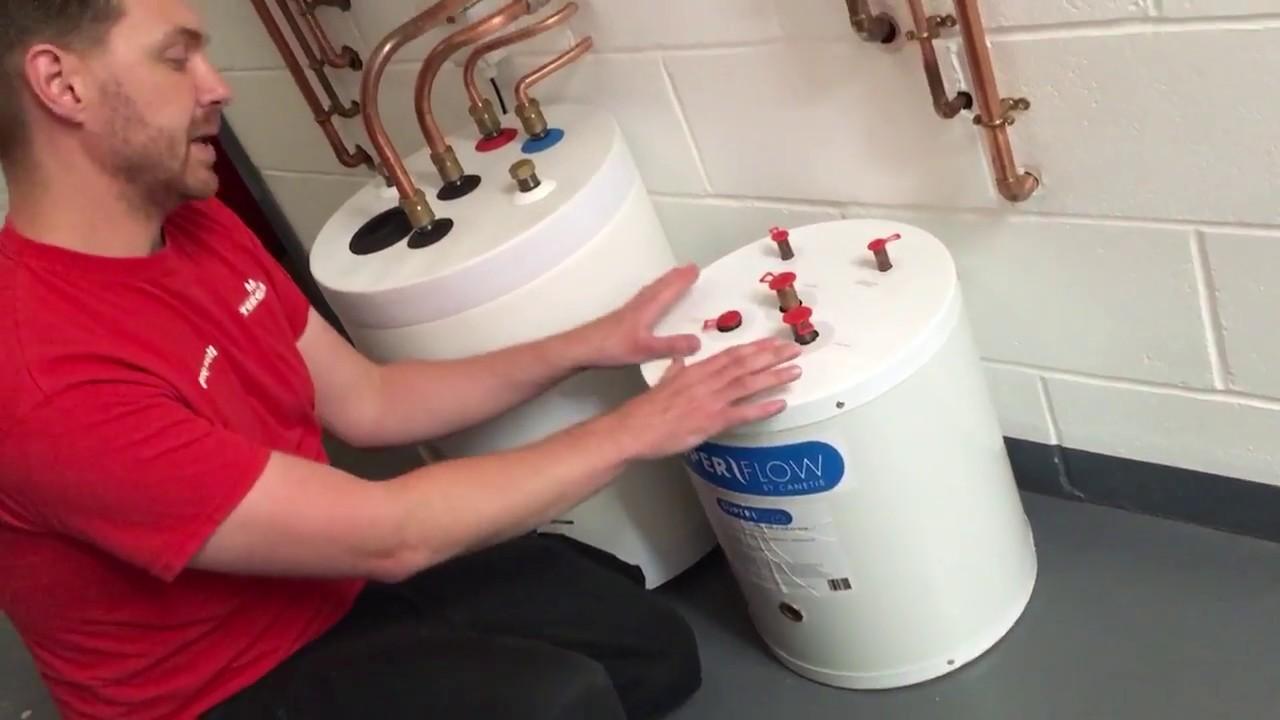
Basics of my system are a borehole pump feeding an accumulator. So I do get good flow. Pipe from boiler is 15mm to a manifold. Water then goes to each wet room. Could with a bit of fine tuning run 3 showers just. You can flush the loo while in the shower with no affect in the shower. One thing you need to do - remove the flow restrictor at the cold water inlet to the boiler. This restricts flow when it's winter and by default in the summer. Intergas was on my list originally, most Dutch combi boilers seem ok for pre heat. Couple of things to read attached the photo is the preheat cylinder sold by Alpha boilers (25 and 50L). You can add an immersion to the 50L.Canetis-SuperFlow-Product-Sheet-WE-050318.pdfCombi-SuperFlow-White-Paper-v1-2-4.pdf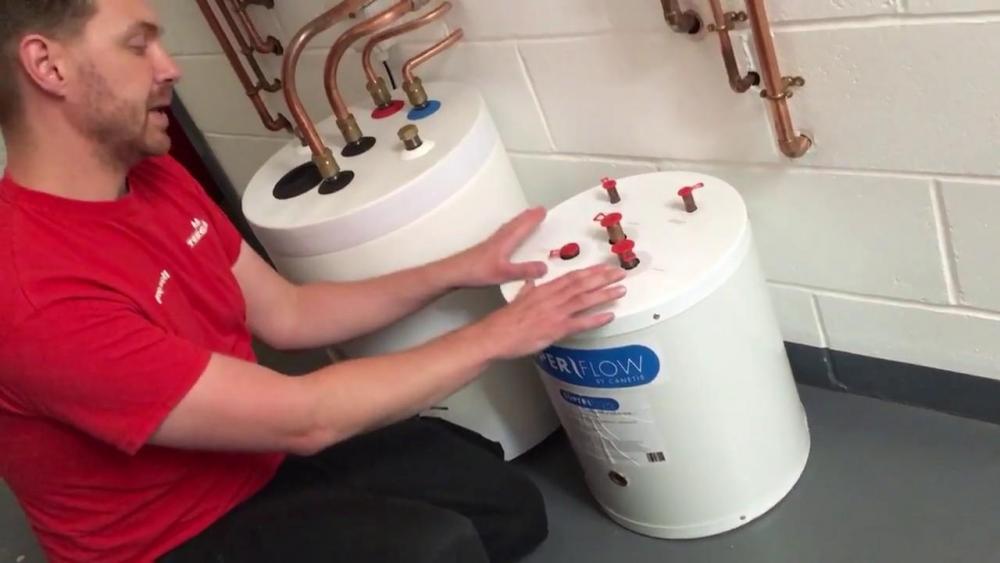
-
Recommissioning/Certification of Solar Install
JohnMo replied to James SHS's topic in Photovoltaics (PV)
Noticed they have also added a statement about charging you £250 to review your system and it's suitability. It is not fundable. I did have my name down, but don't think I will not bother. Out of the 200kWh generated since my battery install, I have only exported 3.4kWh. Would take a lifetime to get my £250 back. -
Solar - Where to start?
JohnMo replied to DazRave's topic in Energy Efficient & Sustainable Design Concepts
From experience combi pre heat is great. You can get huge flow rates if done correctly. Ideally you have a diverter valve, to bypass the combi if water is hot enough to go direct to the tap, plus you need by pass flow and combi flow to go through a mixing valve to stop excess heat going to the taps. Alpha boilers use them as a factory option, I have an Atag boiler that works well with and is designed to take preheat water - not all boilers will, so don't assume it will be ok. -
Review/criticism of low profile underfloor heating plan.
JohnMo replied to Joshua Graham's topic in Underfloor Heating
Aim for 0.15 U value or ideally better, to manage downward heat loss. Ultimately centres and flow temp depend on how many W/m2 you need to get out of the floor? Have you completed heat loss calculations? -
Review/criticism of low profile underfloor heating plan.
JohnMo replied to Joshua Graham's topic in Underfloor Heating
Be prepared for high flow temps and quite high downwards heat loss, you need double your proposed insulation. That level of insulation is fine for radiators, but not fine for UFH. -
MVHR - Wiring & Control
JohnMo replied to richo106's topic in Mechanical Ventilation with Heat Recovery (MVHR)
I have manual switches outside wet rooms to boost, but after the first couple of months they are very rarely used, except in the kitchen if we are cooking smelly stuff. The humidity sensor looks after most boosting, but must say that only kicks in rarely. We have our system tuned well below building regs. We do monitor CO2 levels in lounge and bedroom, if we have 6 or more in the lounge for a long period we also boost then manually. So I wouldn't go overboard with manual control. -
G98 or G99 (AC Coupled 3.6kW Inverter, 5kW Battery)
JohnMo replied to AliMcLeod's topic in Photovoltaics (PV)
So it requires G99 as per your installers statement -
G98 or G99 (AC Coupled 3.6kW Inverter, 5kW Battery)
JohnMo replied to AliMcLeod's topic in Photovoltaics (PV)
Depends if everything including the battery is all done with a single hybrid inverter, G98, as the system cannot export anymore than the inverter rating. If you have PV and battery with seperate inverters G99 as you can exceed the G98 limits. -
How thick is the screed? What are the rooms?
-
MVHR ~ extract from bedrooms??
JohnMo replied to Cognis0's topic in Mechanical Ventilation with Heat Recovery (MVHR)
Take a look at cascade ventilation strategies with MVHR. Do a Google or similar search. -
You really need to investigate coanda nozzles for MVHR, makes the whole process way less complex. Basically put the outlet or extract points anywhere that is convenient and let the air flow and it's tendancy to stick to a surface such as a ceiling do the hard work. Also research cascade ventilation strategies with MVHR, which can tie in to the above.
-
Solar - Where to start?
JohnMo replied to DazRave's topic in Energy Efficient & Sustainable Design Concepts
Some info on our experience. We started with 3.1kW of PV and could self consume that with ease, very little went to the grid, but we are home all the time. Next we added a further 3.6kW, ran the ASHP in cooling mode, that consumed most of it, everything else went to an immersion. But on a sunny day electric still made its way to the grid. We had loads of 80 deg water that we didn't really need. Our first array has optimisers, due to tree shadow, our second doesn't and doesn't need them. Optimisers only really worth it if you have known shadow issues. We now have a battery 17kWh usable. This is a useful tool, better than water, yesterday from 11am to midnight we used no grid electric, battery charged by PV (not fully, but enough to back fill our usage). By midnight the usable energy was depleted. However due to heavy rain all weekend no battery charging was done and very little PV energy went to the house about 1kWh each day.