


JohnMo
-
Posts
13307 -
Joined
-
Last visited
-
Days Won
200
Everything posted by JohnMo
-
 If the design temp for the radiators 60 then that's the flow temp that you need. With mixer at 40 deg flow your boiler will need to deliver 50 degs or more anyway. Good thing is with a return temperature to boiler below 54 you will be condensing.
 -
MVHR Unit Suggestions
JohnMo replied to Tumble's topic in Mechanical Ventilation with Heat Recovery (MVHR)
So long as the fans run as required, at a constant rate (we exchange air at a rate of 0.3ACH) and you have a manual boost button, nothing more is really required. Auto boost, time clocks, not needed. In winter the humidity is likely to be too low rather than too high. For example today outside is 2 Deg and 99% percent humidity, inside 20.5 and 39.5% humidity. Last time I used boost was because we had 10 people in the lounge. Check/clean with hoover the filters every 6 months, replace with new every 12 months. Forget it's there the rest of the time. -
Daikin Alitherm hybrid without the boiler?
JohnMo replied to SuperPav's topic in Air Source Heat Pumps (ASHP)
Just reread, yes missed that. The dream unit, can be set to run at a fixed temp, job done. Then leave to look after it's self. -
I have around 50 to 60L in total. Recent change. In an attempt to run the system hotter to get better performance out of the summer house UFH without overheating the house. I made the following changes. Added a thermostatically controlled ESBE mixer and pump to house UFH - this is generally dropping flow temp down to 29 from 34 so spends most its time less than 50% open, it also close fully. This in effect reduces the system capacity. Added a buffer across the supply and return piping, this acts a min flow valve, with 50L capacity. UFH in summer house is still rubbish, so now installing a fan coil, which generally requires around 35 Deg flow temp. Things still a little fluid, but will look to operate, as such 1. Single house thermostat 2. ESBE mixer, if no heat demand, flow temp 29, if house thermostat has heat demand, flow increases to 35. 3. Single flow temp of 35 degs for heat pump (may alter but will see how things go) 4. Fan coil, Salus self balance actuator to give a 7 deg delta across fan coil and shut off flow as required.
-
Think these products have a small place, but the property has to heat heat like an open window. Then anything is better than nothing. But anything else don't waste your money.
-
Daikin Alitherm hybrid without the boiler?
JohnMo replied to SuperPav's topic in Air Source Heat Pumps (ASHP)
If you heat a buffer at a fixed temp say 30/35 and have another means of heating DHW and/or use the buffer to preheat water going to the DHW cylinder, shouldn't be be too bad to run. Just how things used to be a decade ago (or more). They are basic heat pump, and they are cheap. The inverter ones are R32 and internet connected (smart) but the functionality is no different to the basic unit, apart from modulation. -
Pretty much how S and Y plan work. Manufacturer add lots of good features and the UK plumper f"**s it all up, by using S and Y plan plumbing.
-
Daikin Alitherm hybrid without the boiler?
JohnMo replied to SuperPav's topic in Air Source Heat Pumps (ASHP)
You could, but not very good for DHW. It only outputs a single flow temp, DHW flow and CH flow temp is done at same flow temp. It really pool pump with a couple of additional features, but not much. Even the inverter one is a single flow temp for DHW and CH, it just modulates it's load not the temperature. -
Daikin Altherma ASHP and no hot water
JohnMo replied to M550344's topic in Air Source Heat Pumps (ASHP)
Sounds like setting issues .ore than anything else. Time to get the manual out and read a few times until it makes sense. Do you use most your hot water each day - if so you don't need to disinfect. Heat Geek have a good write up the subject, with the risk etc. Heating you cylinder from 48 to 60 will take over an hour with a 3kW immersion. If you want to hold that temp for 30 mins you need to set to 1.5hrs run time. But if the immersion isn't heating there an issue, it's tripped on over temperature and needs to be reset or it's thermostat is set too low so it's not starting. -
Daikin Alitherm hybrid without the boiler?
JohnMo replied to SuperPav's topic in Air Source Heat Pumps (ASHP)
Single flow temp for DHW and heating, fixed duty, so you will need a buffer most likely. -
I know a bunch of fittings came with the pump, including nrv. But cannot recall exactly what. I would wait until you get the pump and go from there. They change design all the time,
-
My UFH has never reached 45 degrees, for UFH - it never will. I just started mine as low a temp as I could, ran for a couple days, increased slowly to about 35 and stopped there.
-
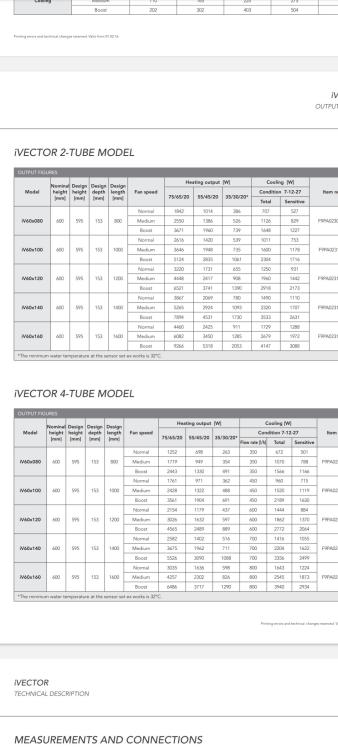
Output chart for the various sizes and different flow temperatures
-
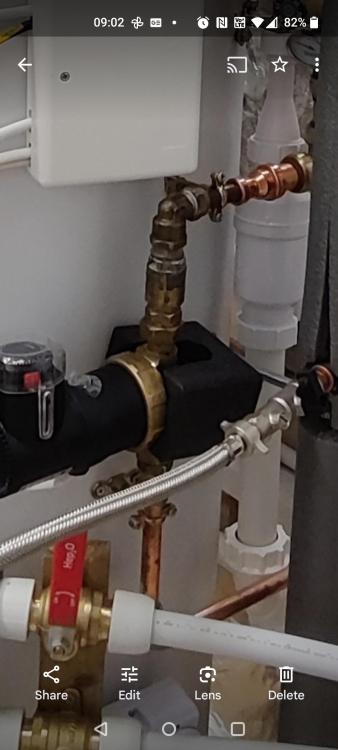
This mine installed, used 1/2 to 15mm compression fittings. No 1-1/4 ports?
-
A bit bonkers really, good job I only paid a fraction of that. With high water temp it will chuck out 6kW, something a through wall would never do.
-
1200mm wide
-
Found 2 pipe version one online at £901 incl vat.
-
Bottom intake has removable, and cleanable filters.
-
Daikin Alitherm hybrid without the boiler?
JohnMo replied to SuperPav's topic in Air Source Heat Pumps (ASHP)
They do two versions of the hybrid, refrigerant split and monobloc. The monobloc works with another manufacturer gas boiler. And it just tees in, from what I remember. Would think it would work on its own, a little bit of fudging about. Have a good read of the manual and make sure you are buying the correct model. -
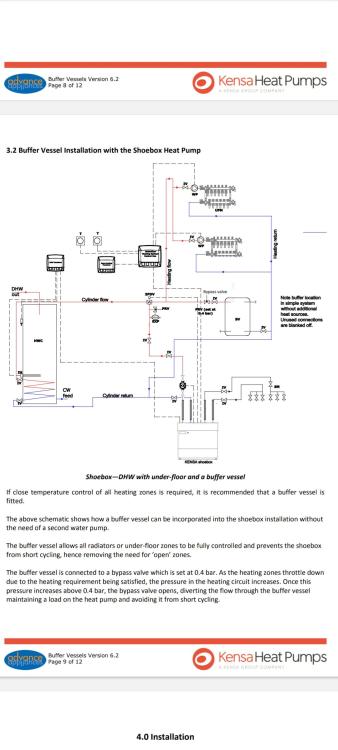
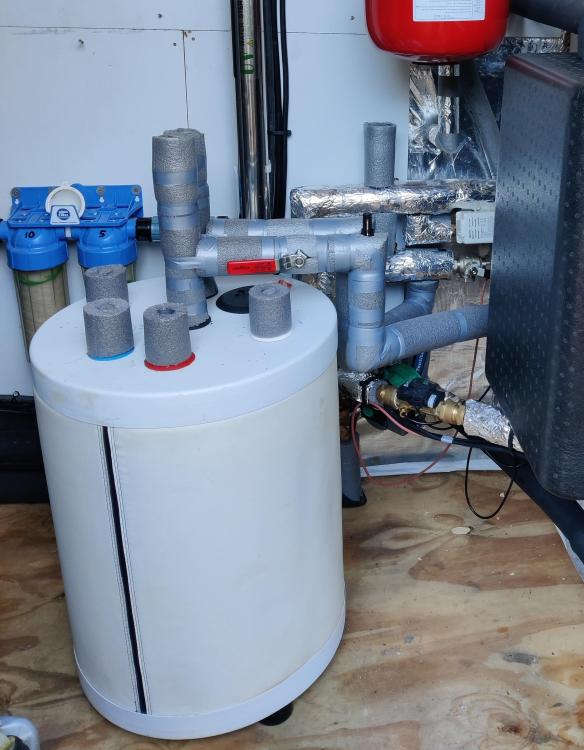
When I made some mods to my heating system and I added a buffer. Pretty easy to do. I used a 50L cylinder across the supply and return, so no additional pumps required. Your heat doesn't modulate, so needs some provision to dump loads to get a decent run time (about 10 mins).
-
My problem is the water comes in to summer house, at the other side of the building to the heater. So have to some how, get the pipes around the room without being an eye sore.
-
So garden room UFH, although just about works, really isn't much use at heat pump temperatures. So a bit of research later, have purchased a fan coil unit. A Myson iVector MK2. Bargain from eBay, about a 1/3 the normal price. It is a 4 pipe fan coil, so has two heat exchanges, one for heating and one for cooling, I will pipe both heat exchanges to a single pipe in a parallel. This should increase heat transfer area and hopefully be able to run slightly cooler. Fan coils come with a temperature sensor, and the normal set point is 32 degrees for the fan to start. So the water has to be above 32 degs to get the heater running. But the Myson one has an adjustable set point, so should simplify setup. So far have mounted it on the wall. Intend to use the UFH manifold to feed the fan coil, with the Salus actuators to manage a 7 deg dT. Heater on wall, with cover off and on
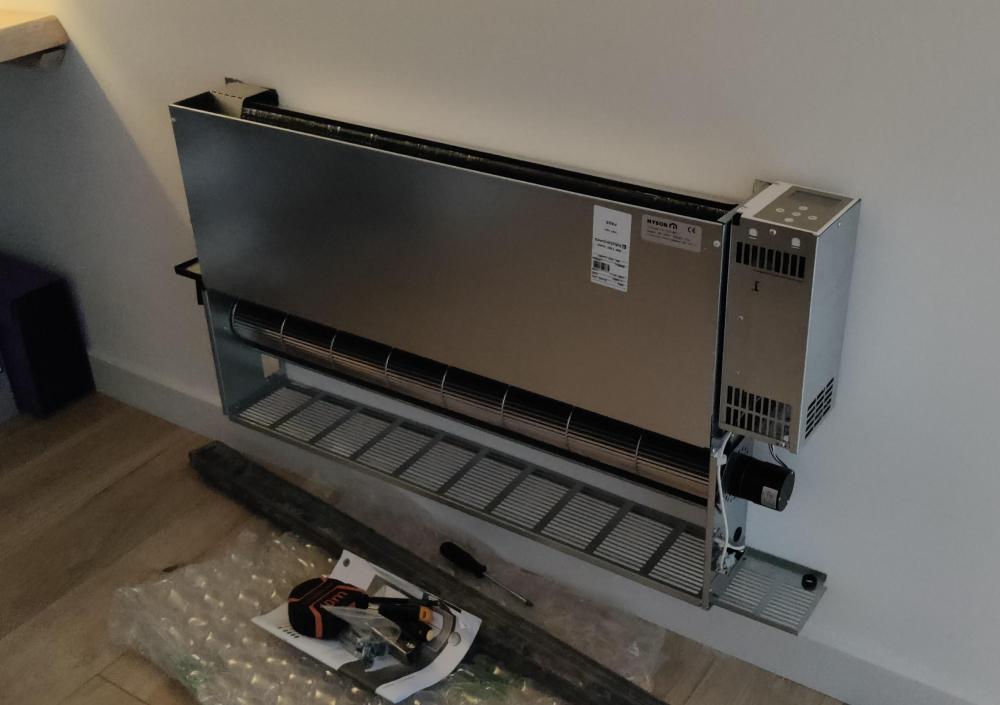
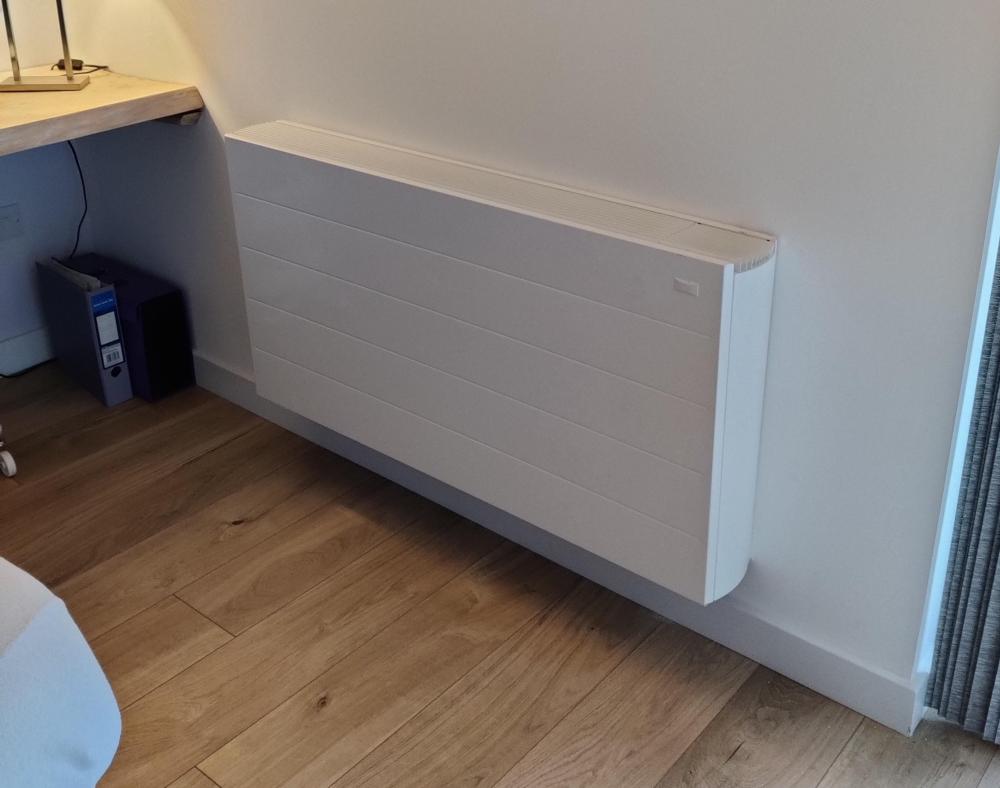
-
This thread is now 1001 posts long - bonkers. Length is all the words strung together possibly longer than your pipe length!
-
Slow underfloor heating not reaching temp.
JohnMo replied to Stoneblade's topic in Underfloor Heating
Top floor flat, downward heat loss should be arrested by the flat below. That sounds like a throw away statement. Ignore for now, although it says that on the drawing. What are your floor coverings? -
Interested in retrofit underfloor heating advice - Hello.
JohnMo replied to Simon L H's topic in Introduce Yourself
Lots of recent threads on the same subject so have a read in the UFH section. Common theme is expensive to run, you need insulation etc. don't trust someone trying to sell you something




