


JohnMo
-
Posts
13308 -
Joined
-
Last visited
-
Days Won
200
Everything posted by JohnMo
-
No to move warm air from your warm rooms to the cold ones isn't that what you asked? But as @SimonD says
-
Sorry your question was about moving heat from one area of the house to another not your ventilation system. @SteamyTea talked about heat pipes, I proposed an inter room fan, which could be ramped up to help even out temperature. The two types of fan I provided are just fans and nothing really to do with there intended duty. Just being used to move air around the house - not a ventilation strategy, not MVHR or anything else.
-
Brink one does. But the alternative I offered - the Greenwood one, is almost silent in operation and cheap to buy. I paid about £40 for one on eBay.
-
Similar systems have been about for about decade. They start to cost a small fortune by the time you have everything covered.
-
Read the whole thing including the downloads. It's not MVHR it's part of a cascade MVHR setup. It just an inter room fan? Not MVHR
-
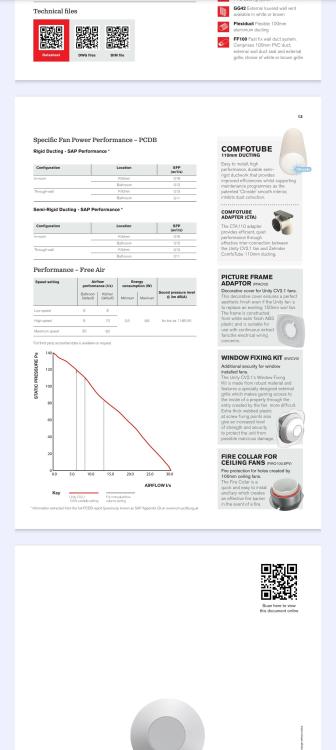
Is this really practical on a house scale? I know that's how you can move high temperature in a computer or with solar thermal tubes. But are they practical on a couple degrees difference in room temperature. Would an inter room fan work better? Something like this will do 70m3/h - but very pricey. https://www.ventilationland.co.uk/en_GB/p/brink-indoor-mixfan-co2-controlled--up-to-70-mh/17927/ An alternative could be a greenwood CV2GIP, or similar control boost via a couple of temp sensors and switch logic.
-
We had one for a number of years, we bought ours in 2014 for the same reasons. We had a Flymo robot mower, was good for the first 3-4 years and then things started to go wrong and after a couple of repairs, the battery gave in and a couple of other things at the same time, it got to the point we chucked it, as repair was way to expensive to justify. But was really good when it was working, hopefully reliability has improved. They can cope with rough terrain quite well. Two primary versions a guide wire embedded in lawn and ones that map the area or know where not to go, they are more expensive but possibly better.
-
This is true for all work in all situations PV, cars, other stuff. Like all things you need to do the due diligence. Couldn't agree more, speaking to other trades people is good, they know each other they have worked with them. That's how I found nearly all my trades when building, they come with people that don't advertise, because they are good and fully booked, but they lead to others, that are good.
-
Really you need to read the mounting system install instructions and know the wind zone you are. From there it will tell you clearly what is acceptable. You also need to confirm with your structural engineer the roof build up is acceptable for any additional loads imposed (uplift and downwards forces). Taking hear say from the internet is not good enough. If you are doing a MCS install the installer will have full responsibility for what is or isn't acceptable. But with all things it's worth checking yourself and questioning.
-
Not agreeing with much of the above. Since September I've generated close too 2,500kWh, nothing much exported. I'm in NE Scotland, so plenty more solar would be generated further south. My summer bills will consist of mostly standing changes. Electric suppliers cap what can be exported to what the local system can handle. Using the correct crimping tool to make up connections is a must, other than that is all very straightforward.
-

SIP wall thickness vs u value
JohnMo replied to Bournbrook 's topic in Structural Insulated Panels (SIPs)
Thickness of material in metres divided k value (metric units) equals R value. Add mutiple R values together for different materials used 1 divided by R value is U value -
ASHP pipework in floor below the insulation - any guidance?
JohnMo replied to AAA's topic in Air Source Heat Pumps (ASHP)
If you are not going underground it's not a cost effective solution. I would just tell the installer you want to put 100mm of your 150mm insulation below the pipes. If you want everything flush prior to screed you may need to trim the 100mm down a little. Leave there 13mm insulation in place. -
If they don't give me a discount I say an alarm isn't there. I had one case many years ago where we bought a house with a monitored alarm system already installed. The stipulation from the insurance company was to be maintained annually from an approved list of contractors, had to be set everytime we left the house and at night. My insurance came down when I said it was no longer installed. Go figure.
-
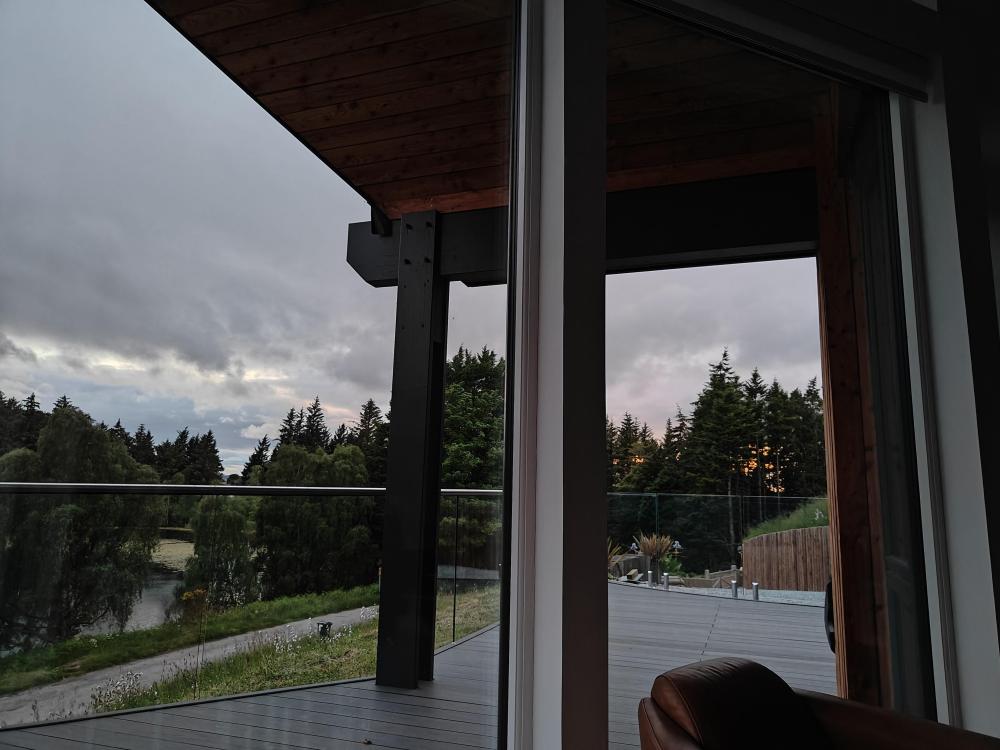
Winter gain and summer gains are different sides of the same coin. Winter you will take all you can get from solar gain. We have close to 4m overhang, but a wall of glass some of it due west, by 2.30pm today we had to close the blinds to keep the sun out. Currently 23 in living room and 14 outside and we had the UFH cooling on for about 6 hrs today. Don't underestimate the power of the sun when mixed with glazing. This is a photo taken just now, due west the sky you see is the path the sun takes and it drops behind the trees. You can see the glow of the sun behind the trees to right.
-
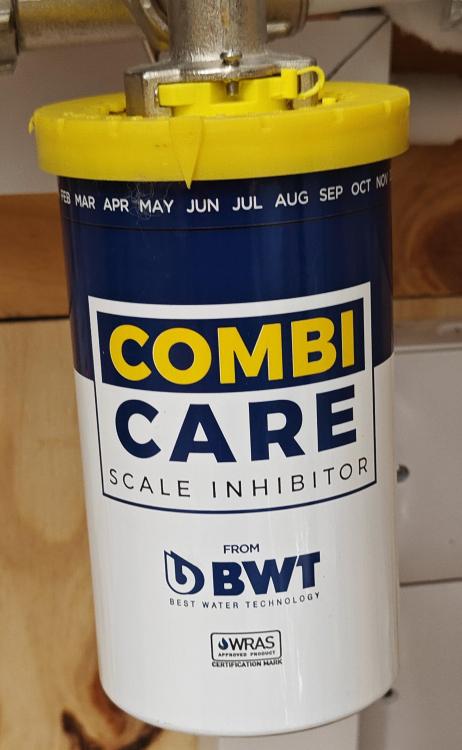
Still tastes rubbish and if salt based there can be issues with salt content. But you could always just use a Poly Phosphate based cartridge system like a BWT combi care. Just put it in the fed to the UVC (22mm). Change cartridge every 12 months. Not a softener as such just stops or reduces scale buildup by stopping the process. A simple explanation here https://silksoftwater.com/water-treatment/water-conditioner/polyphosphates-in-hard-water-treatment/
-
ASHP pipework in floor below the insulation - any guidance?
JohnMo replied to AAA's topic in Air Source Heat Pumps (ASHP)
I would just biased the pipes to the the top of the insulation. Or even on top of it, depending on screed thickness. Certainly wouldn't be at the bottom, no matter what the contract says. -
Look at the value for 150mm and 200mm the difference in the values can be added to each additional 50mm or half the value for every 25mm.
-
This is unlikely to help, as when the sun gets to the west the sun will be low enough to shine straight under the overhang
-
That was my plan with the battery and big chunk of concrete, but smart meters just don't communicate here, so limited to E7 or standard tariff.
-
SIP wall thickness vs u value
JohnMo replied to Bournbrook 's topic in Structural Insulated Panels (SIPs)
Only thing not to like about SIP panels is they are thermally lightweight and have a very short decrement delay. The decrement delay refers to the time it takes for heat generated by the sun to transfer from the outside to the inside of the building envelope. So in this case maybe not the best choice for summer comfort -
SIP wall thickness vs u value
JohnMo replied to Bournbrook 's topic in Structural Insulated Panels (SIPs)
Typical U value calc for the build up proposed Wall Type 3 - 169mm SIP Value 0.17.pdf https://www.ecosipshomes.co.uk/wall-u-values Condensation calculation Wall Type 3 - 169m SIP Condensation Risk.pdf -
SIP wall thickness vs u value
JohnMo replied to Bournbrook 's topic in Structural Insulated Panels (SIPs)
Or just taped without the skim. Some high wind load areas (Scotland) may also require a blockwork outer skin also (plus a finish) , which seems the norm for timber frame building. So could soon get to 400mm thick and not the best U value. -
Contracts are a two way street, not a one way street. If you don't like the terms, propose something different, he can take it or leave it or counter propose. The original proposal was I paid for materials weeks ahead of delivery, but negotiated to day of delivery, prior to entering site. Both parties happy.
-
No, not really, I paid everything in arrears except the roof rafters etc, I actually paid that the moment the lorry pulled up to our drive.
-
I came from a different direction RAF, so aeroplane engineering, where a loose bolt is very bad, a missing bolt could be catastrophic. So was always working with gravity to ensure things stayed where intended. Then oil and gas, where a dropped object could easily injure or worse. So again always inserted from the top, never the bottom. When I started in the oil and gas industry and we experienced multiple bolt failures on reciprocating compressors, analysis of the failure mechanism was bolts fatigue failing. What was happening the bolts were not tightened enough, (difficulty getting bolt tensioning equipment in to the tight location), so the bolt wasn't in the elastic range, where the bolt can stretch and contract indefinitely without fatigue failure.




