crispy_wafer
-
Posts
1214 -
Joined
-
Last visited
Everything posted by crispy_wafer
-
Was too excited to get filling and pressuring that I missed one or two nuts when tightening up the manifold and pump. 🤣 Was like a scene out of one the old submarine movies spraying water everywhere whilst reaching for the off tap with one hand and the grips with the other. chalk it down to experience...
-
Flow Screeding costs ballpark + advice
crispy_wafer replied to crispy_wafer's topic in Floor Structures
I've put it off for as long as I could really, I put the UFH down last week, pressurised it overnight. No pipe leaks, Just a slight weep at the pressure test gauge so bitten the bullet and ordered the screed in, then I can get the Staircase sorted and that will be me done spending money till next year, will give everything time to dry out (my excuse!)... -
Flow Screeding costs ballpark + advice
crispy_wafer replied to crispy_wafer's topic in Floor Structures
Just touching base with this, been quoted 420 per m3, supply/pump/and man, that will be about 55-60mm over 100sq m using Cemfloor mobicem. -
Do you have a keyline https://www.keyline.co.uk nearby, I've used my local one for ducting, drainage and polypipe goodies. And they were really good with me, actually wanted to chat, answer questions, and provide solutions...
-
Discount Offers of the Week
crispy_wafer replied to Ferdinand's topic in General Self Build & DIY Discussion
That compactor is even cheaper now - 199 + delivery Scheppach 6.5HP Petrol Compactor - ALDI UK
-
It's still on my to do list. It's up on the gable end, so going to hire a niftylift to get up there. A couple of bits of gutter that the roofers put up have slipped loose so will hit that at the same time. Was rather hoping the roofers would come back to sort the gutter, then I could drill from the inside and use their ladders to fix the cowling in place on the outside.
-
Where for best PIR EPS slab prices?
crispy_wafer replied to saveasteading's topic in Heat Insulation
Insulationhub, cutpriceinsulation and secondsandco, Managed to get a couple of pallet loads from seconds, some had slightly concave edges which the mrs sawed off as I installed, only con is long lead time on delivery, and you have to manhandle it off the wagon. Insulationhub and cutprice, good prices for retailers and they offload with a dinky forklift for you. -
My windows (not any of your brands, I may add..) the handles are shockingly bad and funnily/not there's a big variation of wobble/play between them all, already been replaced once and they are just the same, I'm in dialogue for a company rep to visit. The cheap **** PVC windows in the office have better handles. The ones I played with in showrooms weren't like that... QC my arse.
-
The rule of thumb I wanted was to work out depth of screed, I had my assumptions, but as with most things self build no prior experience. And I'm sure this post will help others in the future too. Fancied resin topped or a microcement, but budget constraints know mean my plans will need to change. My big concern would have been pouring too much screed for one type finish, then what if in 10 years we then fancied a different type of flooring, I've then got to replace the front door and threshold. Marek
-
A question i've been too afraid to ask. How do you work out how much screed depth is required - so when speaking to suppliers you sound like you have a clue... At present I've been guessing, and now i'm getting closer to getting it done, I dont want to have too much poured in. Buildup is block and beam floor Dpm 150mm Insulation DPC located 1 block above floor Main entrance door has been installed at the dpc level but has a 15mm upstand. At this point I've no idea what the finished floor layer will be or thickness which doesnt help. Is there a rule of thumb.
-
Which ASHP are set up to cool
crispy_wafer replied to Triassic's topic in Air Source Heat Pumps (ASHP)
Nice, You have one unit ducted into both rooms, or two separate controllable units? I'm personally yet to make my mind up, or more likely to have the courage to say yes. Money is getting tight as it is, a 6 unit system with 2 multi splits is a bit of an uplift on the ASHP after the BUS Grant. But the ability to cool and heat areas in the home is a winner and if it can be done with the least amount of equipment, all the better for me. -
Just to add my tuppenny worth, I've had two MCS accredited installers quote, one estimated an 8kW unit, another 11.2kW. the smaller unit was a Midea, the larger was a Mitsi Ecodan. No real discernable difference in costs, but will run through the calcs and see what the spreadsheet suggests.
-
HVAC system for residential use
crispy_wafer replied to Indy's topic in Mechanical Ventilation with Heat Recovery (MVHR)
Ducting would be standalone as far as I know, it's a larger bore and needs to be insulated, aircon recirculates, mvhr brings in outside air. I used Our Guide to Air Conditioning | Air Conditioning World as a guide to work out unit capacity and rough requirements, but am consulting local installers too. I think a max of 5 indoor units from each outside unit, but depends on the duty requirements, I think if all units need to run at full tilt and the total of the indoor units are rated higher than the outside unit then indoor units are derated to cope with demand. But in my case I cannot forsee when all units will be going at the max and requiring more than the outdoor unit can provide. Centralised control is a nice to have as well, as is energy saving features. We've probably got more informed posters than me on this site somewhere though. So take what I say with a pinch. -
HVAC system for residential use
crispy_wafer replied to Indy's topic in Mechanical Ventilation with Heat Recovery (MVHR)
Sounds like you are after multi split AC heatpumps or Air to Air heatpumps as they are known in some circles, reasonable pricing... Depends on how many rooms and the amount of area you are looking to cool/heat. They can emit via radiator looking things, ceiling ducts, wall mount units, built into bulkheads, ceiling cassettes etc. Usually the same mfr's as the regular ASHP's so likes of Daikin, LG, Panasonic, Hitachi, Midea, Haier etc. Panasonic openly market heating and cooling on some of their units and have fan coil units to spread the cool air. The only issue - i think may be around the number of units you are allowed to site before getting planning involved. Something I'm looking into at the moment, it'd be nice to have a solution I can integrate now for heating/cooling whilst I'm at first fix. -
Can you first fix for A/C just in case it's needed in future?
crispy_wafer replied to cbk's topic in Other Heating Systems
Well done @LA3222 - job well done, It seems though Installers arent keen on ASHP cooling, if done right - no problems, if wrong, then condensation risk, and mould. A lot that I've spoken to, just aren't keen to have their business names put to a risk that may or may not happen. For what it's worth to the OP, I'm putting aircon in and will put shading in place too. The Daikin (others are available too) Heatpump Split units are pretty nice looking if wall mounting, or slim ducted units hidden in voids with diffusers located in the ceilings, or in bulkheads above doors, all accessible for future maintenance of course. I'm planning on 2 multi split systems, one for upstairs and one for down. I will use them for space heating this winter to see how we get on with it. They don't need to be jet turbines blowing force 9 gales in your faces. If it works, then I'll not bother with the ASHP, or will wait for a few years till supply and install prices come down to the same as a gas boiler. The GF UFH gear will be going in regardless, as will plumbing for FF Rads. For the cost of the AIrcon stuff at first fix, I'm going it. It may be a folly, but sod it, I'm doing it anyway. -
Got some quotes coming in for 2 multi splits systems, mixture of wall mount and slimline ducted units for our build. Bedrooms, lounge, living area and kitchen, cooling and taking the edge off later in the year with a touch of heating. I'm putting the Air to Water HP on pause for now, but will install the UFH kit just in case my plan backfires and is needed at a later date, I'll be in and out of the build over winter so will be able to see if this will work for us or not. Daikin as a manufacturer look good, as does Haier, Daikin almost twice the cost though.
-
I've just started internally taping up my Window and door openings with Isocell Airstop flex tape which is a bit cheaper...
-
JCT and timelines (and missing deadlines)
crispy_wafer replied to puntloos's topic in Party Wall & Property Legal Issues
Depends on the builder, if it is a small firm, then Stage payments and make sure money paid is for work done and not work to do. They'll usually buy materials on account, so no need for you to pay up front for this either. Hold a percentage back for when the job is finished too for snagging. Worked for us, infact that's what my builder at the time suggested to me. Its in their interest to get the job done in as few hits as possible as they'll no doubt have a diary full. -
Drop a pump in and use it to water the garden.
-
Is normal underground piping any good for ducting?
crispy_wafer replied to Arnold9801's topic in Ventilation
Not sure the orange stuff is UV protected, so may degrade over time, but I guess your application will suggest whether that's a problem or not... Ventilation systems generally use 4,5,6 inch round ducting so you may need to transition. -
Ran 45m of 25mm from new build to old bungalow, 80A switched fuse in the meter box. No complaints from the electrician. I did feed it through the ducting 60mm ish I think before burying it though. When Western power came in to move the supply the main supply went through 100mm ducting that I laid for them quite easy, I left a nice thick piece of rope in there though.
-
UFH location in concrete slab with mesh
crispy_wafer replied to SuperPav's topic in Underfloor Heating
if the higher level is in a particular part of the property you could use a slightly thinner layer over this to mask the base difference, if its all over then beware as thicker PIR sheets are quite rigid and like to rock over undulations . I think others may get round this by using thinner PIR in multiple layers. -
I used one of these to get me from 3/4" to 25mm Plasson 77017 universal coupling 20-27 x 25mm | Wolseley I was fretting about it for weeks as the 3/4" wasnt in the best state being buried under earth and rubble, bloomin amazing, they come with a range of input sizes so just pick t he one that suits the 1/2 inch pipe and make sure you clean and square up the 1/2" pipe before if not already done so.
-
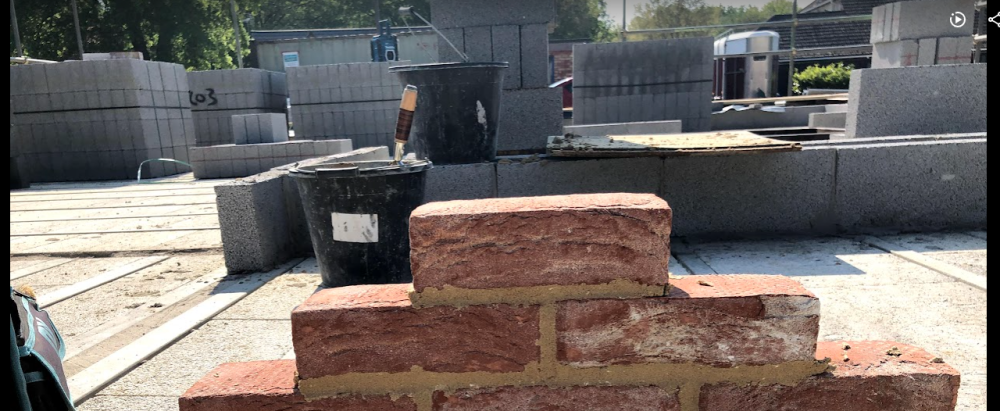
It's fine Our builder did the same, but did spread them out a bit. Not too many pallets on the same span of beams, and closer to the edges rather than middle. He did come and set the blocks out quickly though as he was keen to get a crack on. Not too many images of this but found one. edit: Reading George's post, I guess it depends on the type of block too, some weigh a bit less than others, maybe you could ask when they are likely to set out the blocks, Not sure I'd want pallets sat on there for weeks on end...
-
I've to core 5" holes through brick&block for the supply and extract, access externally is a bit tricky as it's about 5m up in the air. I plan on doing this from the inside out. I'm a bit scared of making a mess of the external brickwork, any tips? Also with the mind of doing the job right, I dont want to just wang the pipe through the wall stick the cowl on and leave it, what's an appropriate way to seal up and make an airtight seal around the penetration. Any products I should use to make a proper job of this? Curious to know what others do?