


Olf
-
Posts
315 -
Joined
-
Last visited
Everything posted by Olf
-
You've done good job with the floor, but what about the walls and roof? If they leak, you may not be lucky to experience short cycling. If your happy with larger temeprature swings, then you can try to set up controls for greater hysteresis, that way you heat for longer and then cool for longer (with the slab smoothing that to large extent) without need for extra space for buffer tank.
-
Small hole or big hole is a hole - I'd cut square pieces of airtight tape, pull the membrane and seal it. Do you actually have to pull the membrane, or is it where you want it? On the Tescon video (as far as I remember) they do staple, the assumption is well attached is airtight. Tears, cuts - again tape.
-
Lumi Plugin uses Cavius alarms in their spotlights, they should be compatible with the rest of Cavius range.
-
1930s Semi Detached - Rear Extension / Internal Alterations
Olf replied to Ynned's topic in Introduce Yourself
Have you considered extending to about 5m, so the whole kitchen fits in the extension? Then, if only opening the existing windows downwards to make access to the extension and gathering area, you completely skip the massive beam supporting the whole 1st floor. You get more floor space in the extension, more in the utility, and probably still keep the change. . -
1930s Semi Detached - Rear Extension / Internal Alterations
Olf replied to Ynned's topic in Introduce Yourself
Big enough to park 2 cars? What is the arrangament for drains in the new ensuite: it is partially over the stairs and I can't see any provision on the downstairs drawing. With so big bifolds the rooflights won't give too much extra light where they currently are, maybe move furter away? -
What is the floor finish downstairs? Do you know the thickness of floor insulation? Perimeter insulation (not 5mm lagging only) present? 30kWh of heat (or x COP, as you were quoting leccy use I believe) is dissipated somewhere each day, so the question is to find where. Can you use it to confirm flow and return temperatures, in case ASHP have sensor/wiring/mapping fault?
-
Why not to discharge to the void under brick and block? Or run the ducting in the void?
-
2x100mm : on top of what already mentioned handling of 100mm thick is manageable by 1 person, 200mm tough. Also (but this may be seasonal/regional) 200mm thick may cost more than 2x100 due to lack of popularity, and so may come with extended leadtime.
-
Wet ufh for new extension and adding to existing
Olf replied to Dazzer's topic in House Extensions & Conservatories
Unless you have to (in my case extension and other changes removed all the existing downstairs radiators with no sensible place for alternatives, ) or really want to (realising cost and disruption of taking up existing floor and making a new one appropriate for UFH) then forget it and install UFH in extension only. -
Can you try to reduce boiler setpoint? You should really work with as low as possible to reach your comfortable temperatures. As a bonus the efficiency will increase. I've dropped to 40oC (with standard radiators upstairs), if you manage to get somewhere there, the need for mixing valve may disappear.
-
I'd go with no 2 (cause that's what I did ) What is the function of ply here? Can you not fit the windowsill board on glue/foam directly on the membrane? Especially if you put some sealant between the membrane and the block work (as you should, only that will guarantee airtight interface between both), when you spread it (with roller) it bonds and you have effectively a rigid surface. If you do penetrate (can't avoid it in many places) then no drama, as the fitting itself should seal the hole, if you're paranoid squirt airtight sealant in the hole before fitting comes in.
-
The picture may be a bit misleading: 'device can vary its emissivity between 0.12 and 0.94. The device can also switch between solar heating mode (high solar absorptivity and low thermal emissivity) and radiative cooling mode (low solar absorptivity and high thermal emissivity) by controlling the optimal electrodeposition morphology for surface plasmon resonance. The optimal solar absorptivity (α) and thermal emissivity (ε) of solar heating and radiative cooling mode are (α, ε) = (0.60, 0.20) and (0.33, 0.94), respectively' So the energy it uses is not the heat in/out of the building, it merely tunes the surface to be reflective (tin foil) or not - kind of LCD on steroids. Being tunable beats all the passive solutions (like reflective paints - or absorbing surface if that is preferred), that provide benefit in one seasonal/daily cycle, but become part of a problem in the other. Will it be commercialised? We will see.
-
More details needed: it sounds like you have mix of rad(s) and UFH. Apart from plumbing (specifically temperatures and flows in such setup), you need to think how to control it. Combi is not a big issue here, I use the existing for UFH downstairs and rads upstairs and it is ok.
-
Just came across this development: Ultra-Wideband Transparent Conductive Electrode for Electrochromic Synergistic Solar and Radiative Heat Management
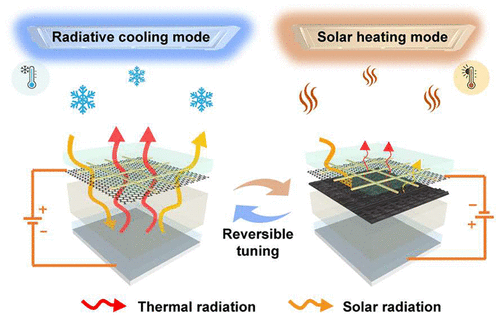
-
Nope. 'Sewers which were private before 2011 but are shared with more than one property, have now become the responsibility of the sewerage company for maintenance – and these may not be revealed on the maps provided with the search' was the extact wording form my searches. Translated from legalese: They have no idea what is in the gardens .
-
@saveasteading I'm not the OP, just being called by @Onoff trying to gently respond that Eton education does not guarantee fluency in buildingese. Imho @Iceverge provided a solution, so for me EOT
-
Hell no! You seem to know what you want, so you can make the sketches yourself. If your builders will be anything close to what I experienced, they will ignore the drawings anyway, verbal communication with multiple repeats being the only way (which highlights the bonus of DIY - you know exactly what you want and how). You will need a structural engineer though, for the foundations at minimum. He/she should be able to give you necessary information. You can inquire local folks now, they should have good idea of local ground conditions - few hundred spent at this stage may save thousands potentially wasted later. Some also can provide drawings for BC or direct to a technician doing that - of course that is the area you can DIY and with good SE taking control of the details, you save money upfront and time (and money) later. I was glad not to have architect in the loop on occasions where quick decisions were required, but honestly could not cope without SE. And triple check the drainage - location of ours wasn't obvious, and when found it (bang on in the middle of planned extension) it was a nasty shallow, low slope pipe. Low slope meant diverting was not possible, shallow meant complicated and limiting foundations/floor structure.
-
After my extension experience: - excavations for foundations: you can try yourself on hired digger, I was happy to leave it to the builders because of site layout and ground conditions - foundations: I used premix so with 30min pour the time was of the essence, I left it again to professionals to get the level straight. - blockwork: something that can be done by a DIYer - joists: definitely DIY - roof: considering it is pitched and must merge with the existing building, working at height and slope I'd leave it to a roofer - internal finish - all yours To the main question: try to figure out ground conditions (there may always be surprises, but you will get an idea) for foundation cost, check for drainage location and levels as you need to connect the kitchen and ensuite, and there might be some drain close to the building requiring moving/building over. These 2 factors added a lot extra to what I hoped for. From the ground level on you can get accurate figures, with 2nd storey costing you next to nothing in the grand scheme of things, as foundations and the roof would have to be done anyway regardless of the height.
-
And I'm stressing out that airtightness for buildings is not equivalent to vapour barrier. Similarly to 'flat roof' having a slope, which surprisingly surprises some people.
-
None I'm afraid. Liquid (and fabrics) airtight membranes provide level of vapour permeability ('intelligence' in marketing blurb), but that comes at a premium. Otherwise timber frame buildings would be stapled with polyethylene DPM all round - and then rot... Depending on the size of the area and potential for condensation/evaporation on the other side you may as well get away with bitumen or similar stuff - it will just block all the moisture migration, either direction, with all the consequences.
-
That's not active use - the stuff will be as happy on top of rigid boards as if it was directly on the floor. Walkways would be active use, a layer on top to spread the load and protect the insulation boards would be a good idea, even a sheet of OSB or plywood will be more than enough. The only challenge is at the eaves: with rigid boards that means messy cutting to follow the roof slope (though it can be done outside, if taking advantage of wind direction it may be a non-issue), remembering to leave some gap for ventilation. Also rigid boards will be pricier than wool, but will end up cheaper solution when considering lifting the floor, and they will also save some headroom (100mm PIR gives the same effect 200mm wool). Added bonus is reduced draughts (especially if all the joins treated with aluminium tape) and reflective surface reducing heat absorption on sunny days (and to lesser extend wasting heat escaping the house in Winter). Depending on where you live, there may be plenty of offcuts available locally (via ebay/gumtree/facebook etc) and it can be done on budget - that's how I got my pieces, both parties were happy as I had them for pennies, the guy saved on a skip.
-
All the manufacturer's detail's I've seen asked for both. Even though in beam and block it is debatable how much damp can cross the air gap underneath Yes, the top layer over insulation, including perimeter (if rigid used, not the thin lagging) - those stripes are light and set free immediately, don't ask how I know
-
How to fix timber wall plate to heavy duty steel lintels
Olf replied to WWilts's topic in RSJs, Lintels & Steelwork
+1, I had to change my design because of that: Catnic lintels strength comes largely from the masonry within and on top of it. I ended up with masonry hangers, that allowed for the same height but extra row of blocks as required -
Weight of the screed should stabilise the boards The blocks should have been treated with mortar to bind the structure and level it, have you done that?
-
https://www.toolstation.com/radondpm-double-sided-butyl-tape/p20591 When I ran out of Visqueen branded I got this in a hurry - apart from lack of a label it looks, feels and works like the branded one, at considerable discount. Though it will not hurt is you wipe wet both bonded surfaces, dust on the build is inevitable and does not help when it comes to sticking things together


