Olf
-
Posts
315 -
Joined
-
Last visited
Everything posted by Olf
-
Check with your council planning team - in my case the planners flagged demolition of my garage. I'm pretty sure it was out of scope, but it looks like a way of charging some quids for offical explanantion. Still, in grand scheme of things it would be peanuts. As for the destruction job itself BC will not be necessary, but do think about any changes to the main building that will be the result (door, heating, electrics, plumbing, wall insulation etc), something may surprisingly fall under the regs.
-
Toilet pan to be located directly above main soil pipe (running at small gradient under the floor) Builders don't give a sh!t and claim normal 90° junction (pictured on the left) will do, but when I imagine it, any (semi)solids will splash equally in each direction and some have chance of remaining upstream from the junction. My thinking is 45° bend + 45° junction (on the right) is superior, as will change the vector of the attack from vertical to horizontal, and so direct the impetus goes where it should. Fellow thinkers welcome to contribute

-
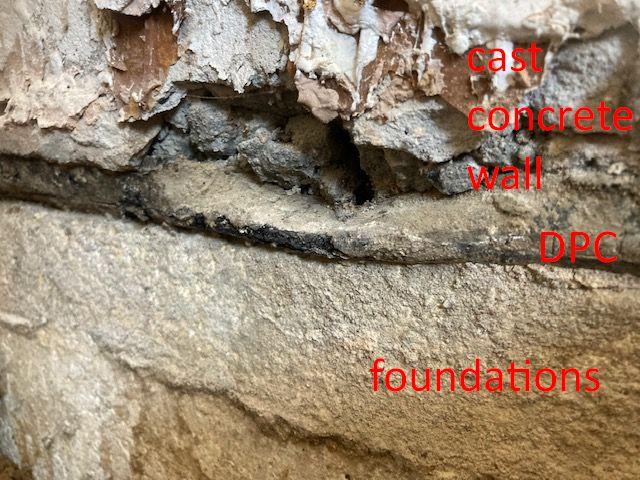
No such luck, it is trimmed along the walls: There seem to be pleanty of bitumic liquid damp proof mebranes, but they are intended to be painted on the surface only. I'm not sure how will they work if poured between the old DPC and the new black sheet with intention to seal the gap however big it may be... 'Bostik Bituminous Mastic All Weather Trowel For Roofs' looks like what I need, though specifically mentions 'roofs' in the name, so I'm a bit cautious.
-
SE requested to use Gen1 as blinding layer over the hardcore. The builders say that to fill the gaps it will be a runny mix and it will take weeks to dry before rigid insulation can be put on top. I argued that concrete sets, not dries, but they may be right in this case, as with excess water that cannot be bound chemically, it needs to evaporate. Is there any admix to speed up floor readiness, or is dehumidifying my only solution?
-
The existing flloor had a layer of bitumen at FFL (over the slab) linking with wall DPC. This is slightly different material, about 5mm thick and a bit flexible, looks like roofing felt. On the floor was about 10mm of solid black stuff. Anyway, the floor is taken up, new DPM will be laid on the blinding layer and I'm thinking how to join it with the DPC: it is trimmed along the wall, so no chance to use any tape. I'm thinking there must be some mastic type solution that woul glue the 2 together and provide reliable seal all round - but can't quite find such. Any hints?
-
Better than what? Spec says 0.034 W/m·K, standard value for polystyren based rigid insulation For the same money you can get PIR backed plasterboard, and that is better than XPS. Apart from tiled areas I can't see any reason to use Multiboard
-
Which exactly Marmox product are you planning to use and why?
-
I'd keep v1, reverse stairs orientation: you get direct access to the kitchen as wanted, quicker link to the utility/car )shopping) and storage (shoes, shoes an maybe more shoes) under the stairs. Additionally you do not open 'an invitation' to go upstairs to any visitors standing in the entrance.
-
Air source heating, how far does it run in a loop?
Olf replied to saveasteading's topic in Underfloor Heating
I usually see 100m value, but regardless, it is more a rule of thumb than an actual physical hard limit. Pipe diameters, layout (number and radius of bends), number of loops on the same manifold and pump capability are all factors affecting the actual performance. -
How to convince BC that slab not needed on the hardcore?
Olf replied to Olf's topic in Floor Structures
Yeah, I realised already that the whole build process under the bonnet is risk/insurance exercise and becomes effectively a choice of what BC is happy to accept within fee, and what needs to be paid extra so the SE is happy to take it on his policy. Anyway, my optimistic version needed digging 375mm below FFL, BC textbook solution needed 525 mm (extra 150mm, out of that 100mm extra concrete layer), luckily SE was happy to support my suggestion of using passive slab, so I'll end up with 450mm to extract (half way between the two options, proper compromise) and will save me time and money on screeding, so I'm reasonably happy. Thank you for your contributions! -
Perhaps incidental heating contributes enough to skew the result. In a perfect 'passive house' it would contribute 100% and give COP of infinity
-
How to convince BC that slab not needed on the hardcore?
Olf replied to Olf's topic in Floor Structures
Cheeky! But will check exactly what was agreed with the builders. The guys are on my side, they’re happy to give up extra cash for a chance to end back breaking digging asap. -
I'm taking up the floor to fit UFH, proposed structure: 75mm screed with pipes over 150mm PIR over 150mm compacted hardcore > builders wanted to beef it up by using 100mm hardcore and 50mm concrete topping. Existing floor slab was lying happily on the soil for the last 70 years. All dug up, BC comes and says he wants screed on PIR over 100mm concrete slab over sand blinding layer over 150mm hardcore I would be happy to swallow extra hardcore thickness, but 100mm slab is imho an overkill for both the subsoil condition and loads above it. And most of all adds extra 100mm of digging up (tough one, in the well compacted soil) and extra time to pour it. The guy seem to be coming from a very cautious school (adding lintels above 110mm soil pipe that will go UNDER the existing foundation is another of his wishes, not sure yet how I am going to stick them from underneath). What guns can I use to convice him? Or is SE my only hope, effectively taking the responsiblity on his insurance so BC can wash his hands off?
-
Freeholder withholding consent for alteration
Olf replied to bupieker's topic in Surveyors & Architects
Write to your BC, as they might be involved anyway. If they’re happy and you either can get letter or actual application (if necessary), you get all you need to challenge the ‘unreasonably withheld’ opinion. -
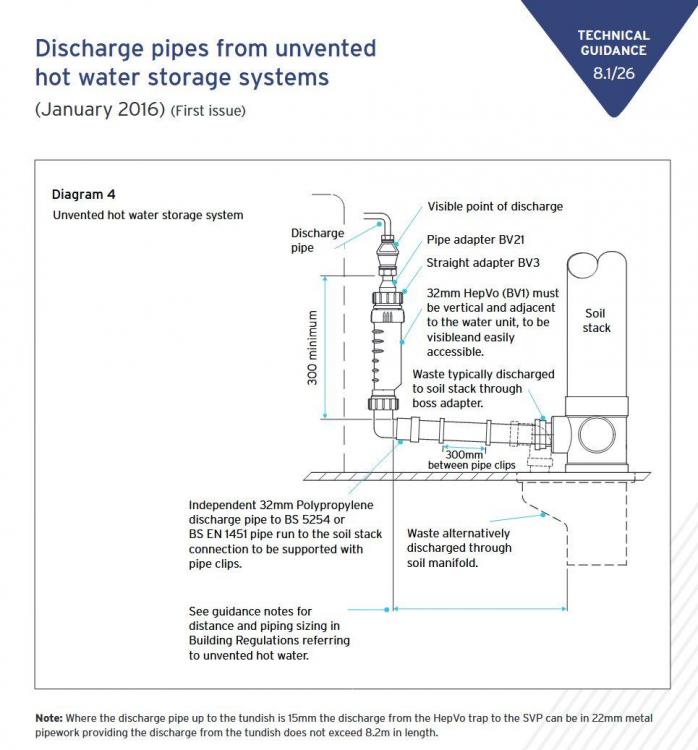
Floplast say: ' Working Temperature: Soil and Waste systems may be used to carry liquids when subjected to a continuous flow, with a maximum temperature of 76°C. Intermittent discharges of up to 100°C may occur, provided that a duration of less than two minutes is observed. ' I think I'm overreacting: with UVC fed indirectly from boiler (and later ASHP) and immersion heating only used to scavange excess PV generation or as a backup, chances of temeprature reaching level to cause escape of boiling water are essentially zero. And should that ever happen, I may possibly have bigger problem than worrying if the pipework was happy with such a surprise.
-
That was just a folly, on the second thought got rid of it I found an NHBC guidance that suggest: 'The discharge pipe and fittings should normally be metal. Alternatively polypropylene pipes and fittings, as described below, are an acceptable alternative material. Polypropylene pipes and fittings should be marked to either BS 5254 ‘Specification for Polypropylene waste pipe and fittings’ or BS EN 1451-1 ‘Plastic piping systems for soil and waste discharge (low and high temperature) within the building structure’. The pipe should be marked with the following at max 1M intervals' Need to check if I can find such certified 110mm waste pipe. They use standard tundish and waterless trap, I'm plannig to simplify by using Hotun
-
I'm on a version n+1 of the layout, basically everything mirrored, so all the connections can be done inside the new stud wall, rather than by chasing existing cast concrete. This though moved UVC location and access and now the drain from relief valves is a bit harder to set up. Incidentally the main 110mm pipe will be running right underneath: My idea is to come out with equal junction and then 110 to 50 or 32 mm reducer, but I'm missing here some trap, and one that wil be capable of accepting boiling water should temperature relief got activated. Any ideas?

-
Me too. Make a gully, add a garden tap above (fed from the sink supply) and disaster turns into success
-
Solicitor should not be required as nothing changes in the documents. I've had similar situation, housing association is entitled to enforce the covenants, wanted both planning and building permission and charged £300 for kindly not objecting. A lot to do with neighbours: if nobody reports, you'll be fine, but if the cost of such consent is reasonable, it saves trouble at the next sale transaction.
-
This may help explain the problem: https://www.heatgeek.com/low-loss-headers/
-
I think I can remove the UFH drain branch - for the rare (I hope) moments it is needed I'll ask washing machine to share both supply and drain.
-
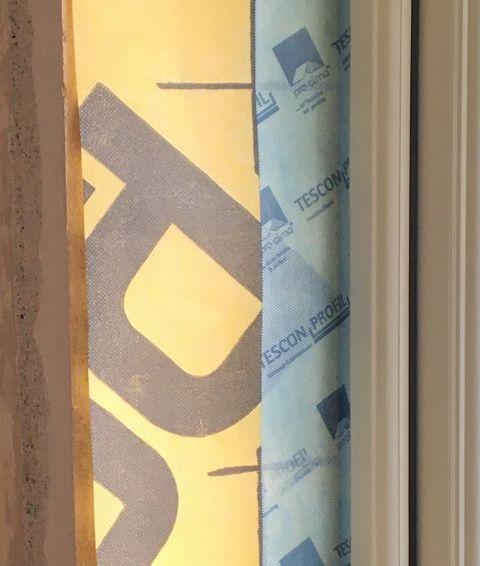
The latter I'm afraid Another scam scheme like most of other self certifications, result not worth the paper issued, but not having one makes you the bad one ? I fully agree with @tonyshouse, fixing the gaps around the windows brough immediate difference, it is just bitch to do and so annoyance that it could have beed done right first time much easier. I'm also interested how is it performing now, espcially the caulk used as sealant? I used modern materials to fix, though their much dearer:
-
Well qualified Fensa registered professional installers are of the opposite opinion, even use of expanding foam was breach of their high standards in my case: IMG_8212.MOV
-
I'm in week 12 of my saga with Catnic, so would suggest to look elswhere. I can see no reason why concrete lintel would be worse than steel in this case, frankly concrete you can cut to form a flat base, it is harder for me to imagine shape of rolled steel lintel in that place. Either way, job for SE to make it work. Unless you have the window ordered and you are sold on the feature, have you considered going normal rectangular window route?
-
Are structural calcs required to produce building reg drawings?
Olf replied to 3smees23's topic in Surveyors & Architects
Both, neither. Clarify what exactly each one of them needs, as definitely not all the drawings. SE will need dimensions and concept to do the calcs, draftsman can then adjust the design to accomodate requirements (though if that designer was any good, the initial design should be sensible enough to not need any)