Gone West
-
Posts
4521 -
Joined
-
Last visited
-
Days Won
19
Everything posted by Gone West
-
We don't have one, although Wendy would like one to fluff up the towels, like we did in our last house. We hang up our washing in the wetroom and it dries very quickly.
-
If your house ground floor is built as the drawing then it looks like you have 100mm Styrofoam Floormate 200X. This has a thermal conductivity of 0.0278W/mK, which is good although it would be better if it was thicker. It doesn't appear to be manufactured any longer. The 200 in the name relates to the compressive strength and the X to the blowing gas which was a type of HFC which is no longer used. With UFH you will be losing some heat to the ground and if the rest of the insulation in the house isn't very high you will have to run the UFH at a higher temperature to offset the losses.
-

Don’t pay your trades up till they have finished
Gone West replied to nod's topic in Floor Tiles & Tiling
I hate wall tiles. Just saying. -
Looking at their website they don't seem to mention ground floor U values, just wall values for different stud sizes. U Value Options (Brick & Block Cladding) Stud Size V-U-T Std Kit 140mm 0.15 0.25 184mm 0.13 0.21 235mm 0.11 0.18
-
Do you know what type and thickness of insulation you have under the UFH pipework.
-
Hi, welcome to the forum. You could try having the heating on in the wet rooms all the time which would also create a more comfortable environment in those rooms. We heat the whole of our house to 23C with just the towel rails in the bathrooms.
-
Looking at your picture it looks like it's a cavity wall from the brick bonding. Our last house was late Victorian cavity wall with vents.
-
Lots of interesting stuff on the OpenEnergyMonitor site. https://community.openenergymonitor.org/t/integrate-a-openevse-charging-station-with-a-9kwp-solar-system/11018
-
Whether to put in electric ufh in the bathrooms?
Gone West replied to Pete's topic in Underfloor Heating
Our wetroom has only an electric towel rail and MVHR and dries very quickly. We also dry our washing in there when we can't hang it outside. -
That's really crap. I lost faith with Gumtree last year after some scamming buyers tried to rip me off. I don't use it any longer.
-
That sounds like a good setup for a well insulated floor. I like hearing about more simple systems. AIUI normally with a gas boiler there is a buffer tank to prevent short cycling and blending valves etc. How did your plumber get around those problems?
-
Of course when the floor is well insulated then the losses will be less. As the level of insulation decreases the losses increase and then the floor temperature will have to be higher to counter the losses. As long as people are aware that UFH should only be acceptable with a well insulated floor and isn't always the most suitable form of heating. Then of course there are the costs to be considered. Not everyone is willing or able to install their own ASHP and UFH components and it can be an expensive exercise to provide the small amount of heat required in a well insulated house.
-
We have 300mm insulation under the concrete slab and warm air heating which keeps the house at 23C. The slab is always going to be very close to 23C unless of course the sun is shining on it when it can be warmer. With bare feet it will feel cooler because we have porcelain tiles all over the ground floor but if you had for instance cork tiles it would feel warm. I disagree. UFH is an inefficient way to heat a house. However much insulation there is under a slab a certain proportion of the heat is lost to the ground. I agree it has advantages over radiators in freeing up wall space, but there are alternatives.
-
Hi Rod, welcome to the forum. Sounds like you're getting well stuck in. Good luck with the rest of the project. Plenty of blogs on here to give you some ideas.
-
Yup.
-
As some will know we use a Genvex Combi 185LS compact unit to provide DHW, ventilation and warm air heating. This unit is ok in our small house but there is now an Austrian company producing a larger version with two EASHPs and a larger DHW tank. It will warm or cool air with one ASHP and heat water with the other. Don't know the cost, but probably high. Pichler PKOM4 Combi Unit.pdf
-
We had the first Isoquick installation in England and it is a very simple system. It can only get spoilt if the concrete is badly laid. See my blog for details . I can't see any reason it can't be done DIY.
-
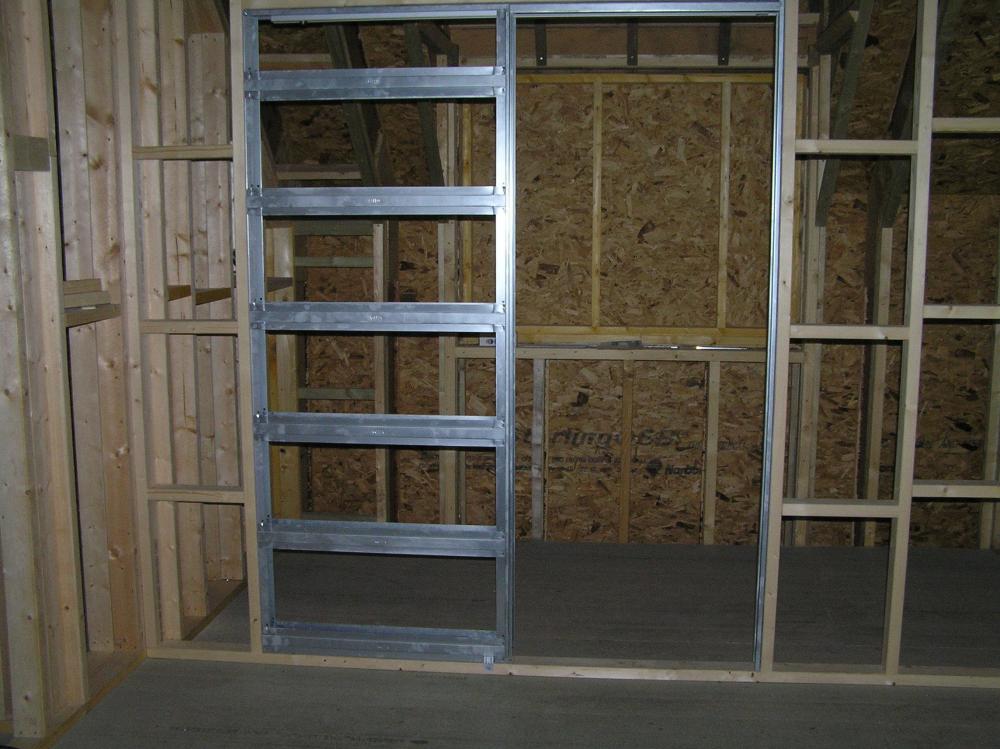
I'm pretty sure there should be some form of anti-slam on the jamb. Glass hitting metal isn't going to end well.
-
Is it a Septic Tank or just an old Cesspit?
Gone West replied to Dave and Helen's topic in Waste & Sewerage
Probably, at some point, had a hole knocked in the bottom to let it soak away. Seems a common practice. -
Isn't the white cover there to hide the screws and act as an anti-slam device? Unless I'm seeing it wrong. On mine there is a vertical foam rubber strip for anti-slam.
-
Borage is a great herb to grow although if the conditions are right it can take over a little by self seeding. When I were a lad living at Wrotham Heath it used to grow wild in our back garden and regularly had slow worms and adders in amongst it. We grow it because the bumblebees love it.
-
I've not seen the frameless version. As @Barney12 did, I just screwed the jamb to the stud with roundhead screws.
-
IIRC when I fitted mine many years ago there was a metal lip on the edge of the frame that the plaster board slid behind. They may well have changed the design since then though.
-
We found out that the only operation OpenReach will carry out for nothing is an overhead line removal. We had our line removed before we demolished our old bungalow.
-
We've got horseradish growing wild in the verge opposite our house. It's been there for years and keeps spreading. I certainly wouldn't want it in the garden.