


Gone West
-
Posts
4668 -
Joined
-
Last visited
-
Days Won
20
Everything posted by Gone West
-

the windy roost Poly (carbonate) Tunnel
Gone West commented on Jenki's blog entry in The Windy Roost
Well done. I looked at the Polycrub Opyl as a shed but was put off by the price and the fact the walls weren't vertical. You've done a good job, bet you're pleased with that. -
Well I wouldn't, just because if there was a fault with the seal there's more likelyhood of a leak. I always think of things like that though and I don't know how often it would ever happen.
-
Do foundations look right on house purchase?
Gone West replied to HazG's topic in House Extensions & Conservatories
How does the area of the concrete slab compare with the planning drawings. -
Yeah, I'd certainly do that.
-
If it's lasted three years since the last time it was emptied why do you want to go to the expense and hassle of fitting a new treatment plant? At our last place we found the treatment plant needed to be emptied more frequently than the septic tank. The treatment plant does definitely produce cleaner effluent but the capacity for solid waste is less than a septic tank.
-
I moved eighteen months ago but I'll see what I can find.
-
When I last posted this picture you indicated that you liked it. Has anything changed?

-
I used Floplast for all my drainage. I also had an account with Jewsons for the build and they gave me a complete list of everything they sold with the discounted price.
-
Thanks. I used Hep2O when it first came out in the early nineties and the mark one version was crap. The mark two version was also crap so I moved onto JG and it was a lot better so I've always used it. I'm sure Hep2O has improved a lot since I last used it but I've never had any problems with JG so I keep using it. I think it's better for DIY users like me because there's no doubt if you fit the collets, then the pipe is fitted correctly.
-
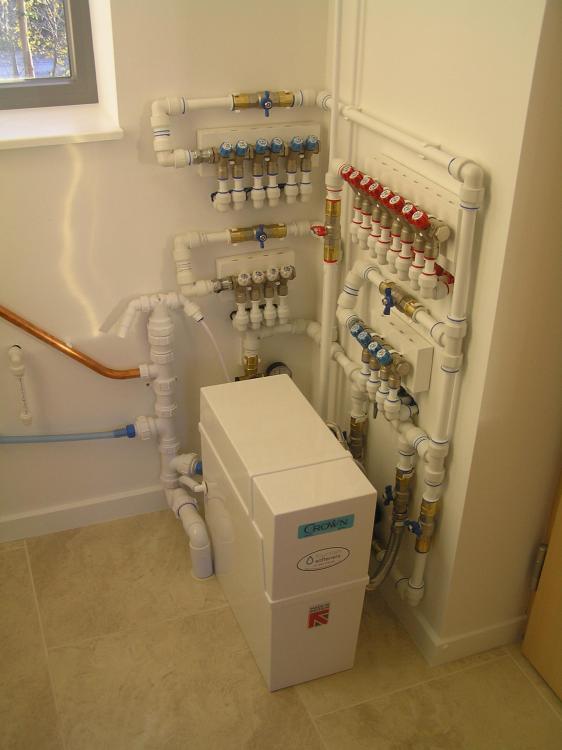
I designed a manifold system and used plastic pipe, never done it before but it worked out ok.
-
Rigid plastic ventilation ducts - what type of duct sealant (if any)
Gone West replied to TimCx's topic in Ventilation
I used PU gel glue on my fittings as I wasn't sure that the plastic was suitable for solvent weld as it was more flexible than ABS type plastic. -
Rigid plastic ventilation ducts - what type of duct sealant (if any)
Gone West replied to TimCx's topic in Ventilation
My rigid plastic duct was also glued together, and I only used aluminium tape as well on awkward fittings.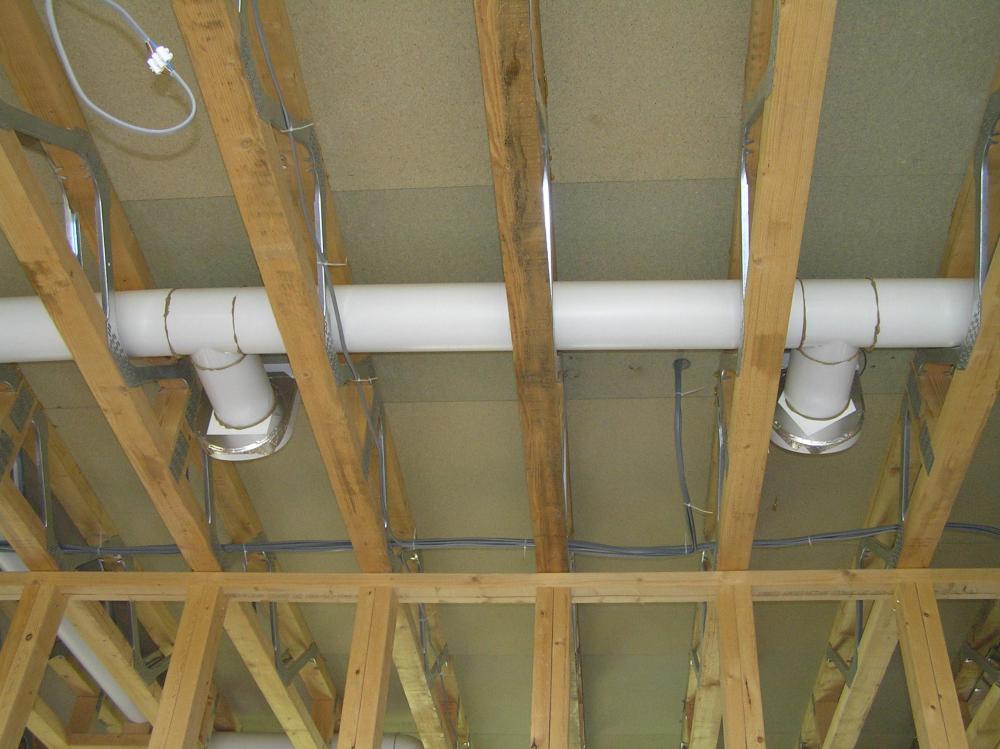
-
No I don't disagree. I think your comments about it being a timber frame and therefore has dried out is more or less correct except possibly the concrete floor which maybe has never dried out fully and the plasterboard which will hold a certain amount of moisture, I don't know. It's the solution, which unfortunately you aren't able to carry out, which is to drive the moisture out, by heating the fabric of the parts of the building affected. Having the doors open all the time when the outside humidity is high will not improve the situation unfortunately. I guess this is just the time of year when the conditions are at the worst for you.
-
Had to heat my place up to 23C continuously for months to get it to dry out and then the RH dropped from the 70s to the 50s. I think keeping it warm is a little more important than ventilating it.
-
Any Reasonably priced solar diverters?
Gone West replied to Barryscotland's topic in Photovoltaics (PV)
Is that why the instructions for my Solar iBoost says "Solar iBoost+ has a default cut in threshold of 100W of export before diversion commences." I wondered why. -
I find it strange as well. My prices don't include the £400, which is a six month, one off grant, and not connected to the price cap.
-
I can't see anything on the Ofgem website switching page that indicates you can't switch supplier.
-
I stopped paying by monthly DD because they were messing me around so now pay quarterly by DD paying off the whole bill. I therefore don't lose the DD discount.
-
Is this for your own house? Seems very high compared to my new prices with SSE. Currently standing charge 51.62p, electricity 28.41p. From 1st October standing charge 52.64p, electricity 33.86p. I'm also in Cornwall on quarterly billing so there must be something wrong.
-
Assistance for oil burners
Gone West replied to Gone West's topic in General Self Build & DIY Discussion
Just checked and it doesn't mention NI. https://www.moneysavingexpert.com/utilities/cheap-heating-oil/ -
Assistance for oil burners
Gone West replied to Gone West's topic in General Self Build & DIY Discussion
It was on the Martin Lewis money tips website. I will check but I thought it was UK wide. -
Assistance for oil burners
Gone West replied to Gone West's topic in General Self Build & DIY Discussion
My guess is you will have to register with a supplier who will give you a voucher/discount so no cash is involved. As you say plenty of scams with cash. -
It would appear that the government is going to help households that use oil for heating, to the tune of £100, on top of the £400 already allocated for gas/electricity. As yet there aren't any more details as to how it will be paid, but I guess it would have to be a voucher scheme for households registered with a supplier.
-
The point is that Zoot seems to think that any house in his area will always be cold and damp. He said "LOCALLY-specific (not house-specific!!)", whereas I think a PH will function as a PH in his area.
-
Yes it's weird to think that my old PassivHaus would no longer function as a PH just because I built it in a different place.




