


Fallingditch
-
Posts
217 -
Joined
-
Last visited
-
Days Won
1
Everything posted by Fallingditch
-
 I was going to post a question on here about how to diagnose a radiator which had ceased getting hot, when I realised the question had probably been addressed in another place. Thanks @Nickfromwales Posted 06 October 2013 - 07:02 PM Hello, I've got a towel radiator in the bathroom which has been cold for ages. We've had a plumber out who managed to get it working a while back however come the colder season we've put the heating on and noticed it's back cold. Initially I presumed the radiator was just full of air so bled the radiator. Air came out so I just assumed that was that. I topped the boiler up to maintain pressure. Unfortunately, that never really fixed it so I've been fiddling with the two valves at the bottom thinking one of them may have been turned off by accident (caught a towel on it or something daft like that) but to no avail. Another thing I've noticed is that the pressure has gone up again today after I bled the radiator (no air this time, was just trying to see if there was a constant flow of water which there wasn't!). I'm assuming that maybe there's some air in the system which has just 'expanded' with the heating being turned on. Anyway, I'm completely baffled by this. Any experts out there with any idea? Or can at least tell me which valves to fiddle with as they both seem to do nothing?! Thank you in advance #2jntabbycat Posted 06 October 2013 - 07:12 PM I had a similar problem with our towel radiator. Every other radiator was working fine except the bathroom one. I turned off the radiator after the bathroom one (the bathroom was second to last in system) and bleed radiator until tails were hot (meaning heat is getting in to it). I was actually told to turn off every radiator but the problem one but This would mean balancing the whole house again so just turned off radiators after the problem one in. Im no plumber but hope that helps. If that doesnt work I have no idea Posted 06 October 2013 - 07:16 PM I'm assuming that this system has a combi boiler (from the mention of pressure). The pressure rise would be normal if it's jut between the system when it's cold and when it's hot (mine increases pressure from about half way up the normal pressure range to about 2/3rds of the way up from cold to hot). The chances are that either the system needs balancing or that the system has crud in it. If it's an old system that was working OK then the latter is a strong favourite. To test things out, shut off all the rads except the towel rail, turn the heating on and see if it heats up. If it does, then the system may need balancing, if it doesn't, then the system has crud in it and needs flushing. #4222 Posted 06 October 2013 - 08:10 PM jntabbycat, on 06 October 2013 - 07:12 PM, said: I had a similar problem with our towel radiator. Every other radiator was working fine except the bathroom one. I turned off the radiator after the bathroom one (the bathroom was second to last in system) and bleed radiator until tails were hot (meaning heat is getting in to it). I was actually told to turn off every radiator but the problem one but This would mean balancing the whole house again so just turned off radiators after the problem one in. I’m no plumber but hope that helps. If that doesn’t work I have no idea jsharris, on 06 October 2013 - 07:16 PM, said: Welcome to ebuild. I'm assuming that this system has a combi boiler (from the mention of pressure). The pressure rise would be normal if it's jut between the system when it's cold and when it's hot (mine increases pressure from about half way up the normal pressure range to about 2/3rds of the way up from cold to hot). The chances are that either the system needs balancing or that the system has crud in it. If it's an old system that was working OK then the latter is a strong favourite. To test things out, shut off all the rads except the towel rail, turn the heating on and see if it heats up. If it does, then the system may need balancing, if it doesn't, then the system has crud in it and needs flushing. I've just turned all the radiators off bar the bathroom and also bled them all. All have no air in them. Interestingly, when I went to bleed the bathroom again, the water pressured dropped so much that water stopped coming out after a couple of seconds. The heating has been on for a couple of hours and the little bit of exposed pipe below still feels cold. This suggests to me that the hot water isn't reaching the radiator? Anyway all radiators are turned off bar that one with heating still turned on so I'll let you know if there's any change. Thank you both for replying so quick. #5jsharris posted 06 October 2013 - 08:32 PM Sounds like there's a lot of air in the system that's now been forced into the towel rail. I'm assuming that you've topped up the system using the filling loop to get the pressure back up, but am a bit concerned that the pressure would drop so low from just bleeding a towel rail. This suggests that the pressure vessel in the boiler (or elsewhere in the heating circuit) may have lost charge pressure. Worth checking, as the pressure vessel should be able to hold the system pressure over a reasonable range of change in volume. It may even be that the diaphragm in the pressure vessel has failed, allowing a lot of air into the system. You can check the pressure vessel if you have a car tyre pressure gauge and a suitable pump ( a bike pump with a Schroeder valve adapter will do). The procedure is to drain the system down to zero pressure and check the pressure in the pressure vessel with the car tyre pressure gauge (you should see a valve on it for this purpose). The pressure vessel will typically have 1.5 to 2 bar in it (the boiler manual will tell you the pressure). If it's reading less than the correct pressure, then pump it up with the bike pump, check it, then refill the system using the filling loop and valves. Keep an eye on the system pressure, as it shouldn't change much, just go up and down a bit between hot and cold. If the system needs refilling from time to time the get the pressure back then it has a leak somewhere and this should be found and fixed. #6222 Posted 06 October 2013 - 09:46 PM Just had a quick fiddle with the two radiator valves with the air vent open and I've managed to get water coming out at pressure. All other radiators off still. Strangely, the water is cold though? (Boiler pressure seems normal.) Have had some issues with system thermostat this evening so perhaps purely coincidence and boiler has turned itself off. Would still have thought water would still be warm in pipes. Will have another look tomorrow. Thanks #7Nickfromwales Posted 06 October 2013 - 09:47 PM Hi, Sounds like first thing to sort is the valves on the towel rad. You mention fiddling with them so how about at least confirming that they're fully open? Turn both valves fully anti-clockwise, untul they stop, then close them fully (clockwise) and count the number of turns. Then open them again (anticlockwise), and make sure it’s the same number of turns as needed to close them. This will prove if you have a knackered valve stem which isn't actually opening or closing the valve internally, as the number of turns between open and closed position should be the same. Flow to a towel rail is usually the cause of other rads not working as they offer little or no resistance so they often cause bypass issues, the exact opposite of your symptoms! How old is the Combi, maybe your pumps on its last legs? And how long do all the working rads take to get warm from the time you turn the heating on? #8Nickfromwales Posted 06 October 2013 - 09:49 PM 222, on 06 October 2013 - 09:46 PM, said: Just had a quick fiddle with the two radiator valves with the air vent open and I've managed to get water coming out at pressure. All other radiators off still. Strangely, the water is cold though? (Boiler pressure seems normal.) Have had some issues with system thermostat this evening so perhaps purely coincidence and boiler has turned itself off. Would still have thought water would still be warm in pipes. Will have another look tomorrow. Thanks My reply crossed with yours. As I thought, your valves were slightly or fully closed, hence no air/water coming out until you 'fiddled' again :-) #9222 Posted 07 October 2013 - 05:47 PM Nickfromwales, on 06 October 2013 - 09:47 PM, said: Hi, Sounds like first thing to sort is the valves on the towel rad. You mention fiddling with them so how about at least confirming that they're fully open? Turn both valves fully anti-clockwise, untul they stop, then close them fully ( clockwise ) and count the number of turns. Then open them again ( anticlockwise ), and make sure its the same number of turns as needed to close them. This will prove if you have a knackered valve stem which isn't actually opening or closing the valve internally, as the number of turns between open and closed position should be the same. Flow to a towel rail is usually the cause of other rads not working as they offer little or no resistance so they often cause bypass issues, the exact opposite of your symptoms! How old is the Combi, maybe your pumps on its last legs? And how long do all the working rads take to get warm from the time you turn te heating on? Regards, nick. The valves do seem a bit dodgy, in that the turns aren't always equal. Sometimes it feels like you're just turning the knob and not the valve, ie it feels like it's not 'biting'. I'm pretty sure at least one of the valves is open though as the water comes out of the bleed vent with pressure, however with the heating on the water is still cold? I have one other rad turned on and that is hot. I don't get how the bathroom one is stone cold when the water is clearly coming out with pressure?? The boiler was replaced with a Worcester Greenstar junior in mid 2007. When all the rads are turned on they take about 10/15 minutes to all warm up. Thank you Edited by 222, 07 October 2013 - 05:47 PM. #10Nickfromwales Posted 07 October 2013 - 05:55 PM Don't confuse pressure with flow rate ( circulation ). You can have pressure in one pipe only and you'll still get water out of the vent, and the same if its only on the other pipe as the flow and return circuit are linked at the boiler. Your problem is not pressure related, its flow and return circulation related. The valve that turns and turns is probably a dummy valve which gets set to the correct number of turns ( balanced ) and then the cap gets fitted after to stop people from turning the wrong valve for on & off purposes. Take the caps off the valves and actually turn the stems to prove operation as per my previous. #11jsharris Posted 07 October 2013 - 06:25 PM I think Nick's right, the LSV (lock shield valve) on the towel rail may well be closed. LSVs are internally the same as ordinary valves, but the cover is locked and doesn't turn the valve spindle internally (hence the name) you need to unscrew the cover from the LSV and turn the spindle fully open (using a spanner or the knob from an ordinary valve). It's also possible for the valve sealing washer inside to get stuck in the closed position, with the valve shaft getting disconnected so that turning it doesn't do anything. #12Nickfromwales Posted 07 October 2013 - 06:39 PM :-) It doesn't turn the spindle, but WILL turn infinitely. Hence my asking to confirm stop point and number of turns. The boilers a good un, and should deal with any pipework setup 22mm/15mm/10mm etc so I think opening these valves will sort the prob. Only open the lsv half way though, or you may experience problems elsewhere like downstairs rad far from boiler slow/not heating. The term balance is what your going to have to strive to achieve for correct operation, so no more fiddling lol, calculated adjustment is the new term for it :-))) #13222 Posted 07 October 2013 - 06:57 PM I have removed the covers and turned as so: IMG_0872.JPG 50.86K 2 downloads Rad still cold after 10 mins. Thanks #14Nickfromwales Posted 07 October 2013 - 07:17 PM Tough nut to crack this one, but we'll get there. I’ll assume that the bathroom is on the first floor. Close ONE side of every rad upstairs, if TRVs ( thermostatic rad valves ) are fitted, set these to * or 0, you don't have to touch the LSV (lock shiled valve) on the other side. Next, with the boiler lit and burning for central heating, pressurise it to 2.5 bar and go to the towel rad. Close the left hand valve by turning it clockwise until it stops turning. Open the vent and let out water until the water is hot, not cool. Re pressurise boiler to 2.5 bar and go back to towel rad. Open the left valve and close the right. Open the vent and let out water until the water is hot again. Upon getting hot water, open the right valve up immediately and check results. If there is a rad right by the boiler, turn that off too, as those closest to the boiler often steal the lions share of the pump potential. Give that a go, as that will purge, or pull through any air lock on the pipework to the TR. Edited by Nickfromwales, 07 October 2013 - 07:17 PM. #15Nickfromwales Posted 07 October 2013 - 07:24 PM Just out of curiosity, did you have a Combi conversion done, or did you always have a Combi before the W/Bosch was fitted? Some goons leave the original pipework as untouched as possible in the airing cupboard to do an "old to new" conversion, and many a time I've seen the original pump bypass valve still in the flow and return circuit, when it should have been cut out. The WB will have its own automatic, internal bypass. #16222 Posted 07 October 2013 - 07:40 PM Ok, just closed left hand valve, and opened vent. Only a little bit of water came out and then it stopped. This suggests to me there's something wrong with right valve? I then went opened left valve, water came out but was not hot. Left for 2 minutes until it started to slow down. Checked boiler pressure and it's gone down to around 1 bar. All rads are turned off in house apart from one which I can’t get to as I can’t be bothered to un-screw radiator cover. Can’t remember type of boiler before but there was no hot water tank and work was carried out by British Gas. #17Nickfromwales Posted 07 October 2013 - 08:08 PM Yup, time for some new rad valves and then go on from there I think. If other rads were hot, or boiler was trying to get heat out to the rad with the cover on, then you should have got some hot water out sooner than later. I think you may have an air lock there but it’s probably being caused by the lack of flow through the pipework to the TRV. Another good exercise, if you want to do belt n braces, would be to drain the heating, remove the valves (don’t bother looking inside or through them or trying them for operation, just chuck them in the bin) and link the two pipes together with some compression elbows (90's) and a short piece of pipe. Fill the system and run the heating. The pipework should get hot straight away and stay hot whilst all other rads are on and open and do so for the full heating on duration. This will prove without doubt that your pipework is ok. Next up of course, is to drain, fit some new valves, and retest for good operation. Any other questions about the above please repost and I’ll talk you through, other than that we'll hear from you when above has been carried out. #18Nickfromwales Posted 07 October 2013 - 08:12 PM One last thing! Honest! If British gits did the boiler change, did they fit a magnetic filter? Manga clean or little brass upside down bottle looking thing adjacent to boiler? If so, are the valves on it fully open? And are the flow and return valves under the boiler (on the far left and far right 22mm pipes) also fully open? Check and reply, as they can cause major flow issues if not fully open! Brain hurts from thinking now so I'm out of ideas after that :-} #19222 Posted 07 October 2013 - 08:40 PM All valves on bottom of boiler are fully open. I cannot see any external filters fitted. My plan is to drain the system at the weekend, remove the valves on the radiator and just cap the pipes off. Then fill the system back up again, bleed all radiators to get rid of air, and check the caps - If they get hot then I know there is hot water there. Does that sound ok? Thanks for all you help nick #20Nickfromwales Posted 07 October 2013 - 09:02 PM Nope, DO NOT just cap the pipes, it'll prove nothing, link them like I've mentioned. You won't have to cut or alter pipework to do that so should be no extra grief. If the pipes aren't parallel then you won't get two 90's to link between, in this case put two 90's facing down, then two more 90's linking together, this will solve the awkward angle issue. #22222 Posted 07 October 2013 - 09:17 PM Right ok I'll pipe the two outlets together. Will plastic pipe suffice? As I don't really have the equipment to be making copper joints etc Thanks again #23222 Posted 07 October 2013 - 09:20 PM Or how about even that flexible piping you can get? #24Nickfromwales Posted 07 October 2013 - 09:39 PM When you take the two valves off, you will be left with two 1/2" nuts and olives which are captive on the pipe. Don't try to take these off. You can use two flexis, or one if bends will allow, no problem at all. I didn't think of that :-> The flexis will come with nuts and olives on one or both ends, discard those and the male threads on the flexis will fit right on the nuts left on your pipes. Bingo. #25Nickfromwales Posted 07 October 2013 - 09:40 PM 222, on 07 October 2013 - 09:17 PM, said: Right ok I'll pipe the two outlets together. Will plastic pipe suffice? As I don't really have the equipment to be making copper joints etc Thanks again Compression fittings are made off with spanners/grips so no soldering needed at all. #26222 Posted 07 October 2013 - 10:06 PM Thanks for all your help. I'll try and scavenge some piping together and hopefully get this sorted at the weekend and post back the results. Much appreciated #27222 Posted 15 October 2013 - 07:07 PM I managed to fit the pipe over the weekend and it got hot as predicted. I've fitted the new valves this afternoon and they're holding well so thank you all for your help. Much appreciated! I just have one final question regarding the valves and balancing. At the moment, I have one valve fully open, and the other half open. How would people advise on me setting the valves efficiently? Thanks again #28Nickfromwales Posted 15 October 2013 - 09:43 PM Hi, Good results! To balance the towel rad, close the part open valve fully and allow it to go cold. Then open the valve 1/4 turn and feel for heat. If nothing, open another 1/4 turn. Repeat until heat starts to enter the rad and that's it. Towel rads heat with very little flow so try that and see how you get on. Nick. #29222 Posted 25 October 2013 - 11:38 AM Thanks nick. Your help is much appreciated #30bwelton Posted 22 February 2015 - 02:59 PM Hi, sorry to jump on this thread, but I have similar problems. I have now removed the towel rad and washed water through it with a hose to check it was nit blocked with sludge. Note I have also fitted Magnacleans and also cleaned out the rest of the system, but just have a couple of radiators left that I am not getting flow through. When I refitted the Towel Radiator I left the top bleed screw open and opens the Lockshield and also the main flow value to fill it up. Both produced positive pressure and pushed the air out the top vent screw. As the air was clearing, I let water come out of the top of the rad until I could feel warm water on both the feed and return. Great I thought !!! However once I close the bleed screw and in theory have flow through the radiator, I found it did not warm up. I think I have tried absolutely everything but to no avail. Just a couple of notes on my system. - it's large, 34 heating circuits including 14 x downstairs underfloor heating loops. - the 20 radiators are on plastic microbore with copper tails out of the walls in to the rads for aesthetics. - the plastic microbore to each radiator come off 4 way plastic push fit manifolds in to 22m copper - main boilers are 2 x Valiant Condensing boilers operating in Parnell to 34mm main circuits. - i have 2 other radiators that I have not got working in addition to the towel rad Any ideas on how to get this towel rad working ? Thx #31Nickfromwales Posted 23 February 2015 - 07:19 AM Hi, Turn off one valve (TRV easiest if fitted ) on every WORKING radiator, and retry. It sounds like the other rads are acting as bypass. Try that and if the lazy ones haven’t come on in a couple of hours max then repost here and we'll continue the research Regards, Nick. PS Do you know if the radiators have been balanced?
 -
I changed Architects twice, and Structural Engineers three times. Very happy with Architect B (who I paid by the hour) and Structural Engineer C (who was paid an agreed sum for all work done). Since the time when my foundations were dug, I dont think if have had more than a couple of phone calls with Architect B - we are both fine with that. The key player now for me is the person managing my build (not me btw), who I pay by the hour. Call him a builder, or a project manager, he is the guy that tells the workers what needs to get done, how it needs to be done and in what sequence. (Er, I havent done too much physical work on my build). So when you say " ultimately through to completion of the build" - in my view I would not have got much value if I had used an architect for any activity post detailed drawings. To answer your question - I would not have a moments hesitation in switching architects - but carefully consider their role during the actual construction.
-
Importing materials
Fallingditch replied to Russell griffiths's topic in General Self Build & DIY Discussion
I have bought all sanitaryware and fittings from online plumbers in Germany. A lot of electrical switchgear from online electrical suppliers in Germany and Belgium. A Brink MVHR unit and and Hybalans ductwork from Builders Merchant in Holland. I have access to a VAT number so they very kindly ship with 0% VAT. My bank has very low currency charges so I pay by direct transfer and avoid surcharges from scredit card companies. Clearly theres a bit of risk, but for higher value goods manufactured by European companies, I would recommend it. Without fail the customer service is good. In the scheme of things, its probably saved one percent of the build - I just find it galling to have to pay double in this country just because the goods have crossed the North Sea of the English Channel. Note: there are some German manufacturers whose goods are priced similarly in the UK and Germany - two examples are Hager and Miele. -
And if the Cistern is a 6/4, then I believe you are taking a risk with the Starck 3, which is only designed for a 4.5l flush: http://www.duravit.co.uk/products/all_series/starck_3.com-en.html?product=2192114 Not sure what happens when you send 6l down a pan expecting a maximum of 4.5l - suggestions welcome :-)
-
Design @MrsRA happy. Might you know how?
Fallingditch replied to ToughButterCup's topic in Kitchen & Household Appliances
My 2c. Have spent many, many hours on this kitchen stuff. Being on this forum, you are not going to accept the first price offered, which means that you will be taking (emailing) your design to two or three or more kitchen suppliers. There is no data standard that I am aware of for kitchens, so when you take them your design, assume you will be carrying a photocopy of what you want, and they will re-enter it (very quickly) into their software. That photcopy needs to include two key pieces of information - the plan, showing hob, fridges, sink, island etc etc, and the elevation, which shows how many drawers are under the hob, where the bins are. I started off going down the design software route, but after a while I gave that up and bought some graphpaper, pencil and rubber. Did a couple sketches and then got to a scale drawing. (Graphpaper makes it a lot easier!) Note: this is an iterative process. When you take your scale drawing to B&Q or Wickes or whoever, because you have given some thought to what you want, you will find the conversation with their kitchen designer becomes a lot easier. They will make good suggestions. They will give you a priced printout. You then take those suggestions and apply them to your graphpaper :-). You can send the updates back to their kitchen designer, and you can go to get your 2nd quote. (Iterative, as I said). (I have posted elsewhere btw about some independant suppliers who compete with Howdens, Wickes, B&Q etc) -
A few photos of their overall appearance would be great :-)
-
FYI I bought all my ventilation ductwork, manifolds etc from a Dutch company: https://www.vakhandeljanssen.nl/ventilatie/aansluitmateriaal-ventilatoren/ventilatiekanalen/ They are quite happy to export to England. (You will probably need to use the Chrome browser, and set it to auto translate). I imported my dutch-made Brink MVHR from Holland also. Note: the installation is not finished yet ...
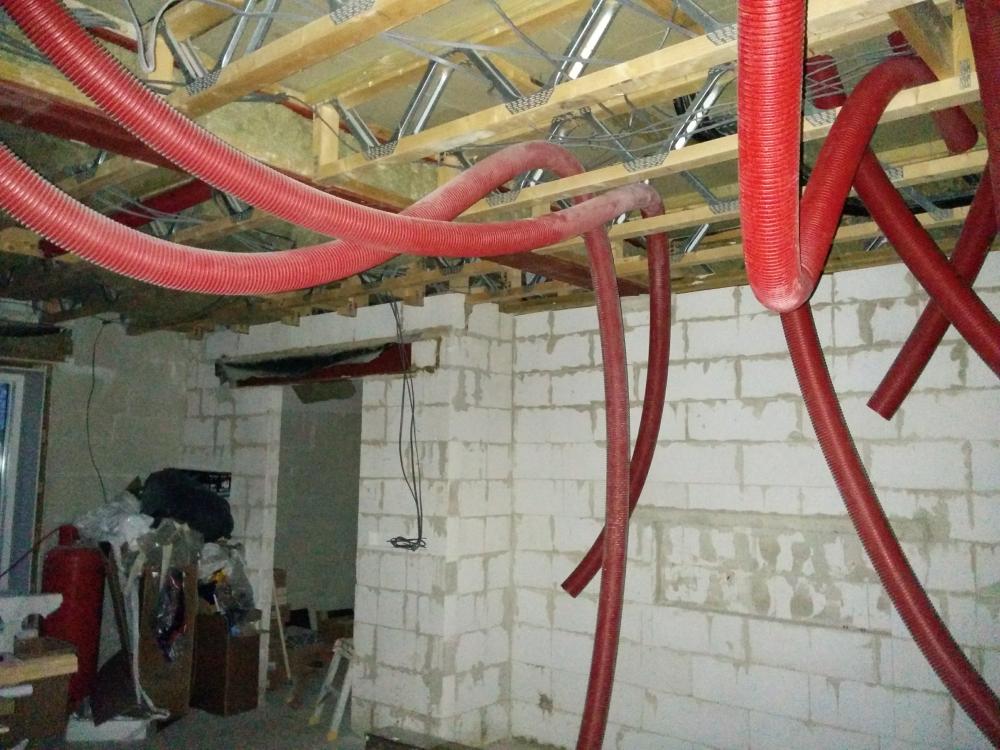
-
Could you post what configuation you went with in the end please?
-
Can I ask, how has your experience been over the last 6 months? and are you getting any radio interference? any negatives?
-
MHRV and boost button
Fallingditch replied to JamieM's topic in Mechanical Ventilation with Heat Recovery (MVHR)
So that's a slightly different use case - manually operated switch which works in parallel with a humidistat. I am not an electrcian and I am certainly not familiar regulations - but there is a £50 product from Danlers: "exterior time lag switch" EXTLSW. IP 66 rated and they state "also suitable for damp areas indoors'. Adjustable 2-20 minutes. Even comes with an orange button. A bit industrial looking though. -
Welcome! This site has helped me make critical decisions at all stages of the build (and then some). We are now at 1st fix, ten months into a 240 sq m masonry build near Colchester (with MVHR). We chose masonry because of the (very remote) possibility of flooding, However we went lightweight autoclaved blocks so as to avoid a big piling job. Masonry does come with overheads. Happy to show you round
-
My question is a very simple one (if a bit anal LOL): if I buy compact (480mm) protruding wall hung WCs rather than 545mm protruding - is there a downside? will they look like child's toilets? will they be more uncomfortable for larger people? will they look a bit weird? (explanation I bought three Grohe concealed cisterns. They can be configured for a 6l or 3 litre flush. The standard size WCs I was going to buy (Duravit) requires a 4.5 litre flus maximumh. I don't want to take the risk of buying a 4.5 litre WC, sending 6l down it, and washing the floor at the same time. If I buy the compact size WC in the same range, they take a 6l flush (for 15 euros more). So on the arse face* of it, there's not that much difference, and so I plan to buy the compact). * sometimes I can't tell the difference
-
Hmmm .. how can I put this ... what's a ceiling plinth? (or to put it another way, I can guess that its one on those square things stuck to and hanging down from the ceiling with concealed lights in it, but how are they constructed? what materials can you use? what stops them falling down? - maybe this needs a separate post!!)
-
Has anyone any experience of this? (I have installed 24V LED striplights running off batteries to a site with no mains power and they have been absolutely brilliant LOL. Wiring has to be thicker than usual, and you have to buy switches designed for the pleasureboating community, but in three years not a problem). So I want to take it to the next level now I want to put four strips in the kitchen diner - one on the galley plinth, one on the island plinth and two concealed in a couple of walls. I can't imagine that I want them to be changing colour every 5 minutes - but I do like the idea of changing them to a new colour every few weeks. I can't imagine I want to switch them on individually - a single switch to turn on all four is what is required. Prefer not to use wireless - off/on switch by the door and a colour knob somewhere else would be ideal. I don't (and won't) have a Building Management System but I so seem to have ended up with a lot of network points ... Any suggestions as the device I can wire the strips back into?
-
They don't really need protecting - in 90% of cases the whole setup sits outside. The propane cylinders are orange so you might want to box them is for aestehtic reasons. As a long term LPG Hob user - good decision! Even if you start to cook with it on a day to day basis, you will be really amazed how long a cylinder lasts. However they don't come with 'volume gauges'. What you do is to rock it from side to side to estimate how much is left. Thing is, when it gets down to (say) one or two inches, its very difficult to estimate how many days until you get to zero. So the technique is: get two full cylinders next year, when #1 runs out, switch to #2 order replacement for #1 when #2 runs out, switch to #1 and order another All very obvious. Actually, you dont even need a changeover valve. Its a two minute job to change them over when it runs out. (And the risk of an auto changeover is that it changes over without you realising it, and first thing you know is that they are both empty). If you have the space, go for 47kg cylinders. One other thing is that I have always used miele hobs. Lot of LPG used on the continent, so conversion kits available as standard. And what you really want to be sure of is that you have a small ring and you can turn it right down without the flame going out - quality german brands on ebay shouldn't give you an issue. UPDATE: my 'quality german hob' actually requires an electrical supply to operate (flame failure detection, I believe) so that that would certainly be an issue for @JanetE BTW when I first started using LPG, they gave the cylinders away to new cusomers. Don't know if that still the case.
-
Welcome from NW Essex! I had problems with SEs also - might be worth having a read of this thread here ? Anyway, we are at 2nd fix and once we got past the SE issue we have not had to deal with any major issues ...
-
Can I ask - what is your main concern? that you want to ensure you buy all the components that you need to equip three bathrooms? so you just want to look through an inventory and get some ideas? Or, have you chosen the particular manufacturers that you want? and possibly even their ranges? Thing is, in any (german) bathroom, typically, you will get your: basins/WCs (chinaware) from (Dravait/Keramag/Villeroy/Ideal Standard or own brand) frames (with concealed cisterns for wall hung WCs) or (frames for basins) from Geberit/Grohe taps from (Grohe/Hansgrohe/Ideal Standard and others) baths from Bette and others Showers from Huppe/Kermi (or possibly buy in the UK because price diffeence here is not that great) Then as you dig deeper into these manufacturers, you find they each do about 15 - 30 different ranges, at wildly varying price points, representing different levels of aesthetic If you read my post here: http://forum.buildhub.org.uk/ipb/topic/607-recommended-bathroom-suite-merchant/?page=2#comment-20128 then that suggests how you can start to get a feel for the price points of the different ranges from the different manufacturers. Taking me as an example, I have three bathrooms to equip. I will be using the same style taps in each (Hansgrohe Focus E) - the same basins and WC range (Duravit D-Code) - a variety of shower mixers and heads (Hansgrohe) - Shower panels from the UK - Grohe WC Frames - and no baths LOL. (You might notice that I am buying low end ranges from quality brands)
-
Online kitchen design/costing tools?
Fallingditch replied to Crofter's topic in Kitchen Units & Worktops
Alternatives: Planners: West Midlands http://www.3dkitchens.co.uk/catalog/kitchen_planner.html Milton Keynes - focus on cabinets http://www.blum.com/gb/en/03/90/ (The other two players - Hettich and Grass - may also offer detailed planners) Deutschland http://www.alno.co.uk/alnosys3/156.0.en.html?PHPSESSID=67a357ebf5ca84ff779abe1dd4c63fe8 https://www.nolte-kitchens.com/en/kitchen-planner http://www.schueller.de/en/gestaltung.htm;jsessionid=F2F25FDBB9609A015A8F55367C135CFB Style visualiser: Yorkshire: http://www.diy-kitchens.com/style-kitchen-tool/view-kitchen.asp -
Recommended bathroom suite merchant??
Fallingditch replied to Hillydevon's topic in Bathrooms, Ensuites & Wetrooms
Even in Germany, prices vary hugely, I have found out. What you can do however, is to refine your searching by searching for specific products using a price comparison website. Start with a known brand and product code. Then for example: make sure in Chrome you have the google translate plugin enabled and configured to translate from German to English go to a price comparison website such as idealo.de type in the brand and the product code (one number at a time) they will prompt you with the product you might be looking for - click on the prompt or just type the whole code in You will then see a display of all the various online plumbing suppliers. As discussed elsewhere ("I love megabad") some ship to the UK and some don't; some have better reputations than others but the point is, that once you know which suite (collection of components) you are going for, it becomes easier to pick a supplier (or two) who will do you the whole lot at good discounts. The other way you can use it is to navigate via their 'categories'. Example: you know you need a WC, and they have to be a certain size, but how to choose amongst the thousands available? Start off it Idealo's Plumbing and Fittings section: click on WCs (translation: Toilets LOL) looking very carefully, see if you can spot 'all filters' (you might have to try a couple of times) click and you then get a whole shedload of options that allows you to further filter, including by price (bottom of the screen) For example: seelct the filter 'less than 150 euro' select the filter 'wall mounted' click the button 'products show' ensure you are sorting 'price lowest first' and for example, you can see that the cheapest Duravit wall hung WC is 56.92 euro. (Nothing agaisnt Ideal Standard btw) Click on the WC and you can see that 56.92 is from MITI24; megabad are at 67.83 and skybad are at 80.75. Works for all kitchen and bathroom supplies! -
After a lot of looking, I have just bought a Brink unit, a 50m coil of Hybalans HB+ 92mm ducting and a quantity of HB+ manifolds and couplings from a Builders Merchant in Holland, who only charged me 50 euros for the shipping (on an order value of a couple of thousand euros). They were very helpful in organising matters. What they don't offer is a design service - so you have you work out which particular Brink unit you want (there are a lot of options) and of course how you put together your air distribution network.
-
Glass Balustrades and Balconies
Fallingditch replied to Fallingditch's topic in General Construction Issues
I actually have two requirements - one is for true juliet external and the other is for a 2.8m run of panels adjacent the internal stairwell. Clearly the glass must be toughened, but if anyone knows whether either of the internal or external thickness is covered by Building Regs? That might be very useful! I have seen 10mm, 12mm and 15mm being offered. Am having difficulty understanding the scenarios whereby a 10mm piece of toughened glass shatters and as a result someone disappears down the stairwell! -
If anyone can recommend a supplier/fabricator of juliet balconies and balustrades, could you please PM me the details? This turns out to be very expensive stuff!
-
This article reproduced from ebuild #1 Leaway Posted 04 September 2015 - 12:09 PM Ok so got a borehole installed and fitted the UV filter and 5 micron filter but still got cloudy water from the site caravan taps. Reading up it appears to be aerated water as once it settles it clears albeit not crystal clear. water tests came in ok apart from pH 8.5, Hardness 50. any ideas on best solution? #2tonyshouse Posted 04 September 2015 - 12:19 PM Probably happening at the tap. Don't worry about it Well in the caravan make sure that pipes can't let light in, not clear or white plastic. #3jsharris Posted 04 September 2015 - 03:59 PM This is very common and is largely a consequence of the relatively high pressure from the borehole pump and the fact that there will be air that then gets dissolved at pressure (your pump is probably sitting with a static pressure of a few bar, just from the immersed depth). We have the same, and it doesn't come from the taps as Tony says, it is in the raw water from our borehole. The problem is that the air won't come out of solution until the pressure reduces and this only happens usually at the tap. In our case it also happens immediately after our pressure reducing valve (we have water coming in at 5 bar and being reduced down to about 2.5 bar). This then causes air pockets that then make the taps splutter. It took me ages to work our what the problem was, but fitting automatic air bleed valves at the highest point in the hot and cold system stopped our spluttering and turning the pressure down a bit on the pressure reducing valve reduced the cloudiness, but didn't get rid of it completely. What pressure are you running at, and do you have a pressure reducing valve? If you haven't got a PRV, then fitting one, together with auto air vents at the highest point of the system will reduce the cloudiness a fair bit. Now our system is running at 2.5 bar with the air vents our water is maybe half as cloudy as it used to be, but it does still have a fair bit of aeration. If you want to get rid of it completely (this applies to borehole system, not mains water, where aeration usually comes form the tap aerators, as Tony suggests) then you need to put in a settling tank and a second pump set to draw water from that to the house supply. Doing this allows all the dissolved air in the water from the borehole pump/aquifer to come out of solution in the settling tank, and the water pumped from this will then be relatively air-free. Edited by jsharris, 04 September 2015 - 04:00 PM. #4tonyshouse Posted 04 September 2015 - 04:03 PM The bubbles might not be bubbles when they re under pressure and only format the tap when the pressure reduces, like sparking water has no bubbles in the bottle until you unscrew the cap. Don't worry about it. #5jsharris “tonyshouse, on 04 September 2015 - 04:03 PM, said: The bubbles might not be bubbles when they re under pressure and only format the tap when the pressure reduces, like sparking water has no bubbles in the bottle until you unscrew the cap. Don't worry about it.” I agree about not worrying about it. but if it looks like our water did when we were running at high pressure then it comes out looking like milk! Nothing wrong with the water, and it clears after a minute or two when left at atmospheric pressure, but it does look unsightly and could be off-putting to those not expecting it (say guests using the water for the first time). #6Leaway Posted 04 September 2015 - 10:00 PM Thanks guys yes very cloudy when filling a glass, eventually clears but off-putting seeing it and not fully crystal clear. I take it the problem can't be anything else? At the moment got a borehole in a shed on site (2 Bar) and then piped through a micron filter, uv filter, and mdpe pie down to the caravan on site. Due to start the timber frame in the next couple of months. Will try the PRV and the settling tank ideas, thanks for the speedy responses. #7jsharris Posted 05 September 2015 - 07:47 AM If you're only at 2 bar, then there's no need for the PRV, as you don't really want supply water below about 2 bar, or else things like showers get a bit feeble. You could try and see if you can get some of the air out before it reaches the taps by fitting a tee in the MDPE with a vertical section and an automatic air vent at the top. It may be that your pump is drawing in air somewhere and that's then getting dissolved in the water while it's sitting in the pressure vessel. A vertical pipe before that with an auto air vent will collect and release small air bubbles before they have a chance to reach the tank and get dissolved into the water. Air take a while to dissolve in water, just as it takes a while to come out of solution when the is pressure reduced (when you pour a glass of water, for example), so removing any air coming up the riser from the pump to the pressure vessel would remove that as a possibility. The settling tank and pressure set pump is really a last resort if you cannot live with cloudy water. It takes a lot of space up and adds complexity, as you have a float switch in the settling tank that controls the borehole pump (which connects directly to the tank), then the pressure switch on the pressure vessel controls the second pressure set pump and that delivers water from the tank to the house supply treatment system (filtration and sterilisation). The latter option of a settling tank can have other benefits, in that it allows the water of off gas stuff other than dissolved air (often borehole water has other dissolved gasses that come out of solution when the pressure is reduced). It can also help reduce things like the dissolved metal content of the water (ferrous iron and manganese being two fairly common metals found in UK aquifers). Your water analysis will help here, as your water is very alkaline, yet not that hard, which is a slightly unusual combination, as there is a fairly good correlation across the UK between high pH and high hardness (our water has a pH of 7.5, so slightly alkaline, but a hardness of 300, with a high TDS figure (mainly calcium carbonate I suspect). What's the ferrous iron and manganese level on your analysis? Is that hardness figure the mg calcium/litre or mg calcium carbonate/litre, or the sum of both (often called "total hardness")? Either way soft water that's strongly alkaline makes me suspect there may be other reasons for the dissolved gasses in the water, so if you could post all the water analysis figures I could take a look and suggest whether there may be another reason for the aeration. Carbon dioxide in solution is often a cause of what seems like aeration, but that only happens with slightly acid water (lower than a pH of 7) usually, as some of the dissolved carbon dioxide ends up forming carbonic acid which makes the water slightly acid. #8Leaway Posted 05 September 2015 - 10:18 PM The test results using a water safe test kit (discover testing.com) were as follows... Bacteria - negative Copper - 0 Iron - 0.0 Nitrate - 0 Nitrite - 0 Ph - 8.5 LR total hardness - 50 Chlorine - 0 Lead - Negative Pesticide - neg #9jsharris Posted 06 September 2015 - 11:04 AM I'd be inclined to get a proper water analysis done. Your local authority are obliged by law to do one at a fixed price that is lower than the labs charge. Ours charge £120, as they insist on adding a charge for a man coming out to take the sample in order to reduce the loss they make from the government fixed lab test price. IIRC most labs charge around £150 or so for a full test. The test kits are often very, very insensitive, and the only one I'd rely on is the pH and total coliform indicators. The latter often gives false positives (as it tests for all coliforms, not just harmful ones) and also because it is extremely easy to accidentally contaminate the sample by touching the sample pot, or just leaving the lid off too long and allowing airborne coliforms to get in. By law you'll need a certified lab test if anyone other than you and your direct family are going to drink the water, too. The puzzle with those test results is that the high pH indicates the presence of something that's making the water very alkaline, yet the hardness result shows very soft water, which is almost always acidic (pH well below 7 in soft water areas as a general rule). The high alkalinity does fit with the absence of metals, but the most common cause of strongly alkaline water is dissolved carbonates (usually calcium and magnesium), and these show in the total hardness test. With a pH of 8.5 I'd have expected a very high total hardness reading, as the two almost go together in most ground water. Do you happen to know anything about the geology of the aquifer? Just a rough location would be enough if you don't want to give your location away, as I'm intrigued by the cause of the high pH and whether this may have a bearing on other dissolved gasses in the water that are causing the apparent aeration. I can understand our aerated water, as we deliberately vigorously aerate it to oxidise out the ferrous iron, manganese and dissolved hydrogen sulphide, then have to accept that we get residual aeration on the low pressure side. You're not using an aeration treatment system though, which implies either air getting in to the pump line (which can and does happen without water leaks) and then being compressed when the pump runs and dissolving into the water, or water that contains naturally dissolved gas. The most common gasses that occur in natural ground water are hydrogen sulphide (which you don't have, as it smells of rotten eggs in even minute concentrations) or carbon dioxide, which is often found in some aquifers, but usually those with a much lower pH than yours. I'm wondering if there is dissolved nitrogen in the ground water, hence the question about the hydrogeology of the aquifer (or the region where you are so I can check a few borehole records on the BGS web site to get a better idea of it). It's harmless if it is, but there may well be other ways of getting it to come out of solution before it reaches the taps. #10Leaway Posted 06 September 2015 - 09:12 PM Thanks, I'll enquire with the local authority (Ceredigion) on the water test which will hopefully clear up doubts. Not aware of the geology of the aquifer but the area is Lledrod in Ceredigion #11jsharris Posted 06 September 2015 - 10:00 PM Thanks, that's useful. You're on mudstone, same as us, with underlying sandstone. There's nothing immediately obvious to suggest why the pH is so high. There are a row of nine boreholes south of you, but all are shallow (sub-10m) and with limited hydrogeological data from the BGS as they were all drilled/dug many years ago. Some report "ore staining", which usually indicates ochre, which is ferric oxide, so I would be surprised to find zero iron in your water, especially given the shales that form the lower levels of the mudstone. They all seem to follow a fault line at a depth of around 10m, but they are all on clay and mudstone/shale, so I would expect water in the aquifer that isn't that dissimilar from ours. We have 40m of mudstone/gault, overlying a shallow greensand aquifer, which gives us water of around 7.3/7.4 pH, together with a much greater hardness than you (over 300, with a TDS of around 180), plus iron, manganese and hydrogen sulphide. I think you really need to pay for a proper water analysis. Use your local authority, as they are obliged to provide this for private water supplies at a lower cost than the labs will charge. They need a proper clean undercover sampling tap, or a clean kitchen tap, and it is sensible to run the water for a few minutes before they take the sample. They will give you a full and detailed analysis for all controlled water contaminants, with the exception that they rarely offer testing for dissolved gasses, like hydrogen sulphide, as they tend to come out of solution as soon as the water comes out of the tap. I suspect that your pH measurement is in error, as it seems too alkaline for the prevailing geology, plus I suspect that you will have small quantities of iron and manganese in the water and perhaps sulphides. These could easily give you gasses in the water from the activities of harmless iron and sulphur reducing bacteria in the aquifer. Nothing to worry about, but these may well be a contributory factor to the outgassing you're seeing at the tap. One other quick thing to check is whether the foot valve in the pump is sealing properly and whether the pump is cycling when you're not using water (watch the pressure gauge or listen to the pressure switch, to see if it switches on and off with all the taps closed). Also see if you have a check valve at the well head. If so, then you may well have a positive displacement pump (a screw pump) that can often drain back the riser pipe from the top check valve down to the pump if there is an air leak, and this then puts compressed air into the pressure vessel that then gets dissolved into the water. I'm certain we can collectively come up with a cause and cure for your aeration, it just needs a bit of detection work (something I've had a LOT of experience of when it comes to boreholes and water treatment over the past year or so, as detailed at length in my blog on here!). #12Leaway Posted 07 September 2015 - 09:42 PM Jeremy, thanks for the in depth response, i have read your many blogs and read through the borehole one before posting, you certainly had challenges . I'm off site at the moment as waiting for local builder tenders for the frame and a quotes for groundworks so no action on site at the moment. Next time i'm on site i'll ensure i arrange a council water test on the water feed to the site caravan and advise an update. Thanks for the suggestions and support #13jsharris Posted 08 September 2015 - 12:20 PM Happy to help, as I found it very difficult to get reliable advice on borehole water supply issues in the UK. There are one or two really good companies out there, who have the knowledge, but because borehole supplies are now relatively uncommon in the UK much of the expertise in dealing with water problems has disappeared, it seems. I have a few contacts in the USA who gave me some really good advice, as the USA doesn't really have a public water supply system once you get outside major towns and cities, so millions of people there still have wells/boreholes for water. #14Leaway Posted 08 December 2015 - 07:31 PM Jeremy got verbal water results back they don't work quick up here on any council matters.(still waiting for the writing report). Verbally the guy said 1) the iron test result was 401 when the test result should be <200 2) also the particles (turbidity) test was 14.2 when it should be <4 He's advised flushing out the system 3-4 times a day at 2 hour intervals to clear out the particles and said the bacteria in the system is not helped by the pump heat if its let on whilst off site. Should be on site regularly from Jan as MBC arrive with he timber frame but i'll probably set a time to flush the water 4 times a day at 2 hrs runs going direct from borehole - pump to tap to bypass the uv and particle filter. He also said he would return for another test Any advice? #15temp Posted 08 December 2015 - 07:39 PM Are you allowed to have a vented settling tank on a drinking water supply? Even in houses with a cold water storage tank the kitchen tap is usually fed from the mains. #16jsharris Posted 08 December 2015 - 08:18 PM Your results aren’t that different from ours. Do you have a smell from the water, like rotten eggs? If so you may also have hydrogen sulphide, as it's fairly common adjunct with high iron. There are several options for iron removal, and removing the iron may well reduce the turbidity, as I'm guessing here that you probably have a mix of clear iron (ferrous iron in solution) and ferric iron (cloudy particles iron oxide). There are lots of proprietary systems, but first a bit of chemistry 101 to understand how they work. Getting rid of ferrous (clear) iron is best done by oxidation, which converts the clear dissolved ferrous iron to ferric iron precipitate. This sticks to anything but is fairly easily filtered out. You have high levels of iron, so a simple catalytic oxidation filter probably won't do the job, or will need regular regeneration with potassium permanganate . These filters work by using various oxidising catalysts, usually based on manganese dioxide. My recommendation (free from some bloke on a forum, so worth what you paid for it) would be a two stage system. First aerate the incoming water to increase it's ORP (Oxygen Reducing Potential), There are several ways of doing this, using a venturi injector or by using a small pumped system that injects air into a tank and massively increases the dissolved oxygen content (oxygen absorbs preferentially into water over nitrogen from air). This first stage tank will typically be a 10 x 52 wound tank with an ar injection port and a vent to allow the tank to have an air pocket at the top 1/3rd. The combination of pressure and air increases the ORP and this causes a lot of the ferrous iron to precipitate out as ferric iron particle (rust). The water than passes to a backwashing sediment filter to remove the ferric iron particles. The backwashing filter can useful have a second stage of iron removal, using Birm, Aquamandix, Filox or another manganese dioxide catalyst, mixed with filter sand, or better still filter AG **. This backwashing filter can have an air draw kit that adds an extra air pocket above the filter bed that works to increase the ORP further, helping the catalytic oxidation in the media. The output of these filters will be fairly iron, and perhaps manganese and sulphate/sulphide, free, but may still be too turbid to be sterilised. The easy way around this is to fit a washable 10" long Big Blue 5 micron filter, ideally a washable one to save changes. The water will now be clear enough to go through the UV sterliser and into the house. It goes without saying that you need the pump pressure vessels and switch ahead of the filters, and you need enough flow capacity to meet the filter backwash rate (which can be pretty high for the heavy iron removal catalysts). It sounds complex, but it really just needs a bit of careful thought about what goes where and which system is best for you. I had to work out a LOT of stuff myself, as none of our local companies filled me with confidence. A really good and helpful supplier is GAPS Water, they take the time to give good advice, butt don't offer an install service, so you need to know what you need before calling them. To answer the last question, yes you can have a vented tank,but it adds problems. You need a second pump, so you double the pump investment, replacement cost and running cost. You also need to clean out the settlement tank, and have space for it. It wont remove the iron and will only have a modet effect on increasing the ORP. Lastly, I have meters for measuring stuff and have acquired a fair bit of hard won practical knowledge, so if you get stuck I may be able to come up and advise directly (free - I don't believe in making a profit from helping people and passing on knowledge). I'll try my best to give the best answers I can on details here on the forum if I can, but each installation tends to be fairly unique. ** The caution with Filter AG is that's very light, so backwash rates need to be controlled to avoid washing it out. #17SteamyTea Posted 08 December 2015 - 08:30 PM I was talking to someone today that is a partner in a borehole drilling company. I asked if they did water treatment as well, she said yes. That is as far as I got. I may chase her up, or her business partner, as I find this subject fascinating. I hated chemistry (still do, I am a Lord Kelvin man), but this sort of 'bucket chemistry' is interesting, and you get a usable product out the end of the pipe. Any chance of a sketch with the main components in there rightful place? #18Leaway Posted 08 December 2015 - 08:47 PM Yes sulphur / eggy smell most of the time although to date infrequent visits to site and staying in the on site caravan over a weekend / week at most. Will be full-time from Jan (cottage during colder months Jan - Feb). Thanks for the hints on aerating sounds complicated? Current set up is borehole with pump to tank in a shed and then piping in the shed to particle filter and uv filter before sending water to on site caravan. From the detail below i would need another wound tank between current tank and particle filter? Then install a backwash filter between new wound tank and particle filter. Or replace the current particle filter with this one? Any diagrams on layout on this one? #19jsharris Posted 08 December 2015 - 09:48 PM Best bet is to look at the USA, as they are far, far more experienced with systems. Bear in mind that none of this stuff is very complicated, it just looks that way. First off, aeration to increase the ORP (feel free to ask questions on any of these bits). This example from the US http://www.purewater...eration-systems shows a first stage pumped aeration system. An alternative is to use an air injector in the water pump line (like this: http://www.wellwater...Micronizer.html to inject air into the pumped water, which still needs an air/water tank, but doesn't need an air pump to get air into the top of the vessel. A Micronizer would typically be used with a tank with an air volume control (very like the vent system on the aer-max) to retain an air pocket to dissolve oxygen into the water. Next the aerated water and ferric iron particles pass from the base of the contact tank to the backwashable filter. My reccomendation would be to go for a suitably sized one of these: http://www.gapswater...l__Systems.html fitted with an air draw kit and probably Aquamandix and sand media, or maybe Filox. Don't over-size, as the backwash rate is much higher than the normal deliver rate. These two stages will remove the iron, hydrogen sulphide and, as long as the pH isn't to high, manganese. Pretty much all the chemical/metal contaminants will now have come out, either by catalytic and direct oxidation and filtration, or by being vented through the vent on the first tank. Next you need to make the raw water potable, by removing remaining turbidity, removing bacteria and cysts (and you'll have a lot of iron and perhaps sulphur reducing bacteria in the water). The easy way to do this is with a simple UV steriliser unit, like this: http://www.gapswater...olet_Range.html . These need the tube to be replaced one a year, as they lose output with time. Before the UV unit you need a simple particulate filter to make sure the water going through the UV steriliser hasn't got any big (>5 micron) particles that could shadow a harmful bacteria. I'd recommend a 10" deep big blue housing with a pleated filter element like this: http://www.gapswater...RUM_Pleat_.html, or maybe a 20" long one if you have a high water demand. Pleated filters like this are good because they can be washed out easily and replaced. Clearly there is a lot more to this, but the above is a pretty good starting point. If you wanted to save money, then you could remove the first aeration stage and use just the iron/sulphur dioxide backwash filter with the 5 micron pleated filter in a Big Blue housing, followed by the UV steriliser. If you still have sulphur/cucumber taste/smell, then another Big Blue housing with a good quality carbon block filter may help, but will need regular replacement. All the other stuff I've mentioned is pretty much self-maintaining, except periodic flushing and cleaning of the 5 micron filter. I'd steer clear of wound filters, as they end up costing a lot to keep replacing them and they don't remove metals or any other contaminants other than sediment. The same goes for carbon filters, they only have a very limited ability to remove metals. Happy to try and advise further. #20Leaway Posted 09 December 2015 - 11:31 PM thanks, I’ll take some time to review the websites and come back to you #21Leaway Posted 21 February 2016 - 10:48 AM Hi Jeremy read through some of the web sites whilst waiting for the extra slow local council to re-test the water which they have done in Dec and Feb. They're now saying the water is safe to drink as the turbot readings from the lab are now 3 NTU and the iron reading 85ug fe/l. I think the timer flush three times a day helped matters. Water still a little cloudy but less grey and no smell of sulphur. With the new readings and general improvements would your advice above change? I assume the aeration is the focus now to take away the cloudiness? #22jsharris Posted 21 February 2016 - 12:59 PM If you've got potable water and the problem is just that it has a lot of dissolved gases, then you could reduce this a lot by fitting a Spirovent. I recently fitted one and found it made a useful improvement and seems to remove a lot of the excessive dissolved air in our water. #23Leaway Posted 16 March 2016 - 10:46 PM Hi Jeremy just to advise and thank you for your suggestions and support. I decided to wait a little more and went down the route of a fresh filter and spirovent as you suggested. I can report clear water looking good enough to drink. Thanks once again #24jsharris Posted 17 March 2016 - 07:49 AM Glad the problem is sorted OK. I'm amazed at how effective the Spirovent is at reducing aeration in the water. We've tried so many different things that have promised a lot but failed to deliver that I wasn't expecting much from it. It's good news that you need nothing other than a filter, as it makes the system a lot cheaper to both fit and run. #25Leaway Posted 05 April 2016 - 10:39 AM Hi Jeremy, water flowing well now and clean, non cloudy and drinkable from the cold tap in the static caravan. Still seem to be getting a sulphur smell in the shower with hot water use. Would this be the static caravan boiler (Morco) and piping un doing the aeration? (piping mixes between 25 MDFE, 15 & 20mm piping). Not an issue for the caravan as only a temporary option but want to ensure this doesn't re-occure for the eventual self build. Any views from your experience? #26jsharris Posted 05 April 2016 - 10:50 AM The sulphur smell could be coming from one of two causes. As it's from the hot water, then the first thing to try and work out is if you have sulphur reducing bacteria growing in the hot water tank. It's rare in the UK, as we usually have copper tanks that tend to prevent this, but fairly common in galvanised steel, or stainless steel, hot water tanks or water heaters that have a magnesium anti-corrosion anode fitted. So it may well be just the water heater causing the problem. To check, try and inject some neat unscented household bleach into the water heater and let it stand for a few hours, then give it a good flush. If that fixes the problem for a time then you can be reasonably sure that sulphur bacteria in the heater are the cause, and they may well come back, as they are probably in the water (they aren't harmful, just smelly). The other possibility is that the water supply has some dissolved hydrogen sulphide in it. This won't show on a lab test, as it will come out of solution very quickly, long before the sample gets to the lab. It can be detected by smell at very low concentrations in water freshly drawn from some boreholes (like ours), but aeration will quickly remove it, provided there is a vent for it to escape through after aeration. I'd try and disinfect the water heater first, if you think it may be made of something other than #27Leaway Posted 05 April 2016 - 12:20 PM Hi Jeremy thanks for the quick response its a brand new boiler (only small Morco caravan boiler) so shouldn't be any bacteria. I have fitted an aerator (spirovent) as per earlier suggestions which has helped with the cold water. Any suggestions? It the eventually proper plumbing and standard piping will eventually eradicate it i'll just live with the smell for the next 9 months but if i need to take action for the long term i thought it would be good to test and trial using the simple caravan plumbing first. Attached Files missing #28jsharris Posted 05 April 2016 - 12:42 PM That UV light should kill the bacteria (they will be in the borehole water originally) before they get to the water heater, unless the water heater was used before the UV disinfection unit was fitted? It would be unusual for them to thrive in what is a small instant water heater, but it might be possible. These are some of the toughest bacteria on the planet, they live in volcanic hot springs or in the deep depth of the ocean around "smokers", so can be stubborn to eradicate. From what you say, though, I suspect the smell may well be hydrogen sulphide dissolved in the borehole water. Usually H2S comes out of solution very quickly when the water pressure is reduced, but it only takes a very small concentration to be detectable. If the filter you have has just got a sediment cartridge, you could try using a block activated carbon cartridge instead, to both filter and adsorb any H2S. A carbon filter won't fix a significant H2S problem, but can sometimes work if the problem is only minor. We have too much H2S in our water for a carbon filter to have any real effect, so I use a catalyst-based backwashing, oxidising filtration unit. This works well, but is a significant investment and if you can fix the problem more readily with an activated carbon cartridge then that would be the first thing to try. Make sure it's a solid block cartridge, that will both filter to 10 microns and remove quite a lot of potential trace contaminants, rather than a granular activated carbon filter that will work, but needs a lot of flushing before use to flush out the very fine black carbon dust. This isn't usually a problem with the solid block filters. #29Leaway Posted 06 April 2016 - 11:32 AM Yes just got a sediment filter in at the moment so will try a carbon cartridge instead. Were do you get yours from? used the water filter men previously but my credit card got scammed after this purchase (not saying its them just questioning their system security). #30jsharris Posted 06 April 2016 - 11:36 AM I can't remember, but I gave all the spare unused carbon block cartridges away to daiking here, and you might be able to read the name from this photo from that thread: http://www.ebuild.co...ug/#entry132223 #31daiking Posted 06 April 2016 - 12:25 PM I can take a look later if it helps. #32Leaway yes please thanks #33daiking Posted 06 April 2016 - 10:38 PM Sorry, no discernible brand. (image removed) #34Leaway Posted 24 April 2016 - 06:09 PM Jeremy second filter unit fitted with Carbon filter and success the missus is happy the shower in the caravan doesnt smell like a geyzer from iceland any more with sulphur. Thanks for you help. Daiking - couldn't identify the make but thanks for trying, searched a few images on google but no success so went for eh best deal on line. #35jsharris Posted 24 April 2016 - 08:27 PM Great, glad that's fixed it. For the house system you may want to consider something that's less hassle in terms of needing to change carbon filters every few months I've come up with a reasonably affordable system, using off-the-shelf parts, that will just remove the H2S without needing to change carbon filters, It involved a bit of DIY, but our system is now working really, really well, and is pretty much hands-off, just a UV tube change once a year. I'll post more details and where you can get the parts later, when you're looking to install the final water system to the new house. You'll need to find room for a 5ft high, 10" diameter contact tank and air vent, plus a venturi injector at the well head, but it will vent out all the H2S and also precipitate out any ferrous (clear) iron you may have, and is pretty easy to put together. #36Leaway Posted 24 April 2016 - 08:31 PM Borehole is currently in a small shed in the corner of the plot. i was looking to upgrade the shed but keep the Borehole and filtering in there and out side of the house. MBC arrive tomorrow so timing for eventual water system for the house i expect autumn this year. Less hassle definitely sounds good, would appreciate any help. #37jsharris Posted 24 April 2016 - 08:53 PM I'll draw up the details and how to put it together in the next couple of months. It's apparently a common problem, as the lady from the council who came to sample out water for the final "official" water test the week before last asked lots of questions and said that she'd recommended aeration systems but that they'd not worked. I explained that to work you must have a contact tank, with a regulated air vent, to give the reaction time needed, something that it seems Environmental Health weren't aware of (yet it's common knowledge in the US). She's since put me on to two other "problem wells" and we're in the process of fixing them the same way we fixed ours. #38Nickfromwales Posted 24 April 2016 - 09:47 PM Are there 36 hours in your days Jeremy? Your a very generous chap #39jsharris Posted 25 April 2016 - 08:51 AM Thanks for the compliment, Nick, but you yourself give a lot of time here helping others, probably more than I do. I know the frustration of trying to fix well and borehole water problems, and understand the lack of expertise (and unavailability of kit) here in the UK. All the answers to treating well and borehole problems are available in the USA, where a large proportion of homes away from city centres are on well water. All of the knowledge I've gained has come from making mistakes and having to spend tens of hours seeking answers, so it seems daft not to just pass that on and save others having to go though the long process I went through to fix things. It's also therapeutic to look at something unrelated to finishing our house from time to time, a sort of diversionary therapy (although we are very nearly finished now - should get completion in the next few weeks, all being well.).
-
+1 for an insulated reinforced concrete slab. We are on London clay in flood zone 3a. The slab option was so much less intrusive than piles. PM me and I'll let you know what we spent.
-
Seeing as the price of a vanity unit exceeds the price of a WC, basin and tap combined (even when imported), we are thinking of fitting shelves (aka 'consoles' aka 'bathroom worktops') instead, and either insetting basins or installing 'wash bowls' as they are known.` After further research, it seems that you cannot install just any laminate in a bathroom as a worksurface - laminates have to be specially manufactured for bathrooms. So my question is, (I think), what worktop material can I use in a bathroom?


