Fallingditch
-
Posts
217 -
Joined
-
Last visited
-
Days Won
1
Everything posted by Fallingditch
-

Design and cost of hot water heating system
Fallingditch replied to volcane's topic in Other Heating Systems
Discussion on which gas boiler here. ASHP or oil here. You may well have read them but they are still relevant. As you imply, with five showers there are likely to be occasions when there will be a need for three or more concurrent showers, which means even the largest combi boiler won't be enough. If you are considering the boiler option, I would recommend Vaillant's Choose a Boiler page - the guidelines that they give actually apply to all Boiler and cylinder manufacturers. -
Excellent news !
-
Quality and stylish switches - Trendi not doing it
Fallingditch replied to jamiehamy's topic in Lighting
+1. Trendi are selling a lot of switches and a lot of people give them +ve reviews on Amazon but like you when I bought a sample I didnt feel they reached the standards I wanted. So switch-wise, I went large-rocker European and bought Belgian Niko lightswitches (like @Trw144. Huge range and not too expensive if you stick to black or white. (Try DMLights, who also do LeGrand and an BtiCino, a flashy Italian manufacturer). Three pin sockets is more of a challenge. I couldnt find anything economic to compete with white plastic. The only ones I could find were coloured ones were made by Gira, and these are about four times the price (even bought direct from Germany). -
100%. Spent about two years working with an architectural technician to come up with our ideal design - and I still really would have liked to live in it. We live in a rural environment.Unfortunately, shorty after we received PP, we moved out - huge mistake! Shorty after that, the farmer decided to build a reservoir with a 4m earth bank wall next to our plot. (Farmers can do that sort of thing and there's not much ordinary people can do about it). So we went back and got PP for a building raised up another 600mm. (Another mistake !) Then we went out to tender to try to find a contractor who would build it. The cheapest price we got was 2.25 per sq m. Most expensive was double that !! OK so the design was somewhat unusual, but I have to say I was not impressed with the quality of the Builders' responses here in NE Essex. This was the lowpoint. For three months we did nothing (apart from pay rent, unnecessarily). Fretted. Then one night - inspiration! Drop the fancy design. Build something simple - and tall to see over the bank LOL. So we came up with a three storey building designed to look like a water mill. Took that to the planners. Got lucky and were assigned Grayson Perry's Officer (so to speak). He was happy with what we were trying to do. Architectural technician and I worked on the plans. Got them submitted and they were approved without going to committee. (From inspiration to approval took three months - phew ...) Having said all that, the biggest stroke of luck we had was finding a team of builders we could work with, who were able to build it at a reasonable price (around £1,500 psm). That and having a good Architectural technician, and eventually finding a good Structural Engineer. Those plans are pretty close to what we have built, internal and out. Moving in at Easter - fingers crossed etc etc etc Many people on this site who have successfully got to the end of the journey move in, and subsequently spend a lot of time being distracted by defects and the mistakes they made. Seems like it can't be helped. (I know I will - I can list half a dozen right now). But at least I know when I look at the building, I am happy with what I designed. If you built what you've planned for today, and subseqently decided it wasn't right, that would be a tough thing to live with. So to address the original question - do not proceed until you are confident. In the scheme of things, £5k is small beer. (Not everybody will agree with me, but this is a place for opinions )
-
I built with block and block, using 215 inner and 100 outer with 200 polystyrene in the void. We used Ytong blocks because Celcon couldn't provide 215mm blocks to the same specification. (Nor could Thermalite). Plan is to clad it rather than render it however (planners). There were two reasons for using lightweight autoclaved blockwork: our Structural Engineer assured us we could go with a lighter reinforced concrete slab (we did not want to have to pile) as other threads have pointed out, airtighness is critical. With lightweight autoclaved concrete using a thin bond mortar, its much easier to avoid gaps (especially if it is parged on the inside) I did suggest using 100mm normal blocks for the outer skin, but the issue (I was told) is that if you are using thin bed adhesive for the inner, and standard mortar for the outer, you cant keep the courses in step. (Somebody who's actaully done this may come back and say "oh yes you can" but for me the argument was good enough).
-
Assessing the quality of a laid tile floor
Fallingditch replied to Fallingditch's topic in Floor Tiles & Tiling
To put this to bed: I have reached a satisfactory agreement for compensation with the people involved all tiles will be lifted I am sticking with using this tile design (the alternative would be another chunk of change, and the change is running out) spare tiles, new tiles, and any tiles which can be recycled and are in A1 will be used I have clearly specified to what standard they must be laid tiles in key areas will be dry laid so that I can agree appearance As I have said - appreciate all the comments :-) -
Tender reponse - what level of detailed breakdown?
Fallingditch replied to JohnW's topic in Costing & Estimating
John: I've sent you via DM a sample spreadsheet for a house design which I sent out for tender responses in July 2015 here in Essex. It only makes sense if you have a set of detailed plans - but you should get an idea of the level of granularity. I was very disappointed with the responses from Tenderers. I sent seven out - the cheapest quote was for £415k and the most expensive £735k !! I put a lot of effort into the design, but in the end we threw it away and started again. Second time around I hired a PM who had their own crew and they are building it. The job's going generally OK. Its running at about £1,500 psm (if you want a guideline). One year old and a month to go. I feel I can now speak from experience. So here's a health warning. Even though we put a lot of effort getting good quality plans drawn up, and providing detailed specifications of materials and fittings, there have still been a huge number of changes we have negotiated with the PM. You might think you can get to a point where you working from a fixed price - but as soon as you start making the decisions that you didnt know you had to, the potential exists for you to get hit with additional charges over and above your contract. Moral of the story? its all about the relationship you have with the builder, and how much effort you can put into specifiying things beforehand. Suggestion? get the builder to give you three reference sites of clients they have constructed custom builds for. -
@Nickfromwales How can I find out what commissioning and adjusting entails? Let me put it another way. I want to fire up the boiler in order to test the UFH system etc etc. Am I right in thinking that I must/should wait for the commissioning engineer? who will convert it to LPG (with his screwdriver LOL) and then do the important commssioning and adjusting bit?
-
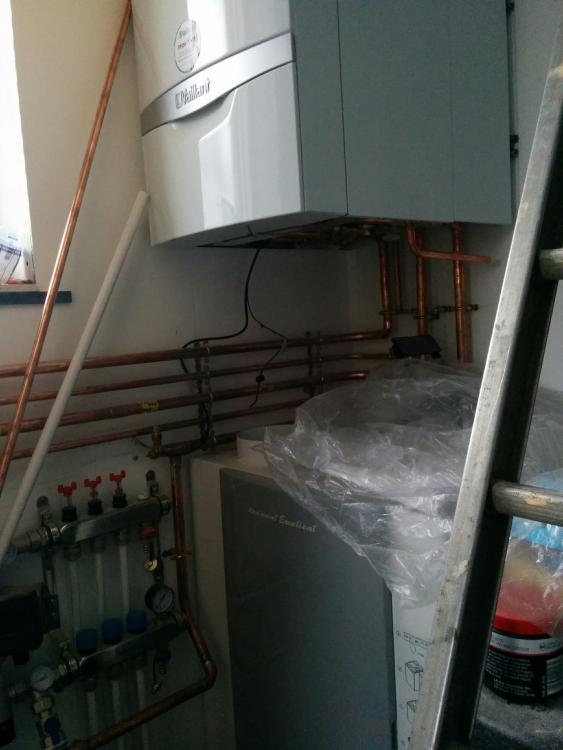
I have a new Vaillant 938 Ecotec plus. I will be running it on LPG (Propane). It needs converting, however. Mr Vaillant wants to send an engineer to convert it and commission it. He wants £113.00 for the trouble. I understand the replacement components are about £10.00 (= new jets). My electrician has volunteered to supply and fit the kit. If I pay my electrician to do it, is it likely to invalidate my warranty? or cause me other issues down the line? (I bought a new Toyota Prius once. Its a complex car. But I seem to recall there is legislation preventing car companies forcing drivers to have their vehicles serviced by Main Dealers. In any case, from the beginning I took my Prius to the local garage for servicing. Never a problem. Now its 165,000 miles from new. Hope my boiler is as reliable.)
-
Assessing the quality of a laid tile floor
Fallingditch replied to Fallingditch's topic in Floor Tiles & Tiling
Sidebar: How flat should a tile be? I have had some feedback, and that is the fact that the tiles were slightly dished. (I do recognise that the time to complain about the tiles is not after they have all been laid, but set that aside for now). We chose these spanish import 450 x 450 porcelain tiles because they were a pleasant light grey, they were available from a local supplier, and they came at a good price c. £17 psm. Perhaps one reason for the competitive price is because they are not 'flat'... I have laid them face up on a flat surface and it is true they do rock a little. That I assume can be compensated for with tile cement. However when I put a spirit level across the surface of the tile, I find that one or two corners do 'bow down' away from the flat edge, leaving a gap of about 1mm between the top of the face and the bottom of the level. (Maybe the worst ones have a 2mm gap). Questions: How 'flat' should porcelain tiles be? What is the typical tolerance on a 450 x 450 tile? If tiles are irregularly shaped, would good tilers compensate for this by (say) using a wider gap? 10mm? Should I consider using these tiles again? or does this 'bowing' mean I should avoid them at all costs? (I don't really want to start the search again for this particular colour) What guarantees do tile suppliers typically make regarding flatness? (if I were to buy from a mail order supplier - how bad would they have to be before I could send them back?) -
Assessing the quality of a laid tile floor
Fallingditch replied to Fallingditch's topic in Floor Tiles & Tiling
Thanks all - appreciate the comments. The relationship is that I hire the PM. He hires the subs. I supply the materials. To date, all has gone OK - work has been carried out to a very high standard and I am very happy with it. This is the first major problem. Its very unfortunate indeed that it wasn't spotted earlier. It is a big ticket item and I should have double checked early on. Hopefully, other self builders following this thread will learn from my mistake. * * * * * * * * A dispute has been opened. I will post on progress. -
Assessing the quality of a laid tile floor
Fallingditch replied to Fallingditch's topic in Floor Tiles & Tiling
All: thanks for the comments. I am employing a Project Manager for this build. He is hiring in subcontractors to do the work. So far, having spent about £300k for a 240 sq m house, we haven't really had a problem, and have now started 2nd fix. Unfortunately, in this particular case, the subcontractor used is a close relation of the PM, which makes matters somewhat awkward for all concerned. -
Assessing the quality of a laid tile floor
Fallingditch replied to Fallingditch's topic in Floor Tiles & Tiling
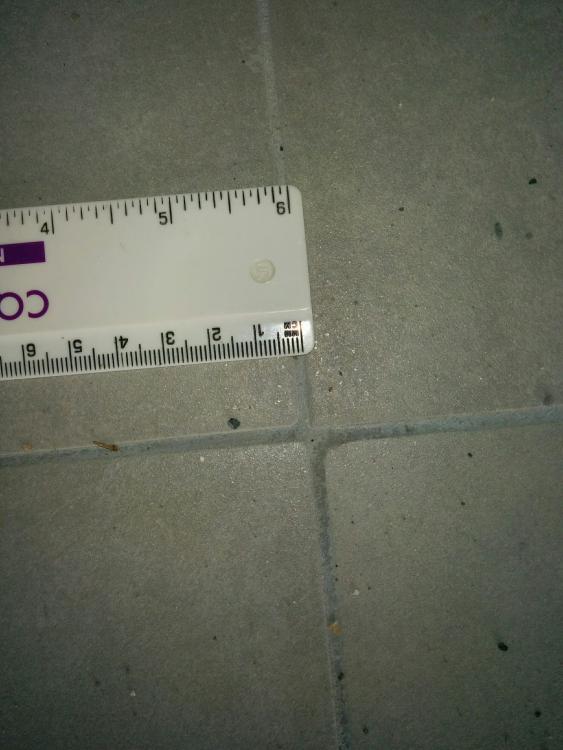
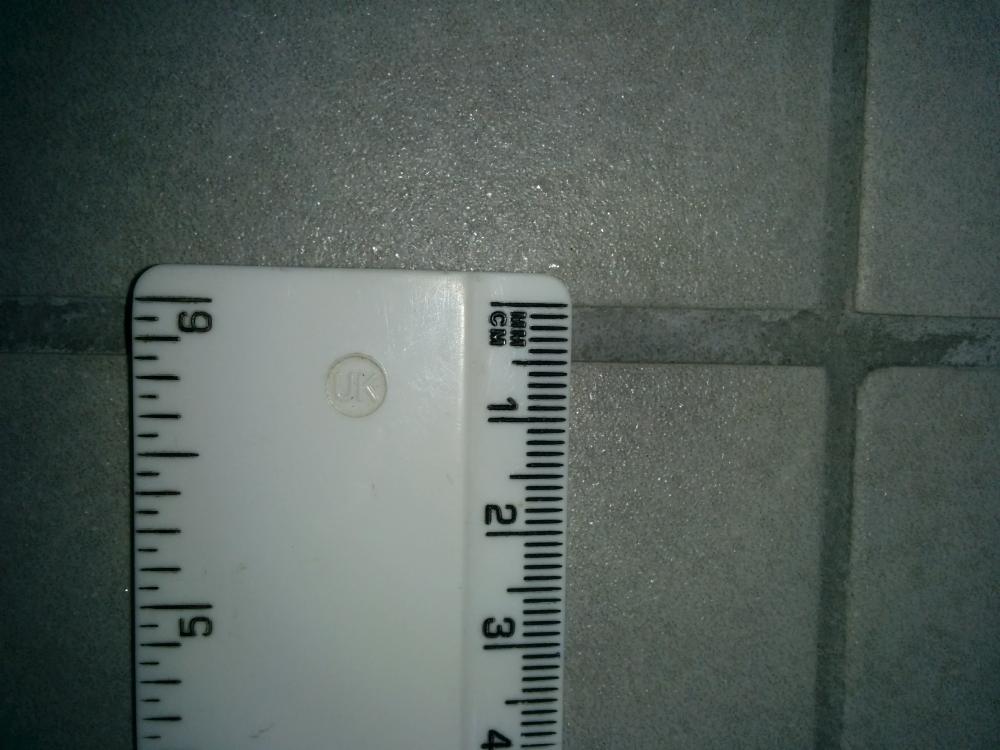
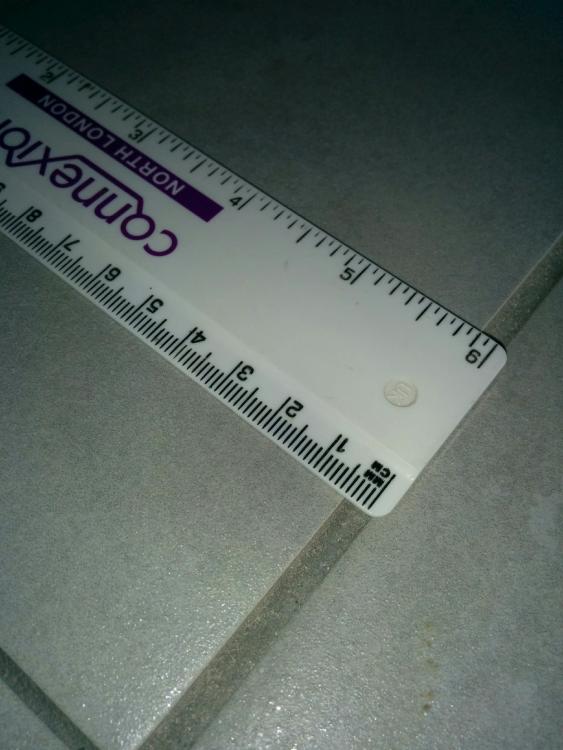
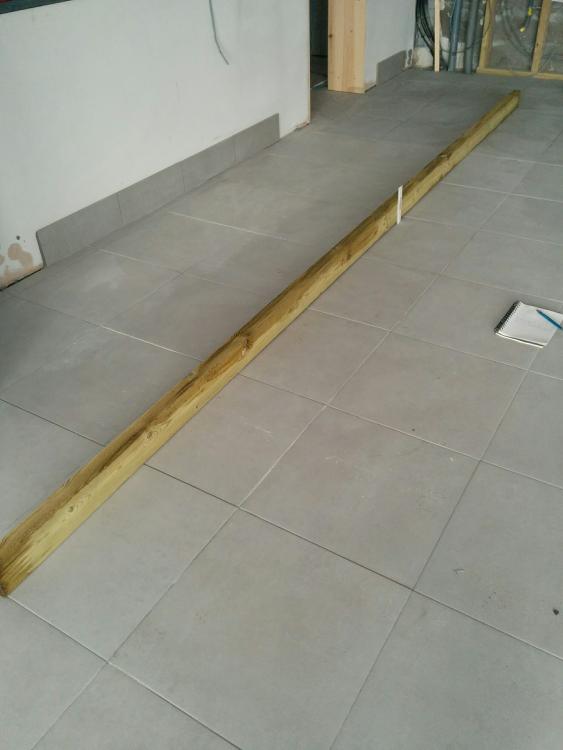
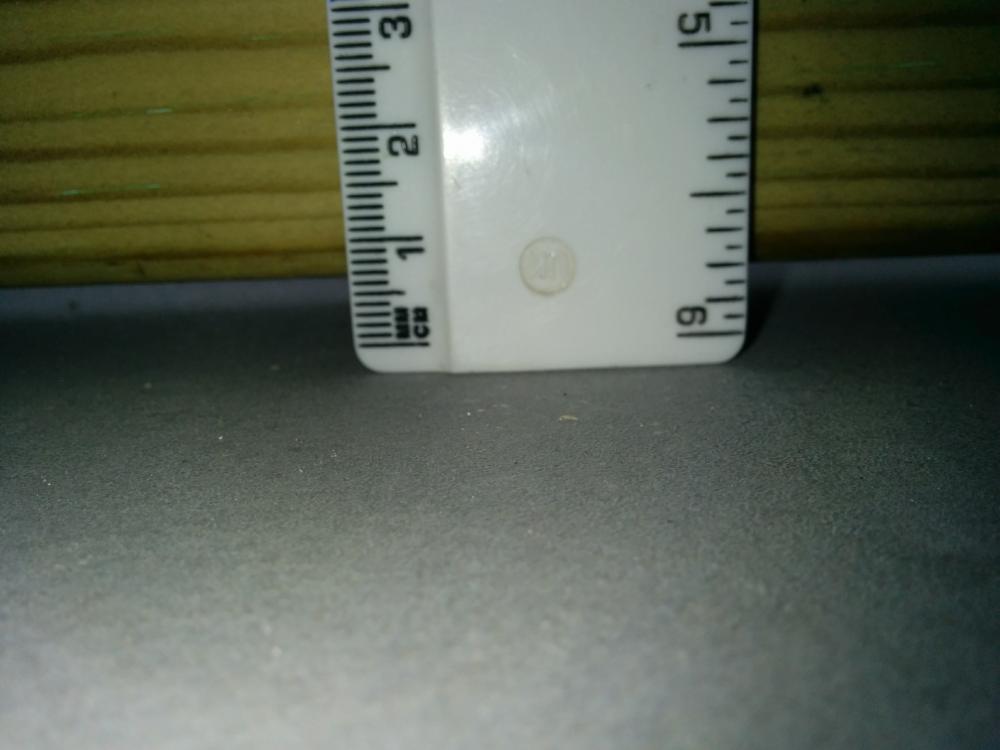
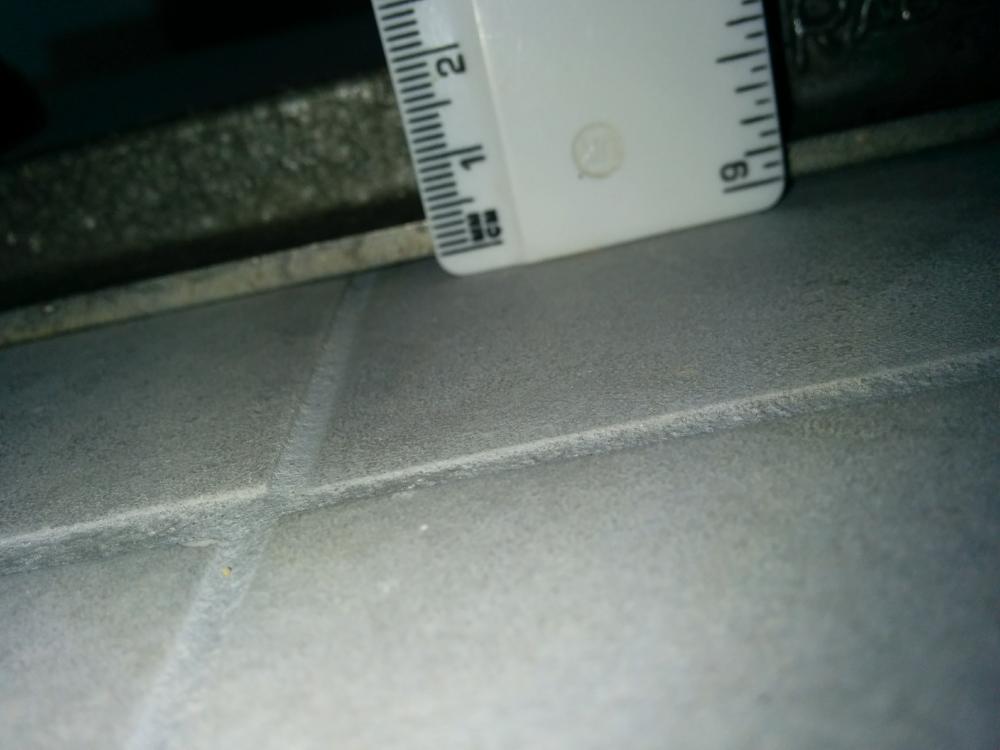
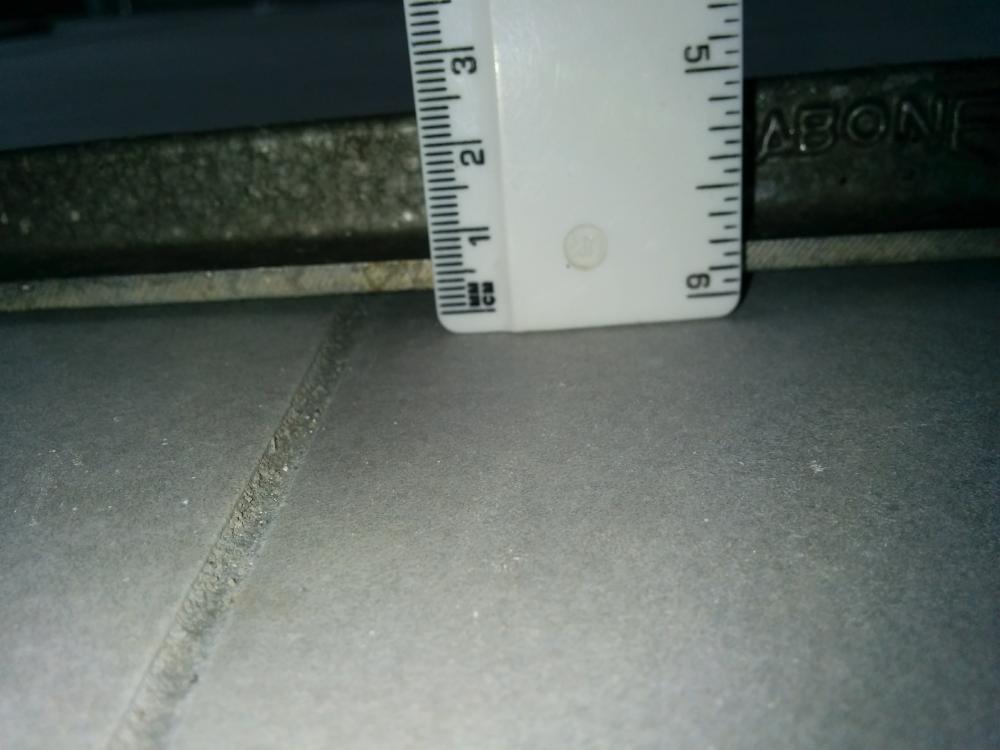
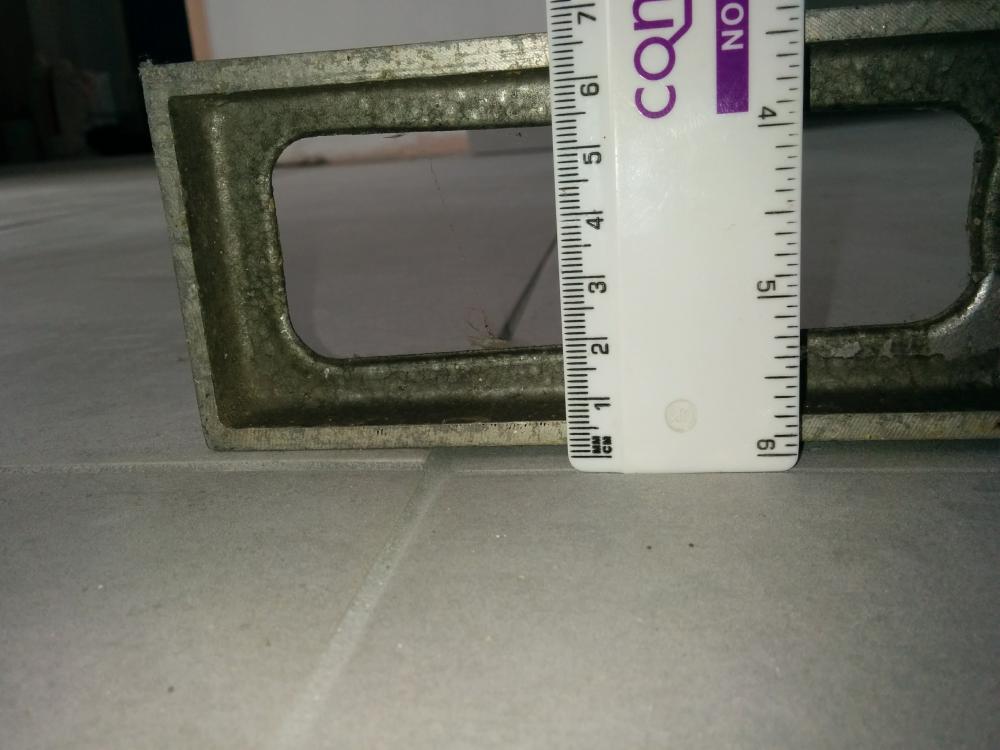
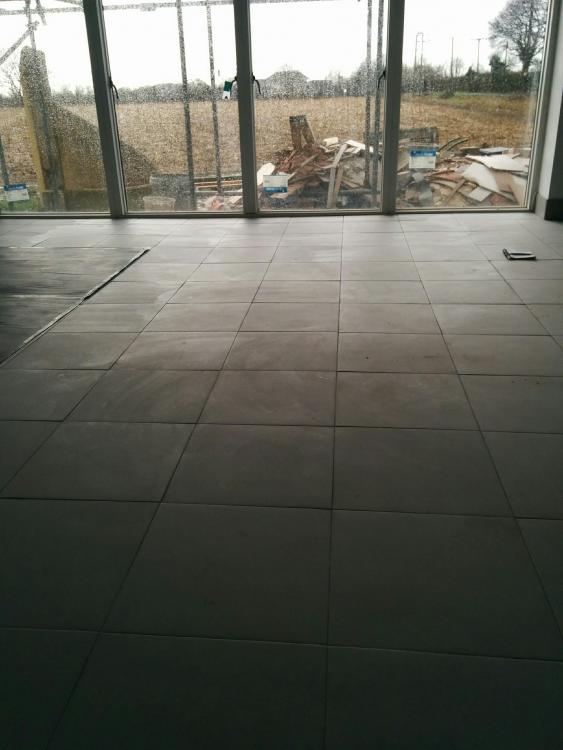
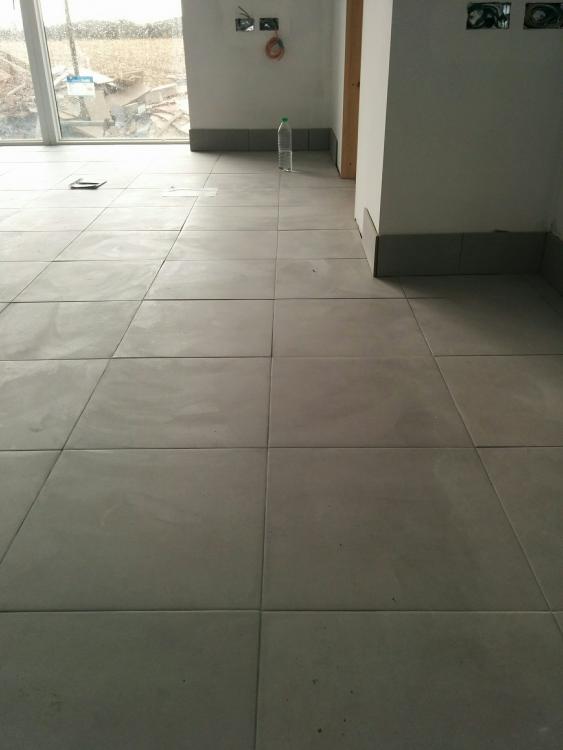
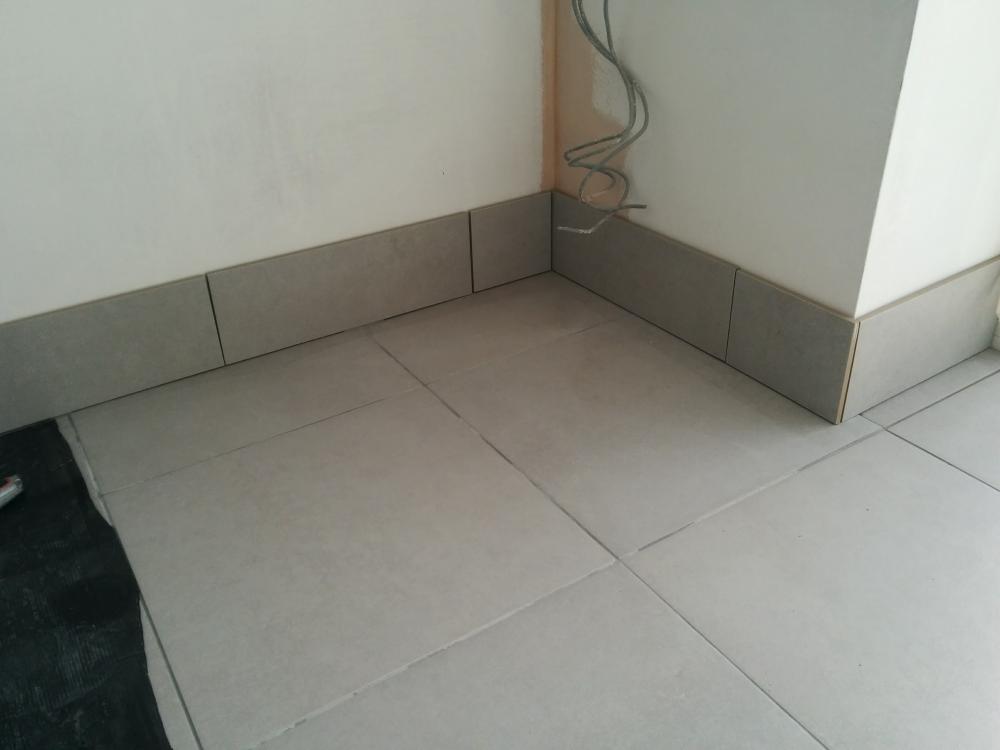
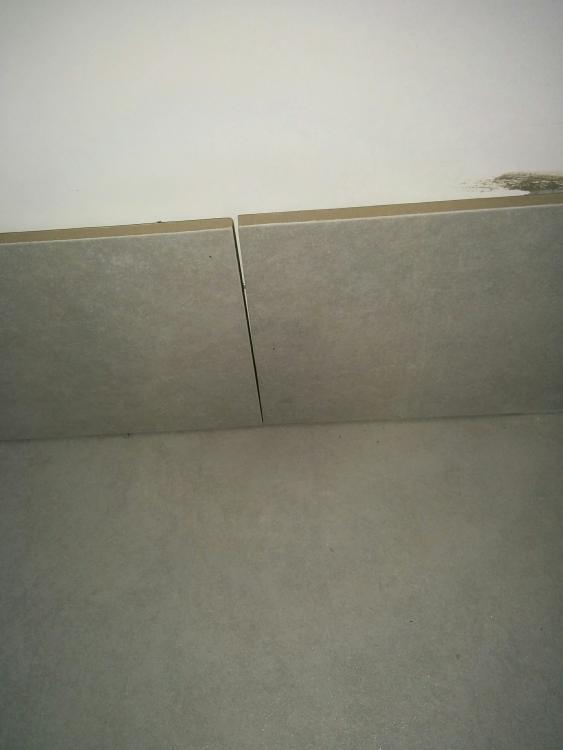
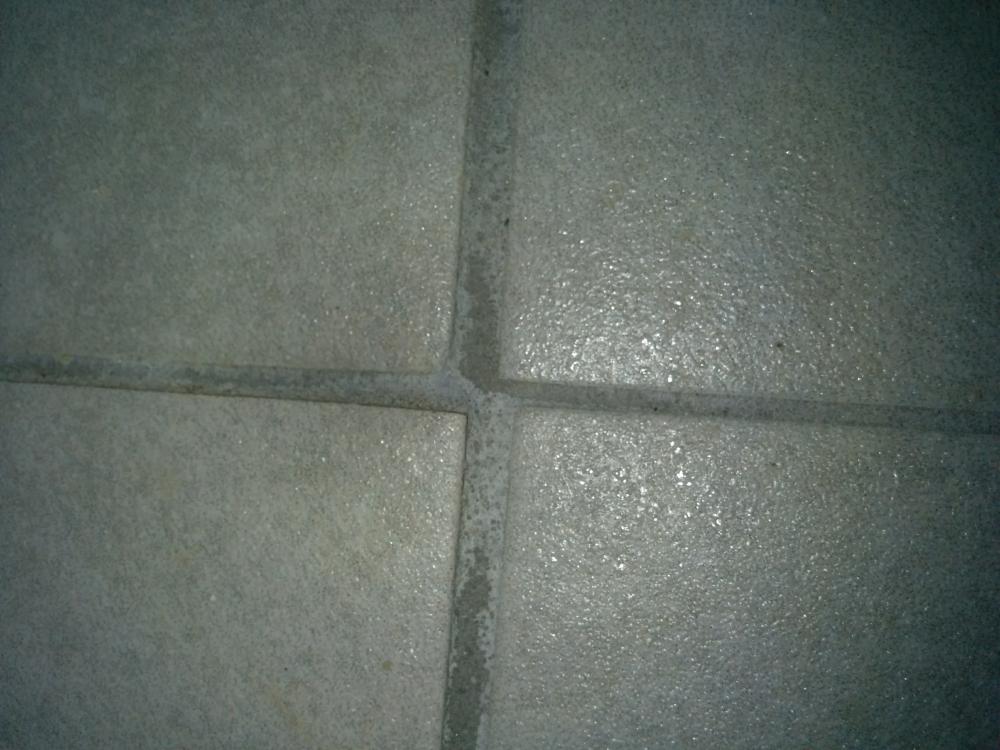
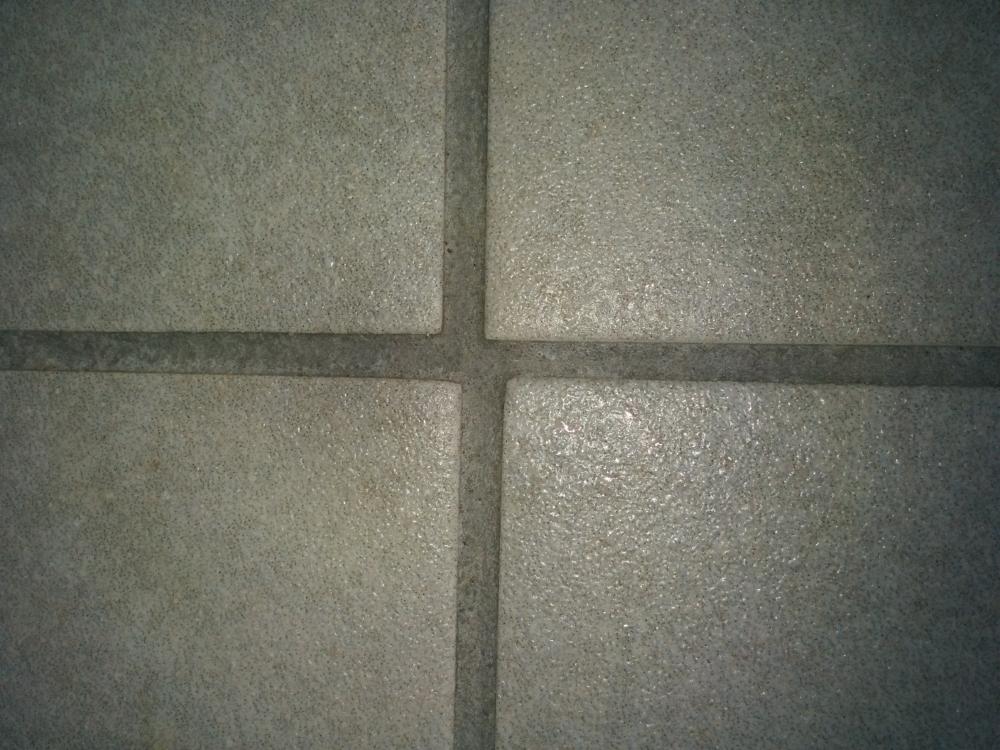
Many thanks @MrP. I think I can guess what the nature of the responses are going to be ... Anyway, here goes (warning: many images to follow) "Tiling shall have an appropriate appearance Items to be taken into account include: (a) tile joints Tile joints should be straight in alignment unless the tiles are, by design, irregular in shape. The width of floor tile joints should not be less than 3mm, unless otherwise specified by the manufacturer. Joints in floor tiles should generally not exceed the tile thickness, but wider joints, up to 10mm, may be necessary to accommodate dimensional irregularities in some tiles. Where tiles have dimensional irregularities, the joint dimensions should be “evened out” to maintain a regular appearance." I would say that 80% have joint sizes of 2mm. However there is significant variation. 2mm: 1mm 5mm: 5mm again: (b) overall variation in surface level of wall and floor tiles ± 3mm maximum deviation from a 2m straightedge with equal offsets. Deviation is about 8mm (several examples of significant deviation) (c) variations in surface level between adjacent wall or floor tiles 1mm for joints less than 6mm wide. 2mm for joints more than 6mm wide $mm variation with a 2mm joint 5mm variation: "appropriate appearance" Tiling shall have an appropriate appearance Upstands cut to different widths Upstands not set vertical: Tlies not laid square: <ends>
-
Assessing the quality of a laid tile floor
Fallingditch replied to Fallingditch's topic in Floor Tiles & Tiling
Will do in the daylight in the morning. -
We have just had a large area of tiling laid (around 50 sq m of 450 x 450 porcelain floor tiles) for our large open plan kitchen area. To my untrained eye, the quality of workmanship appears unsatisfactory. However, rather than saying to the subcontractor "this does not look good enough to me" and then arguing about what good should look like, can anyone offer advice on some objective measures for a professionally laid tiled floor ? For instance, how level should it be? how straight the gaps between the tiles should be? If the response from the subcontractor is "it was the tile quality - specifically their varying thickness" - what would be considered to be an acceptable tolerance for 450 x 450 floor tiles?
-
How to find a slow leak?
Fallingditch replied to Fallingditch's topic in Central Heating (Radiators)
Afraid he retired and moved to Devon. -
I have standardised on 200mm square panels. Others have installed these panels and reports are good. Sourced from fleabay, they all appear to be either: 3000k warm white 6000k cool white / daylight While I am happy to install 3000k in lounge and bedrooms, I would prefer a cooler colour in bathrooms and kitchen. However for me, the 6000k provides too harsh, tooo severe a light. There are plenty of LED 4500k chips manufactured I believe - but I cannot find any installed the 200 x 200 or 225 x 225 form factors. Bit of an obscure post I know but has anybody come across 200 x 200 panels @ 4500k? or similar?
-
Can anybody point me at some authoritative guidance on what is actually required under regulation here (for my three storey house) ? I have been reading conflcting information about this ...
-
Recommended Bamboo supplier?
Fallingditch replied to Fallingditch's topic in Wood & Laminate Flooring
Really sorry - confused myself - it was http://www.bambooflooringcompany.com/flooring-accessories/bamboo-profiles/stair-nosings/ who have run out of nosings !! -
It's embarrassing.
Fallingditch replied to ToughButterCup's topic in General Self Build & DIY Discussion
Don't forget that some of us have installed Hybalans semi flexible MVHR ducting from Holland (and higher spec MVHR Units than are avaible in this country); sanitaryware from Duravit, Keramag and Villeroy and Boch, (all of whom have mind-bogglingly extensive ranges and appear to be buying up the remanants of the UK sanitaryware industry), boilers from Vaillant (because their quality appears to be the best), and lightswitches from Nico (because they offer 24V DC compatibilty). -
I plan to do both stairs and floors in bamboo. I was going to source from simplybamboo.co.uk bambooflooringcompany but they have run out of bamboo noseings and re-up is more than a month away ... Just wondering if anyone could recommend an alternative supplier? Or even recommend a supplier of oak flooring? Lokking for somewhat more thatn 100 sq m, to East Anglia. PM me if you prefer.
-
How to find a slow leak?
Fallingditch replied to Fallingditch's topic in Central Heating (Radiators)
PRV - is that Pressure Relief valve on the boiler? System was installed way before present occupiers moved in Fifteen radiators on three storeys. -
Old edwardianl house with a forty year old central heating system. Modern Vaillant combi boiler that has to be regularly repressurised with mains water. This suggests a weeping joint in the system somewhere - but there us no visible evidence - may well be under the ground floor floorboards (or elsewhere). What is the best approach to finding the source of the leak? Are there any tools available whch I could hire for instance?
-
Welcome! My Architect in the East of England (or should I say the person who designed and drew up the plans for my custom build, and took them through Planning) used to refer to himself as an Architect, but now I notice that he calls himself "Member of the Chartered Association of Building Engineers". He did a good job. Clearly the qualifications are important, but as I am sure you know Mrs H., both references and the relationship area really important.
-
Vaillant EcoTec Plus 838 versus 938
Fallingditch replied to RichS's topic in Boilers & Hot Water Tanks
The Ecotec Plus 938 certainly is one hell of a chunk of boiler (and one hell of a chunk of price tag too, at around 1400 smackers). On the other hand, the theory is that it will provide rapid hot water from its reservoir for handwashing, and in addition has the capacity to run two simultaneous showers, which means that I will not need to make use of a storage cylinder or thermal store. There are no solar collectors on site so all hot water will be provided by gas (LP not Natural). Will report back on actual tests in about a month. Will estimate running costs in 2018. (Do understand that this is not addressing the OP question - will let others talk about the 838).