
joe90
-
Posts
13570 -
Joined
-
Last visited
-
Days Won
139
Everything posted by joe90
-

Removing bricks from fire place to get more heat
joe90 replied to kestrel's topic in Stoves, Fires & Fireplaces
That’s enough reason for me to change it 😇 -
Removing bricks from fire place to get more heat
joe90 replied to kestrel's topic in Stoves, Fires & Fireplaces
The tricky part is not getting mortar on the front of the bricks, it’s a bugger (impossible) to get rid of it, mortar needs to be wet enough to “stick” but not run down the front of the bricks. 👍 -
Removing bricks from fire place to get more heat
joe90 replied to kestrel's topic in Stoves, Fires & Fireplaces
Time to bite the bullet, can you lay bricks (neatly 🤣) or find a local brickie and start a Plan, could look a lot better than what you have AND work much better 👍 -
Removing bricks from fire place to get more heat
joe90 replied to kestrel's topic in Stoves, Fires & Fireplaces
If this were mine I would get rid of that brick hood completely , I think it dies not look nice ( just my opinion), I would make a larger opening much higher, you could still have a brick arch if you want or an oak lintel (far enough away from the stove , this was mane on m6 last build and worked very well.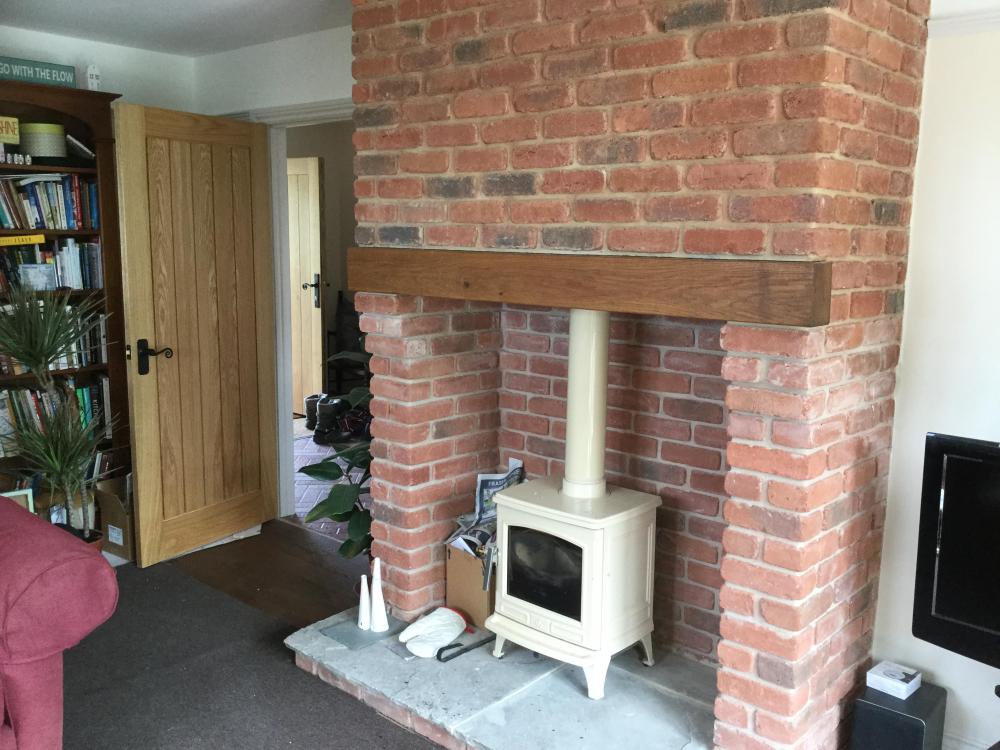
-
https://www.rentalex.com/wp-content/uploads/2020/10/TM34MG-Parts-Manual.pdf
-
1/ Yes I got that 2/ the amount of water moved by this was very little and would not be considered adding to flooding (which never happened in the area), if it was not clay the same amount of water would end up in any sort of ditch or drainage anyway.it’s not like it was flowing water. 3/ being a keen gardener I disagree, plants (unless pond or margin plants) don’t like wet feet and I wanted to be able to walk on my lawn without wellies.
-
Well my reading of mole ploughing (which I was going to do in the soggy field next to my build) was that the mole creates a drain, like a mole hole, but works because it cracks the clay to create fissures allowing water to flow into the mole which should end up in a ditch of some sort.
-
1920s brick cavity wall - dot and dab plasterboard
joe90 replied to johnhenstock83's topic in Plastering & Rendering
I dot and dabbed insulated plasterboard in an old cottage with solid 9” walls and it was the best thing I did for a 100 year old place. If dot and dab is done properly then draught will not occur, plus you said the brickwork was sound! -
Well on my last build which was on solid yellow clay in winter the water table was only just under the ground level (50 - 100mm), not a flood but a consistent level. It does. Seen it with my own eyes. Had I not been sure I would have caveated my response. I disagree, on solid clay water will not drain away unless on a slope. Although I used strip foundations we backfilled the trench outside with 50mm stone to create a French drain and I extended it to a nearby ditch which worked perfectly at keeping the water table lower.
-
Removing bricks from fire place to get more heat
joe90 replied to kestrel's topic in Stoves, Fires & Fireplaces
My wood stove in my little cottage is great, heat’s more than just the room it’s in after just a few hours. 👍 -
DONT use breeze blocks or bricks, they can crumble, best to use blocks of wood. No I know nothing about the mechanics of your machine, can you not get a schematic diagram from the internet to discover what’s inside? Send us a pic.
-
Which is why in a few jobs I preferred glulams to steels 👍
-
Removing bricks from fire place to get more heat
joe90 replied to kestrel's topic in Stoves, Fires & Fireplaces
Well I have one and it works well at pushing the heat into the room, yes the bricks will heat up but that turns it into a storage heater so you benefit longer after the fire goes out. Yes I agree it’s tight and I would not like it and opening it can be done with care. -
Any YIMBYs on here? Keir Starmer is.......
joe90 replied to ToughButterCup's topic in Planning Permission
Maybe but most brownfield sites are already in towns so a win win and better than agricultural areas., from what I know (and prove me wrong if you know better) the cost of clearing up a brownfield (polluted?) site deters builders. -
It’s got to be worth a punt, just cite others with shorter drives that have done the same. Planning is a lottery (in my opinion).
-
Any YIMBYs on here? Keir Starmer is.......
joe90 replied to ToughButterCup's topic in Planning Permission
I have always said there should be help/incentives to get developers/people to build on brownfield sites. -
What do you mean? As said above as long as air can move around the radiator it will function fine.
-
No Every day is a school day 👍
-
Is it also not known as “glulam”
-
And in the wet paint 🤷♂️
-
I concur.
-
Any YIMBYs on here? Keir Starmer is.......
joe90 replied to ToughButterCup's topic in Planning Permission
Yes I read about the fire service inventing blankets to cover an EV on fire but it has to stay in place for days as batteries can re ignite again when oxygen is available. -
Any YIMBYs on here? Keir Starmer is.......
joe90 replied to ToughButterCup's topic in Planning Permission
But are they not reporting that EV fires are more difficult to put out?. Although EV fires are rare, firefighters have found that they are very hard to put out once they start. This is because lithium-ion batteries burn hot and fast. They also require more effort to be extinguished because the batteries can reignite after the fire has been initially controlled.6 Jun 202 -
Nothing wrong with re instating the brickwork as it was originally built, but it beggars belief why someone should go to the trouble of removing just a segment of those chimneys?
-
And insulate the doors and make them airtight. No, @ProDave is right, whole roof is the only (easiest) way.