


Russell griffiths
-
Posts
7971 -
Joined
-
Last visited
-
Days Won
65
Everything posted by Russell griffiths
-

Boarding the Dormer - ceiling to slope
Russell griffiths replied to crispy_wafer's topic in Plastering & Rendering
No need to angle them,I looked for a trim to go from my vaulted ceilings to the flat area, I did find some, but after asking 3 plasterers to use them they all looked at me like I was insane and said just round the corner off. I didn’t like that answer and went on a plasterers forum, they all said the same, round it off. so we put a tight coat of bonding along that line, then added a fine plaster reinforcement mesh 200mm wide, then another tight smear of bonding over the mesh, all flattened out using a wet brush to feather the edges, the plasterer then skimmed the lot. I haven’t even got a hint of a crack anywhere and I’m glad I didn’t go for the straight line as I think I would always look at it to check it’s straight. -
Dormer construction detail advice, please
Russell griffiths replied to Tony L's topic in General Construction Issues
Got to be timber then, insulation in the studs, some on the inside to bring it out to the right dimensions you need. -
Dormer construction detail advice, please
Russell griffiths replied to Tony L's topic in General Construction Issues
Why build that wall solid, build it in a cavity to the same spec as the outer walls and continue it up past the roof line. I’ve got two large internal walls that pop up and suddenly become external walls, it was easier to use the same build method all around than swapping to a different build method for just 1.5m of wall poking up. -
Dormer construction detail advice, please
Russell griffiths replied to Tony L's topic in General Construction Issues
Can you use an EWI on the section of cavity wall coming up against the sloping roof. it would be behind your cladding. if you use one of the aluminium bracket and rail systems for the cladding the Ewi can fit behind the rails. -
Extra insulation round SVP’s in a Kore passive slab?
Russell griffiths replied to Gibdog's topic in Foundations
Tube of cheap silicon from screw fix £5 at the most, he is definitely a lunatic. do you need him anymore you have the slab booked in, mbc frame on top, guaranteed air test of 0.6, what more is he good for apart from costing you more money. -
Dormer construction detail advice, please
Russell griffiths replied to Tony L's topic in General Construction Issues
I have a 90mm square steel post with 25mm insulation on the outside then covered in an aluminium flashing to match the windows.
- 29 replies
-
- 1
-

-
- drawings
- construction detail
- (and 1 more)
-
Dormer construction detail advice, please
Russell griffiths replied to Tony L's topic in General Construction Issues
Just a quick idea, is it a big deal to have the bedroom inline with downstairs, but just space the cladding out to get that set out look. you loose your bigger bedroom. that lintel above the corner window is going to be grief, can you live with a corner post, could save you a good few grand. -
Shower and basin drain connections
Russell griffiths replied to seanblee's topic in Bathrooms, Ensuites & Wetrooms
If the hole is in the correct location on the trimmer then it’s not a problem, you can get reinforcement plates that fix to the side if your worried, or you can make up a reinforcement plate out of 18mm ply, glued and screwed on. you just need to avoid the standard plumber hack of cutting 50mm notches out of every joist 🤦🏻♂️ fit an air admittance trap under the basin. -
Shower and basin drain connections
Russell griffiths replied to seanblee's topic in Bathrooms, Ensuites & Wetrooms
I personally would start from scratch and get it how you want it. pull the floor up, cut the stack off remove all those old bosses and fit a new section of stack with th bosses in the location you want them, get the pipes under the floor, get the tray down flush and have it right. anything else is just compromise. -
Extra insulation round SVP’s in a Kore passive slab?
Russell griffiths replied to Gibdog's topic in Foundations
He’s a lunatic. why not block all your windows up then you wont have that problem either. we all want to build better, but you need to draw a line somewhere. if you are using the MBC double stud wall system and their insulated slab then you are splitting hairs, you will struggle to find a better system that works so well together. -
Buying slabs of timber.
Russell griffiths replied to Russell griffiths's topic in General Self Build & DIY Discussion
Not Vastern a small local forestry company. -
Buying slabs of timber.
Russell griffiths replied to Russell griffiths's topic in General Self Build & DIY Discussion
I’m probably going to stain it, most timbers will be too light for what I want to do. -
Buying slabs of timber.
Russell griffiths replied to Russell griffiths's topic in General Self Build & DIY Discussion
There’s all different stuff, i like the look of some monkey puzzle, but the big stuff I want is cedar, not western red, but either Lebanon or deodar. -
Evening all. I want to build a large dining table from a single slab of timber, I went to a sawmill today to have a look at some and found plenty I liked, they had all thing I’m undecided about is what slab from what part of the tree. the trees have been cut and then re stacked up in the same position that they came from the tree, so looking at my excellent diagram would you want a piece from the centre like no 4, or 3, or a slab from the outer parts no 1-2 or 5-6. it’s all about 75mm thick at the moment ready to be surfaced flat on both sides to bring it in to about 60mm finish width.

-
Extra insulation round SVP’s in a Kore passive slab?
Russell griffiths replied to Gibdog's topic in Foundations
You normally wrap the pipes in a 15-20mm thick layer of foam held in place with gaffa tape. this is usually to allow a bit of wiggle room around the pipe so it isn’t totally trapped by the concrete, this can help if having to add another joiner to the pipe as the joining collar can go down lower without hitting the concrete. if he’s worried about cold bridging, then he’s getting you to spend £20 to save 50p. Lunatic. !! -
Help, Chimney 'knee' construction
Russell griffiths replied to Post and beam's topic in Roofing, Tiling & Slating
does that help, the bottom of the rafter is supported on a timber fixed on the inside as the roof tiles in this instance don’t have any rafter tails on show. if this helps you need to do a mock up to see how you want the rafters to finish and how you want the tiles to sit over the brickwork.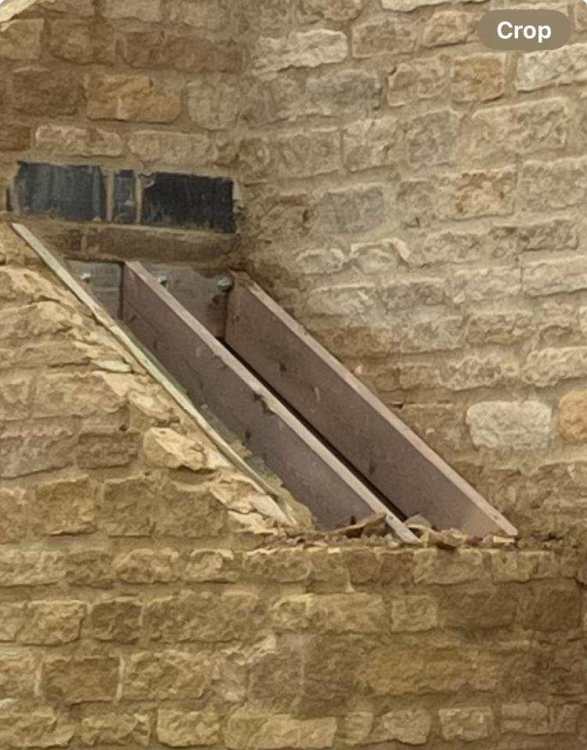
-
Help, Chimney 'knee' construction
Russell griffiths replied to Post and beam's topic in Roofing, Tiling & Slating
It’s going to be hard to explain you need a rafter fixed into the sips panel like you said, the top end of this rafter will fit flat up against the a ledger board that needs fixing to the side of the c————— sod it I will try to find some pictures. -
Help, Chimney 'knee' construction
Russell griffiths replied to Post and beam's topic in Roofing, Tiling & Slating
Not really, that’s all a bit wrong are you after building the timber work to support the roof tiles ? if you are then we need a bit of clarity on what you want to achieve will you have a barge board running up the outside of the brickwork, or will you just over sale the tiles and have a cemented fillet, or dry verge. what roof covering is going on this ? will it have a soffit and facia at the lowest point, or just facia. need a sketch reall on what the final goal will be then I can guide you as to how to frame it up. -
How does the energy get through 100mm of brickwork, the cavity on the outside of the insulation is generally cold. still baffled. 😂
-
You shouldn’t put a sharp 90 underground, either install an inspection chamber just before the connection, or a very slow long radius bend. how exactly are you connecting to the sewer, is it a saddle or are you cutting in and installing a junction. a few photos would help with this. and if the storm drain is deeper than the foul then your current pipe will be to low in the ground, you will need to go backwards up the run of pipe and re lay the pipe to the correct fall.
-
Red/Brown/Buff bricks
Russell griffiths replied to allthatpebbledash's topic in New House & Self Build Design
I think picking the correct mortar and pointing method is as important as the brick choice. -
What do you think the aluminium layer will do inside a cavity. i personally can’t see it being of any help at all. if this is a new build i would ask some more questions on here and look at all the options for your insulation.
-
Who can dig the trench for my new electrical supply?
Russell griffiths replied to Bancroft's topic in Electrics - Other
It depends where this trench is. if it’s across a farmers field or through your land then as John said you can do it. if it runs within 1m of the highway you will need a contractor with a streetworks permit, and use the appropriate traffic control. obviously the more rural you are and the less people there are to upset you do whatever you want, just be aware if you are working within a metre of the highway you need to comply. -
Take the brickwork down, not the blocks.
-
You would need to pay privately, it would probably cause so much bad feeling it would be hard to continue with the rest of the build. unless you have some lads that genuinely want to learn how to do things better.




