


Russdl
-
Posts
1785 -
Joined
-
Last visited
-
Days Won
6
Everything posted by Russdl
-
My MVHR layout
Russdl replied to Jason L's topic in Mechanical Ventilation with Heat Recovery (MVHR)
@Jason L as above, I’d get one in the dining area. Also I’d get them further away from the doors, as you have done in the sitting room. When I did mine I found out somewhere that the supply and extract air valves should be at least 1500mm from any wall. I can’t remember for the life of me where I found that but it’s something I’ve tried to do where possible, unfortunately doing that upsets my OCD as the valves are not necessarily in an eye pleasing position in the ceilings or aligned with light fittings. -
Integrating an MVHR to our build
Russdl replied to djcdan's topic in Mechanical Ventilation with Heat Recovery (MVHR)
Yes you can, and if needed you can also get a flatter version if there isn’t room for the round. The more 90 degree bends the more the flow is restricted though. -
@Temp Two good ideas there - apart from the carpet one that is. I’ll get right on to it ?
-
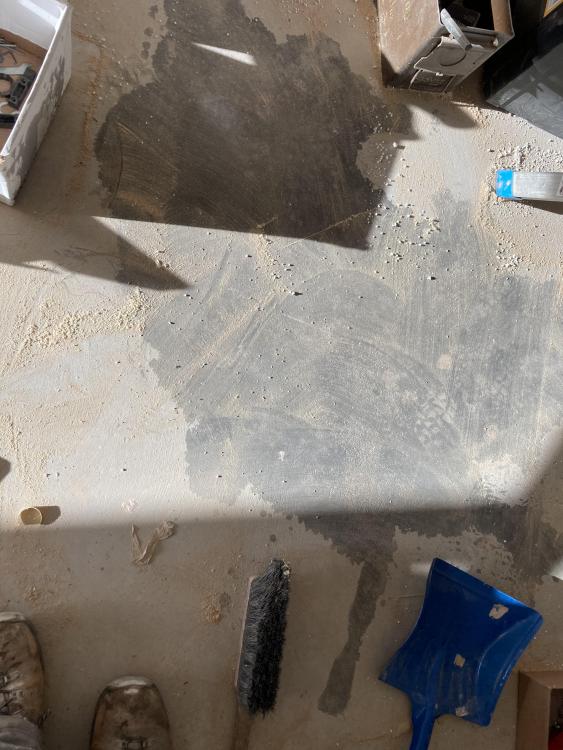
Some clown, probably me, kicked over a tin of Hammerite thinners, right after cleaning some black Hammerite from a spray gun. We now have a massive black stain on the slab. I soaked up as much as I could and covered the stain in sawdust for a couple of days but it still stinks of thinners. I assume the odour will disappear in time but is there anything else I can do to ensure the room, that will be carpeted, doesn’t always have a whiff of thinners about it?
-
+1 to that. When we finally get in to our new gaff we’ll be waving a sad farewell to a Clearview wood burner. They’re not the Rolls-Royce of wood burners, they are the Tesla of wood burners.
-
Maximum fence post centres/ arris rail length?
Russdl replied to Randomusername's topic in Landscaping, Decking & Patios
Our fence was done with 3m arris rails for aesthetics. Any shorter and it seemed to me there would be too many post cluttering things up. I can’t fault the quality. (My nephew did it and he’s bigger than me.)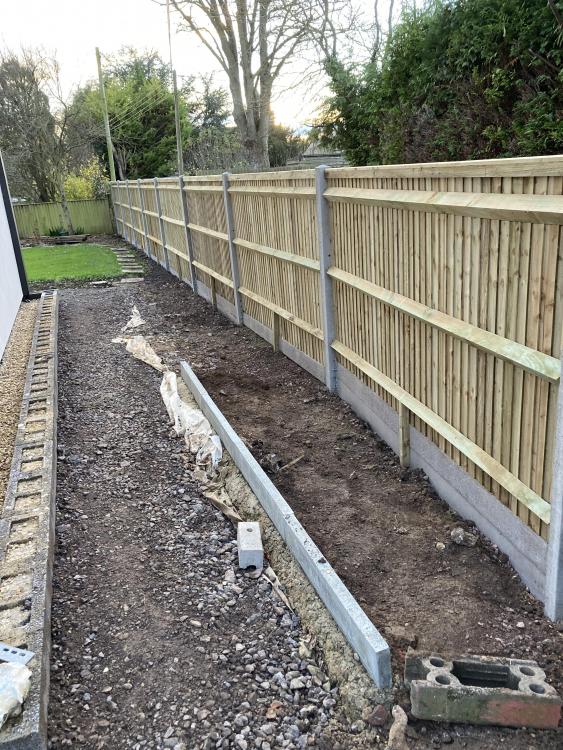
-
Dead impressed with the cupboards @Big Jimbo and the bed, we need a wee vid to see the sofa/bed conversion, plus how exactly did you straighten out the warped ply?
-
@SteamyTea it may just come to that!
-
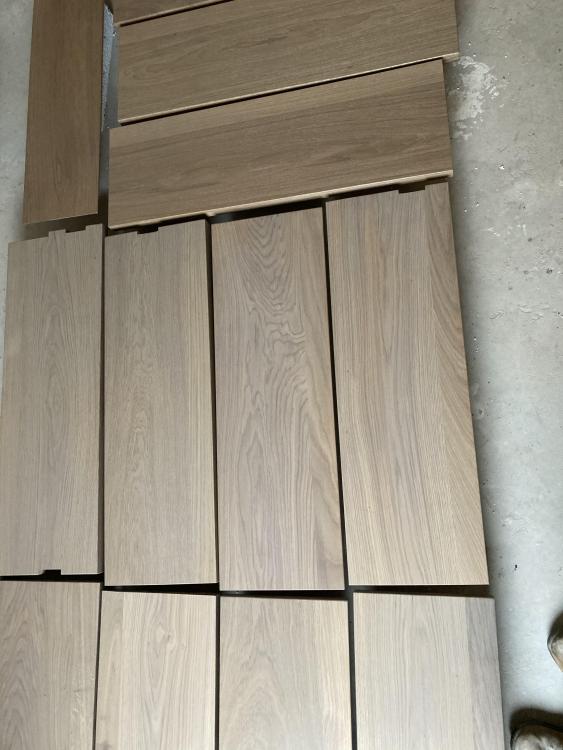
Just thought I’d share my OSMO experience so far. Our stairs treads are made out of oak/engineered oak and to try and keep them lightish and greyish and stop them going orangeish I’ve used OSMO’s Polyx Oil - light grey. It’s a bit nerve wracking, the product in the tin is most definitely grey, it looks like a grey primer paint. I had numerous trial runs on off cuts of oak before I had the balls to go for it on the treads themselves but I’ve achieved the look I’m after. Time will tell if it keeps the orange at bay. In the picture below the horizontally aligned treads have had one coat and the vertical treads the maximum of two coats.
-
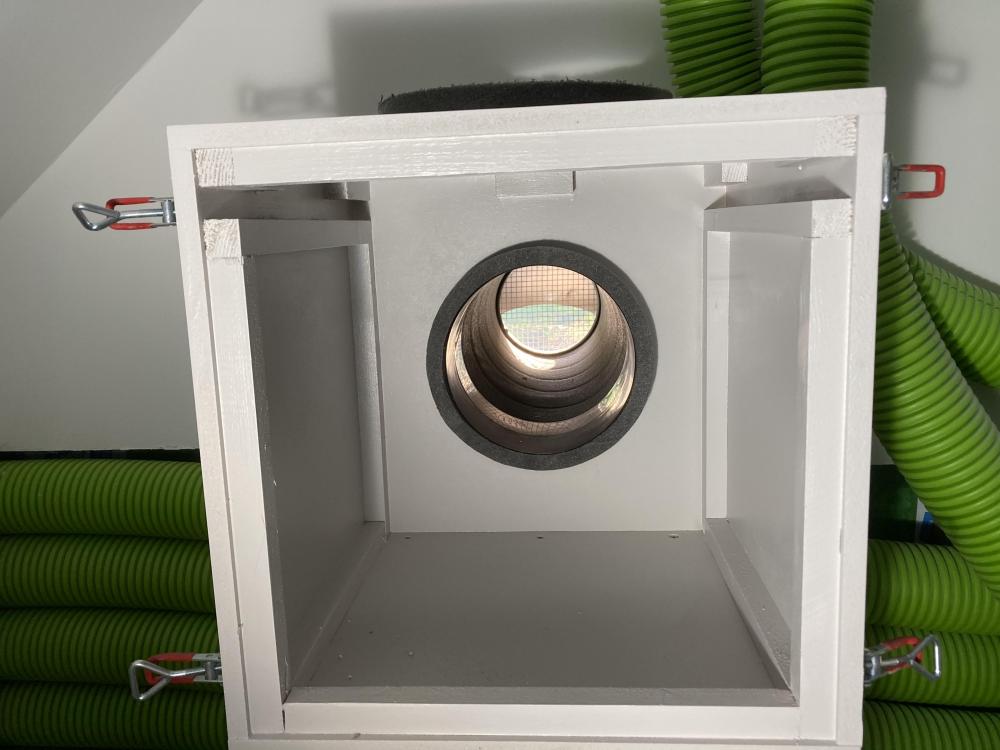
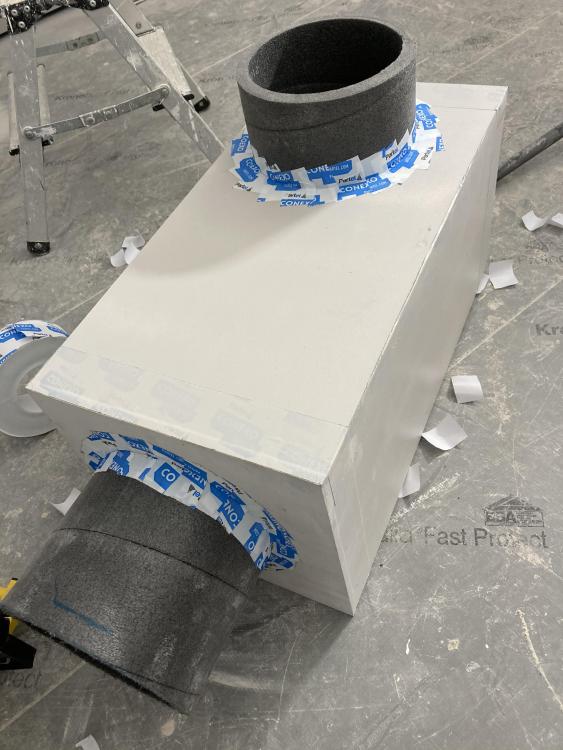
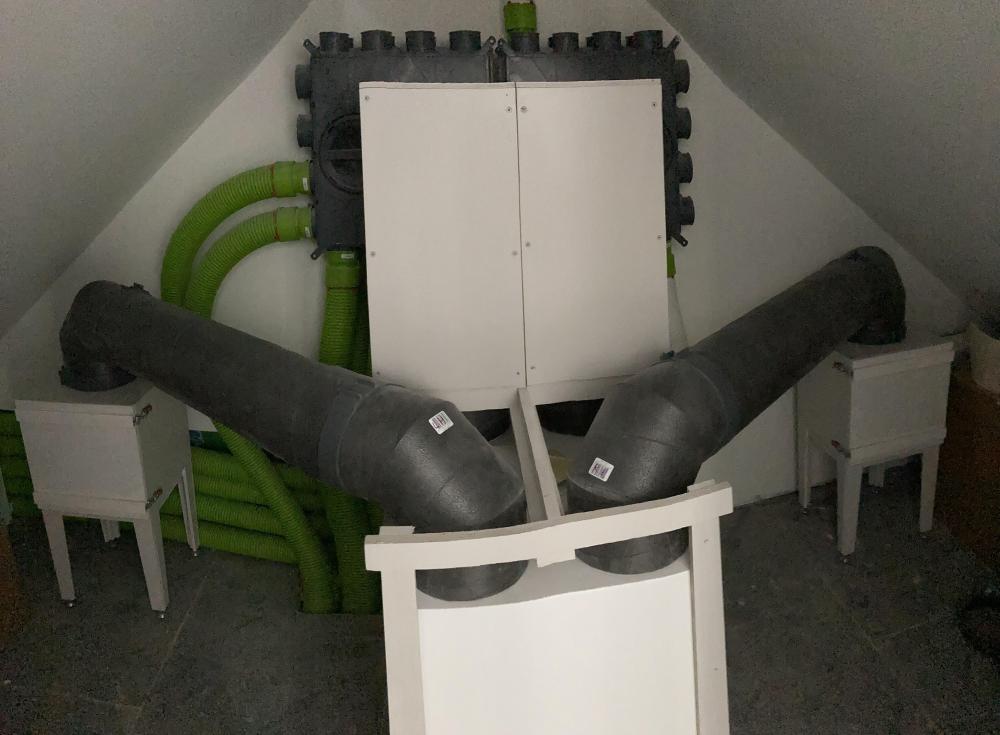
Finally the MVHR with added bits is properly fitted and the loft space in which it resides is taped and painted. The spiders are already on the advance through the grills on the intake and exhaust vents so hopefully my MVHR pre filter will keep them out of the MVHR itself. The pre filters are airtight so should be spider proof as well. The home made attenuators are easy to remove, which I’ll need to do to fit the restrictor rings to the manifolds and I haven’t airtight taped the fronts on yet. Not sure if I need to? The boxes are lined with acoustic foam, would that be airtight enough I wonder, and how would I know if it wasn’t? Just need some electricity to see if it all works as I hope ??
- 100 replies
-
- 3
-

-
- mvhr vents
- filter
- (and 1 more)
-
Zinc angled standing seam.
Russdl replied to Makeitstop's topic in House Extensions & Conservatories
Does that mean you have to ship the roof panels to BiPVCo to get the PV bonded to them? -
Zinc angled standing seam.
Russdl replied to Makeitstop's topic in House Extensions & Conservatories
@SimonD he posted drawings on page one of this thread. Doesn’t look too complex. -
Recovering Academic
Russdl replied to Lesgrandepotato's topic in General Self Build & DIY Discussion
I think you’ll find he’s @ToughButterCup now and still yarning. -
Zinc angled standing seam.
Russdl replied to Makeitstop's topic in House Extensions & Conservatories
Good luck ? -
Zinc angled standing seam.
Russdl replied to Makeitstop's topic in House Extensions & Conservatories
In a nutshell, it can’t. As an alternative, and DIY’able, what about timber or timber composite cladding? Or any other DIY’able cladding for that matter. It would achieve your end game of hiding some of the brickwork. -
Zinc angled standing seam.
Russdl replied to Makeitstop's topic in House Extensions & Conservatories
@Makeitstop that is quite astonishing. Where are you in the country? If you’re down south perhaps it would be worth getting a quote for the bloke who did ours? Would you do the prep prior to zinc yourself? It’ll save a bob or ten. -
@Russell griffiths yep it’s boiled down to 150x6 flat plate with welded rebar stakes. Sloping garden bit as @joe90 suggested (because yet again I couldn’t work that out for myself ?)
-
Never heard of that, I shall research further.
-
@PeterStarck and @PeterW Thanks, so it works out roughly twice the price for the galvanised stuff with a bit of jiggerey pokery re VAT delivery, time elapsed. I'm pretty sure I'll go for the mild steel for the path alongside the house and maybe revisit the Everedge for the pretty bits.
-
@PeterStarck They look good, they're a bit shy with their prices. Do you know what their m price is for 150mm high?
-
My roof tiles are zinc standing seam, I think I'll stick to the mild steel ?
-
No, long gone. I see where you’re going with that though.
-
@joe90 yep, I was already thinking along those lines. Another sleepless night beckons as this goes round and round in my head for the next many hours! I can over think anything.
-
Exactly, but when I look down at a muddy rubbly hole I forget that stuff. Thanks for reminding me!
-
You're right of course, it could grade down towards the gravel boards, I guess I was concerned about the level slowly creeping up over the years and covering the gravel boards if I were to do that. So a 6m 150x8mm mild steel sheet it is I reckon, in fact 6mm as no vehicles will get near. Thanks both ?



