Dan F
-
Posts
1431 -
Joined
-
Last visited
-
Days Won
2
Everything posted by Dan F
-
Induction downdraft hobs requirements (Bora etc)
Dan F replied to SuperJohnG's topic in Kitchen & Household Appliances
Good to know! We've had both MVHR designer and kitchen designer tell us to avoid avoid using a slot difusor above island, which is where we'll have Bora hob. -
Induction downdraft hobs requirements (Bora etc)
Dan F replied to SuperJohnG's topic in Kitchen & Household Appliances
In your case it'd be fine I'd imagine. But with 2.5m ceiling heights, where MVHR is just 1.5m above hob, i've been told it can interfere with effectiveness. -
Induction downdraft hobs requirements (Bora etc)
Dan F replied to SuperJohnG's topic in Kitchen & Household Appliances
Careful with putting an MVHR extract directly above a BORA extractor as it can impact effectiveness. -
New Build Passive House (Donegal - Ireland)
Dan F replied to Donegalsd's topic in Introduce Yourself
If you have PV you could argue that the cooling may be free I guess, but I struggle to understand how a good PH architect/consultant would design something, in Ireland, that has up to 25% overheating to start with! The night purge should ideally be modelled in the PHPP already, that way you'd know if the risk still existed considering this rather than making any assumptions. Has the brise soliel shading been included in the model? That should help a lot, although you'd probably want something for first floor windows too. Solar glass will impact winter solar gain which is why IMO the best approach is correctly designed overhangs (that will block light in summer, but allow it in in winter) and/or temporary shading (external venetian/fabric blinds). See if your PHPP consultant will give you the spreadsheet so that you can play around with the variables yourself and work out the best balance yourself. As long you don't use it for any other projects I don't see why this would be an issue.- 11 replies
-
- 1
-

-
- passivhaus
- timberframe
- (and 2 more)
-
New Build Passive House (Donegal - Ireland)
Dan F replied to Donegalsd's topic in Introduce Yourself
Welcome! Have you done PHPP calcs yourself or do you have a passive house consultant or architect onboard? I'm suprised at your cooing demand as this is much higher than you'd expect for this part of the world! What is your "frequency of overheating" without cooling? It must be very high.. Ideally, you would design the house to avoid so much overheating without needing to rely on so much cooling. You don't have to sacrifice the view in order to do this, but can use a combination of i) overhangs, ii) temporary shading and iii) solar glass. The good thing about having PHPP model is that you can try different combinations until you get a good balance. You may still want some slab cooling, but in my opinion it's not ideal for a design to bake in this amount of cooling given you are in the north of ireland and not the south of france. Is it too late to at a minumum build in some overhangs at first floor level? On a seperate note, looks like something is wrong in your PHPP as PE/PER demand are far too low. -
Fire stuff - Building within 1m of boundary
Dan F replied to WorksItOut's topic in Building Regulations
The latter. Requirement for building requirements depends on size. Planning process won't tell you if you do/don't need bulding regs, these too are decoupled. We got LDC partly as safety net before investing money. But also because we are building house at the same time, so wanted to get the garden room in the bag, so we didn't need to include it in the house application to reduce scope of main application. (PD only applies when main house exists..) -
Fire stuff - Building within 1m of boundary
Dan F replied to WorksItOut's topic in Building Regulations
We are bulding a garden room that falls under PD, requires building regs and is within 1m of bounday. Building inspector said we needed 30min fire rating on inside and outside of the walls along boundary (the wall can still be timber-framed). - Internally we are assuming a fire-rated plasterboard gives this. - Externally we planning Savolit wood wool board and lime render (avoiding the use of a cavity) We had a neighbour complain and someone from planning out a couple of weeks ago. We had applied for a Lawful Development Certificate though, so sent them packing and told them to go and look at there own planning records first! Are you having any toilet, drainage etc. If you are that is another area that building inspector will be interested in (if BRegs apply). Even things like how much space you have around the toilet and width of doorways I think.. -
In which case you won't need any magic/app to control powerall and you won't care less about the API I was mentioning is lacking. Tesla will control battery instead.. Which Tesla Tarrif: - 11p once that doesn't need a car? - 8p one that needs Telsa car? In our case given we'll export more than we import over the full year, I assume 11p would make most sense. (not that we have car yet)
-
Our meter was installed about 6wks ago. Octupus had been telling us that they had no idea at all regarding lead times and that'd we'd have to wait and see. The way we got it done is the end was someone on a Tesla user group put me in contact with the meter instalation manager! I haven't looked at the the whole Go vs. Agile vs. Tesla Tarif options yet, unclear which makes most sense.
-
Octupus Agile or (Octopus) Telsa Tarif? - Agile you are messing around trying to get Powerwall to charge at the best time based on agile tarrif. - Tesla Tarif is 11p for all exports and imports. (double Octupus standard export rate) If you have a fairly decent sized PV array, I wondering if it make sense to skip all the complexity of agile (and lack of API to control powerwall) and just go with the Tesla Tarrif. (You no longer need a Telsa car for Telsa Tarif)
-
MVHR with active cooling
Dan F replied to worldwidewebs's topic in Mechanical Ventilation with Heat Recovery (MVHR)
I copied the value from the datasheet. It is more complex because there is also "sensible power" with cooling due to condensation, so that might explain the difference. Agree! -
MVHR with active cooling
Dan F replied to worldwidewebs's topic in Mechanical Ventilation with Heat Recovery (MVHR)
@Levo If you want to use MVHR for cooling you will want to use a much lower temperature. Where did you get the 8C from? From ComfoPost data sheet: - Water temp IN. 7C - Water temp OUT 12C - Air temp IN 27C - Air temp OUT 12C - Flow rate. 144m3/hr - Power: 1.9kW Heating you can get 1.75kW from the same system, but to get this power you'd need a 55C water flow temperature.. so not going to be very nearly as efficient as using UFH at 35C flow. Running at 0.6 ACH will improve power, but not by that much. We will be using this system, but only as complientary heating/cooling of the first floor.. primarily approach to heating/cooling is UFH. That said, given out total cooling load (PHPP calculated) is only 1.3kW, MVHR-only cooling would in theory work. -
Typically each circuit will be max of 100m, so depending on the size of your house you'll likely need multiple circuits. While you may not see the need for manually controlling each circuit seperatly in a highly insulated house you do need to ensure the system is balanced. Three ways to balance from what I've read: 1) Adjust the flow regulators manually for each circuit on manifold based on pipe run length. 2) Use slab sensor in for each circuit and switch actuator on/off based on temperature. 3) Use the Salus auto-balancing actuators. One thing to note is that option 1), won't account for areas of the slab which are potentially hotter/colder for some reason, like sun hitting fooring or near a door that gets opened regularly.
-
@SuperJohnG Once you've worked out ducts, make sure you have UFH layout worked out and give some thought to in-slab temp sensors (assuming you are having in-slab UFH)
-
They pegged out all the interecting lines that formed the corners (1-2 meters from actual house position) and also marked up levels on fence posts. Then: - Groundworker dug formation using these. - MBC then transferred this to there own small wooden frame type thing to fo mark the position of EPS corners once they'd compacted the hardcore.
-
In our case: - We had a surveroy set out foundation position. - MBC then measured drainage position from foundation edge based on drainage drawing provided by designer. Same with all ther other duct penetrations.
-
We ended up with two 110mm ducts in plant room for condensate/UVC overflow, just because this was easier than trying to pipe the condensate from one side of the plant room to the other. Ideally you don't have lots of SVP junctions under your slab, but using Y-junctions for drains that aren't toilets or kitchen sinks is acceptable. The is a NHBC guidance document called "‘Y’ JUNCTIONS IN DRAINS UNDER BUILDINGS" that talks about this. 110mm SVP pipe supplied and installed by MBC. If you need 32mm depends how many concurrent high-pressure showers you want to plan for ?. Costs a lot less to upgrade to 32mm now then do it later which might be impossible, is my POV though. I don't know if most, but some people do. We felt it was the best approach for us. Depends how far away ASHP is, if you want it highly insulated, if you are happy to cement it in, and if you can go down under harcdcore to acommodate the bend radius or not. Clearly if you UVC is on an external wall, then this might make less sense and/or be less practical. The bend radius is about 0.5m+ from memory. Order pipe from https://www.loco2heat.co.uk/. Photo here. Note the long run is to a garden room, the short run on the left is for the ASHP.
-
68mm Ferro Firesafe EI30 (assuming you need 30min fire door). U-value I was quoted for the whole doorset was 1.02 vs. 0.76 for the passive version.
-
We haven't ordered this yet. But Latham's was a lot cheaper than Principal Doorsets. Also, you don't necesarily need the PH version, the standard version is stil pretty good from u-value perspective and was £1,685 at the time (vs £2,200).
-
Not sure how the "1m away" calculation works. If you compare the sound power of each, they doesn't seem to be too much in it: aroTHERM plus 7kW: 55dB. aroTHERM plus 10kW: 60dB Ecodan R32 8.5kW: 58dB Ecodan R32 11.2kW: 58dB
-
No need to run cables, just put the ducts in with a pull-cord. We also have integral garage outside of thermal envelope. The garage will have a 3-phase distribution board, PV inverter and potentially future battery/car-charge. We'll then have a 1-phase consumer unit in the plant room for the house itself. We have used ducts between garage and plant room to avoid mains cables going through joists. All electric circuits for garden and front gates will come out of garage, rather than plant room. If you ensure there is a shallow bend on 110mm SVP ducting a 25mm MDPE will be a non-issue. 32mm is a much tigher fit with a standard shallow bend though. I went out to buy some 32mm MDPE just to ensure it went past shallow bend prior to pour. We went with pre-insulated pipes for ASHP rather than ducting. Used REHAU RAUTHERMEX 25mm+25mm/111mm DUO PIPE". @ £22/m. These need to go in before the preperation for slab, as given the bend radius they need to go quite deep.
-
We doubled up on the BT duct, to allow for future cable/fiber internet. Sometimes these companies don't like sharing ducts. Can't you simply take two ducts out; one to garden and one to front gate and then do all external wiring seperatly later? External lights attached to house is a bit different though. We hadn't planned for this at all, but are now hurriedly trying to work this out before everything gets rendered. Uplighters wired in as part of lanscaping is one option, but if you want fittings on the facade itself these need pentrations into house or conduits behind renderboard/finnish. I'd suggest finalizing your plant room layout if at all possible before defining exact duct positions as otherwise duct locations may dictate where things need to go Don't forget condensate from MVHR, waste water from water softener etc. You'll either need to wire back to a relay/dimmer, or use lights along with a control system (e.g. DALI/DMX or something else). If you don't want to wire everything back to the house then you'll need to either have relay/dimmers outside the house.. or use a control bus. Don't you have anywhere in the house, that is outside the thermal envolope where you are left concerned about penetrations, that you could wire everything too? Or better still some sort of strategic location outside of the house e.g. future location of garage? Thats what we did, yes. Only other reason for ducts between rooms, other that islands, is if you want a in-floor power sockets anywhere.
-
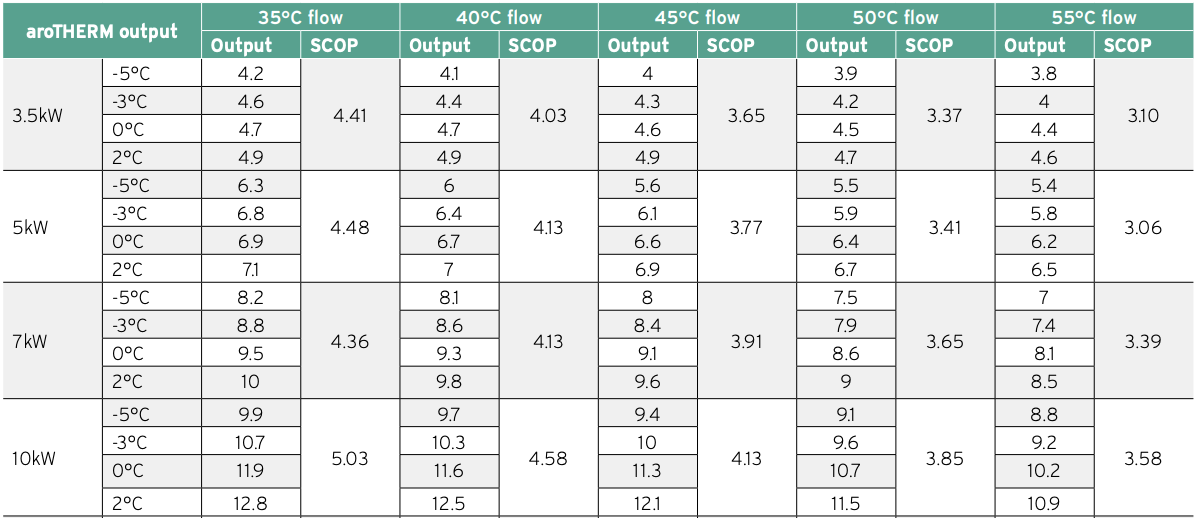
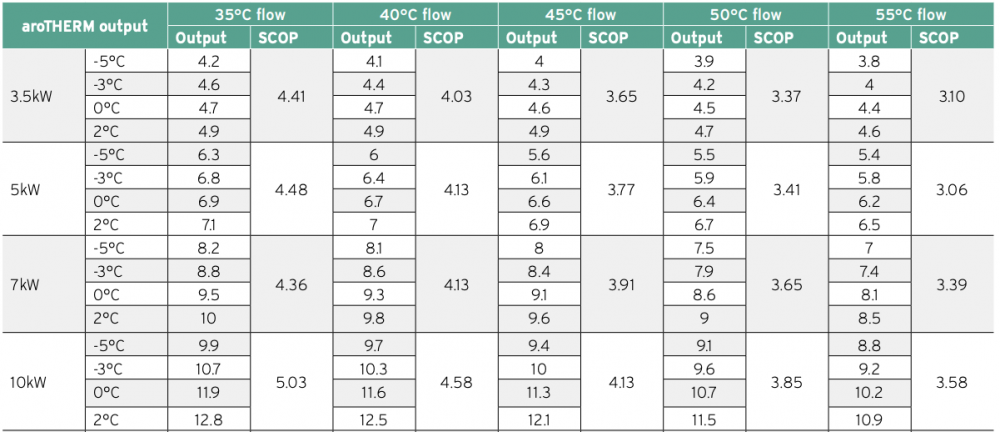
I was looking at exactly this same issue, with exactly the same ASHP model a while ago. Still not decided which one to go for though. What I would say, is look at the power table, as the 7kW is only 7kW at -5C/55C. I'm not sure where you are based, but we are in the south-east and don't expect -5C. The other difference is that: - 10kW version has a "scroll compressor" instead of a "rotary piston". - 10kW version I assume has a higher minimum power
-
This is also our current plan. I haven't got any quotes yet though, and am interested in comparing it with Samsung/LG/Mitsubishi/Panasonic R32 models. Have you got any prices and/or compared performance/noise/price with R32 model? (R32 is still lot lower GWP than other other gases)
-
This is for early adopters: https://lavo.com.au/pre-order/! £19,000.