


Dan F
-
Posts
1431 -
Joined
-
Last visited
-
Days Won
2
Everything posted by Dan F
-
What is best practice for diameter for wet-room shower discharge pipes? Our architect has specified 50mm, shower drain has 50mm diameter trap and showersave is 50mm but it seems building regs only requires 40mm and plumber apparently only ever uses 40mm
-
Noone has done full loading calcs, but we assumed 100A was enough (as ASHP is only 7kW). But then I realised that 1 or 2 future 3-phase car-charges could pull up to 32A per phase which would only leave 68A for the house. This is definitely too tight, especially with no gas. So idea was to: - run 3-phase cable to plant room - minimize use of phases now (to backup more things on single pwerwall) - when we have car chargers installed and/or more batteries then balance phases. I guess, if I can't get them to use 25mm cable, we could potentially use your suggestion for 100A single-phase and then repurpose the same cable and get 3x60A if/when required.
-
My bad, I hijacked an old post as topic was very similair (just different number of phases). This is what we have: - 3 phase (3x100A) to a site kiosk. - 5-core 25mm armoured cable from site kiosk to 3-phase distribution board in garage. - Garage distribution board will serve i) garage ii) house iii) garden room iv) front gate v) garden vi) car charger(s). 3-phase inverter is also wired up to this board. - Plant room consumer unit (serves house) is 12m from garage board, and connected via 50mm ID duct through the EPS layer of the passive slab foundation. - Intially the plan was to use one phase in the house, but then we decided it was best to bring 3-phase to plant rooom, even if we only used 1-phase initially, because if we ever have 2 three-phase car charges there wouldn't be much left for house on just a single phase. Reason to try to use 1 phase for most things initially, is to ony put battery on a single phase but still backup almost everything. Our electirian was going to put 5-core 25mm from garage to plant room, but has instead used 16mm. They were unaware duct is insulated. Our electrician is using a core for earth, not the armour. Using a 4-core 25mm and earthing the amour might be an option thoughm if they can't get 5-core through duct. Even if already mechanically protected by 100mm of reinforced concrete? Anyway, might still be best to use 25mm unamoured and RCD vs. 16mm armoured, right?
-
Sorry for the ignorance, but don't you need 3-live + nuetral + earth? I think that's what the 16mm SWA they've put in is. I'm pretty sure the supply has a nuetral.. but I'll check. Might have been an issue with the bends, but I wasn't there when they tried so not sure. Might have to insist that they try again and show me. Is a non-amoured equivilant available though?
-
Table 4E2A (non-amoured in conduit in insulated wall) seems the closest. 89A (25mm) and 68A (16mm). The electrican didn't ask where the duct went, so he has probably assumed it's in-ground and is thinking he'll be OK with 80A, which isn't good given it's actually wrapped in EPS. I'll have to talk it over with him Monday, make sure he knows and find out what fuses he was planning to use. 60A 3-phase would be enough for our needs yes, but we had planned to try to keep most things (including ASHP) on one phase for battery backup, so it's not really ideal as it means less will be able to go on the backed-up phase. If I do insist on 25mm, but SWA won't work in MBC's 63mm duct, is it possible to get hold of 25mm 5-core non-amoured? Everything online seems to be only SWA...
-
Now I think about it it's actually lower down in the EPS. In the garage it's in the middle layer of 3. In the house there is 400mm EPS and it's in the second layer from the ground. So 100mm EPS below and 200mm EPS above (aside from a few areas of slab thickening). I meant 5-core, sorry: 3 live + neutral and earth. Ideally this is use 25mm armoured, as they initially had said they'd use, but if that won't work (duct is only 50/63mm), what should I do: 1) Insist they use 25mm even if it's unarmoured? (any specific type?) 2) Not worry about the 16mm armoured, but just ensure they use 80A (?) fuse/MCCB? 80A would limit usage in the house (vs 100A), but as its three phase this shouldn't be an issue I assume, as more than 1 phase can be used if required.
-
We have the same setup; main disbribution board in the garage (along with PV and any future car chargers) and then a conumer unit 12m away in a plant room for the house. The difference in our case is that both are 3-phase. We may only use 1-phase in the house in short term (easier to backup with battery) , but it gives us flexibility to rebalance phases later. @ProDave Does the same logic apply, and 16mm 4-core is enough between garage and house as long as an 80A 3-phase breakers is used? (cable is in duct that goes through the top layer of EPS, partly under heated house and partly under unheated garage) I think the plan was to run SWA 25mm 4-core, but when they saw the 63mm duct, rather than use a 25mm 4-core unamoured, it seems they switched to 16mm 4-core SWA insteasd
-
Any scientific thoughts on the four options I mentioned? Problem with 3) is you still need to screw PB to joists. I assumed 4) was best, just concerned it might be overkill vs. 1) if the downlighter/speaker penetrations etc. aren't actually going to be that significant. I've played around with DIALux which is free and models lighting and it was fairly build rooms, import photometric data for fittings and run a model. I was hoping there might be something similair, with a library of materials, might exists for acoustics, but not found anything easy to use..
-
Yes, plus motion sensors etc. We also have recessed lighting tracks in some areas as well a couple of areas with some receased paneling. Given this, a continius layer of board(s) for both fire+acoustics just seemed like a good idea. If we do this though, the question is what to do above it, as: - Fixing the continous pb/fb direct to joists is almost certainly a bad idea. - But, using resilient bars and 2xSB may we overkill and present somewhat of a practical issue regarding the gypframe hangers.
-
Has anyone come across any software for modelling different options for acoustic ceilings? Or, has anyone had any sucess with using https://i-simpa.ifsttar.fr/ I'm looking at a few options for a ground floor ceiling and would ideally I'd like to be able to model the options, before unnecesarily overcomplicating things. 1) 2 x SB with CasoLine ML. Need to box out steels seperatly in fireboard. Penetrations for downlighters required. 2) Fireboard or 2xSB fixed directly to the bottom of joists. Additional layer of PB for sacrifical ceiling for lighting on hangers. 3) Fireboard or 2xSB fixed to the bottom of joists with reslient layer between joists and PB. Additional layer of PB for sacrifical ceiling for lighting on hangers 4) Fireboard or 2xSB fixed on resilient bars bars. Additional layer of PB for sacrifical ceiling for lighting on hangers
-
We should have used maximum 20mm RAUTHERMEX, or less potentially. This would have meant 6.2L in 30m of pipe instead of 10L, so less heat to loose and less time to wait for hot water. Looks like you don't have this same issue, but still good idea to size hot-water pipes as small as you can (while accounting for pressure loss + velocity).
-
We put a pre-insulated pipe in to DHW in summerhouse too. But I didn't thnk about it too much and used the same 25mm pipe as for UFH. This is going to mean it'll b a long wait for hot-water and so might not be a good idea. Therefore we may end up refrofitting a quooker (and potentially an electric shower), but this will depend on how we use it.
-
We are 300m2, similair levels of insulation and have a PHPP calculated heating demand of 3kW. We were between a 7kW and 10kW ASHP. The reason we were looking at 10kW was i) UVC reheat time ii) UFH in a 40m2 garden room. In the end we are going with a 7kW + Mixergy + WWHRS combination, the latter two components mitigating the need for such a quick reheat time from the ASHP. If you have a buffer tank, you could have you buffer tank at 45C and run summerhouse UFH at 40C and house at 28C (seperate manifolds) How are you planning to hook-up your summerhouse UFH? We used https://www.loco2heat.co.uk/products/preinsulated-pipe/rehau-preinsulated-pipe/rauthermex-duo
-
If using DPM on sand, then no issue AFAIK. If EPS is directly on sand (with DPM between concrete and EPS), then in theory you are supposed to use type2 + grit (rather than type1 and sand) so that the EPS doesn't absorb moisture. It's not there is an strucutral issue, rather the thermal characteristics of the EPS are reduced when water is absorbed. (EPS, unlike XPS, does take up some moisture).
-
Looks like it's £950 for the 300L. The 7k must have been list price, still not cheap though https://www.cityplumbing.co.uk/Vaillant-Unistor-20235274-Heat-Pump-Cylinder-300-Litre/p/379174?uiel=Desktop
-
condensation in cold roof in passive house
Dan F replied to kaye's topic in Roofing, Tiling & Slating
I meant between exoperm and battens/slates. I can't see how partial boarding woule have an impact. -
condensation in cold roof in passive house
Dan F replied to kaye's topic in Roofing, Tiling & Slating
You should be good then (without any air vents) as that membrane is vapour permeable and natural slates alllow ventilation of batton zone, even if you dont have a dry ridge systen with ventilation. As long as you haven't put anything vapor impermeable on top of expoperm (?). Agree with @TonyT, its likely temporary. -
£7k is with unitower. 2k for a UVC is a lot though, especially if its only 180L.
-
It drops off yes, but it's not massive. SCOP at 55C (3.4). is only 22% less that SCOP at 35C (4.4). I agree heating with standard radiators at 75C isn't a geeat idea. The SCOP for 65/75C isn't published. The COP for A7/W65 is 2.8, but if I understand correctly, that'll be fair bit worse when it's colder outside which is when you need the heating!
-
condensation in cold roof in passive house
Dan F replied to kaye's topic in Roofing, Tiling & Slating
Are they natural or man-made slate? Do you remember what membrane was used below batterns on pitched roof? Was it this one? https://www.partel.co.uk/product/23/1/exoperm-mono-150-breathable-monolithic-membrane -
condensation in cold roof in passive house
Dan F replied to kaye's topic in Roofing, Tiling & Slating
If it's MBC, they used this membrane on our build, just a couple of months ago: https://www.partel.co.uk/product/25/1/izoperm-plus-pha-vapour-control-membrane Is the roof-space vented? -
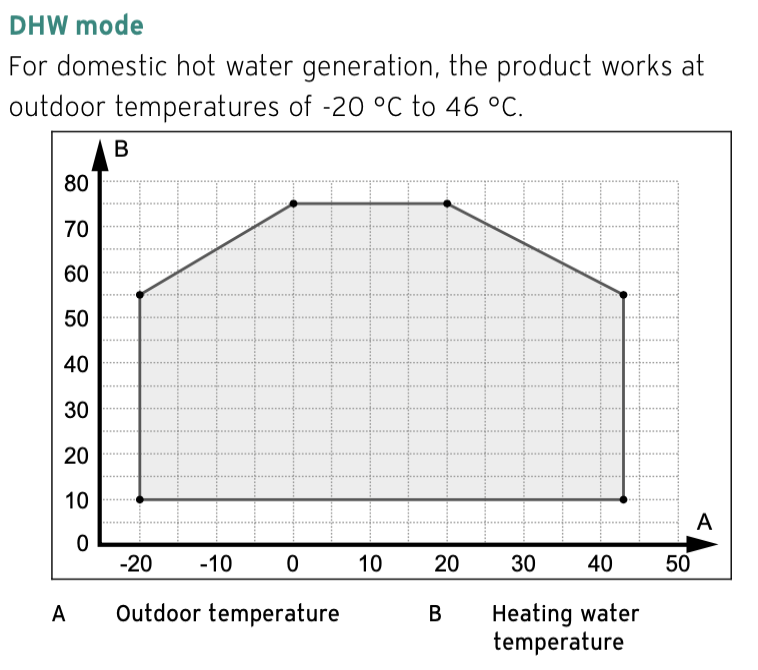
Why would you use a UniTower and not spec your own UVC, though? The temperature isn't limited, rather they don't actively promote it for >55C as COP above this isn't great and I think there is also something about RHI needing a COP >2.5. While you could theoretically use this for retrofit with standard radiators, I'm not sure thats a good idea personally. Yes, if you have the space. We have one on order. We'll unlikely ever use 75C flow, but who knows.. if we are expecting guests we could potentially temporarily increase the temperature from 55 -> 70C to increase the effective capacity of the 305L UVC from 460L to 610L. The main reason to choose this model was efficiency, minimal noise and low global warming impact. There are a number of manfuacters that do the newer R32 models that are all pretty good, some of which go up to 65C. Be careful though, because these maximum temperatures are only supported when the external air temperature is within a certain range as @ProDave also pointed out.. At -15C, it can still do 60C DHW, which is pretty good. By comparison the new R32 ecodan can't do more than 50C DHW at that temperature and the LG Therm V R32 maximum is 55C .
-
@Adsibob Sorry, I confused you with my numbers! That 84% I quoted was as compared to Planitherm XN glass (which has light transmittence of 81% and solar factor of 0.6). If you look at the actual figures, the guardian solar glass actually seems to be marginally better than the Saint Gobain. See: https://www.saint-gobain-glass.com/products/cool-lite-skn The glass will be slightly tinted as a result of the coating yes, but that's rather different to a "tinted glass" which has been tinted deliberately to achieve a colour, like the ones in the document you attached previously. The web page gives you an idea of what it might look like externally and internally: https://www.guardianglass.com/gb/en/products/brands/sunguard/super-neutral/70-35 It's hard to compare the u-values as each manufactuer uses different thicknesses of glass/argon in their calculations, I woulnd't expext any significnat differences though. Not sure on the specifics, but I'd hazard a guess that guardian are probably number #2 in europe size-wise and as good as Saint Gobain. @craig would know... Didn't look at CRI when we chose glass, so not sure there, but it may be more important for solar control glass I guess, which we didn't use. Saint Gobain don't seem to uote this though, so can't compare. Obviously 98 is better than 94, but you can't get the reduced solar gain with no any other impact. End of the day, if you need the solar glass you get it, if you don't then you use climaguard which will mean i) no tint, ii) marginally better colours iii) more solar gain (beneficial in in winter, potentially issue in summer)
-
Good point, need to watch out for that. Hot/cold routes are different as hot is fully radial and cold isn't, but will look out for this under sinks and add lagging if they get close. The argument for not needing to lag the 12mm hot runs was because they only have 300-350ml hot water in them which means: - Only 3-4 seconds to get hot water from tank. - Only 14Wh of energy lost to the house as pipe cools from 55C to 21C, which is nothing and certainly not going to contribute to overheating Good point. Was already planning to lag a 20mm MLP cold to kitchen unit run. Will add some insulation to 15mm branch to sink too, especially as the budget will probably run out before we get a chance to look at a fancy fridge or cooling/sparking tap thingie. A house we went to visit prior to starting on our self-build (not someone on forum) I remember them having to wait 10/15+ seconds for the cold kitchen tap to run cool to being able to serve us a glass of water.. Thanks!
-
Today I asked plumber to: 1) Not bother lagging most 12mm MLP hot/cold. 2) To lag (in same insulation) the 12mm flow/return for 3 basins with radial recirculation as @Nickfromwales suggests) 3) Lag all other hot runs (kitchen sink, showers, bath), even though there is no recirculation. 4) Only lag cold pipes where they are: - Copper (in plant room) - 20/26mm MLP (used between plant room and satellite cold manfolds) Sensible approach? Sufficient?
