


Declan52
-
Posts
4449 -
Joined
-
Last visited
-
Days Won
10
Everything posted by Declan52
-
Bring it back. Screwfix have a brilliant return policy. As they take your name and address when you buy something it will be on their system.
-
If there is a better chainsaw for £50 I would love to see it. The maul is that good I didn't need to use the grenade.
-
I used an old pallet to roll the trees on to so they where up of the ground then cut them into 6ft lengths and from there onto a saw horse where they where cut into 1ft lengths.
-
http://www.screwfix.com/p/titan-ttb355chn-40-5cm-2000w-electric-chainsaw-230v/92771 http://www.screwfix.com/p/roughneck-log-splitter-set-3-pieces/48279 I have logged up close on 30 trees average about 18inch wide and have only blunted one chain so far, hit an old nail in one trunk. Have used the chainsaw to cut pallets and other scrap timber up so it has well made its money by now. It does like the chain oil though. You can easily split the logs with maul once you get the hang of it. Nothing as satisfying hearing that crack when you make contact. I have around 2-3 years worth sitting at my shed drying out.
-

Gabions as garden fence anchors?
Declan52 replied to Hillydevon's topic in Landscaping, Decking & Patios
Instead of using planks, heavy and expensive, used lengths of 4*1. Much cheaper and will give more slots which will look nicer and allow more airflow. If you really want it to look tasty use 2*1, 4*1,6*1 and alternate them with a 10mm slot between each board. Gabions would be very labour intensive plus expensive. Dig a hole and use timber/concrete post and use postcrete.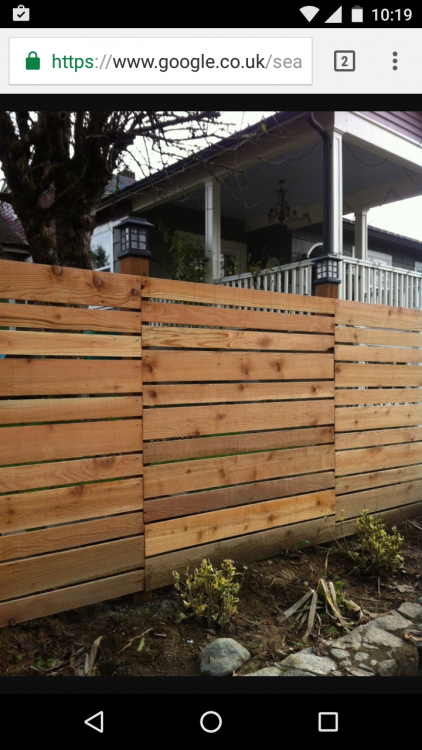
-
What and where to use air tight tapes on block built house
Declan52 replied to JamieM's topic in Ventilation
The green tape is used for the joins on any membrane as well. The window tape has a small tacky side that sticks to the window but you need the fortax 6400 to glue it to the blocks. I just sent them an email with the linear meters on it and they worked it out. Sent the cheque of and the goods arrived. Taping the floor above and below is probably your only option now. -
Don't forget to put a fold in it before you attach it to the floor. It will allow the floor and roof to shrink and expand and not rip the vcl.
-
Best £20 you ever spent????
-
I split my downstairs sockets up into 3 areas. 1st was all the utility room, washing machine,dryer freezer. 2nd was the kitchen/sunroom, fridge dishwasher and sockets for kettles toaster and then TV unit plugs. 3rd was the rest of the downstairs, 1 TV computer few lamps.
-
Security alarm???
-
Roof Lights: glass or polycarbonate
Declan52 replied to ToughButterCup's topic in Roofing, Tiling & Slating
What about 2 large roof lights or 4 small to get the size you need. They come with all the bits needed to make the roof watertight. Easy to fit and easy to open and close, long pole cheap option or motorised for the expensive version. -
What and where to use air tight tapes on block built house
Declan52 replied to JamieM's topic in Ventilation
Just put some tape or sealant all around where the hanger exits the wall. -
What and where to use air tight tapes on block built house
Declan52 replied to JamieM's topic in Ventilation
Not hard work just time consuming. A good two days cutting and taping. You don't have to do it and just accept the heat loss, your call. Just use any insulation you have lying about. Can be sheet insulation or even cavity wall boards. -
What and where to use air tight tapes on block built house
Declan52 replied to JamieM's topic in Ventilation
Over time the joists flex as they shrink and expand so the cement will crack. You could put tape all the way round each gap or even cut some pir insulation and stick it to the blocks and then tape the edges. You will have to tape from you floor above to the wall and then plaster over this to seal it in. The window tape on that link can do this. It will take a fair bit of time to do it right but would be well worth it. Are you filling the joists with rockwool??? -
Buy a cheap bucket( £1 poundshop )and puncture with a small hole at the bottom so it leaks out on to the cut. Will keep the dust down and the blade cool.
-
Use a wall chaser and you will get it done in half the time. Can also set the depth for a more accurate cut.
-
Anyone mix their own Epoxy Mortar? (for concrete repairs/levelling)
Declan52 replied to IanR's topic in Floor Structures
40mm is a lot to fill with self leveling. -
What and where to use air tight tapes on block built house
Declan52 replied to JamieM's topic in Ventilation
No more expanding on Terry's answer explaining how I done mine. Mine was a cold roof so not sure how you would implement your suggested route. -
Anyone mix their own Epoxy Mortar? (for concrete repairs/levelling)
Declan52 replied to IanR's topic in Floor Structures
Would some self leveling not be ideal for the 2nd and 3rd option. Might work on the 1st but hard to say without a pic. -
What and where to use air tight tapes on block built house
Declan52 replied to JamieM's topic in Ventilation
The three separate bits in a block build all need joined together to get very good airtightness. The floor, the walls and the ceiling. For the floor you will have a layer of dpc sticking out under the bottom course of block to which you can seal the DPM to when you do your screed. Another way if you do the finished floor first is to lap the DPM over the blocks and then put the dpc on and build away. You can also use a tape to join the finished floor to the wall. The wall and ceiling junction you can use a membrane fixed to the joists and then glued to the blockwork. When it gets wet plastered then the wall gets sealed in. If you just rely on plastering up to the ceiling wall junction once your house dries out and cracks here then you will have holes in the fabric. The rest are all the holes in the walls and ceilings that need sealed up. For Windows and doors you use a tape that sticks to the frame and then is glued to the blockwork. All the services then need sealed up with tape or sealant depending on what it is. The hardest area is round joists where the best?? Method is the like of the Tony tray. Similarly the eaves are a little more tricky if you go for attic truss. All it requires is a bit of thought and not excepting poor/lazy trades putting holes in the fabric if they don't have to. -
What and where to use air tight tapes on block built house
Declan52 replied to JamieM's topic in Ventilation
I used a membrane underneath the plasterboard which gets bonded to the blockwork using a special glue. The other areas are the doors and windows. Then it's all the penetrating services that need sealed round. http://www.cleanenergyireland.ie/air-tightness/ Good video of the membrane and window tape here. I bought all my stuff from these guys as well. -
Had the same issue in my last house and I put metal washers on the hinge so they lifted the door up. You need to find a washer with a big enough hole to slide over the finger on the hinge but not stick way out so is noticeable. Only way I had round it as door was fully adjusted up and was no good.
-
Would the duct have 3 90 degree bends which would really badly impact the flow speed. One as it goes into the floor another as it comes back up to avoid the outside ground level and then another to exit the build. Would be possible to only have one as it goes into the floor and straight out but the ground level outside will need to be very low to suit this.
-
Dual Hobs in Worktop, design vs structural engineering
Declan52 replied to TerryE's topic in Kitchen Units & Worktops
There are lots of kitchen suppliers who do similar handless doors in various colours. Mine is the high gloss white but have some aubergine (purple to me) for a bit of colour. You could get the main parts from wickes but buy a few feature doors from another supplier. Most kitchen units are all a standard size so wouldn't be hard to match up. The kitchen supplier you visited and seen the orange doors will have a brochure where you could check online to see how much the doors cost. Just beware the high gloss end panels to match the doors aren't cheap. -
And it gets better!!! If I use the pi I have set up as a retro arcade machine I could be watching the kettle boil while playing double dragon.


