HerbJ
-
Posts
588 -
Joined
-
Last visited
-
Days Won
4
Everything posted by HerbJ
-
I think the info was by me , originally from ebuild. The useful info can be found in a thread called "Wetroom in Kore slab". On the question of mat wells, we have porcelain tile floors directly laid on a poured MBC slab and we created matwels using standard metal tile edging strips, which us matwells approx 15mm deep, which is sufficient for entrance mats. The suitable matting can be bought by the metre to suit
-
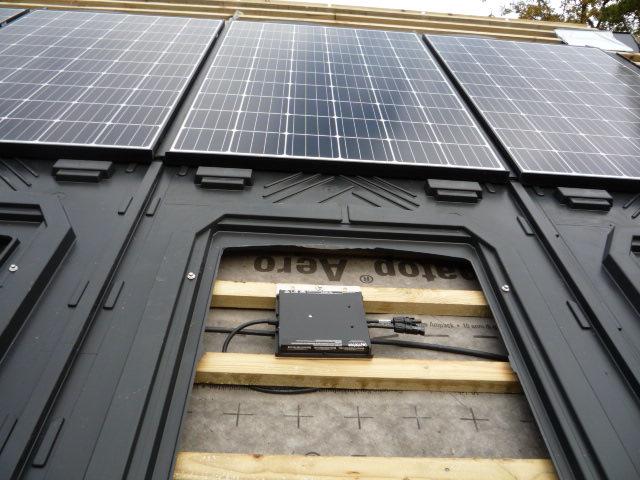
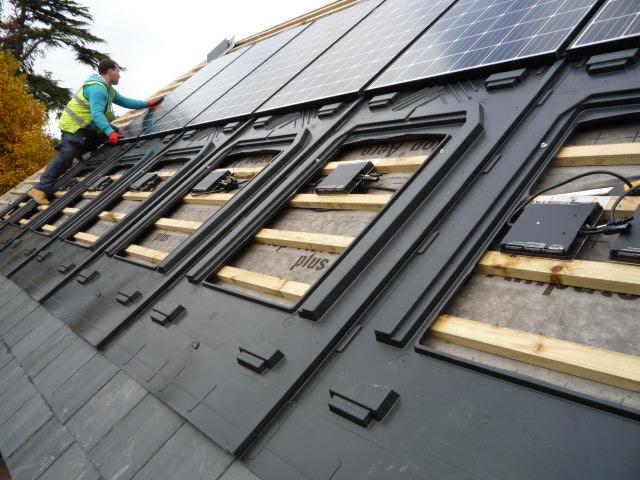
These may help = couple of photos taken ahowing my PV panel installation in an in-roof system. There is more info on the site, including more photos of mine and similar installations so just search
-
To be honest, I have no hard data but SWMBO does prefer the main bedroom/ensuite to be warm, so I imagine the UFH in these rooms is active for a fair % of time when the weather is really cold. We do have the advantage that 1st Floor every bedroom, the main ensuite and the family bathroom have individual temperature sensors and are controlled to suit. Most of the time, everywhere except the main bed/ensuite is set so that they never come on and they sit happily at 18 to 20C, a couple of degrees below the Ground Floor.
-
Yes, that's correct. We installed a Jupiter Proprietary installation system - see attached. the ECO-100 PI in the bedrooms with engineered wood floors and the ECO-400 PI in the bathrooms with porcelain tiled floors. It was a relatively expensive option, but the Jupiter system also give some measure of acoustic properties as well,. SWSBO wanted comfort and we both believed that the type of house we built (320m2 in a high value residential area) required UFH on the 1st Floor if we ever decide to sell. It does provide a added measure of comfort, though for most of the time with individual room temperature control, which for the most part is set to provide heat to the Master Bed and ensuite, unless we have visitors (family, grandkids...). l believe there are other BH who decided against fitting upstairs UFH, even if it was only bathrooms, and wish they could revisit that decision! We have experienced no creaks and groans. It operates at a very low temperature . We didn't fit any kind of heating on the 2nd Floor but did install plumbing for future installation of heating. We have the study and a play room/media room on the 2nd floor and it the temperature is acceptable in winter. ECO-10U Pt E.pdf ECO-40U Pt E.pdf
-

German windows with roller shutters built-in — who makes them?
HerbJ replied to Dreadnaught's topic in Windows & Glazing
All the shutter parts can be found on https://www.jalousiescout.de/- 15 replies
-
- 1
-

-
- roller shutter
- security shutters
- (and 2 more)
-
We've just had window film installed and it seems to be working successfully in controlling heat gain. We had 43m2 installed, on South and West facing windows at about £64/m2. We looked at the 3M window film and that was £127/m2. Happy to share details!
-
Sometimes you wish you'd read BH in more depth and more often....
HerbJ replied to ToughButterCup's topic in Heat Insulation
or do you just like Michael Connelly novels? -
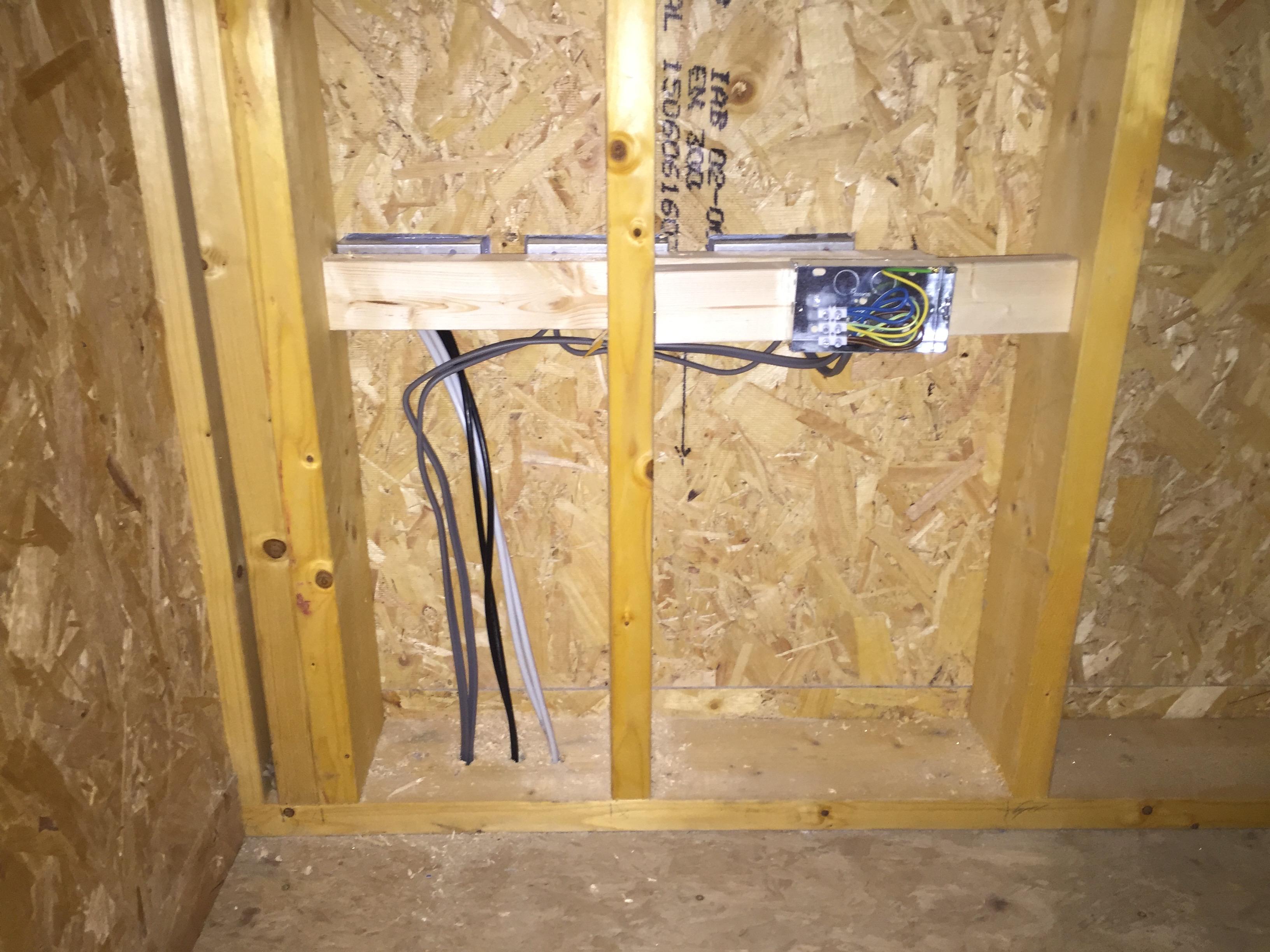
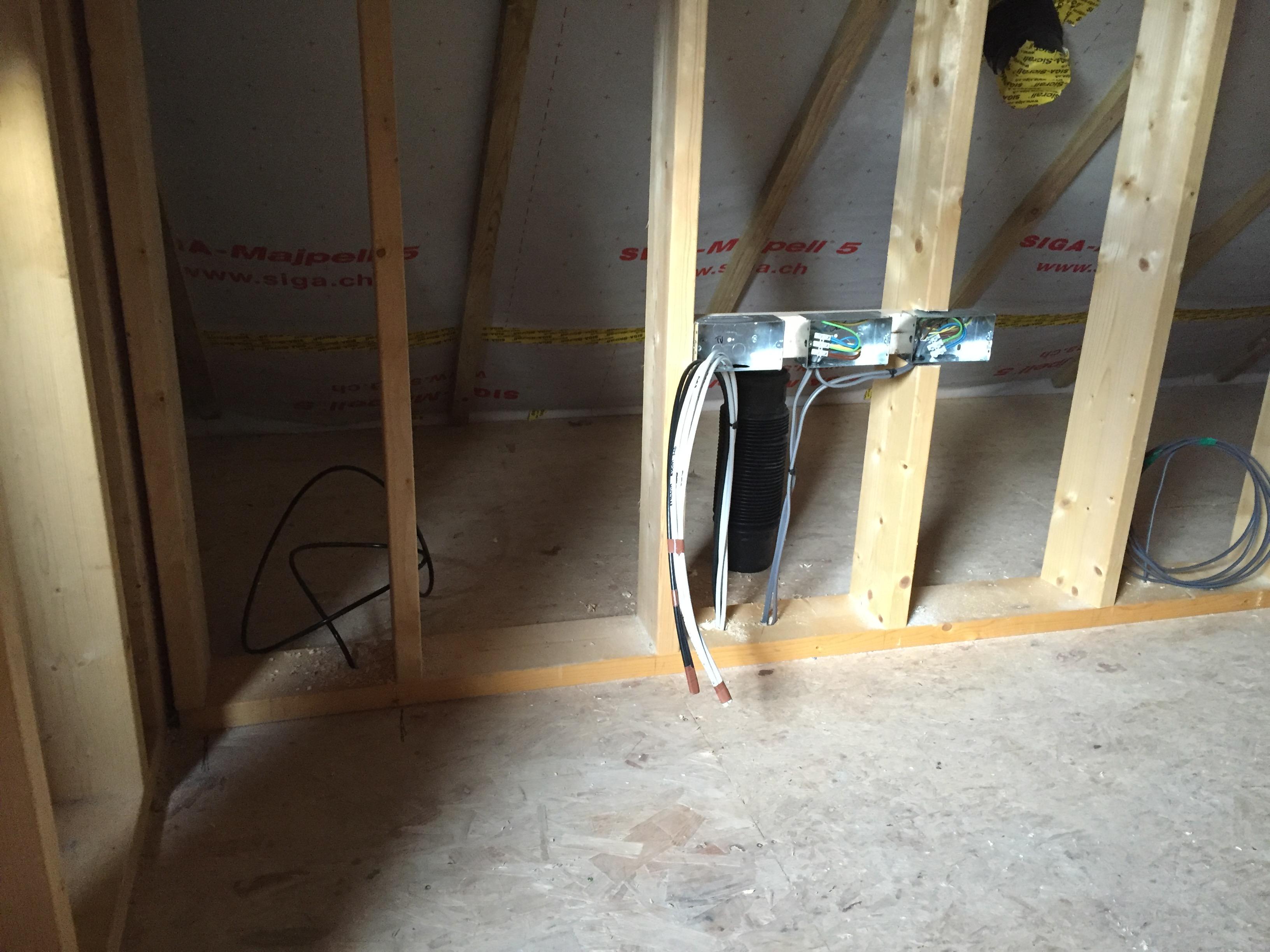
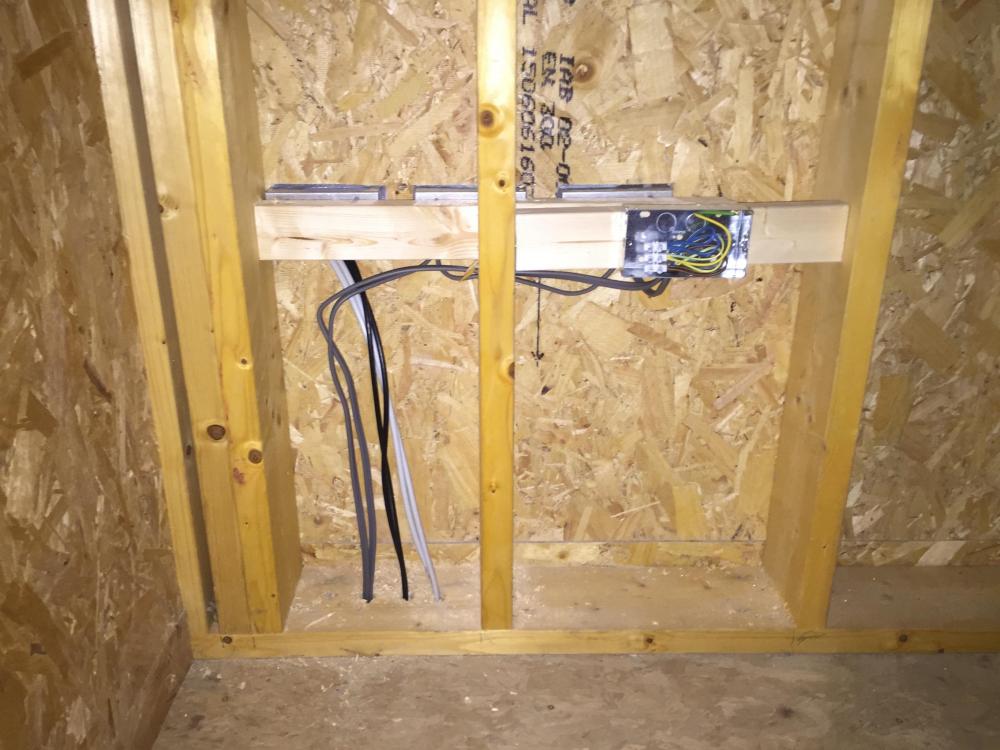
Yes - two double sockets and a TV coaxial/Cat 6 for TV etc. One of the the wall is a 1400mm high X 140mm stud wall, which requires zero zero structural integrity. The studs were not hacked. The carpentry is better than some carpenters work I have experienced.
-
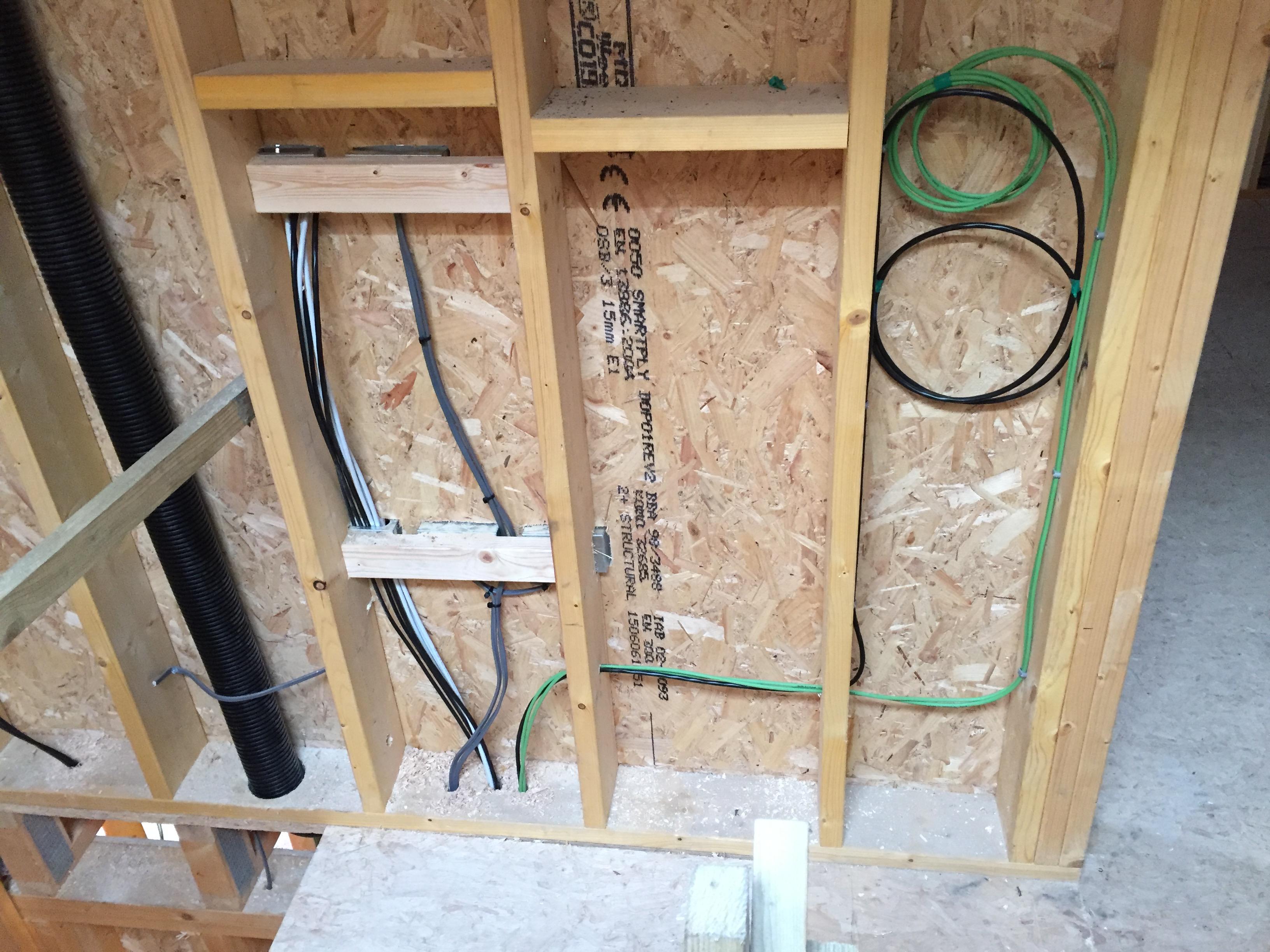
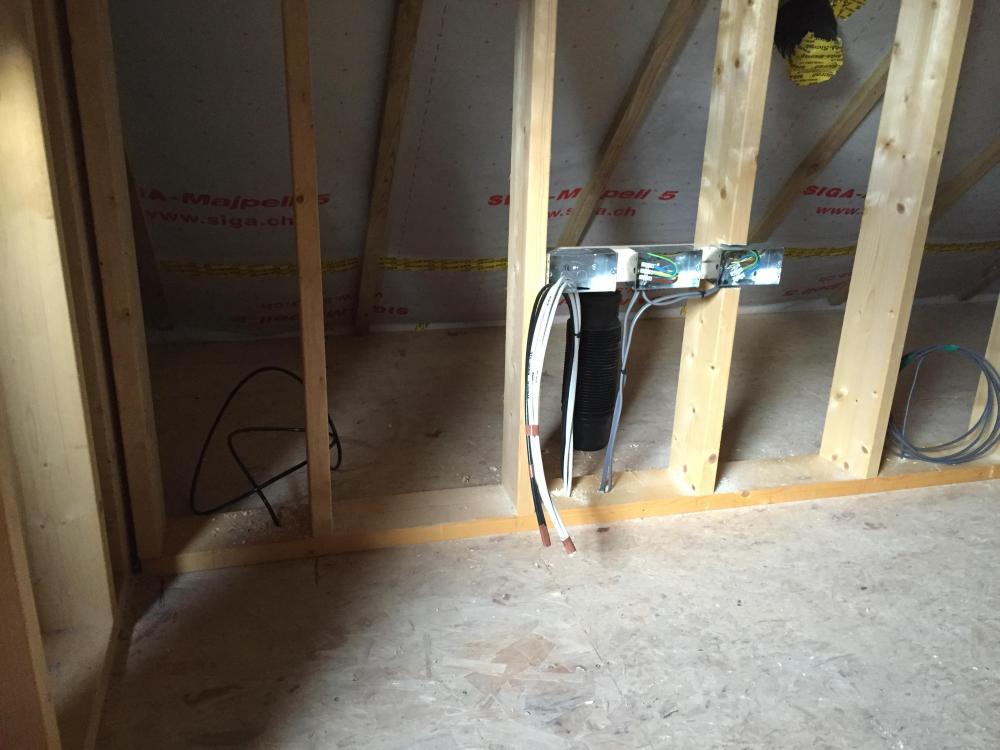
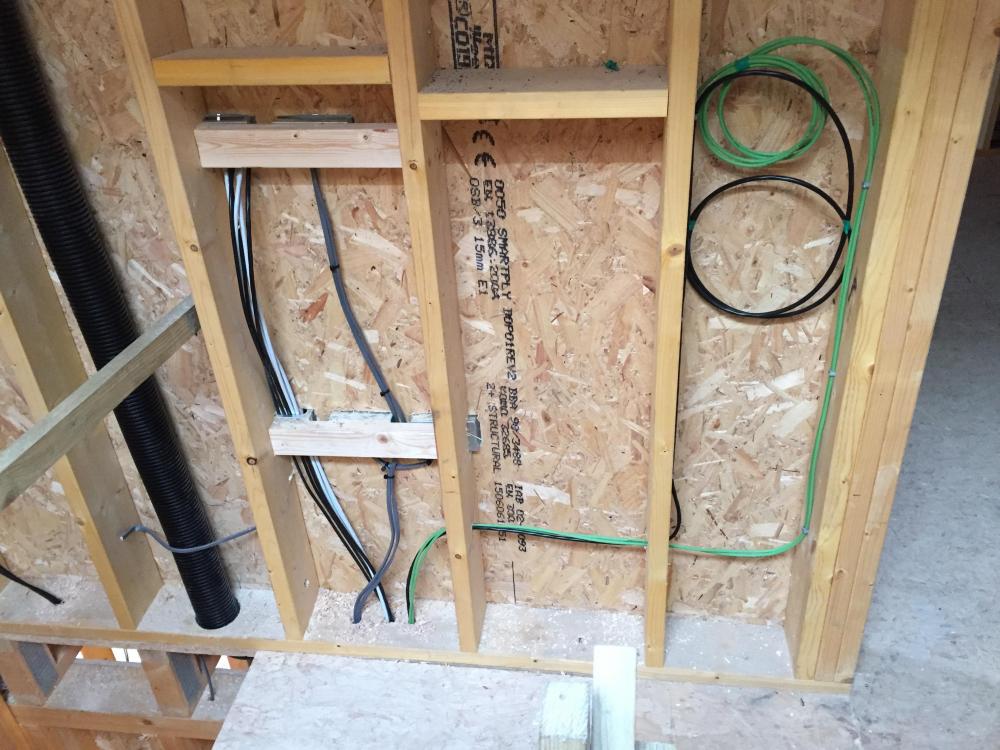
Something like this? Our electrician installed specific noggins for every back box and support required for the electrical 1st fix - he has more tools than the carpenters! He didn't try to use the noggins in the stud walls that were part of the TF
-
Point taken - I have corrected my earlier response to make sense of my point on cooling. For inlet heating, this is NOT an uncommon location on some MVHR systems for frost protection, though many like my PAUL NOVUS unit have the frost protection heater mounted internally.
-
Presumably, this duct heater/cooler would only be in operation as a cooler when the summer bypass is open on the MVHR Unit? So, there would be no issue with throwing away the cooling....
-
I bought the cheapest unit I could find and it has been working well for over 2 years or so without any problem. it is a unit made by SolarImmersion - see https://solarimmersion.co.uk/
-
We were required to have fire doors because we have a 3 storey house with an open stair case through the central core of the house. So, all the habitable rooms off this central core all specified as fire doors.
-
No, not the linen cupboard just the habitable rooms - all the bedroom doors (off the landing) but not the ensuites .
-
Yes, we used the same supplier. All our doors were supplied as door sets, except for some cupboard doors on the 2nd Floor and I should have bought door sets for these! The Ground Floor doors are 926 x 2014 mm minimum, with double doors to lounge, dining room ad kitchen . All Fire Doors The First Floor bedroom and family bath doors are all 826 x 2040 mm, with , the double doors for the linen cupboard and 726 x 2024mm for the guest ensuite. All bedroom doors are Fire doors The 2nd Floor doors are a mix of 826 x 2040mm and 726 x 2040mm, to suit the layout. The two habitable rooms are fire doors.
-
Standard practice for most developers, together with creative use of NMA's and change of conditions, which normally involve slipping in new plans with wholesale changes to the original approved plans. My wife is Chairman of the Parish Council Planning Committee and it seems that a good proportion of Planning Application in this area are retrospective by Developers "gaming" the system . She has s a case at committee tonight - new build in green belt was given approval as a replacement dwelling in 2017. The developer didn't build anything close to what approved and is putting in retrospective planning application for a house that must be 50% bigger than the house approved ( which was 50% bigger than the original dwelling). The construction has been stopped by enforcement after the neighbours reported it and the developer has already withdrawn one retrospective application in 2018 and is trying again after removing the garage ( there was no garage on the original application??) It's a game and developers are very good at it...
-
I also would recommend this course of action. It is the least line of resistance and stress. Also, use the the" Certificate for zero rated VAT" when dealing/communicating with contractors, ideally pre-contract. I went into this in some detail with HMRC and several things were made very clear HMRC will NEVER refund VAT incorrectly charged. It must be properly accounted for and refunded by the contractor. It is unlawful to charge VAT in contravention of the applicable Regulations. If a contractor unlawfully charges VAT and refuses to correct the invoice and refund the incorrectly charged VAT. then the final step available would be to take the contractor to the small claims court and make a claim for the unlawfully charged VAT
-
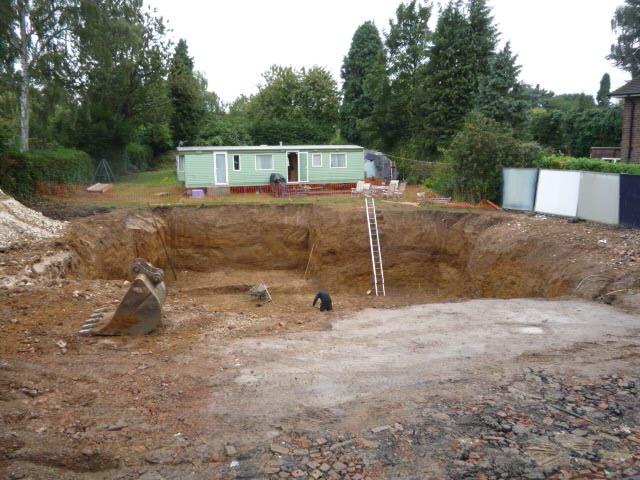
Looking fantastic... Come on a bit since this
-
The locks on our Gaulhofer 3G French windows and EVVA EPS Cylinders. I haven't noticed any draught or window coming through in any circumstance, though we are not that exposed. Ditto the lock on our Gaulfofer 3G Front Door, which is a Q Line cylinder Lock?
-
MVHR air flow rates
HerbJ replied to lizzie's topic in Mechanical Ventilation with Heat Recovery (MVHR)
Well done. Fingers crossed for you? -
MVHR air flow rates
HerbJ replied to lizzie's topic in Mechanical Ventilation with Heat Recovery (MVHR)
@lizzie No, you are on the right track . Using your layout drawing information, I calculated your floor area as 124.4 m2, so if you have high ceilings then your calculated volumes seem OK. Using my calculated floor area of 124.4 m2, the Part K minimum ventilation requirement in accordance with Table 5.1(b) - 124.4x0.3x 3.6 = 136 m3/hr, which highlights that your house has been well over-ventilated on a day to day basis at the design rates of 220 m3/hr taken from your attached documents. The reason that you have more extracts than most houses is that you have extracts in the plant room and your Master Bedroom, which were not really essential and do not need to have such high airflows in those two rooms. If you use the passivhaus/din method for sizing the airflow for normal situations then assuming 5 people living in the house gives supply airflow of 5 X 30 = 150m3/hr and using 50m3/hr for the kitchen, 30m3/hr for the bathrooms and utility and 20 m3/hr for the toilet this give s total extract rate of 160 m3/hr ( ignoring the dressing room and plant room for the moment). So, not too much out of balance. Also, all within the Part K requirements. So what I would do is to set these extract rates above for kitchen, bathrooms and toilets which all meet or exceed the minimum BR extract rates for these rooms)and use a lower rate of 10 m3/hr for the dressing room and plant room (both small rooms) = total extract rate of 180m3/hr. For the supply rates use 40m3/hr (2x20m3/hr) for the living room, 35 m3/hr for the snug and 35 m3/hr for the Master Bedroom and 30m3/hr for each of the two bedrooms = total supply rate of 170 m3/hr. Use these rates to set up the system for Setting 3, with your F7 filter in place. Then, set Settings1, 2 and 4 as detailed in your Operation Instructions. I would operate the system on Setting 2 on a day to day basis, when there are just two of you (and then dog) in occupation. It will be much quieter at all settings, more comfortable, cost less money to run and should give you everything to want..... and of course it complies with the BR. Hopefully, with your enthalpy HE , you will also see more comfortable RH% I am sure that my thoughts set out above will be picked apart by others reading it and they will identify any issues with what I have summarised. Again best of luck -
MVHR air flow rates
HerbJ replied to lizzie's topic in Mechanical Ventilation with Heat Recovery (MVHR)
+1 to @JSHarris I've just a quick look at the info you attached earlier So, you have 4 settings, pretty similar to that described by @JSHarris Setting 1 is your unoccupied house setting - named "moisture protect" in your details - this should be set set at 30% of BR Flow, - currently it set at 50% of Setting 3 Setting 2 is named "low" setting - this should been set at 70% of the BR Flow - currently it set at 74% of Setting 3 Setting 3 is named "living" - the BR flow rates , which I believe that was used for all the flow volumes measured - BR Flow = 100% and the subsequent setting for Setting 1, 2 and 4 - Setting 4 is your "boost " setting - this should be set at 130% of the BR Flow - currently it set at 152%% of Setting 3 All your Design info is on your layout drawing, including design flow rates for each supply and extract outlet, together with m2 area of each room ventilated. In short you have supply rate in total of ( 4x40 + 25 + 30) = 215 m3/hr extract rate in total of (4 x 20+2 x 22 + 2x45) = 212 m3/hr It seems you have been operating at Setting 3, which is the 100% BR rate and that is greatly overventilating the house. A better setting for day to day living would be Setting 2, with Setting 3 only used when you are cooking or drying clothes or having a party. Setting 4 should be used when using bathrooms etc. I don't know who created the "air flow details" spreadsheet? was this your installation/commissioning man after he commissioned the system? This requires reviewing against as some of the settings do not seem to be consistemt with the recommendations in the manual extracts you attached. Best of luck -
MVHR air flow rates
HerbJ replied to lizzie's topic in Mechanical Ventilation with Heat Recovery (MVHR)
So, it seems that your original installer did commission the system using a flow meter but did not record the commissioning tests and flow values for the various settings. Is it not possible to call him and try to understand what what settings he used - BR rates = Setting? Boost Flow Rate = Setting? etc? Perhaps he did record all the settings but failed to leave you a copy? How many settings do you have? It seems strange that Setting 2 is the "absent setting" and Setting 3 "living" What is Setting 1 ( if there is such a setting)? Do you have a "Boost" setting? -
I just checked my Commissioning Report and I have misstated some of the settings iI detailed earlier in this post. So, for clarity: Setting 1 - the reduced/low setting , is set at 53% of the BR flow rates. This is the setting that we set for normal day to day operation with juts two of us in the house. Setting 2 - is set at the BR flow rates - we use this if we are drying clothes in the utility room or have a house full of family/friends Setting 3 - the boost flow rate , is at 140% of the BR flow rates and used when using the bathrooms & cloakroom or when doing some serious cooking in the kitchen, with lots of steam/fumes from pots & pans. This is the only setting wen there is any ventilation noise and then only from an extract grill in the family bathrooms.
-
Hi @lizzie When our MVHR system is boosted by turning on a light switch in a bathroom ( or manually selecting the boost setting), the whole house airflow is boosted. This is fairly standard for whole house MVHR systems and it would add a lot of complexity/cost to only boost ventilation to individual rooms.