BotusBuild
-
Posts
1461 -
Joined
-
Last visited
-
Days Won
10
Everything posted by BotusBuild
-
ASHP outdoor unit heating pump Q
BotusBuild replied to BotusBuild's topic in Air Source Heat Pumps (ASHP)
So, unless you're close to a limit on your water pumps capability, the chart is accurate enough would be the conclusion? -
ASHP outdoor unit heating pump Q
BotusBuild replied to BotusBuild's topic in Air Source Heat Pumps (ASHP)
For anyone who comes back this way to ready this thread, I strongly recommend taking a look at and using the above calculator. -
Batteries in plant room and 120 minute fire rated walls
BotusBuild replied to jimseng's topic in Energy Storage
I'd rather have a modern battery unit in the plant room than a tumble dryer anywhere inside the house -
ASHP outdoor unit heating pump Q
BotusBuild replied to BotusBuild's topic in Air Source Heat Pumps (ASHP)
This is what I was trying to do, but obviously slipped up on a decimal point or seven 😀 -
ASHP outdoor unit heating pump Q
BotusBuild replied to BotusBuild's topic in Air Source Heat Pumps (ASHP)
If my answer above is correct then I get the following: The Worst ΔP is a paltry 0.013188Pa. Given that the "remaining head pressure" graph in the OP shows the pressure in kPA this result seems crazily LOW. UFH Loops Flow meter reading (L/min) V (m/s) L (m) ΔP (Pa) Loop 1 1.5 0.000025 90 0.000044 Loop 2 1.5 0.000025 90 0.000044 Loop 3 2 0.00003333333333 92 0.000081 Loop 4 2 0.00003333333333 85 0.000074 Loop 5 2 0.00003333333333 95 0.000083 Loop 6 2 0.00003333333333 88 0.000077 Loop 7 1.5 0.000025 85 0.000042 Loop 8 0.9 0.000015 81 0.000014 Loop 9 0.9 0.000015 89 0.000016 Loop 10 1.1 0.00001833333333 86 0.000023 Loop 11 2 0.00003333333333 71 0.000062 Loop 12 0.9 0.000015 85 0.000015 Loop 13 1.2 0.00002 87 0.000027 Loop 14 2 0.00003333333333 40 0.000035 Total ΔP 0.000638 Pa 28mm flow and return pipework 1.535714286 0.0000255952381 10 0.013105 Worst ΔP 0.013188 Pa -
ASHP outdoor unit heating pump Q
BotusBuild replied to BotusBuild's topic in Air Source Heat Pumps (ASHP)
Can I assume the flow in the feed and return pipes is the total of all the flows in the loops given that the system is completely open? May have answered this myself from DuckDuckAI Multiple Outlet Manifold: If the manifold has multiple outlets, the flow in the feed pipe can be calculated using the formula: Flow in Feed Pipe=Total Flow×Number of Outlets -
ASHP outdoor unit heating pump Q
BotusBuild replied to BotusBuild's topic in Air Source Heat Pumps (ASHP)
Here are my calculations: Flow meter reading (L/min) V (m/s) L (m) ΔP (Pa) Loop 1 1.5 0.000025 90 0.000044 Loop 2 1.5 0.000025 90 0.000044 V = Flow Meter Reading/60000 Loop 3 2 0.00003333333333 92 0.000081 Loop 4 2 0.00003333333333 85 0.000074 ΔP = f * (L/D) * (ρ * V²/2) Loop 5 2 0.00003333333333 95 0.000083 Loop 6 2 0.00003333333333 88 0.000077 f = 0.018 Loop 7 1.5 0.000025 85 0.000042 ρ = 1050 kg/m3 Loop 8 0.9 0.000015 81 0.000014 D = 0.012m Loop 9 0.9 0.000015 89 0.000016 Loop 10 1.1 0.00001833333333 86 0.000023 Loop 11 2 0.00003333333333 71 0.000062 Loop 12 0.9 0.000015 85 0.000015 Loop 13 1.2 0.00002 87 0.000027 Loop 14 2 0.00003333333333 40 0.000035 Total ΔP 0.000638 Pa As long as I don't have something wrong, then I think there is enough residual head. @SimonD, does the calculations appear to be correct? Thanks in advance -
ASHP outdoor unit heating pump Q
BotusBuild replied to BotusBuild's topic in Air Source Heat Pumps (ASHP)
Before I "take a punt" on just removing the buffer and pump and see what happens I'm going to do option 1 from @SimonD's earlier post. I presume I use this formula - ΔP = f * (L/D) * (ρ * V²/2), where ΔP is the pressure drop, f is the friction factor, L is the pipe length, D is the diameter, ρ is the fluid density, and V is the fluid velocity. To answer Simon's question as to why they installed a buffer in the first place. Was it: - just a mindless design that plonked it in there; - to do with a calculated or feared pressure loss issue; - to do with system volume as your system doesn't hold the minimum volume per minimum kW output of the heat pump; - to actually buffer excess output from the heat pump as it's oversized? Originally, we were going to have multiple zones and the buffer was required for this simple reason. We did not have the thermostats setup at the time the ASHP was installed and have found that as a completely open unzoned system the house is comfortable. The house is bedrooms downstairs, living area upstairs so the rising heat problem some houses suffer from actually works for us. More houses should be built this way 🙂 -
ASHP outdoor unit heating pump Q
BotusBuild replied to BotusBuild's topic in Air Source Heat Pumps (ASHP)
John, the current setup works. We are comfortable the way the loops are and by adjusting flows to each. I am only interested in whether I can remove or bypass the buffer tank and rely on the heating pump in the outdoor unit to continue to make the water flow through the UFH. -
ASHP outdoor unit heating pump Q
BotusBuild replied to BotusBuild's topic in Air Source Heat Pumps (ASHP)
@SimonD, is there anything else you are seeking information about? A bit more below. FYI the heat pump is about 3m from the plant room (LGF where the manifold is), connected by 28mm insulated pipework. The UVC (250l) is in the plant room. Motorised valve switches between heating and DHW. Heating flow goes to the buffer tank (50l), then a pump on the flow to the two manifolds. These have no mixing valves or secondary pumps. All heating pipework is 28mm copper in the plant room, all insulated. About 10m of this on flow and return to furthest (UGF) manifold -
ASHP outdoor unit heating pump Q
BotusBuild replied to BotusBuild's topic in Air Source Heat Pumps (ASHP)
I know you are trying to be helpful on here. There are perhaps better ways of wording some of things you post. e.g. you could have asked what pipe size I used, and sought a better explanation for the pipe layout (which equally I could have provided a better explanation for up front)- 35 replies
-
- 1
-

-
- vaillant
- arotherm plus
- (and 1 more)
-
ASHP outdoor unit heating pump Q
BotusBuild replied to BotusBuild's topic in Air Source Heat Pumps (ASHP)
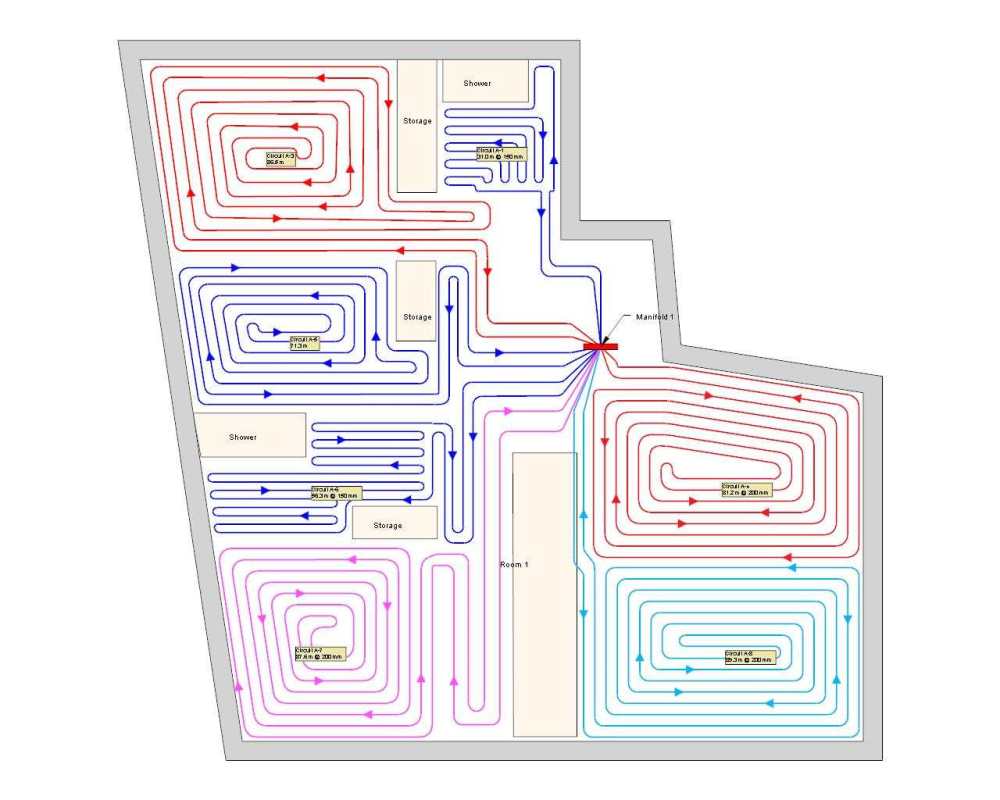
Sometimes you comments come across a bit passive aggressive. UGF. Open plan to the left. Large single room to the right. A hall where the small blue loop is shown (but not fitted). A utility and cloakroom where the small read loop is shown (but not fitted). LGF. On the left each loop is a separate room. The 2 large loops to the right are a single room. All pipes are 16mm. No loop longer than 95m as laid. -
ASHP outdoor unit heating pump Q
BotusBuild replied to BotusBuild's topic in Air Source Heat Pumps (ASHP)
Two storey building. Outdoor unit is level with the upper floor. We have UFH on both floors. Lower floor has 7 loops to a manifold. Upper floor has 7 loops to a manifold (in the UGF file attached, the small red loop and the small blue loop to the upper right were left out).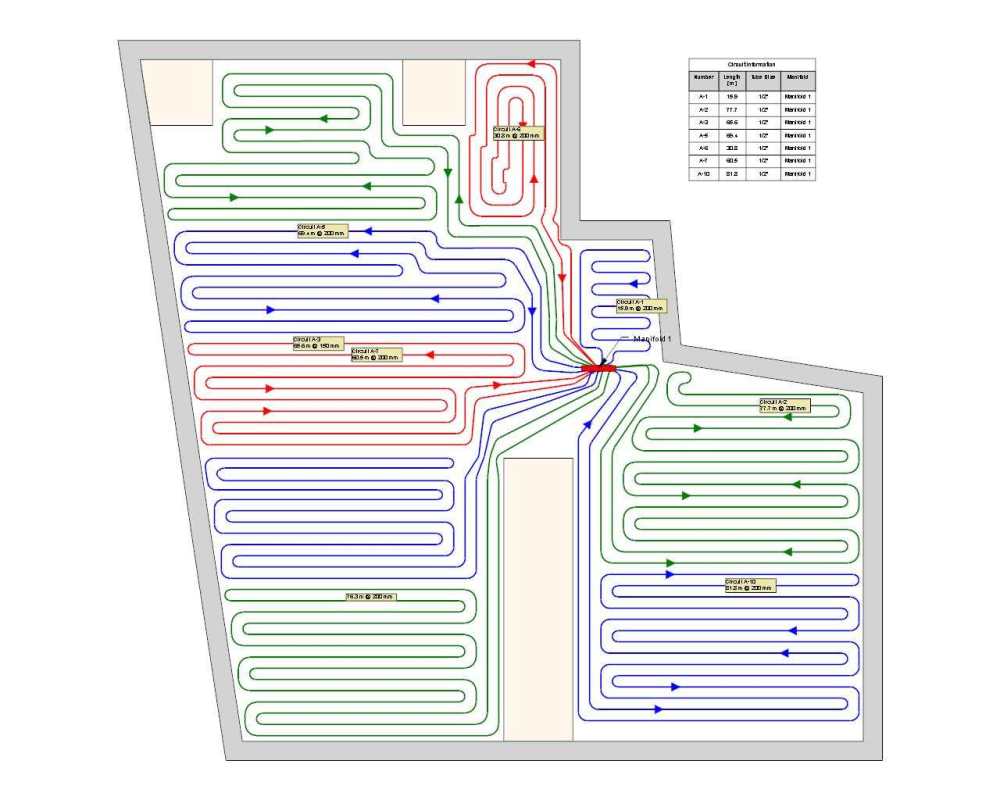
-
ASHP outdoor unit heating pump Q
BotusBuild replied to BotusBuild's topic in Air Source Heat Pumps (ASHP)
@SimonD 🙂 I tagged it. Its a VWL 75/6. I don't know the index circuit pressure loss. That's a new term for me. Should it be documented somewhere? Possibly called something else? The worst monthh for heat loss for the property is 3246W daily heat loss power for mean min OAT (as calculated using JHarris spreadsheet) -
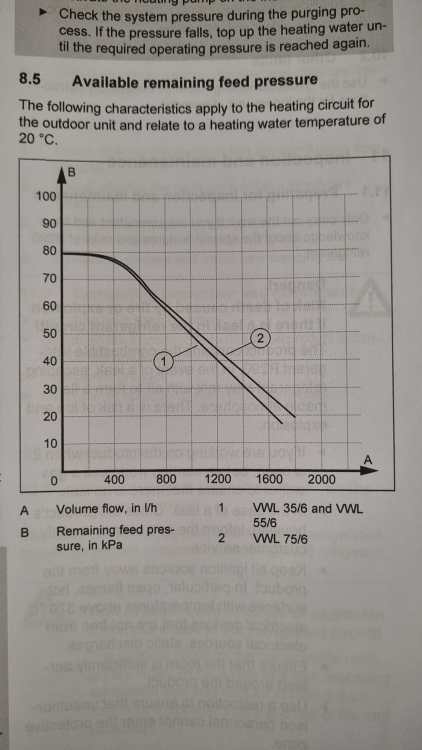
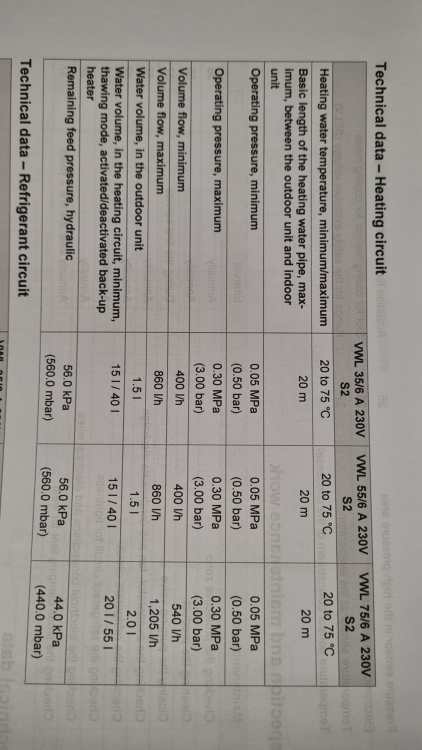
I'm looking to remove or bypass the fitted buffer tank in our heating circuit, removing the "extra circuit pump" at the same time. Will the heating pump fitted in the outdoor unit will be capable of circulating the water through the heating and DHW? The buffer tank is 50 litres. The UFH pipes have a volume approximately 100 - 110 litres. Info from docs: The heating pump in the outdoor unit consumes 2 to 50W.
-
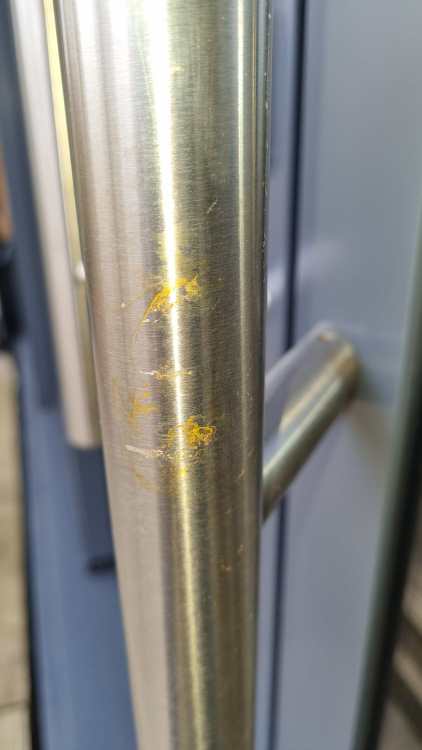
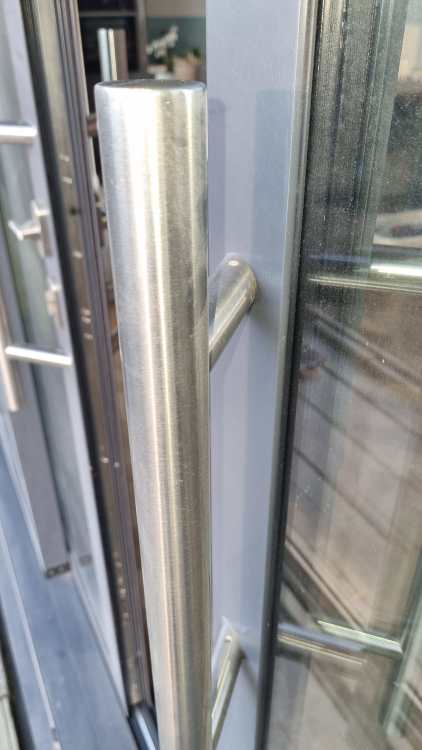
An update. Mrs BB made up a paste of Bicard of Soda and a little water. Applied it to the offending handles with a finger. The washed off with some warm soapy water. Before: After: (dusty at the top due to work I was doing today)
-
@Mr Punter, can you recall what worked to clean the rust?
-
As the protective fencing is NOT a part of your building, you can't claim for that anyway. I would say something like excavations for foundations, or in our case, fitting of sewage treatment plant (STP) would be the start of building work.
-
I believe you have to show "commencement of build" date as part of the VAT reclaim. Then only invoices after this date until "completion certificate" date are allowed. Prepared to be proven incorrect.
-
Vaillant ashp (my battle with).
BotusBuild replied to zoothorn's topic in Air Source Heat Pumps (ASHP)
There's one thing about this thread. I've learned a little more about humidity 🙃 -
Vaillant ashp (my battle with).
BotusBuild replied to zoothorn's topic in Air Source Heat Pumps (ASHP)
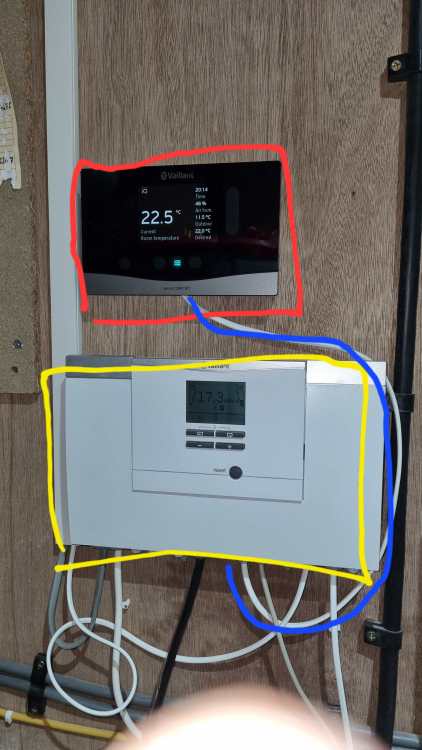
Zoot, Others have answered on behalf. Thanks to them. Agreed that the HW glitch needs sorting first, before you start replacing things that MAY not need changing. Just a thought on the heating. If the VRC700 is inside a closed cupboard with the cylinder, is there enough length of cable (the blue one) to move it just outside the cupboard. That will then be in a slightly cooler place and so it won't switch off the heating as quickly, and before the rads have had more time to warm things up a bit more. This is without making any setting changes so should be a simple to do move. -
Rebuilding after demolishing question
BotusBuild replied to dustyb's topic in General Self Build & DIY Discussion
Guilty, and it was EPS (Nudura) -
Vaillant ashp (my battle with).
BotusBuild replied to zoothorn's topic in Air Source Heat Pumps (ASHP)
Hi Zoot, If you follow the directions in that link I sent you on PM, you will be using the Timer setting (not the constant ON), and you will also have setup the daytime temperature and the setback temperature as is being suggested. As per my PM, take the time to read that article, then set aside an hour or so to make the changes. We are all hoping that your understanding gets you to the point of being able to decide to the make the changes. We do all believe it will help in the next cold season. 🤞 -
Never again, unless... maybe...
BotusBuild replied to NSS's topic in General Self Build & DIY Discussion
Doable, but I think compromise would be required on materials, air tightness, insulation levels given the minimal involvement -
Vaillant ashp (my battle with).
BotusBuild replied to zoothorn's topic in Air Source Heat Pumps (ASHP)
I've just sent Zoot a link to an article on the basics of how to setup the heating on the Vaillant controller (the black box) found on the FB Vaillant group. Also, I've given Zoot the spec of cable (blue) needed to link the black box (in red) to the white box. (In yellow). Its 0.75mm twinflex as stated earlier. FYI: I'm in the process of moving mine once my plumbing is sorted out. I suspect that Zoot's black and white box are also this close to each other. Go for it Zoot! 😀