


TerryE
-
Posts
3826 -
Joined
-
Last visited
-
Days Won
30
Everything posted by TerryE
-
The aluminium custom folds have an upstand of around 100mm which is largely hidden by the rain gutter which sits in front of this. The horizontal section is ~200mm deep, but our stone skin has a 3 course stepped brick header which effectively steps out 60mm over the three courses. The aluminium steps out another 25mm so is just about visible from below. The remaining 175mm is used as an interface to brick up against. All of these high-jinks are needed because we had to put out slate roof on before we started lifting the stone skin. Having done this, I believe that this was also the correct order since the timber frame was fully loaded before we added the stone skin and this minimised any differential movement between the two. Our stone mason is still only up to 1st floor cill level, but when this is complete, I will post some explanatory pics.
-
I am doing all of the interior woodwork on our house, and I've invested maybe £500 in basic tools: a new chop saw, table saw, router, planer / thicknesser, multitool and a refresh of squares, rules, etc.. All budget items from Titan or Erbauer ranges from Screwfix. OK, if I was a professional making my living from this, then the equivalent might have been 4-5× this price, but for what am I doing this stuff is 90% as good as the best and 400% better than what I had. For example, my new Erbauer chopsaw was half the cost of my old worn-out one that was 15 years-old and is just SO much better. £500 pays for a couple of days chippie time and this kit has saved me far more than that. Moral: if you are going to do a job yourself then you need to be properly tooled up to do it. OK, spend £100 on the Chinese or east European tool that might have a few flaws and wear out in a couple of years rather than the £400 trade best-in-class equivalent, but you'll probably be using it on only one house, so what the heck. Don't try to do without the tools that you need to do the job. It's false economy.
- 13 replies
-
- 2
-

-
- money
- investment
- (and 2 more)
-
As old Ronald Reagan said: trust but verify
-
In a self build you will rely on your major subs. One of the major reasons that initially attracted me to MBC was that they offered both the slab and the timber frame and this de-risked a major interface for me. Even so, the windows and doors are a major risk because these work at the interface between 3 / 4 subs: the window/door supplier, the slab, the timber frame and the exterior cladding. None of these contractors is prime, so this interfacing risk is on you -- or your architect if he or she is good enough. There's no free lunch. Appoint any one contractor prime (assuming that the accept it) then they'll charge ~5% management fee to cover the risk and effort of interfacing to the others. Your architect will charge ~7% and their contribution / value-add is seen as controversial by many self-builders, myself included. If you don't have a prime or overall overseer, then this role doesn't go away. Individual contractors work within their contract scope of supply to deliver a good product and turn a decent profit for themselves. It's not their fault to remedy if the customer specification is wrong. Working out how the windows interface to the slab, frame and skin is down to you or your architect. If your architect isn't totally on top of this, then you should really ask yourself what they are doing to justify their fee and also accept that you have to get your head around how this is going to work out in fine detail and in practice. I would also add that Alex's nightmare isn't a nightmare; this timescale is pretty typical, and you should budget this in your planning.
-
OK, right or wrong, here is what we did. I cut a 50mm channel in the EPS300 perimeter at our 4 Internorm door openings (2 conventional doors and 2 tilt and open double french doors) I also attached an extra 45×50×<door width> shuttering the outside to extend this as a tongue out into the airgap. This was rebared and poured and levelled as part of the MBC base pour. We also used OSB3 (though in retrospect I would recommend marine ply to others) boxing on top and sides of the door openings to bring the line of the doors (and windows) 45mm out in front of the frame and close the airgap. We allowed for this framing in our MBC opening calcs as you need to add this plus10-15mm filling gap to the the frame sizes to get the MBC openings right. The frames sit behind the stone skin. The bulk of the weight of the doors and frame is carried by steel straps attached to the framing box, but the foam filler and silicon also carry the load into the boxing frame. The Internorm doorframes sit on a 30mm high spacer (that ecoHaus provide as standard) and this sits on the concrete tongue. We have a stone skin that is ~150mm and I've used Perinsul load bearing blocks butted up to the tongue, with the top level with the slab. The actual cill is slate bedded on top of the Perinsul blocks. OK in theory the slate might touch the concrete tongue on the diagonal, but the area of the bridge is tiny, so I don't think that this will be a material issue.
-
Timber frame company fined for fire and traffic offences
TerryE replied to ProDave's topic in Housing Politics
I am going to segue this topic a little and turn it around to the scenario that most of the self-builders on this forum face: what steps should self builders take to minimise fire risk on their own builds? I would suggest as a starter: Have a clear set of rules for all tradesmen working in the building, and post work checks, for example: No naked flame or other flammable-level heating on-site without a permit to work and second-person safety checks (e.g. misting down all surfaces before and after work by a second person, plus follow-up check) Clear rules for storage of flammables (e.g. off-build), and removal of flammables off site (including wood swarf from hole-drilling). On-site immediate action mechanisms including suitable fire extinguisher (any recommendations? Perhaps one of these on each landing during the build) and safety blanket. -
£10 handy inspection camera/borescope for Android
TerryE replied to readiescards's topic in Boffin's Corner
I've used my camera plugged into an old Ubuntu latptop -- which is the only way that I've found to drive it -- and to be quite honest, the results are crap. The cable is just a plain USB lead so there is no stiffness and only a weak ability to turn / control it. Once you get into water, then the back glare from the LEDs makes the picture uninterpretable. 2 out of 10. I guess that you get what you pay for -
So I had my Anglian water inspector around. He had absolutely no problems with my standpipe. So my version made from ScrewFix bits at less than £30 has just as good as the pre-assembled one at ~£300. Note my WB don't allow a bibcock tap, but they're a lot cheaper so I've just filed off the thread. The other wrinkle was that he said that we had to have a separate stop cock and double-check valve in our own boundary box within our site boundary, so we bought one at ~£120. My builder then said: waste of money; the crew will refuse to install it. So the groundworks crew came along and installed our water main this Sat and finished the re-tarmac'ing on Monday. The crew boss said: that's a bloody waste of money; there's no point in having a stopcock when there's another a foot away in the pavement. I refuse to install it; take it back and get your money back. You builder will be putting in the house supply as soon as we're gone anyway. When they left and my builder came to site, he said .... Anyone want a nice boundary box / MDPE 25mm stopcock / double check valve?
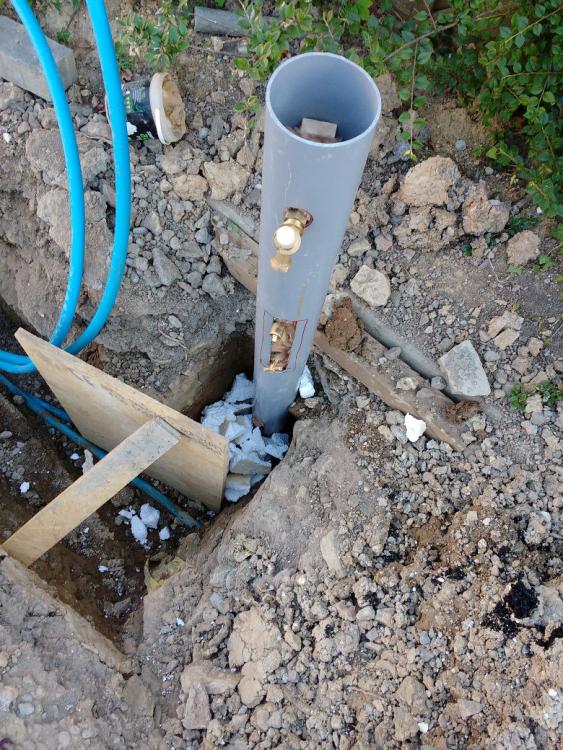
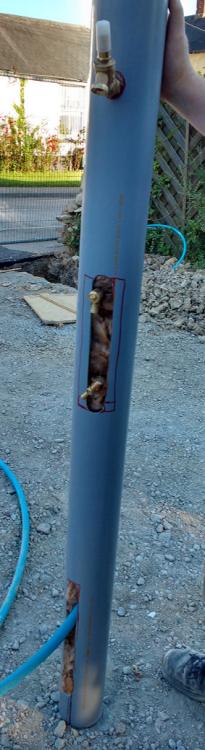
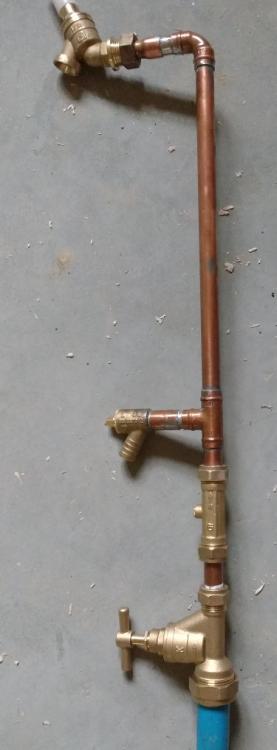
-
Timber frame company fined for fire and traffic offences
TerryE replied to ProDave's topic in Housing Politics
This may have been petty bureaucracy gone mad, or there may have been some underlying valid concerns that triggered this action. We just don't know and we can't guess. What I have observed and continue to observe is that there is a prevalent culture in the building industry -- certainly amongst all of the crews that have worked on my site -- to ignore sensible HS and use of PPE. I really just can't understand why this is case. Why do building workers seem to have a wish to be deaf, have crappy lungs and eye problems in their later years? A few examples that irritate me or have irritated me: The frame erection crew was working on our second floor around the unguarded staircase void which was a 5m drop onto a concrete slab. I had to insist that they put up a temporary safety rail. Our builder's scaffolder has no concept of safety on access paths -- unprotected bolts and poles sticking out dangerously. Most of these could be avoided with 10 seconds thought or at least mitigated with protection, but no: 10 seconds of brain-work and 30 seconds of extra effort is an ask too far. I've asked for clear access paths to be kept to and from our build and around it, and when I turn around there's a new bag of graded stone in the middle of one -- it was a convenient space to use, so why not use it? Cutting and hammering without ear defenders, eye protection or dust masks. I could go on but I'll leave it to others to give examples. I don't know about spreading culture in the building trade but I do within the IT industry. You can't to this by taking punitive measures against the workers on the ground; you have to have to do this top down with firm consistency and continuous education. In the case of a large scale timber construction, it has specific issues / risks that need to be addressed: proper fire compartmentalisation across the site; proper enforcement of practices which minimise fire risk being a JiT style-operation, there needs to be clear storage and movement policies for framing components, etc.; being a rapid build technology, workers can quickly end up working at height, so height and fall safely need to be integrated into the working practices; ditto use of heaving lifting gear / cranes. As I say, we just don't know in this case, but I do think there are lots of areas where I could see a poor management and safety culture resulting in H&SE action. -
We bought this one from ScrewFix at £200. No complaints, other than they classified it as a 2 person lift; so their staff weren't allowed to pick it up. Taking an extra person might help. They taught sappers how to pick up heavy loads; probably something they missed off the educators' courses
-
Thanks. We'll prob do this as well About half our studwork partitions are racked using polythene strips on the far side just makes it easier to keep in. We've got insulation above and below our MVHR ducting and we stabled the upper layer into position. We've still got to do the bulk of the insulation -- last job in firs tfix. We'll have to see whether it's quicker then just stapling the insulation.
-
Our builder uses his own petrol Belle for his building work, but we still bought a cheap electric Belle look-alike for ourselves from ScrewFix. Jan and I have mixed a lot of mortar and concrete in our time, but we're getting too bloody old for that lark. The electric mixer is just brilliant, and we use it for our garden and boundary walling and paving etc., which we are doing ourselves. Thanks to the bucket of ballast trick, it still looks like new and we'll probably get rid of it on eBay or whatever when the house and garden is done.
-
House fire - how to control mvhr
TerryE replied to warby's topic in Mechanical Ventilation with Heat Recovery (MVHR)
Part of me says that this would be a real pain for a "false alarm", but thinking about this: if its getting hot enough for the collar to activate then this is by far the best thing to do in the circumstances. Time for you and me to go to bed. Or we'll both be getting grief in the morning! And I've got the waterboard turning up at 08:00 to dig up the road and put in my water supply. Sweet dreams!! -
House fire - how to control mvhr
TerryE replied to warby's topic in Mechanical Ventilation with Heat Recovery (MVHR)
Hummnnn, need to think about this one, given that we are still in first fit. Most of our extracts are in our wet rooms where their is minimal fire risk. The double extract in our kitchen area is the obvious exception, and a source of risk. I would appreciate comments / advice from other house builders who have addressed this. -
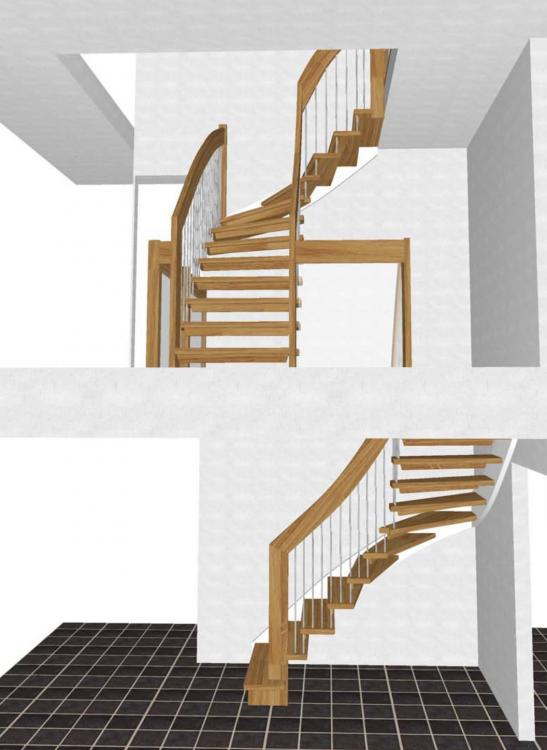
AFAIK the BRs only mandate compartmentalisation between dwellings so such collars must be fitted between apartments in flats, but they aren't mandated between floors within a single detached residence. In our house we have a single open stair well void running top to bottom and we must provide 30 minutes fire protection onto this exit corridor, so we need fire doors; pink plasterboard, etc. Our house has pluses and minuses as far fire risks go: No fires; no smoking inside the house; solid ground floor (concrete/slate); the house is airtight to 0.6 AC/HR; other than the MVHR and doors, the rooms are properly sealed, so no smoke leakage. We also have far above average fire detection: we have a 3-floor linked fire detector mandated by BRs and I will also be adding per room sensors. It's got a timber frame and PosiJoist floors. It's occupants are in their 60s and getting older . So my top-level view is that localised fires will be better contained than in most conventional houses, fire detection far better, and the escape risks less; however, if a fire does escape an individual room and get into the frame structure or inter-floor spaces, then it will be a flatten and rebuild job (if it doesn't collapse itself as a result of the fire). As to a more quantitative view, the governments own Fire Statistics: Great Britain April 2013 to March 2014 makes good reading. There were 35,000 accidental dwelling fires and just over 200 fatalities, and of these more than half were smoking related or space heating. So for non-smokers living in a passive house, you are roughly 20 times more likely to die in a road accident than in a house fire. With over 17M dwellings in the UK, this equates to one fire per 500 years of occupancy. Incidentally there are about twice as many accidental dwelling fires per capita in Scotland than in England or Wales. Kitchen fires account for half of all call-outs but very few fatalities. And picking up Pete's point above, attempting to fight a fire is as likely to get you killed in a house fire as smoking. These statistics focus on the human impact and aren't broken down into severity of fire in terms of localised / leading to the destruction / condemning of property. They are also based on the Fire Service Incident Reporting System (i.e 999 fire service calls). I believe that most insurers require an IRS reference before paying out on a claim, so these figures will include most material fires, but might exclude a large class of minor fires where the cost of remediation was less than the insurance excess. In thinking about all of this one little concern these stats have flagged for me is the issue of electric supply related fires. The move to LED-based lighting means that we have started to add far more more 240V to LED drivers in our ceiling voids. The impact of this trend won't have made its way into the statistics yet, but I need to think a bit more about the precautions that we should take here. Sorry about the stats, but this almost veering into Boffin's Corner territory except for it's potentially wider interest. I would be very interest in @SteamyTea's and @JSHarris's analysis
-
House fire - how to control mvhr
TerryE replied to warby's topic in Mechanical Ventilation with Heat Recovery (MVHR)
Martin, the purpose of an MVHR is mechanically ventilate a reasonably airtight house whilst retaining the heat that would otherwise be dumped during ventilation. Most MVHRs can recycle the whole house volume in 2 hours but will normally be on tick-over doing so perhaps every 4 hours. This is perfectly adequate to keep the house fresh and moisture-free. It is not designed to perform emergency smoke dumping. As Dave says, the BRs now give other guidance and escape routes and means of clearing smoke. I feel that you are using the wrong tool to address a very real issue. After having thought about this, so long as the MVHR shuts down and any ducting channels are properly protected it should not worsen the fire risks. My parents lived well into to their 90s and my mother had increasing dementia for the last 10 years of her life; towards the end neither was capable of standing after a fall. Both had emergency call buttons around their necks and we encouraged (with minimal success) my father to carry his mobile on him at all times. We and social services made a number of modifications to their house to enable them to continue to live in it and in my father's case until his terminal admission to hospital. Yes fire is a risk and the outcome might be frightful, but so is simply lying on a floor unable to move or regain standing, and slowly freezing to death or starving. You must live in a dwelling matched to your capabilities, and whether you have MVHR or not really isn't a material factor in this judgement. So for example in such cases any smoke detectors should be automatically link to an alarm systems and included in response scenarios. My answer is simple: I believe that it will make no difference, if the house is built to current BRs and correctly maintained. There are other risk factors for fire that are far more material, for example does the house have open fires or do the occupants smoke? And for example a house fitted with MVHR almost certainly won't have open fires. -
Pete, thanks for your thoughtful and expert response. I agree with many of your points unreservedly, and I also feel that the remainder apply for most house owners: when in doubt priority is: To clear occupants from the immediate property and notify the fire services; To notify any adjoining property occupants in the case of flats and attached buildings, and ensure that any needed evacuation cascade is initiated; To carry out immediate actions which could mitigate the fire impacts, such as shutting doors to contain fires; shutting down ventilation systems; turning off the power to the property (so long as these actions don't prejudice 1 and 2); To prepare for the arrival of the fire services so that they have clear access and the best information to engage the incident. (E.g. has the building been fully evacuated.) However, in my case I live in a village and the ETA for the fire-service which is based in the local town is a minimum of 20-25 mins. I will also be living in a timber frame house with eco-joists. The dilemma that I personally face is that given this sort of best response time, if no immediate actions are taken then by the time that the fire services put the fire out, it's quite probable that the house will be condemned even if still standing and will need a total rebuild. In my case I've also fought quite a few house fires and as you are also retired then you are probably of an age where you were one of the guys who would turn up with a fireman's helmet in a carrier bag to make sure that we didn't make a total horlicks of it, when I arrived with my Green Goddess(es). So I have at least done the 101 stuff on how to put out minor fires, and whilst we might differ on the wisdom of individual home owners attempting to carry out immediate actions to target a local (minor) fire, and this must be a personal choice based on experience and local circumstances and one that I can't promote to others. However, the wider issue that I would like to discuss in this thread in not such immediate actions, but how by design and construction I can practically minimise the risks of a local fire spreading out a sealed room and into the rest of the fabric of the building.
-
Our service cavities on our gables (the sides perpendicular to the joists) aren't top closed and we divide our house into 3 by two loadbearing internal walls. I've decide to continue this as a fire barrier in the PosiJoists as well. @jack, @Calvinmiddle you've got MBC timber frames; are there any specifics that you did here? Off for a site visit to @RandAbuild so might might this up later
-
House fire - how to control mvhr
TerryE replied to warby's topic in Mechanical Ventilation with Heat Recovery (MVHR)
Peace brothers. The Neanderthals died out about 3-40,000 years ago largely due to a bit ethnic cleansing by our lot or our ancestors. Maybe we should continue this on my post since this covers a wider scope than just the MVHR aspects? -
Partition Wall Construction and Underfloor Heating
TerryE replied to Grosey's topic in General Construction Issues
Your UFH runs will typically be planned out on a room by room basis with the room's runs entering and leaving through the door and using the hall as the route to the manifold. In general you should keep the runs away from any walls. This includes non load-bearing partitions. -
The BRegs, and specifically B3 Section 2 Internal Fire Spread (Linings) B3 Section 3 Internal Fire Spread (Structure) B3 Section 5 Compartmentalisation B3 Section 6 Cavities B3 Section 7 Protection of openings and fire-stopping have an impact on the construction detailing within the house. As a self-builder my aims are twofold: (i) to keep my Building Inspector on my side and happy to sign off our build as complying; (ii) to do the right thing in sensibly protecting the house occupants in the case of a fire and to avoid losing the entire house in the case of a fire. I mentioned on a previous post that one of the fun things that I did whilst I was an army officer in my 20s, was to run a fire station for a couple of months during the fireman's strike in 1977/78, and so I had first-hand experience a quite a few house fires and their aftermath, and which I can still vividly remember. Now all of these were in Brick / block fabric houses and a couple of garages, but in general my personal view is that you can broadly divide fires into two categories: localised and non-localised. A localised fire is just that: it has a defined seat such as a piece of electrical equipment or a pan on the cooker. A non-localised fire is one that spreads from the room containing the fire into the fabric of the building. Whatever the type of the fire, the primary goal is to protect life and to minimise any health impacts on the occupants and neighbours. This being done, the next goal should be to minimise the consequential damage to the property. In the case of a localised fire, if this is dealt with quickly and correctly then the fire can be stopped, and the major damage localised to the room containing the fire. Though of course there are still issues of wider smoke damage, risk to occupants, post-fire assessment and remediation, etc.. In the case of of a non-localised fire in a timber framed house, I would suspect that the consequences would almost certain lead to the destruction or condemning of the structure. So IMO, it makes a lot of sense to incorporate into your design and build sensible measures to help keep fires localised. In general I take the BRegs to be a sensible codification of a set of measures to achieve these goals. A lot of this is guidance rather than mandatory requirements (in this discussion, I am assuming a detached single dwelling, as there are extra mandatory requirements in the case of attached multiple dwellings) and so is really up a negotiation between you and your Inspector, though I could imagine that I might well decided to do in excess of what my inspector wants at a minimum. So what should I do to keep the Inspector "off my back" and to do what is sensible for my own benefit? My first question is what readable guidance is out there? Can anyone recommend any good references or Internet downloadable materials? What are the particular risks in a Timber-framed or Passive House? To be honest, I have for more open questions than answers, one issues such as: Flammable gas containment. Even something like a pan fire can produce a lot of hot gases that are past the ignition temperature for some plastics and exposed wood. In a room with plastered walls you might still have a few minutes to kill the fire whilst the plastered fabric contains the combustible gases. But not if there are gas conduits above the fire. MVHR for example. So in another post there was a discussion about the wisdom of how the MVHR should be programmed to respond to a fire. My view is that it should be powered down as this has the best chance of keeping the fire local to one room. We have 3 boxed-in ducting cavities carrying a total of 8 MVHR pipes from the ground floor vents to the manifold on the second floor. What is the best way to implement containment here? Compartment closure. Thanks to our Gerberit loos and hidden plumbing we have boxing in panels to hide all of this. This should be closed from a fire perspective and not open to floor voids. Ceiling and floor breeches for services such as potable water, waste and MVHR. How best to seal these and where to we do implement some level of self sealing? Drywall spaces. In general we are using acoustic insulation in ceilings and stud walls, and this has secondary advantages for fire suppression. But we also have a thin (33mm) service cavity on the external walls which we currently plan to leave hollow. If this best filled out? So many Qs and not enough answers. So I would really value your discussion and input to help inform our decisions and dialogue with our BInsp.
-
@Nickfromwales the whole issue of fire barriers and BReg compliance is a subject in its own right and merits is own topic. I'll do a little background research and start one
-
-
The only online stockist of the Hep2O brass manifolds that I can find is selling the old grey version (HX93T/15 GY) parts, rather than the current white (HX93T/15W) parts. The good news is that they are only £27.88 ex VAT, but the bad news is that Wavin have made design changes between the grey and white Hep2O versions: The white version demounting key doesn't work on grey fittings. The insert design has been changed and now includes castellations to give positive feedback on insertion. I am not sure what the other implications are. I could always resort to ringing round traditional suppliers such as TP, but I suspect that I'll be quoted a lot higher prices. My inclination is to go with the GY parts and if necessary do the same trick as @Nickfromwales did in his layout shown above and put in a copper fire break. The Hep2O straights are pretty cheap (~£1.20) and this means that I can still demount the Hep2O pipe if necessary. Comments? PS. They do the 2 port W parts so I could use 3 × HX92T/15 W (£52.38) instead of 2 × HX93T/15 GY (£55.76). Also time to do what Nick suggests and ring around a few plumbers merchants.
-
@Nickfromwales, just walking though your layout about I can understand the first TMV, but why cascade in a second for the low flow hots? Was this so that all of the washbasin hots were at a lower hand-hot temperature? If so, then I take it that you only dry-shave? Also, Is there any specific reason from mounting the TMVs horizontally and standing out of the layout plane -- other than your drive for neatness?


