


Mr Punter
-
Posts
8220 -
Joined
-
Last visited
-
Days Won
24
Everything posted by Mr Punter
-
Loft insulation in space with friable/brittle roof torching
Mr Punter replied to Jimbo23's topic in Heat Insulation
The tiles will need to come off at some stage and new felt fitted. If the torching issue is that bad you need to get it done sooner, if not, just insulate and have a tidy up every couple of years. -
Ledge Issue at Masonry-Timber Frame Junction
Mr Punter replied to R2021's topic in General Construction Issues
Another option is the do the outer leaf in block or brick. If you want to just clad the timber frame, do as @ProDave suggests and do away with the outer leaf altogether. -
So this is an external wall. Is it Stixall then OSB then dpc?
-
I am building up to a neighbouring house and the top section is built in no-longer-rendered Celcon blocks. The render has part fallen off so I have removed the rest. We have a valley type gutter going in between their house and our new project and the roofer wants us to fit 11mm OSB to the Celcon wall so he can fit the membrane which will line the gutter and be dressed up the wall and under a metal coping. I quite like the idea of a combination of mechanical fixings plus adhesive but I don't know what would work best. It is fairly high up and I don't fancy a return visit if the boards start to come away.
-
If this is a class q PD conversion you need to retain the structure. I think it may also be time limited for completion, so check this as well.
-
You could put a shoe on the downpipe so directs the water away from the wall.
-
Stud thickness for horizontal 110mm soil pipe
Mr Punter replied to sean1933's topic in Waste & Sewerage
I guess you could have a pair of, say 220 x 45 joists across the of top of the pipe as a lintel and sheathe with OSB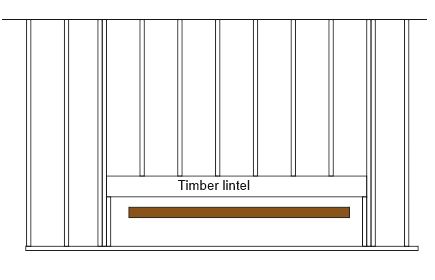
-
Council Tax Blow!
Mr Punter replied to richo106's topic in Self Build VAT, Community Infrastructure Levy (CIL), S106 & Tax
That's great news. I understand them not wanting properties left empty but you are clearly making great improvements and it does not feel right to have the extra levy when you are not adding any burden to their costs. -
Which Render - Silicone vs Monocouche
Mr Punter replied to richo106's topic in Plastering & Rendering
I am not a fan of monocouche. Can look really crappy a few years down the line. Sand cement and masonry paint seems more robust. -
Trench block or cavity with infill below DPC advice required?
Mr Punter replied to ruggers's topic in Brick & Block
I have used full fill rigid t&g insulation before. It was often a struggle to get the bricklayers to fit them the correct way up. Luckily it was just ground floor with timber frame and cladding above so not so much hassle with coursing. -
Look round the outside of the house to check for cracking / subsidence. Look at neighbouring properties as well and maybe ask a neighbour if they have had any issues. Have a look at the wall beneath the window on the 1st floor.
-
All sorts of options - scaffold tower, cherry picker, ladder + mechanical lift, programme the work so the scaff was still up. Not the most heterosexual look either.
-
Compriband is a good product for timber as you don't get cracks appearing where materials shrink and silicone cracks.
-
I have been messing about with a fairly small development project. Several unforeseen obstacles have caused significant delay and expense. It is now probably going to be loss making but I try to take the rough with the smooth. At least I am not up to my neck in debt to the bank.
-
TP1 and mortgage charge simultaneously
Mr Punter replied to MoDo's topic in Party Wall & Property Legal Issues
When I sell completed properties it is done via a TP1. I think this is the same for all developers. This should not hold up the mortgage. -
I have done it where we run the timber down the reveals then compriband the gap. Window width needs to be opening width minus 2 x cladding minus 20mm (2 x 10mm compriband).
-
The brickwork will make a real mess of the compriband. It will expand really wide and the bricklayer will not have an edge to work to. Stupid idea. Just get the brickwork and window in and compriband the gap.
-
Flexible Drainage Couplings...
Mr Punter replied to Mulberry View's topic in General Self Build & DIY Discussion
I only use the band seal couplings on different pipe type and sizes, so plastic to clay, MDPE etc. -
Face brick water absorption below DPC advice required
Mr Punter replied to ruggers's topic in Brick & Block
Another vote for the Staffies. Also good for padstones, lintel bearings, manholes etc. About £1 each. -
I think it could make it look worse.
-
Level of soil pipe/foulwater drain?
Mr Punter replied to CalvinHobbes's topic in General Structural Issues
I have used the band seal couplings to join pipes of different materials. Lay the new pipes on a 50mm bed of shingle. When all the pipe is in, cover in more shingle, then use your excavated material. No big sharp bits that could damage the pipe. BTW the thing about solids being left behind on a steeper drain run has been debunked and there is now no maximum gradient. An IC is required for a change in gradient or direction. -
Faulty installation or faulty unit?
Mr Punter replied to WWilts's topic in Electrics - Kitchen & Bathroom
I think it may be wired wrong. It needs a permanent live to keep the trickle going plus a switched live which is triggered by the PIR. -
New member... over budget at the start, what to do?
Mr Punter replied to worriedexpat's topic in Introduce Yourself
£121,000 on the flat roof sounds completely ridiculous. -
Yes. A few YouTube vids of this type of thing.
-
Builder asked could we employ him?
Mr Punter replied to CalvinHobbes's topic in General Self Build & DIY Discussion
Not something I would do. You may open up all sorts of potential liabilities.


