.jpg.c21f3ac78c9b7efd90cbdcb312744dc5.jpg)
jack
-
Posts
7460 -
Joined
-
Last visited
-
Days Won
41
Everything posted by jack
-
.jpg.c21f3ac78c9b7efd90cbdcb312744dc5.thumb.jpg.7adcad4c0e384f5ecd7d56b0618df6e5.jpg) WC only sets the ASHP flow temp, and I'm pretty sure it does so using only the exterior temperature. When running perfectly, the higher flow temperature completely cancels out the increasing heat loss as it gets colder outside. Once WC is properly set up, interior temps are solely a function of whatever thermostatic feedback you implement. For example, I have a 10 year old Panasonic Aquarea. I only have the dumb controller without a thermostat. All interior temperature sensing is handled by my home automation system, which controls a relay across the relevant switched live contact. The ASHP knows literally nothing about the internal temperature of the house other than indirectly via switched calls for heat.
WC only sets the ASHP flow temp, and I'm pretty sure it does so using only the exterior temperature. When running perfectly, the higher flow temperature completely cancels out the increasing heat loss as it gets colder outside. Once WC is properly set up, interior temps are solely a function of whatever thermostatic feedback you implement. For example, I have a 10 year old Panasonic Aquarea. I only have the dumb controller without a thermostat. All interior temperature sensing is handled by my home automation system, which controls a relay across the relevant switched live contact. The ASHP knows literally nothing about the internal temperature of the house other than indirectly via switched calls for heat. -
Observations on need for heating upstairs
jack replied to Post and beam's topic in Air Source Heat Pumps (ASHP)
Just before Christmas, we passed our 10 year anniversary in an MBC house. Overall, we're very happy with the decision to not have heating upstairs. My wife would probably prefer things a little warmer in the bedroom(!) but honestly, it's fine. Bedrooms rarely fall below about 18.5 degrees, and I have our heating system (UFH downstairs, single zone, polished concrete on insulated raft) set to come on if the upstairs temp falls below that. Currently the kitchen slab is 21.8 °C and the upstairs hall is 18.6 °C. My main regret is not putting in some form of UFH in the bathrooms. We even designed in dropped joists in the bathrooms to allow for insulation and flooring build-up, but in the end decided to save our pennies. It's not that the bathrooms are particularly cold, but the tiles feel a little chilly underfoot when upstairs is at its lowest temperatures. We ended up retrofitting IR panels to the ceilings. They help, but they're definitely not as good as UFH would be. We probably spent quite a bit more doing this than if we'd just put in electric UFH mats during first fix. If I were doing it all again, I'd definitely add UFH of some sort to the upstairs bathrooms, but would not add heating anywhere else. I would, however, consider installing air conditioning for summer. After a long run of hot days, it gets very warm upstairs. That said, I think purge ventilation could be a good alternative or complementary strategy if you don't live in a noisy area. Best to add retractible insect screens to bedroom windows so you can open them as soon as the temperature outside drops below the temperature inside, and ideally add a central openable rooflight to take avantage of stack ventilation. -
I'm not sure what you mean. We, and much of the west, exported our manufacturing (and energy/fossil fuel consumption) to China. I posted the chart to show that we're chasing net zero to our detriment while China forges ahead. What's misleading about that?
-
I didn't say they could build cheaply, I said more cheaply and quickly than the UK. How much are the two most recent UK nuclear plants costing? £40 billion each by the time they're finished?
-
100% For the most part we've just exported our dirty industries to places like China. They then got a lot better at it, provoking Jevons Paradox, and here we are: Look at the UK, saving the world with its carbon reductions.

-
HS2 was announced in 2009. It needn't take 41 years to design and build a nuclear power plant. Much of the delay is regulatory. We can do both. The UK is one of the most expensive places in the world to build nuclear power stations. I understand why it's cheap to build them in China, but there's no good reason why somewhere like Finland or France is able to build so much more cheaply and quickly than the UK. It's absolute insanity that it's no longer terminating in central London.
-
Agreed generally, but the way such subsidies work is a failure of government policy and negotiation. There's no reason for curtailment payments to wind generators to be anything like as lucrative as they are. The failure to increase grid capacity and interconnectivity is also unforgiveable. The fossil fuel industry also has the advantage of being able to avoid the costs of negative externalities. It's easy to conclude that the dead eagle at the base of a wind turbine was probably killed by the turbine. It's more or less impossible to attribute specific cases of lung cancer, emphysema, asthma, etc. to the burning of fossil fuels, but it's undoubtedly the case that it causes serious negative health impacts on human health, including huge numbers of unnecessary deaths every year. Fossil fuel extraction, transport, and use, have similar issues of their own. This is the one point I agree with wholeheartedly. Adding more renewables without dealing with the baseload required to cover periods of low renewables generation and drastically increasing storage at grid scale is completely unreasonable. Most people who want more renewables seem to not understand this. Imagine where we'd be now if government had decided to spend the HS2 money on fast-tracked nuclear power stations?
-
Most western car companies have been (pardon the analogy) asleep at the wheel. Look at the Top Gear episode from around 2012 where they visited China and ripped the piss out of what was being made over there. To be fair, much of it was dreadful, but I remember reading an article from probably that time plus or minus a couple of years where car experts opined that the Chinese wouldn't be able to replicate the complexity of existing supply chains etc in less than a couple of decades. They also said that China were too far behind in metallurgy to make good quality ICE engines. It's quite extraordinary how wrong they were. The Chinese have addressed the supply chains and metallurgy issues in short order, plus focused on EVs where the component count is much lower and the need for super high spec materials and machining is reduced in any event.
-
Nope, not me. I do look wistfully at their site every couple months. It's utterly insane how much prices have come down over the last few years.
-
100% agree, but if the OP is installing HA anyway (or already has it installed), it doesn't hurt to use it. I've intentionally kept my MVHR and heating systems completely separate. MVHR is just left to its own devices - I may eventually integrate it into my (Loxone) HA system for more flexibility around boosting times and power, but for the moment it works fine without. My heating system is kept relatively simple, in the sense that weather compensation, flow temps, etc., are all left to the ASHP, which is programmed via the ASHP controller. Calls for heat are made via the usual live switching approach. However, instead of using a thermostat to call for heat, I have my HA system control a relay. The HA system decides whether to call for heat based on the temperature upstairs, the temperature of the slab, whether the Octopus cheap rate applies, and a couple of other factors. Throughout December and early January, we had anything from 2 to 9 people staying in the house, and daytime temperatures of everything from low single digits to low teens, including long periods of sunny days and cloudy days. The slab temperature never dropped below 20, never rose above 22, and didn't change by more than about 0.8° (usually a lot less) in any 24 hour period.
- 43 replies
-
- 1
-

-
- mvhr
- ashp and dhw
- (and 2 more)
-
Rebuilding after demolishing question
jack replied to dustyb's topic in General Self Build & DIY Discussion
Welcome to the forum. In your situation, I'd consider insulated concrete formwork (ICF). Excellent structural and thermal performance, and good results are possible even with minimal building experience (although I'm sure it helps a lot if you're generally "handy"). Many of the big formwork suppliers run training programmes for self builders. Google search of BuildHub for 'ICF': https://www.google.com/search?q=icf+site%3Abuildhub.org.uk Personally, I'd stay away from SIPs. No-one ever posts about how great their experience was building with them, and plenty have had serious problems. -
Welcome!
-
Unless the original poster is monitoring this thread, they won't see your reply. To flag someone, you can type the @ sign, start typing the member's name (no space after the @), then select from the drop-down menu: @frankmcs65
-
Welcome. For "Utility connection – specifically Drainage/Waste water", we don't have a sub-forum for the utility connection side of waste water, so please post in https://forum.buildhub.org.uk/forum/130-waste-sewerage/
-
Samsung/Gen6 plumbed boiler (ASHP)
jack replied to Paul16461's topic in Air Source Heat Pumps (ASHP)
I can't help with your question, but I've moved it to the ASHP sub-forum and mentioned that it's an ASHP in the title (I would generally assume a "boiler" is gas or oil fired). -
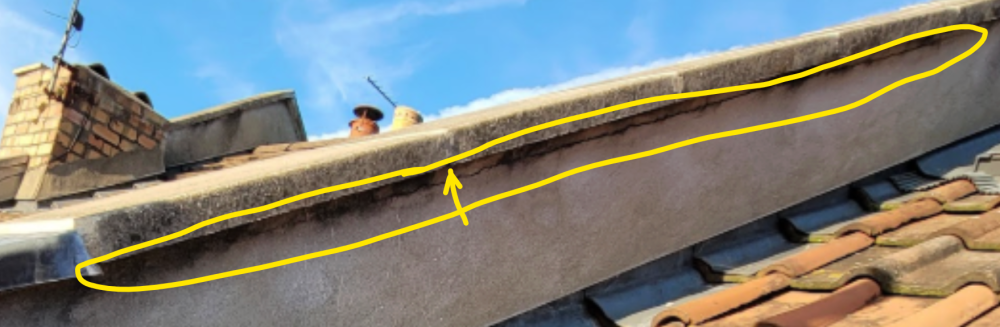
The massive crack circled in yellow would have me concerned: Even with a drip edge along the underside of the coping stones, there's a discontinuity at each join that could let water track away from the edge. The one at the yellow arrow seems particularly bad. Could you temporarily cover the render on your neighbour's side with some plastic sheet that goes right up under the coping stone overhang, ideally with a continuous bead of silicone to make sure water can't track through? That might let you at least rule out the neighbour's render.
-
Cheap sturdy vacuum cleaner for DIY cleanup
jack replied to Gill's topic in General Self Build & DIY Discussion
I'm not surprised. The one we snaffled over 10 years ago had already had a long history of being hired out to builders, who you can be sure didn't treat it with any respect. -
Cheap sturdy vacuum cleaner for DIY cleanup
jack replied to Gill's topic in General Self Build & DIY Discussion
Almost EXACTLY my experience. Wife used new Dyson to vacuum up a tiny amount of concrete dust, it developed a loud squeal, and was never the same again, even after sending it in for a service to address the issue. My inlaws run a plant hire company and hire out Henrys. They last forever. After our experience with the Dyson, we got hold of an ex-hire Henry. It vacuumed up everything we threw at it during the build, including concrete and plaster dust, and is still going strong a decade later. One of the guys onsite during our build had one. Chatting away to him about their reliability, and we learn that he's been running his without a bag, for years, because he didn't know it needed one! -
A reinforcing band is usually laid along joints to reinforce them before resin is applied, which can result in a visible line (you can certainly see the joints in the fiberglass on our balconies, but that's probably because I did them!) Crackling noises suggest a lack of adhesion, which could be down to insufficient resin, or the resin they did use not being rolled out enough to ensure full wetting of the glass through to the substrate. However, even if you don't have full adhesion, as long as the resin is continuous, it shouldn't leak. Do you know where the leak is? Are there any obvious pinholes? What about the copings over the parapet walls? We had a leak through a section of aluminium coping over our parapet wall that was not at all obvious due to how far the water tracked before becoming visible. More info needed, but @SteamyTea might have some thoughts.
-
Welcome. I'm certainly no specialist, but I'd start with the fact that the coping stones don't appear to have any sort of drip edge on them. If so, water will track underneath them to where they join the render. Any cracks/gaps at that joint will let in water. Re "Coping stones have dpc underneath them (protection from water ingress if coping stones were failing)", what does the DPC actually cover? If it's just the top of the wall under the coping stones, the water behind the render will find its way to the brick wall once it gets lower than the bottom of the DPC. Before rendering, the brickwork looked very "gappy". Any water getting though to the brickwork could take any number of paths downwards, including from one side of the wall to the other (e.g., it's possible water getting on on your neighbour's side could track to your side through a gap in the mortar). I'm sure someone more knowledgeable will be along shortly, but having dealt with a serious roof leak in the past, you have my sympathy!
-
I'm 100% certain I'd have done a much better job than the installer we used, even with zero training and experience. Most of it is It just common sense and a desire to do a good job. Unfortunately, the guy who did 95% of the work was a waste of space. 100% my opinion too.
-
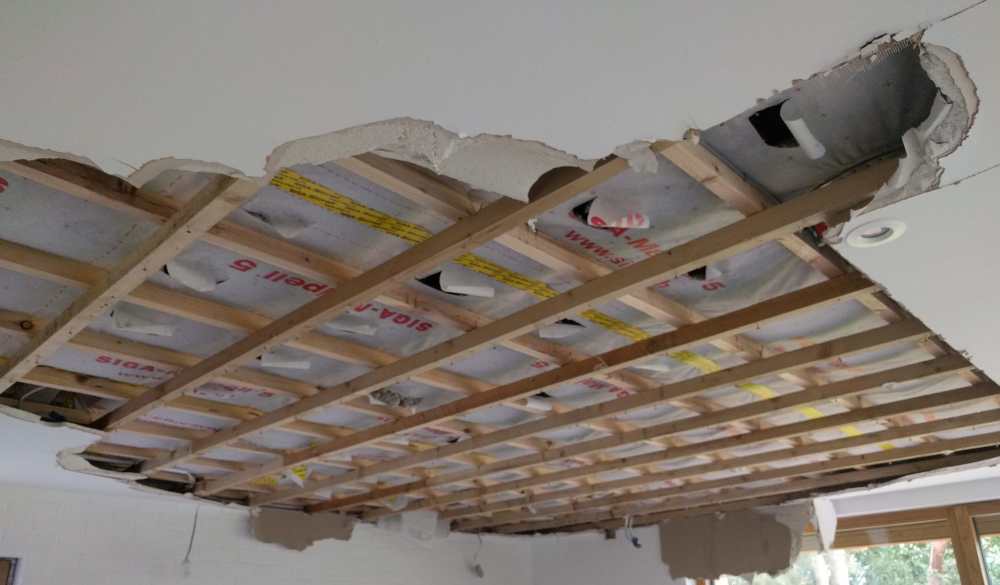
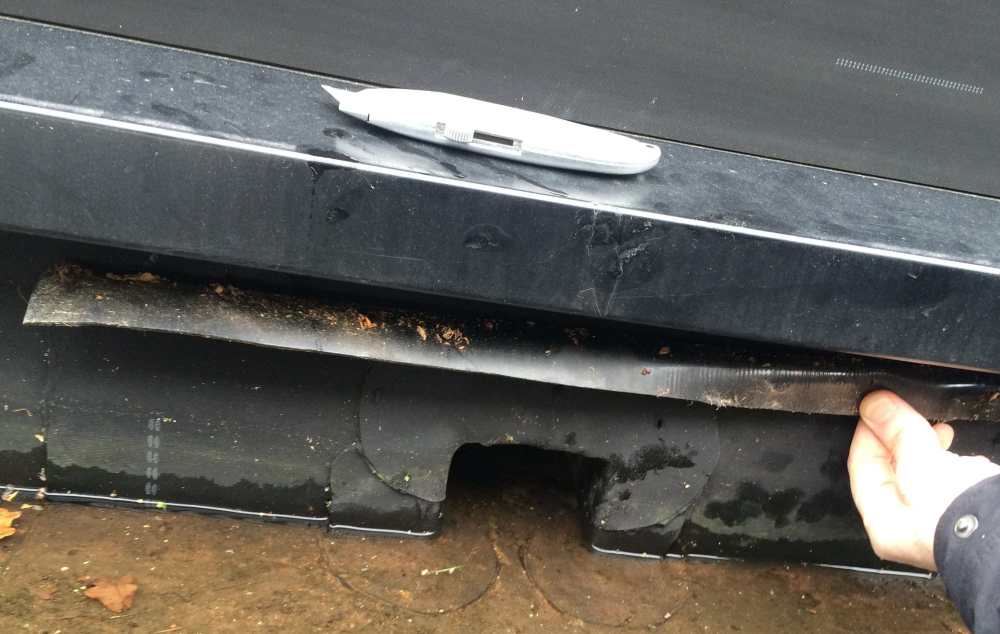
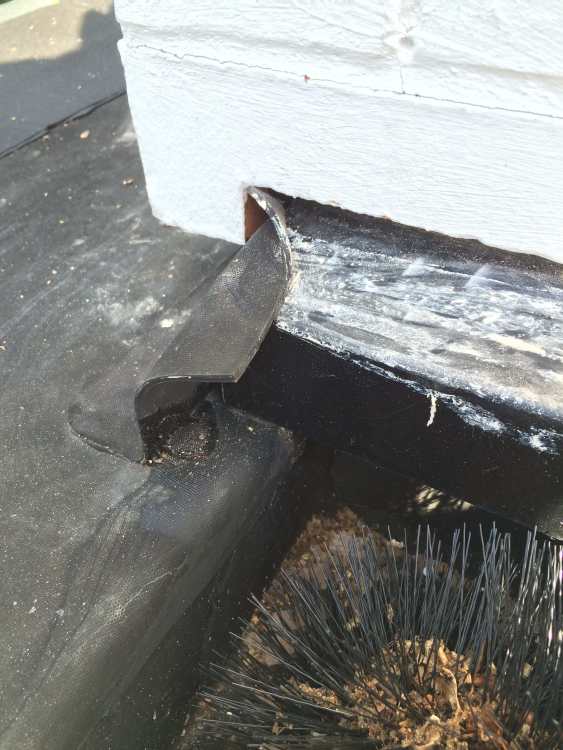
I assume it's because the installer was incompetent. Unfortunately, I didn't realise how bad a job they were doing until it was too late. I've previously documented some of the issues we had with them, particularly the multiple serious leaks we had within a month of moving in. This was the worst leak: And the extent of the damage arising out of that particular leak: There were plenty of other problems along the way: This is just a small subset. I got them back a couple of times to fix the worst of the issues, but it's still a dog's breakfast. We were so worried about the installation that we demanded the Resitrix rep come out and inspect it, particularly in the areas that ended up being the source of the leaks a few months later. Disappointingly, the rep wrote a report saying that all work was of the "usual high standard" (or words to that effect) expected of their authorised installers. It's a shame, because the Resitrix product itself is clearly very high quality.
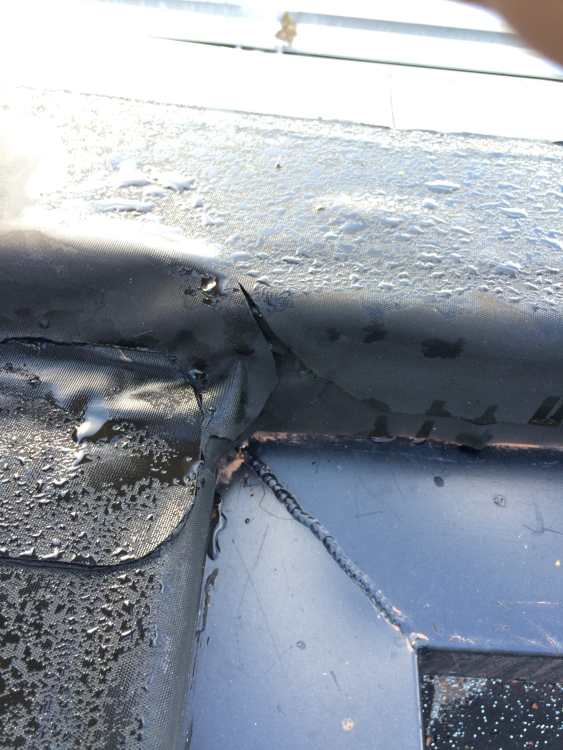
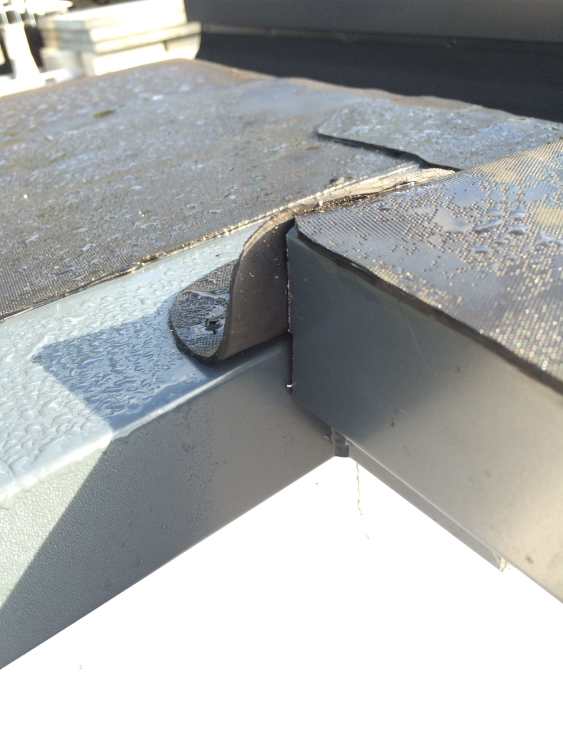
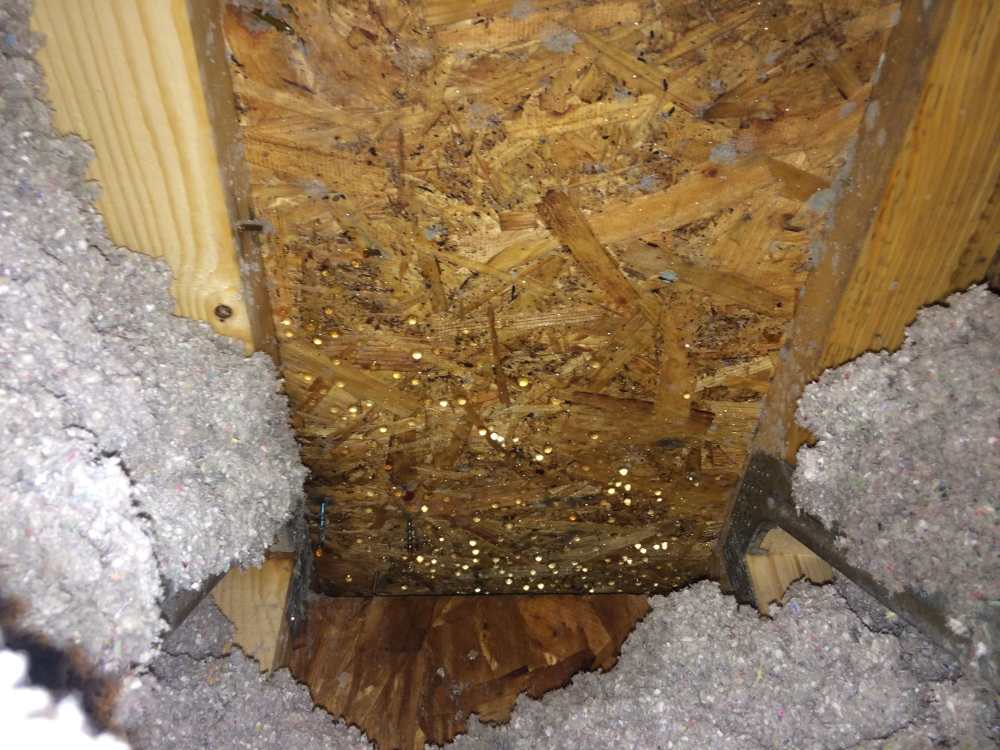
-
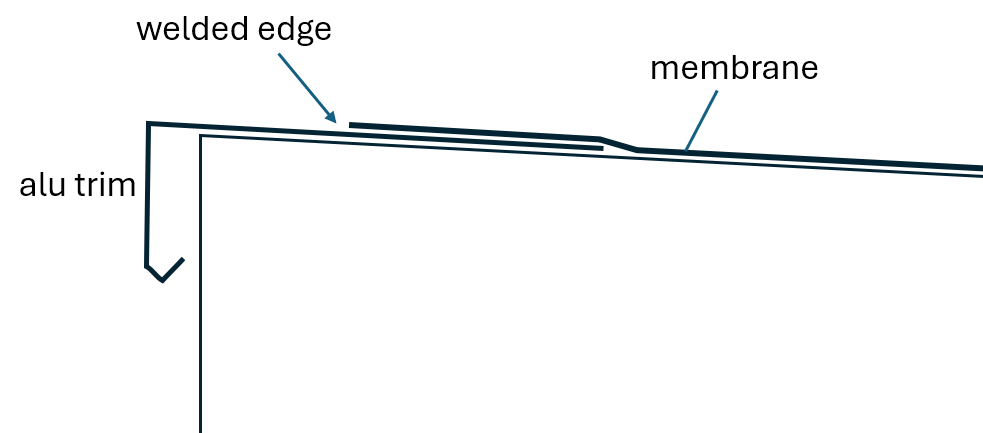
I don't like the idea of welding a membrane onto a trim where the slope is away from the trim towards the membrane. We have a Resitrix membrane and I've been really unhappy with how it was done. The detail over the outside edge of our parapet wall looks like this: It's theoretically fine as long as the welds (they're modified bitumen based) hold. The problem is that the trims are aluminium, so there are joins at least every 3 metres. As the trims expand and contract with temperature, the welds near the joints are put under quite a bit of lateral stress. In our case, many of them have failed for a couple of inches either side of the joins. I don't doubt that water getting into the space and freezing makes it worse over time. Also, water tends to pool along the welded edge due to the direction of the slope, making it very easy for water to get into the failed joins. It would've mattered a lot less of the weld had failed but the slope were in the other direction. In summary, if I'd known then what I know now, there's no way I would have accepted this design. Assume that welds, joins, glue, etc. will always fail over time. The design needs to be such that, if that happens, water is still largely shed in the correct direction without having a route into the structure through the failed join.
-
Feels like the majority of discussions around finance on Grand Designs. I remember that one on the Isle of Wight where they built an absolutely massive house with half basement and high quality finishes. They budgeted less than £1000/sqm, with them doing literally no actual building themselves. By the time the windows arrived from Switzerland, they were already out of money. The guy was running around trying to scrape together enough cash to allow the windows to be unloaded. Apparently they built that big because the plot deserved it.
-
A mate of mine got some guys in to clear the moss off his roof. Turns out it's in really bad condition - felt is leaking in several areas, battens are in poor condition, and various other issues. Some of the rafters are wet but there's no rot yet. It needs to be taken off and redone. It's a medium-sized four bed semi with a simple double-pitched gable roof. I won't tell you the price the guys doing the moss quoted him, but any thoughts on a rough cost for this sort of work (basically remove and replace everything from the rafters up)? Tiles are clay if that helps. Thanks.
.jpg.c21f3ac78c9b7efd90cbdcb312744dc5.thumb.jpg.7adcad4c0e384f5ecd7d56b0618df6e5.jpg)