Jump to content

jack

Members
  • Posts

    7405
  • Joined

  • Last visited

  • Days Won

    40

Everything posted by jack

  1. @craig, is this something you could help with? Many thanks.
  2. Have you asked why they're making these decisions? I'm sure they aren't doing it just to be difficult. It could be about routing needs, including competition from power, electricity, and water routing, interference from building elements such as joists, and/or limitations of their build system. In our case, we'd initially planned to put the MVHR in the pantry, but ended up moving it to the plant room right next door. Admittedly, a large part of the need for that location was my fault, because I didn't give nearly enough thought to the plant room layout before everything (drainage, power, water) was permanently positioned when the slab was poured. In the end (and possibly more relevant to your situation), we also decided to move the manifolds into the utility room, largely because it was clear we'd really struggle routing the per-room ducts around all the other power, water and drainage passing through the ceiling in the plant room. Similar issues could apply even to a couple of large ducts, depending on the routes they might need to take. I suppose my point is that there's generally a reason for every decision. They should be able to articulate that reason. If you end up with the MVHR in the utility room, you could box it in. We did that with ours in the pantry. It just looks like another set of cupboard doors. We did similar with a dropped ceiling below the manifolds in our utility room, with flush access panels for maintenance if needed. It worked well for use. The access panels have have never been opened in the decade since we moved in.
  3. It might be just a case of spreading the load across as many timbers as possible, but you'd need an SE to confirm the mass needed, and whether your roof has the necessary load capacity. We have a low-angle ballasted system on a flat roof that uses concrete council-type slabs as ballast, but with a frame system specifically designed for PV. I can't easily check, but it's something like a couple of slabs per panel, I think. I'd have preferred a through-membrane system bolted down to the roof deck, but unfortunately didn't plan ahead and so it wasn't a reasonable option at the time. Hasn't moved in 10+ years. I appreciate it's desirable to avoid roof penetrations, but if done properly it needn't be a significant leak risk. You'd still need SE calculations for load, lift, and fastener pullout, but I still think that's preferable to using ballast. Even it's within your roof's load capacity, you'll be putting considerably more pressure on the membrane and underlying structure.
  4. We used Express Glass Warehouse about 6 years ago for the laminated glass on our external balconies. No idea whether it's still the case, but back then they were the cheapest decent quality laminated glass I could find. I assume you know exactly what specs you're after. We went for 17.5mm clear laminated & toughened panels. Incidentally, if you want suction lifters, for the cost of postage you're welcome to the ones I used. What channel or other mounting system have you gone for?
  5. Had boys growing up in our house and can confirm! There's definitely a move towards compatibility with a smaller number of standards, like Matter and Home Assistant. Admittedly it was ten years ago, and I'd certainly do a few things differently now, but I personally went for a centralised home automation system that meant I could use relatively dumb lights, with DMX control. You can also get DMX relays for very little money. That puts all the "smart" stuff (dimming, automated on/off times, different scenes depending on different times of day/year) in the central system. The big risk, of course, is that if the central system breaks, everything breaks, but a spare raspberry pi and SD card don't cost much in the scheme of things. Getting back to your point about branded systems, blinds are one of the worst areas for this. Typically you have to use their proprietary wireless system controller or a dumb relay. Of course, you could use a wireless relay (e.g., Shelly and the like) controlled via a home automation system, but it's a shame they're so insistent on using their own standards.
  6. I have Scolmore Click (Definity, from memory) retractive switches throughout my house. Admittedly things might have moved on in the 11+ years since I installed mine, but they are loud and very heavily sprung. It's difficult to double-click them, especially if you're (say) turning off a light late at night and don't want to wake anyone up. I'd definitely be buying a sample of whatever I was thinking of using. Obviously it's a matter of personal taste, but I wouldn't buy screwless metal faceplates again. On white/light walls, they draw a lot of attention. They also mark fairly easily and I think metal cover plates can look/feel cheaper than good quality plastic. If I were doing it again it'd be white plastic all the way, focusing on how the switches feel in use.
  7. The stuff you saw was definitely the dry-installed type. Wet cellulose is applied in a completely different way. You start with the wall cavity open then spray in damp cellulose and scrape/compress it flat with the studs before plasterboarding. I've never heard of anyone offering the wet-spray stuff in the UK. My recollection is that Jeremy discussed it in response to expression of concern about post-installation slump of the dry stuff. Personally, I do have some concerns about how perfectly dry-installed cellulose fills cavities, especially for flat roofs, under windows and the like, and tall walls where there's a lot of weight compressing the cellulose at the bottom. I'm sure there's an element of installer skill, too. Water can travel a long way through cellulose. I guess the thing you have in your favour is that you only had a fixed amount of ingress based on the one-off snow event, so hopefully it won't have gone too far. In our case, we think the leak was there for months, which allowed it to saturate a lot of cellulose. We had two leaks - this was the worst of them: With an area as (hopefully) small as this, @lizzie might get away with making a smallish opening, pulling out the wet stuff, then manually pushing fresh stuff back in manually. To be honest, with such a small amount I'd be tempted to pull it out, dry it properly, and re-use it. Except for the re-use, that's what I did when we had another leak (scaffolders punctured an aluminium trim on the flat roof above the garage and didn't tell us about it, so first we realised was when we spotted the leak). Not the most pleasant job in the world, and you will make a mess, but it worked out okay. The cellulose sort-of stays put when you compress it, so you just keep stuffing it up until the space is full. For a small patch, allowing it to dry out is a possibility. You could consider piping dry air from a dehumidifier into the service void for a couple of weeks. Personally, I'd be happier if I knew it was all properly dried out, including any wooden elements in contact with it, so I'm not sure I'd risk it.
  8. Random attempts to access shared resources is common across a wide range of communications protocols. It's used across all the major mobile standards in the form of a RACH channel.
  9. Some mini-diggers have retractable tracks that let them get through doorways as narrow as ~700 mm. One of our neighbours had new fences put in about 5 years ago and two of them have already failed at the base. This is in a very damp area that gets no sun. I see similar all the time around me. I wish I'd known when getting the fences done how long ordinary treated posts tend to last. Our fences are 10 years old and no obvious issues yet (we're much higher up than the neighbour and on sandy ground), but looking at all the failing (and not that old) fences in my area, I know it's only a matter of time. As for longevity, perhaps not ideal for OP if they plan to sink a load of vertical posts, but for fenceposts in general, postsaver sleeves have a good reputation.
  10. And by quite a lot in some cases. https://www.reddit.com/r/OctopusEnergy/comments/1rwgpp5/wtf_octopus_just_slashed_iog/ Just in time for the sunny weather when my solar produces more than I can use!
  11. Hearing this would make me very keen to consider them if I were building again, even without the door and window installation nightmare we had with another supplier. A supplier who's willing to take this sort of responsibility is a rare and beautiful thing.
  12. It's worth having a look at installation specs and limitations. Higher spec cables tend to be thicker, stiffer, and have larger minimum bend radiuses. Cat 6a can be more challenging to route and terminate than cat 6, for example. I also think cat 6a needs different terminations compared to cat 5e/6 due to having thicker conductors.
  13. It's possible I suppose. Of course, all of this assumes Iran agrees to back down, or is incapacitated, and I don't see either of those happening in the short term. Insurance or not, would you agree to take a ship through the state of Hormuz when the Iranians have been laying mines and are threatening to blow up shipping?
  14. I think insurance policies are already on hold for transits through the Straight of Hormuz. I personally think the situation is too far gone. I was reading earlier how long it takes to get insurance policies back up and running properly after they've been suspended like this. Trump could declare "victory" tomorrow, but it could take weeks if not months before shipping insurance is back to normal. By then, the world's economy will have been crippled. Trump and Co. really thought this would be a slightly bigger version of Venezuala - couple of weeks instead of a couple of days. Instead, they've probably brought forward the next big recession and money print by months if not a year or more. Probably the last thing they were hoping for given the mid-terms later this year (although another argument is that they know they're going to lose those, so they want to get as much of their agenda implemented as quickly as possible before then). Sow the wind, reap the whirlwind.
  15. Copper grease is your friend with stainless-on-stainless. I learned this after I managed to completely seize one of the stainless nuts that holds my ASHP stand down, halfway onto the threaded bar. Apparently galling is a thing.
  16. Be gentle. Toughened glass is already under a lot of tension, and etched toughened glass has an increased chance of shattering. I'd personally be tempted to start with some sort of windscreen treatment like Rain X and see whether that reduces the appearance of etching. If it works, you'd need to re-apply it every few months, but you'd need to clean it far less often, as water won't stick to it. If that doesn't work you can always move on to something more aggressive.
  17. The PassivHaus Institute thinks otherwise. Sure, their heat demand/load numbers are based on the theoretical ability of an MVHR system to deliver the required heat based on several other assumptions, but imo that context is of little practical relevance given they don't actually require heat to be distributed in that fashion. But UFH isn't "sometimes" installed for "reassurance" in the UK. UFH is widely installed as the primary heating distribution system in PassivHaus-class buildings in the UK, presumably because people prefer to heat their homes that way than via hot air through a ventilation system.
  18. In thermal efficiency terms, the PassivHaus standard is more about reducing power consumpton to a particular level than to removing the need for a heating source. Very few PassivHaus-class builds in the UK would be comfortable to live in year round without any form of heating.
  19. It's a bit like childbirth (I imagine). In the immediate aftermath you can't imagine wanting to do it again, but the memory of the pain fades and you find yourself thinking about it. I'd love to build again, but I couldn't manage it while having a day job. We might sell up when we retire and put the money towards a smaller new build somewhere a bit cheaper.
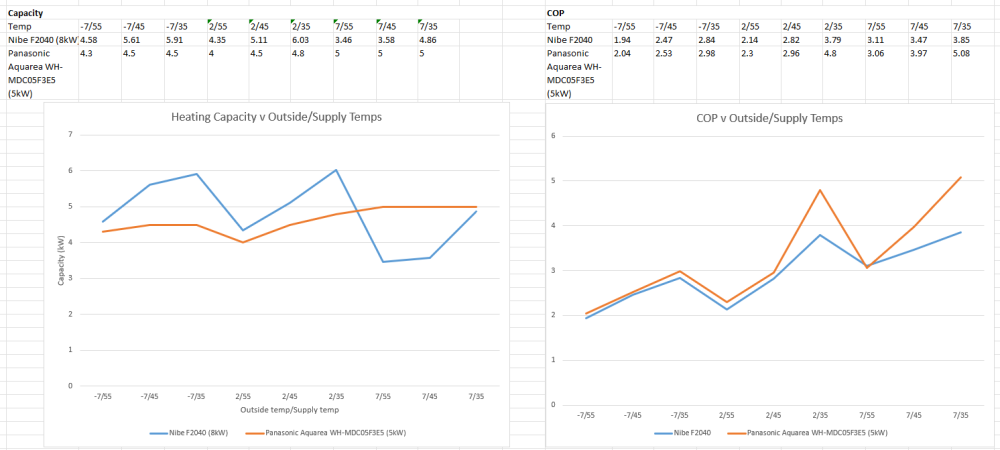
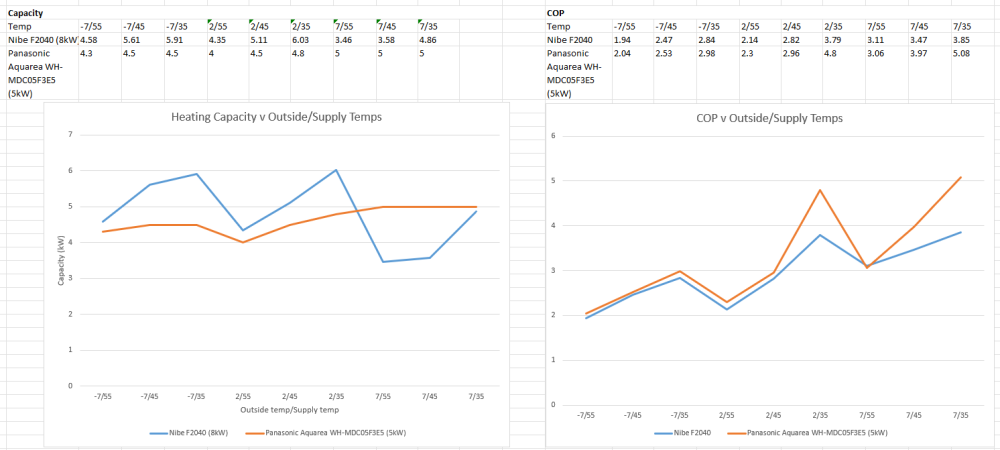
  20. We self-installed a 5 kW Panasonic Aquarea in 2015. Our electrician did the wiring (very simple) and the plumber took care of the plumbing from where it entered the house. We probably paid £400 all up for the installation, maybe less. I did the pipework from the plant room, through the underslab insulation, and plumbed it into the unit. As to why we went with a heat pump: Despite there being gas on the road and the bungalow we were replacing being built in the 1950s, there was no gas to the property. It would have cost us time, money, and disruption to install gas. We wanted to avoid paying two lots of standing charges. We'd used an induction hob at a friend's place and wanted one of those instead of a gas cooker. We were going for PassivHaus class insulation and airtightness, so we knew that we wouldn't need a massive heat source to heat it. The idea of a low-and-slow option seemed more compatible with the house's thermal characteristics. We wanted the option of cooling. Having lived with it for about 8 years (we didn't enable it for the first couple of years), this is probably one of the best reasons to choose ASHP in a well-insulated house with UFH, imo. We (well, I!) wanted some sort of home automation, and I felt that an ASHP offered more interesting control options than a boiler. We haven't actually integrated the ASHP in the way I'd thought we might (the modbus module for the ASHP was too expensive to justify), so this point was somewhat moot in the end. We installed a lot of solar (8.5 kWp) and I thought we'd be able to at least partly power the ASHP with excess solar. With the benefit of hindsight, I'm not sure this was a great argument. I'm genuinely unsure how often we generate excess energy at a time when the house needs heating. In the shoulder months we often don't need heat, and in winter when heat's required, we often generate very little solar, let alone excess solar. I don't remember whether I considered E7, E10, or any other time of use tariffs at the time we made the decision to go with an ASHP, but cheap overnight rates have since become of the strongest reasons for using an ASHP imo. For example, I have our system set to prioritise heating during the 6 hour cheap window with have with Intelligent Octopus Go. I allow a little bit of overheating during that period, and allow things to cool down a little more during the expensive period before turning on the heating. There are sometimes periods of several days where the heating is only on during the cheap period, which is quite satisfying to see given it's about a quarter of the price than the peak rate. The main concern I had was DHW recharge time. That hasn't turned out to be a massive issue, except when our younger one - Mr three-hour-shower-of-power - is home for the holidays. Upon reflection, I'd have gone for a larger tank than the 250 L one we installed. That would have allowed me to lower the DHW temp even further, while ensuring ample hot water. I don't know how repairable boilers are, but I get the sense that ASHPs could have a very long life, at least while parts are still available for any given model. How repairable any particular issue is depends on the failure mode. About three years after we installed the unit, either the control board or the pump failed. Apparently both are replaced at the same time, because it isn't possible to tell why one or the other failed, and one of them failing can bring the other one down with it. Sounded like bollocks to me, but I did a bit of research at the time and this seemed to be a common view. I don't recall what that cost us, because it was tied up with some other work, but certainly it was several hundred quid. I think the pump alone might have been £400, which sounded like an utter rort for a smallish pump, but I wasn't able to find a cheaper equivalent. It's since continued running without issue for a further 7 years. If something catastrophic happened and the whole unit needed replacing, I'd just go and buy a new one for £2-3k and install it myself, reusing the existing wiring and plumbing. The units themselves aren't that expensive, even for decent brands. For example, the current equivalent of the model we installed is about £2700.
  21. For those using SketchUp, here's a potential alternative way of working out heatloss, based on SAP principles: https://forum.buildhub.org.uk/topic/46635-preliminary-sap-and-heat-loss-tool-for-sketchup/
  22. The architect who designed my house has just released an extension for Sketchup. As I understand it, you build a very simple model in SketchUp, select various values from drop-down lists, and it outputs a draft SAP report. You can use it for heatloss modelling, or to estimate what impact changing components etc. will have on SAP score. It's really designed for architects and designers, but there's a 14 day trial if you want to take it for a spin and see what it can do.
  23. I agree with this, but was just commenting on the MVHR balancing point (and not suggesting the MVHR is the solution here). @Potatoman, for a short term fix while you figure out what's happening and what to do about it, consider getting a dehumidifier. They can make a world of difference and aren't expensive to run (pennies per hour). If you consider this option, look at Meaco. They're a British company who make very good quality units for not crazy prices. Three year warranty as standard and I've heard of them helping people beyond that time too.
×
×
  • Create New...