.jpg.c21f3ac78c9b7efd90cbdcb312744dc5.jpg)
jack
-
Posts
7460 -
Joined
-
Last visited
-
Days Won
41
Everything posted by jack
-
No-one else in my house every switches anything off, not once, not ever. It's standing joke to everyone but me. Best effort was the older boy leaving the fan heater on when he was in the garage gym yesterday. I spent a puzzled hour trying to figure out what was using 2 kW all day today when everything in the house was turned off. By the time we realised what the issue was, it had been on full power for over 20 hours. Even with a 4 hour cheap rate overnight and some decent solar through the middle of the day, that'll have cost a pretty penny!
-
I agree. Most of our downlights are 2700 K or maybe 3000 K and the light is very pleasant. I was talked into higher colour temperature for the bathrooms - 4000 or something like that - and it's too cold. We have some very warm white wall lights in our ensuite, and use only them during the dim/dark hours. Much easier on the eyes right before you head to bed or have just woken up. Good point this. We have a few in our hallway and kitchen which are very effective for looking nice at night, but they make it impossible to hang anything on the walls. Directional spotlights or angled downlights can give a similar effect while allowing for pictures etc.
-
The problem is less downlights per se and more the visual effect of a vast array of closely-mounted downlights as the primary, or even only, light source for a large area. It's particularly bad if the ceilings are low. We have a small number of relatively high power, wide angle downlights in our kitchen and they're not actually that bad, although I prefer to have them on low in the evenings and use wall and accent lights unless I'm doing something that needs a ton of light. As well as using not shite pendants, you can also use wall lights and lamps (and LED strips, but even when they're concealed I'm not a fan of the way these are usually used). I've had the 16 channel version of this running via Loxone for a few months now. Rock solid so far. Dimming is excellent - better even than the 8-channel Theben KNX dimmer being used for the rest of the channels.
-
All I'll say is that downlights are the devil, and large arrays of downlights are whatever's worse than the devil. My eyes are already bleeding looking at the array in the kitchen. One thing I'll recommend (which we didn't do enough of) is to walk into each room, imagine specific scenarios about how it will be used, and think about what the lighting would ideally look like for each use. For example, the kitchen is probably going to be the most complex, because it has lots of different uses across the day and night: - Cooking on a weeknight: compare a bright summer's day with a dark winter evening - Eating lunch/breakfast at the island - Eating dinner at the table - Coffee on a dark, overcast winter weekend morning - After-dinner lighting for midweek where you might be wandering in and out from the living room, grabbing a cup of tea, etc - A party where there are lots of people drinking and eating snacks - A dinner party with 6-8 people at the table (does the lighting change over the course of the evening? Brighter when people get there and you're engaged in cooking and organising drinks, then changing focus to the table when you sit down to eat, and perhaps changing again if things continue after dinner) Other things to consider: - Will you have any art on the walls? If so, how will you light it (if at all). - How much of your lighting can be done with local task lights versus bright downlights? In the kitchen example, are you better having some good task lighting above the island where you'll be doing food prep, coupled with some more moody, lower level lighting over the island for when you still want to see what you're doing (e.g., eating), but brightness isn't so important. - Consider lamps and wall lights that are controllable as part of scenes incorporating your main lighting. Another thing to consider is to look at the lighting in bars and restaurants, and see what sort of lighting gives you the sort of mood you're after. It's amazing the impact a couple of lamps with orange or red shades can do to the feel of a space.
-
@jen and mark, I've closed this thread to avoid having duplicated comments across two threads. I think the other thread is in a better sub-forum.
-
These are a central element of the novel Oscar and Lucinda by Peter Carey. I don't generally read historical or literary fiction (this is both), but I remember absolutely loving it.
-
We cleared up our garden of things that could get blown away before the massive storm earlier in the year. We overlooked one thing: a small side-table with a glass top. After the storm, we realised that the top had just disappeared. Quick search didn't locate it. We found it a couple of weeks later in a bush quite some distance from the table. It had been flung in the air by the wind, bounced at least a couple of times on the paving (based on chips along its edges), then landed in the bush. Still perfectly usable if you ignore a couple of edge chips.
-
I got laminated and toughened for that very reason. That said, I don't believe building regs required laminated, at least for residential properties. Might be wrong about that, but either way, laminated makes a lot of sense.
-
When I was getting the glass for our balconies, one or two places offered an additional "heat soak" treated toughened glass. They put it through a process that essentially accelerates the impact that inclusions have. It's destructive, so the additional cost of heat-soaked glass reflects both the additional process cost and the average loss rate.
-
[Mod hat on] Please behave yourselves and stop bickering. [/Mod hat off]
-
If you don't have some form of battery backup, can you run an oil burner during a blackout given they need power for ignition/control?
-
In the original post: So the builder was told what was needed. If he couldn't do this, or didn't want to for whatever reason (e.g., it isn't practical based on the rest of the construction, or it's going to cost 10 times more than what he actually built, etc), the appropriate response is a conversation with the client, not to just press ahead and do something completely different. I don't think what he's done is terrible. More evenly spaced mortar would have been better (the angle each brick makes with the arch shows you how he's got it wrong), but the main point is that he didn't build what was shown and agreed, and he did it without a discussion.

-
Welcome Mark. After that length of time, plasterers tend to either have bullet-proof shoulders, or shoulders that feel like they've been shot several times. Hope it's the former for you!
-
.jpg.c21f3ac78c9b7efd90cbdcb312744dc5.thumb.jpg.7adcad4c0e384f5ecd7d56b0618df6e5.jpg)
Borrowing MVHR balancing kit from buildhub
jack replied to joe90's topic in Mechanical Ventilation with Heat Recovery (MVHR)
Just for any others following, this discussion has moved to PMs. -
Interesting, thanks @Radian I hadn't considered that the Varisine stuff might have had anything to do with the one-cycle limit.
-
I don't know all that much about them, but there's presumably an upper reasonable limit on buffer size, and I can't imagine it corresponds to a huge amount of energy relative to an offset of, say, tens of watts? Do you have any feeling for the values that are likely to be involved?
-
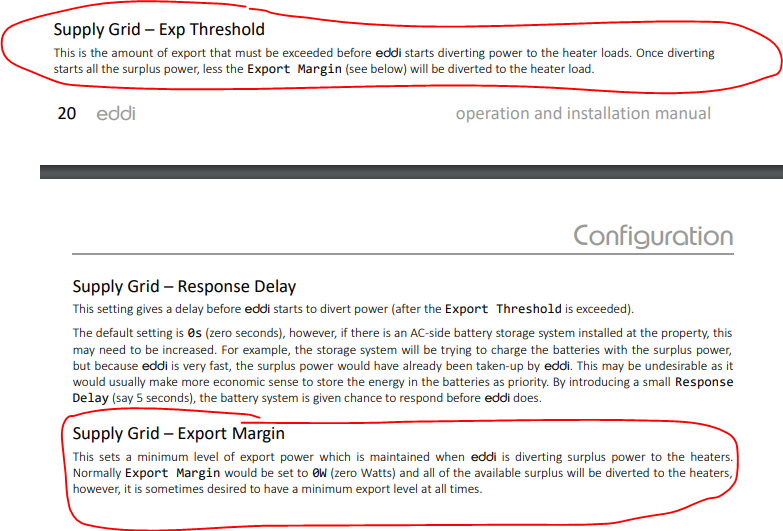
I have an Eddi and it allows adjustment of both the export threshold and the export margin, although I doubt there's much granularity (it isn't going to allow fine-tuning to suit different meter types, for example).
-
Borrowing MVHR balancing kit from buildhub
jack replied to joe90's topic in Mechanical Ventilation with Heat Recovery (MVHR)
Check out the tool loan forum: Unfortunately, two of the three units have gone missing in action, so we're about to implement a deposit system. Post over in the thread above and I'll add you to the list for the tool. -
+1 I've had to drill through soft-ish brick slips, which probably have similar challenges to the tiles you'll be drilling. Ordinary masonry bits are far too blunt to make any sort of dent without a decent hammer action drill, but the hammer action risks cracking the tiles. Spear point bit and patience are your friends.
-
It isn't personally of much interest to me so I haven't really looked into it, but I believe you can use their IR system to control IR devices such as TVs. You can also control networked devices such as TVs, home theatre amps, etc, over ethernet or wireless. I doubt you can replicate every single function of the remotes - I suspect the aim is control the main functions (on/off, volume, input select, that sort of thing). If you were into home theatre and had a complex setup, you could, for example, program a button to enter home cinema mode, where Loxone turns on the TV and amp, selects the right inputs and outputs for the HT audio system, closes blinds, and sets the lights to a certain mood. In case you haven't found it yet, the Google Groups Loxone forum is a good place to ask more technical questions if needed: https://groups.google.com/g/loxone-english
-
That aluminium flex tubing is far from ideal as it has quite high internal resistance. It's also uninsulated, which isn't great given the system is in a garage (presumably not within the thermal envelope of the house). If you can, you're better off replacing the ducting that's outside the thermal envelope with proper insulated ducts like these. Ideally you'd also insulate the unit itself to reduce heat loss and condensation. Is there room to add rigid insulation as part of the boxing-in? And is there a condensation drain underneath the existing unit?
-
Short version: I think the choice of roof covering is probably a lot less important than the choice of roof installer. We went with Resitrix, which is a textured, reinforced EPDM layer over modified bitumen. As documented here more than once, the product is great. It's been up there over 7 years, and is still looking bombproof. The problem was that the product wasn't installed all that well. I'd raised questions about the quality of a number of the joint when it was first finished, especially around some of the outlets. I wasn't happy with the answers they gave, so I got the local rep out to inspect. He sent me an email confirming that the installation was of the high quality expected from their authorised installers. A few months later, we woke up the morning after a large downpour to water dripping around the downlights in our bedroom and the main bathroom. Two of the joined areas I'd expressed concerns about turned out to be even worse than I'd thought might be the case. The installers came out to rectify. I made them re-do the other similar joins: upon removing the original joins to replace, it appeared that another two had almost completely given way and would be be leaking in the very near future. I was up on the roof again just last weekend patching some joins that I wasn't happy with: Resitrix is clearly an amazing product, but the installation - both the details chosen, and then the way they were implemented by the installer - completely let the product down. Also, double-check what the guarantee covers. We have a transferable, insurance-backed guarantee, but it only covers materials. I don't know whether that's typical, but if so, it's of limited use.
-
Preparing for an air tight test
jack replied to Happy Valley's topic in General Self Build & DIY Discussion
Make sure all your windows and doors are properly adjusted (assuming they're adjustable). That can make a difference. If you have any incoming ducts for water, electricity, etc, that are open to the outside world, make sure they're sealed at the house end before the test. -
Copyright dispute with timber frame company. Help.
jack replied to Paulp1's topic in General Self Build & DIY Discussion
Agreed that this is the right answer, once you've checked a couple of other things. The main question is: what does the contract actually say? Without knowing that, everything else is just speculation. I wouldn't assume that any particular company deeply understands the contracts they use with their customers, so double check what has been paid for, where the copyright ends up, and what rights the customer has in the circumstances. The last bit may not be explicit, especially if their contract assumes the customer will always use the TF company for construction. If (and it's still a big "if" based on what we know) you pay someone to design a building, you have an implied right to build that building without further permission or payment, even if the designer retains copyright as a result of the contract. But the contract may also say that they only design as part of a package and don't grant rights to use drawings separately, for example. Strictly speaking that could be a problem. -
Copyright dispute with timber frame company. Help.
jack replied to Paulp1's topic in General Self Build & DIY Discussion
In practical terms, you may well be right that the TF company won't sue, but this: ... is 100% wrong. And even if you're right on the practical reality, the OP didn't ask whether they can or should just press on irrespective of the legal position. They asked: The plain answer is no, because nothing can stop the TF company proceeding as far along the process as they choose. They might decide it's worth at least a letter before action even if they have no intention of litigating. Do you think a letter from a lawyer threatening the OP's friend with court will lower her stress levels?
.jpg.c21f3ac78c9b7efd90cbdcb312744dc5.thumb.jpg.7adcad4c0e384f5ecd7d56b0618df6e5.jpg)