


MikeSharp01
-
Posts
5693 -
Joined
-
Last visited
-
Days Won
16
Everything posted by MikeSharp01
-
Great curves! What is the azimuth and elevation of your array? Looks almost perfect due south +/- BST!
-
Came across this today, wacky and wonderful. http://www.treehugger.com/tiny-houses/passivdom-passive-tiny-3d-printed-carbon-fiber-autonomous-solar-powered-marvel.html probably a portend of things to come.
-
Will be intesting to see if you can still drop the pin in the UK in a little under two years - get your calcs done now!
-
We put the water pipe in the duct before we laid it because I was worried about getting it through! Could have done the SWA as well but kept radius at 400mm so I am hopeful.
-

The blood and stomarch pills is happening to my slab!
MikeSharp01 replied to MikeSharp01's topic in Foundations
We used RC25/30 concrete mix as this is used in slabs with reinforcing steel and is specified for light traffic warehouses s should be up to a normal home. It can be power floated and further polished if required after chemical densification. The slab we poured was the garden room slab and designed to be an experiment for all aspects of the main house construction following a couple of months behind. As I have said elsewhere we learned a lot but perhaps the biggest on the day learning experience was to powerfloat in the same area sequence as the pour and over about the same period. We ended up power floating the final area too early, we were constrained by the hire of the float and although it has come out acceptably it is not as good as the rest of the surface. The salts coming out happened later, after about 10 days in the form photographed above but was happening around areas of drying out from day 3. It looks to have been my own silly fault as I only covered it for the first two days and from then on I would wet it when I arrived at site and keep it wet during the day but it was often dry the next day so as @Ian has pointed out this constant wetting and drying probably caused the problem. The problem is not getting worse, no more areas have appeared and I keep those that have swept. I am hopeful all will be well. -
Are any TV 'Architects', Architects?
MikeSharp01 replied to Ferdinand's topic in Surveyors & Architects
It feels to me that we must acknowledge their training and experience as they should ours. It is perhaps this tension that, when not 100% focused on creative synergy between architect and client, creates the perception of arrogance and aloofness often alluded to here as the problem with architects. In the end if you are not a trained and practising architect you will need an open mind and a very large quantum of empathy with their drives and motivation to get the very best out of them. In their training they are taught how to elicit thoughts, ideas and feelings from clients and then interpret them in the designs that have been commissioned of them. As with the rest of us they do not know what they do not know (or have not been told) and in terms of best practice in aspects of construction, such as highly insulated homes where solar gain plays a bit part, many will not be versed. This does not in itself detract from their wider value in driving forward the built environment albeit at the behest of clients. Aye there is the rub! As in all soft systems, those constructed by humans, the CATWOE acronym, coined so aptly by Peter Checkland (et al) tells us, how we might come to understand one another and create solutions to problems once they are mutually understood with clear root causes identified and shared. CUSTOMERS, ACTORS, TRANSFORMATIONAL PROCESSES, WORLD VIEWS, OWNERS & ENVIRONMENTAL CONSTRAINTS. As self builders we are often very clear about what we want and this is a constraint architects are trained to work with, why, because knowing what you want is not always what you should have or need. There is, after all, often a fundamental difference between what you need and what you want. As a professional I was always trained to give the customer what they needed rather than just what they wanted, unless the two were 100% coincident. They wanted a degree, they needed an education. In the end they, formerly the state, were paying me to improve things for them and they acknowledged that they were employing me to support, explain and curate their journey. In taking them off piste you had to be able to justify the choice, show them things they had never considered and make the case for driving it home. Sorry @SteamyTea, I cannot agree - design, architectural or otherwise, is at the core of our environment be it good or bad, engineering delivers great designs based on leveraging sound science only if the initial design is sound. In most things it is not difficult to see the juxtaposition between form and function and perhaps which follows which is the fulcrum upon which this discussion balances. Houses, Le Corbusier said, are machines for living in and he was right but living is a human construct, back to CATWOE, not an engineering one, well thankfully not yet anyway! Perhaps its sharing our ideas and allowing others to show us as yet untravelled paths we find hard to do? -
Are any TV 'Architects', Architects?
MikeSharp01 replied to Ferdinand's topic in Surveyors & Architects
Nothing wrong with our architect, done a good job working with a difficult client, us. There is perhaps nothing wrong with discussion but I would hope we don't chase them away as they do add value in those dimensions of this business where their expertise has direct impact and I think that has been well discussed on the old forum, where at least one architect helped us get to grips with the questions we needed to address with ours, but perhaps not on this forum. maybe we should address this gap somehow as often, as alluded to above and elsewhere, getting the best design even with an architect on board can be very challenging. -
Are any TV 'Architects', Architects?
MikeSharp01 replied to Ferdinand's topic in Surveyors & Architects
You forgot Piers Taylor (also from house that 100K built) who is an architect. -
And we thought our site was awkward...
MikeSharp01 replied to jamiehamy's topic in General Self Build & DIY Discussion
This is the loco on the railway here at millstone manor. This loco can handle the 1:30 slope with around 1T on a truck from the drive up to the log store, workshop and top station (Moss bank) it takes a bit of time to steam up but the battery electric loco is ready to go as required to transport things up the garden. Fortunately, or unfortunately depending on your view, the drive goes to the front door so the front of the house can be fed without the railway.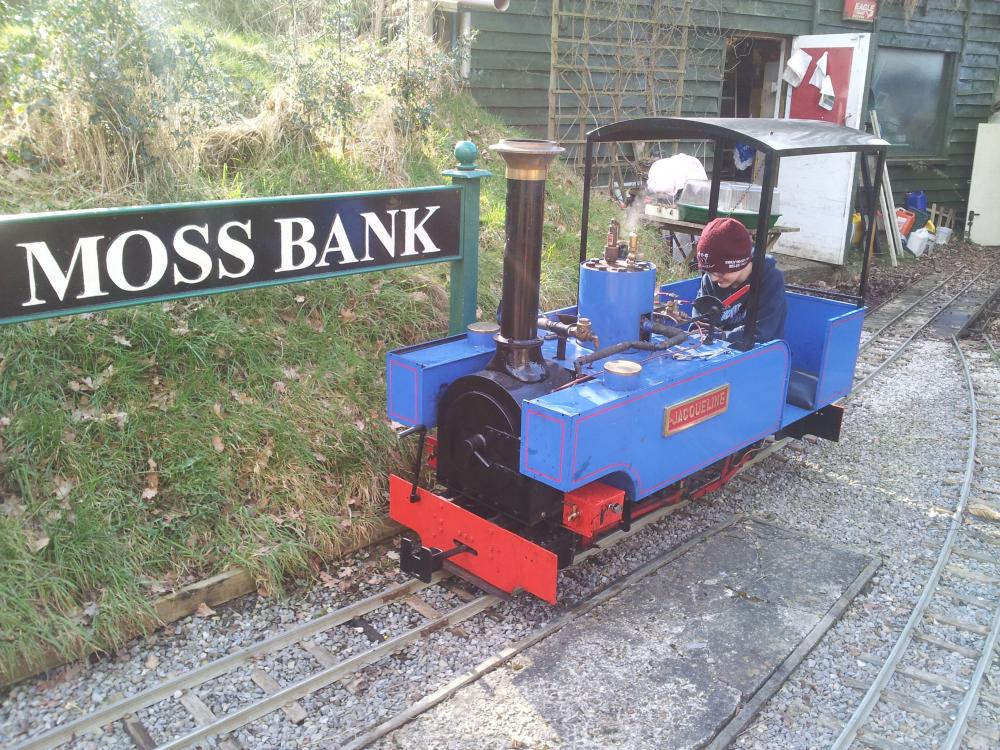
-
clearfox Eating worm monster arrived
MikeSharp01 replied to readiescards's topic in Waste & Sewerage
Somebody is bloody good with a digger! Smoother than a babies bottom and just look at those teeth (tooth) marks! -
Here is the roofing bible I have been working with.. seems comprehensive but of course I don't know what I don't know! https://www.fixmyroof.co.uk/videos-and-guides/pitched-roof/slate-a-roof/#
-
Have you got a double row (double cover / starter course) on the base line, not sure I can see it in the picture, without it the water will run through the gaps on the base row and into the fabric also the geometry alters quite a bit!
-
+1 to that, saw it a few weeks back!
-
The blood and stomarch pills is happening to my slab!
MikeSharp01 replied to MikeSharp01's topic in Foundations
@IanThe passive slab will be engineer designed, they will know its to be the finished surface and it will have UFH. @jack Thanks for this, I will PM you for your details, the other half does not like polished (Terazzo style) concrete but would like us to end up with the shiny grey surface. We are leaving 6mm of headroom to allow us to put a very thin finish on if we need / want to with a sunken mat zone at the front door. -
The blood and stomarch pills is happening to my slab!
MikeSharp01 replied to MikeSharp01's topic in Foundations
Thanks @Ian I think I just thought through the need to keep the evaporation rate down so keep it wet. I did cover it for the first three days and wetted it under the cover, but was worried that the tarpaulin would damage the surface. It does get direct sun and the last few weeks have been decidedly warm for the time of year on the Kent coast. This was a learning exercise and I have learned a lot in readiness for the main pour. I have it flat with +/-2mm (actually -2, +1.5) and the vast majority of the power floated surface is very good. I just need to take more care of the slab on the main pour. Every day is a school day after all! -
The blood and stomarch pills is happening to my slab!
MikeSharp01 replied to MikeSharp01's topic in Foundations
Ah it was probably my fault as I could only wet it and cover it on a daily basis. So it was drying out. I will have to make a cover for the main slab and keep it misted. -
The blood and stomarch pills is happening to my slab!
MikeSharp01 replied to MikeSharp01's topic in Foundations
Thanks again but this is supposed to be the finished surface there are no finishes. This is the garden room slab and has been designed to test the processes for the main house. I need to avoid problems with the main slab. Will keep brushing. -
The blood and stomarch pills is happening to my slab!
MikeSharp01 replied to MikeSharp01's topic in Foundations
Thanks @Ian great link, I will get some acid and see if I can sort it. -
Here is the data sheet by the looks of it ST - 50 glorious pages. https://ae-bst.resource.bosch.com/media/_tech/media/datasheets/BST-BMP280-DS001-18.pdf
-
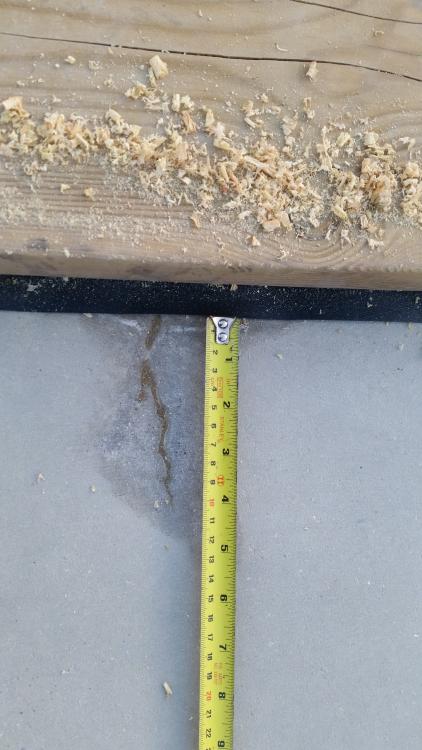
Arrived at site this morning to find some weird happenings on my slab, see attached, I have no idea what this is all about but they all start on the edge of the DPC strip under the sole plate and were surrounded by salt deposits until I swept them to see what was going on. If I lift the DPC is does not continue under it! Any ideas? Wonder if I should lift the sole plate and let the concrete cure some more. DPC was put down 10 days after pouring and slab was kept wet for first 5 days.
-
Any one else have problems with Jewsons?
MikeSharp01 replied to Leaway's topic in Building Materials
My local Jewsons is very good for service, if I need it urgently they will drop it round directly if they can. Before xmas I broke a neighbours fence post and within an hour they had a new one on the drive for me to fit. I do check prices on larger orders and sometimes they don't get the order but I am learning all the time. I know the people there, recognise their voices and keep them informed of where / what I am up to. Their credit system is a bit odd but as long as I keep paying it works well and when I overpaid the other month, paid an invoice they had not issued yet, off the delivery ticket, they issued me a credit note which I then spent paying the invoice when it arrived. I guess it keeps their books straight. -
How to survive a tree falling on cabin
MikeSharp01 replied to Tennentslager's topic in New House & Self Build Design
Short answer: Probably not! Longer answer: It seems to me that the problem with trees is not that they are super massive but that when they fall they are travelling! Oak has a density of around 0.8Kg/m3 so a 200mm diameter length of say 5m long (forget the leaves and ancillary branches) weighs in at about 125Kg, assuming it is coming from 5 meters up and accelerating under gravity its will be doing about 10m/s when it hits your roof. So, sorry Jack, f=ma and so load / (force) is now about 1.25 tonnes (12.5Kn). The branch, at least in my experience, is round so the area over which this force will be spread is very small, although spreading rapidly until the full diameter is reached, at least at the point of contact, fractionally after impact the area might, generously, be 10mm2. This is probably well in excess of what you can get a timber frame to cope with at a single point, but even in the best case if it lands directly on one of the studs the stud will either buckle or push its way through the floor - everybody d..s! If you double skin with 18mm OSB, nailed every 50mm you might get to a wall that could take it, and spread it out along the sole plate if hit directly from above, but the roof, trussed or otherwise, probably won't. Hope that helps. This might convince you - although one hopes you won't be deliberately felling the whole tree across your hut!! -
As the Guardian argues we need to beef up the consumer rights protection - it won't be easy because private (older) house sales need to be kept clear of it because of unlimited (cost of purchase + putting up the householder while the problems are fixed + stress on the family + fixing the problems) comeback in case of a problem and perhaps caveat emptor needs to prevail there but for a new build there really is no excuse. I think the problem may have its root cause in the way the big housebuilders (indeed all main contractors) are structured with a Coase's law boundary that is only a few layers deep and that actual work is carried out by a battery of sub contractors who have often / sometimes / not infrequently been screwed down on price and so are running on tight margins that drive cost reductions and corner cutting. Essentially you can argue that the shareholders, of the main contractors, dividends are driving the quality / size and supply down!
-
Thanks Jeremy, I thought it very odd that two CAD platforms have the same error, two lines apart. Maybe its actually one cad platform serving both masters. I am sure I got this error somewhere else yesterday - will drill back on my laptop and see what it was about.
-
Don't be daft, horse drawn transport is much more sustainable and was working well a few hundred years back, you get great manure and when they are no longer any good for moving you, or your stuff, you can eat them. No more landfill


