Iceverge
-
Posts
4485 -
Joined
-
Last visited
-
Days Won
32
Everything posted by Iceverge
-

Cold unventilated loft - condensation risk?
Iceverge replied to G and J's topic in Roofing, Tiling & Slating
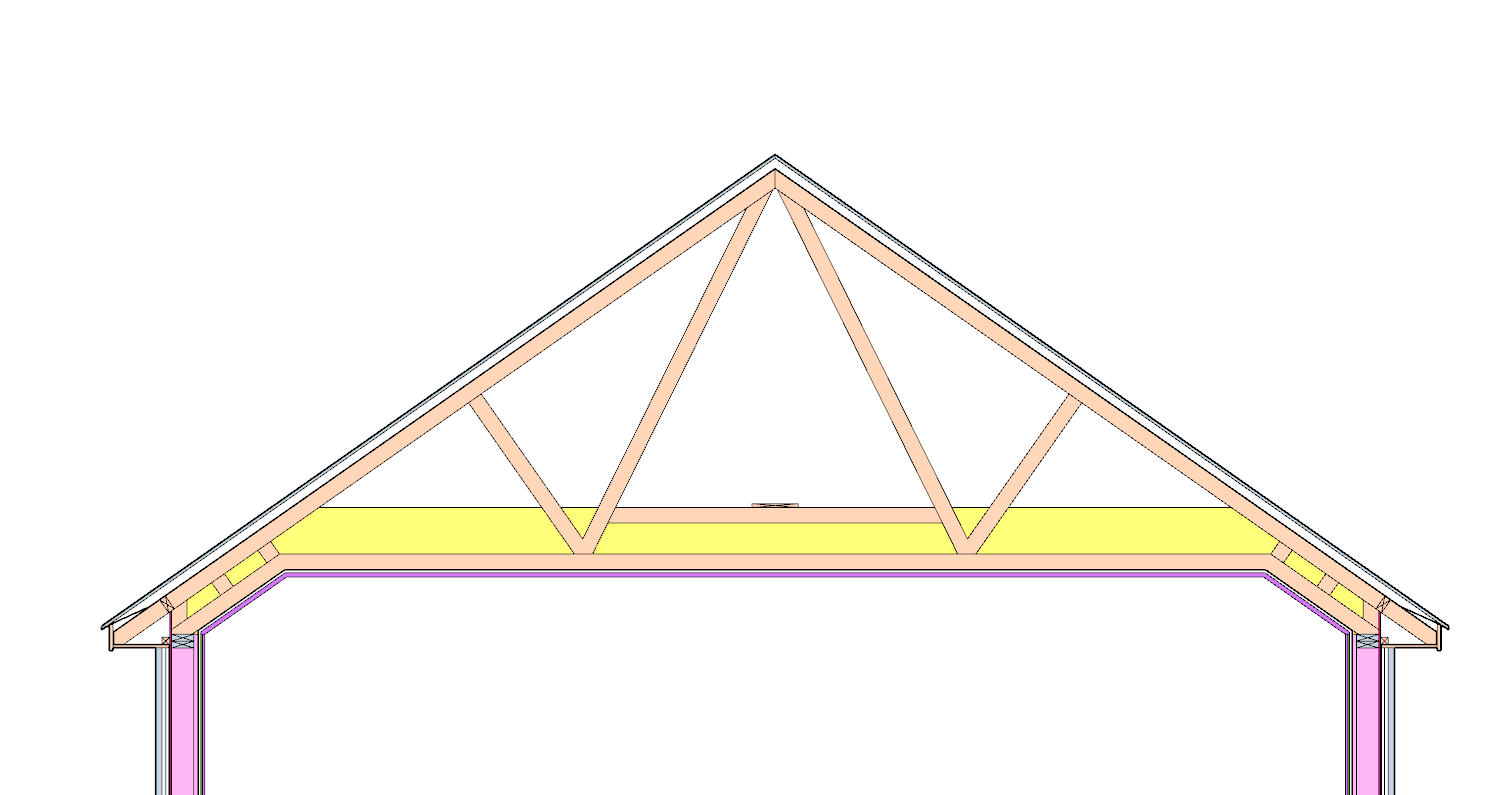
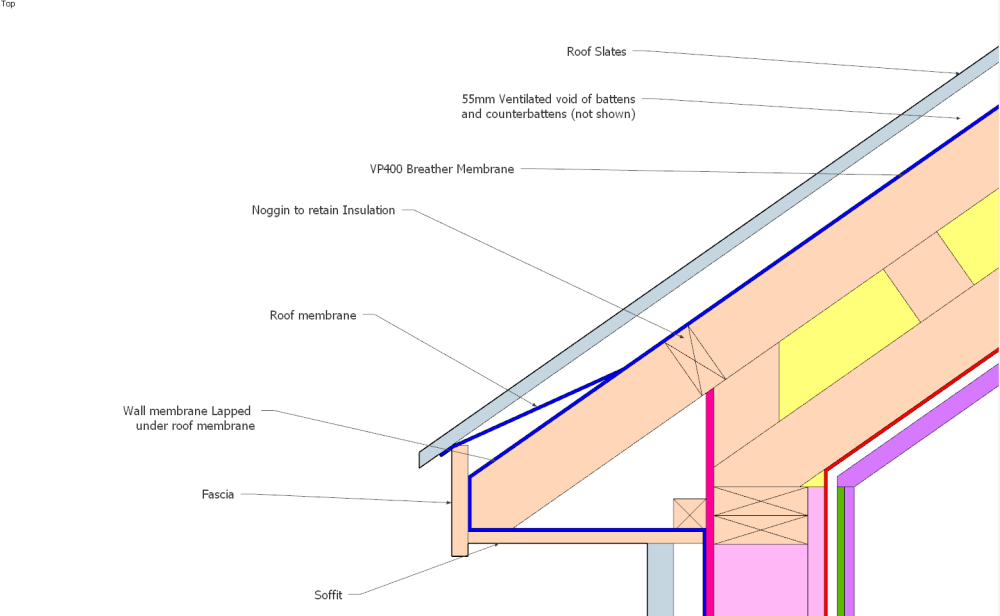
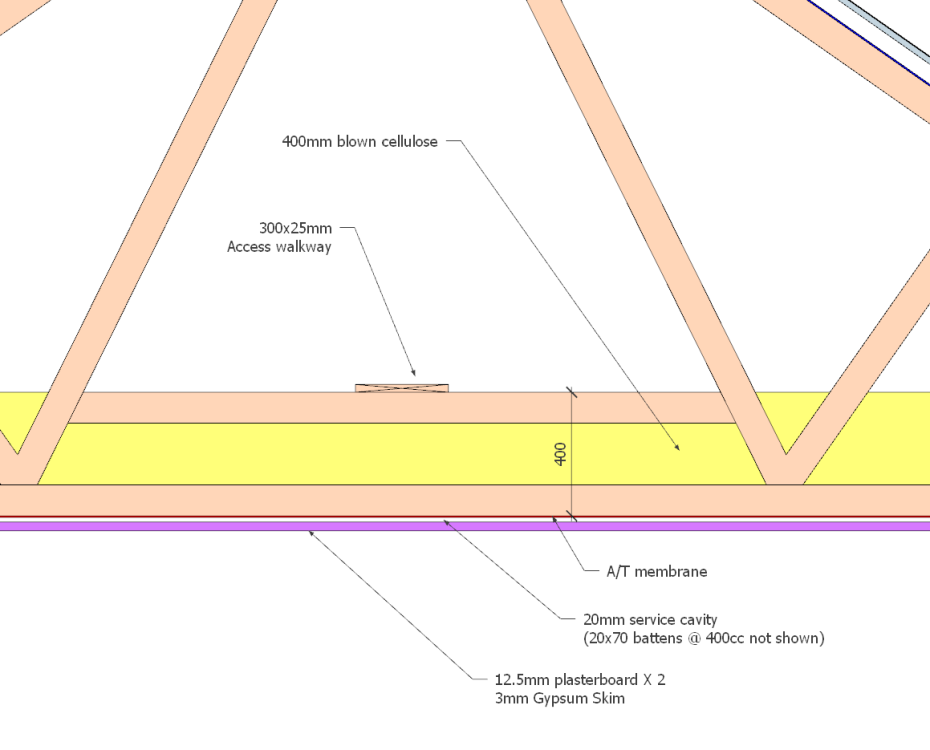
A quick sketch. Couple of things. I'Ve assumed a 35 deg roof pitch. PIR in the walls......................between timbers........................groan..............Anyhou. Here's a sketch of my idea. A fink truss with extended 300mm tails to allow for increased ceiling height.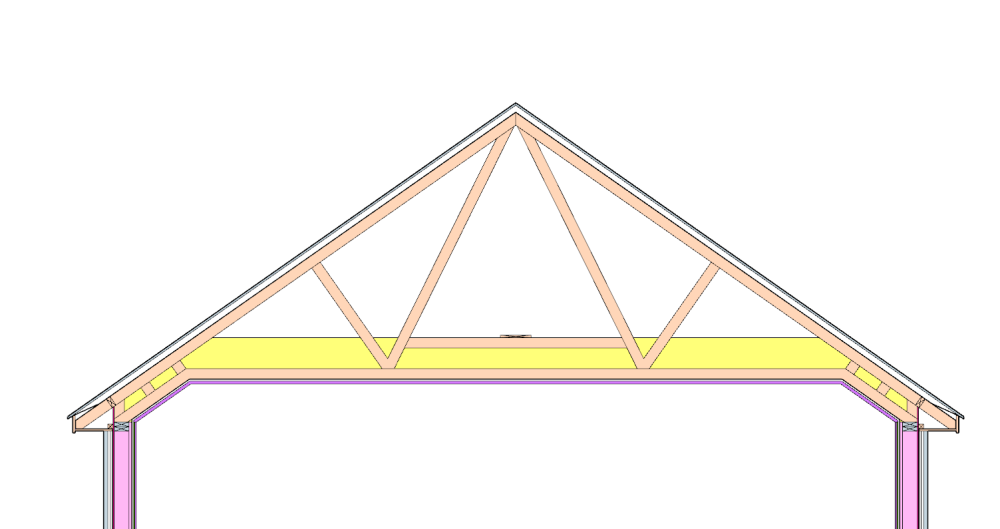
-
Any indication of the spans etc over the door? Easiest DIY would be to frame it yourself on site I think. Maybe trusses for the roof. Would be quicker than building it from sticks. Are you planning on making it a useable space? Here's a couple of links for ideas.
-
Cold unventilated loft - condensation risk?
Iceverge replied to G and J's topic in Roofing, Tiling & Slating
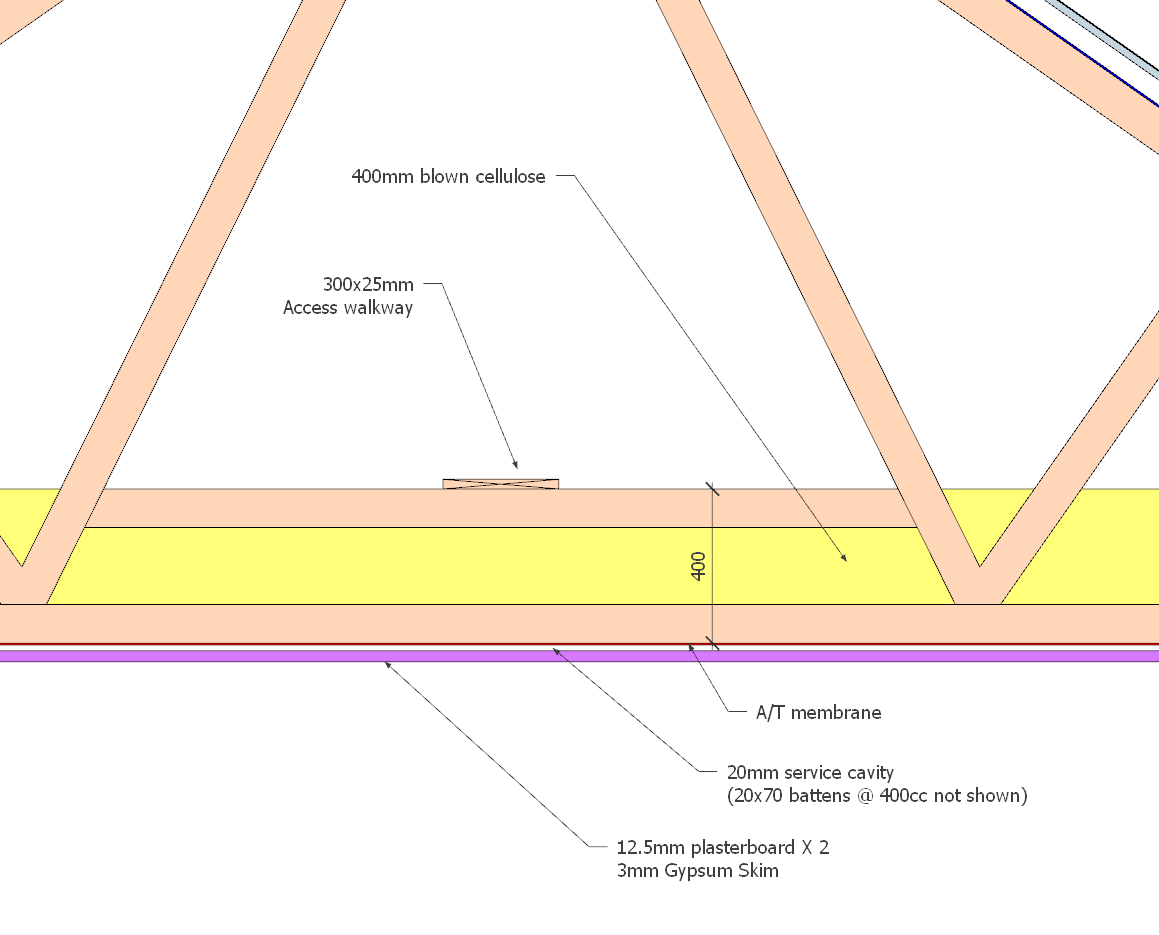
Hmmmmmmmmm..... Would prefer slimline down lighters in a service cavity. Fine. Would be happy with this if I was going it myself. Fix ply where the outlets/inlets and use a hole saw to cut an exact hole size. Push the vent through. Seal with tape/sealant. Same for ducts. One hole let one duct. Staple and tape the airtight membrane to the ply. Ensure the ducts are well covered with insulation. Get a raised tie between some of the Webs of the trusses to put a boarded walkway on or even a few planks. Forget the PIR. I bought an official airtight one. I had to use extra sealant as it was leaking with my DIY blower door. Consider a second hand window double glazed and use that above a bog standard loft hatch. It'd be cheaper than the official hatch. The only workable way is over the top. Taped OSB sarking is probably the easiest and then move to a warm roof with insulation over the sarking. We have this with our tyvek membrane under the slates. I think some sarking wouldn't be a bad idea. That and double boarded ceilings for noise mitigation. That layer should really join the wild tight external layer of the building. What is your wall construction you settled on in the end? -
Have you cavity insulation only on and agenda? If so long sill and straddle. If there is internal insulation you can do whatever you like provided you deal with and drips at the window head correctly.
-
Cold unventilated loft - condensation risk?
Iceverge replied to G and J's topic in Roofing, Tiling & Slating
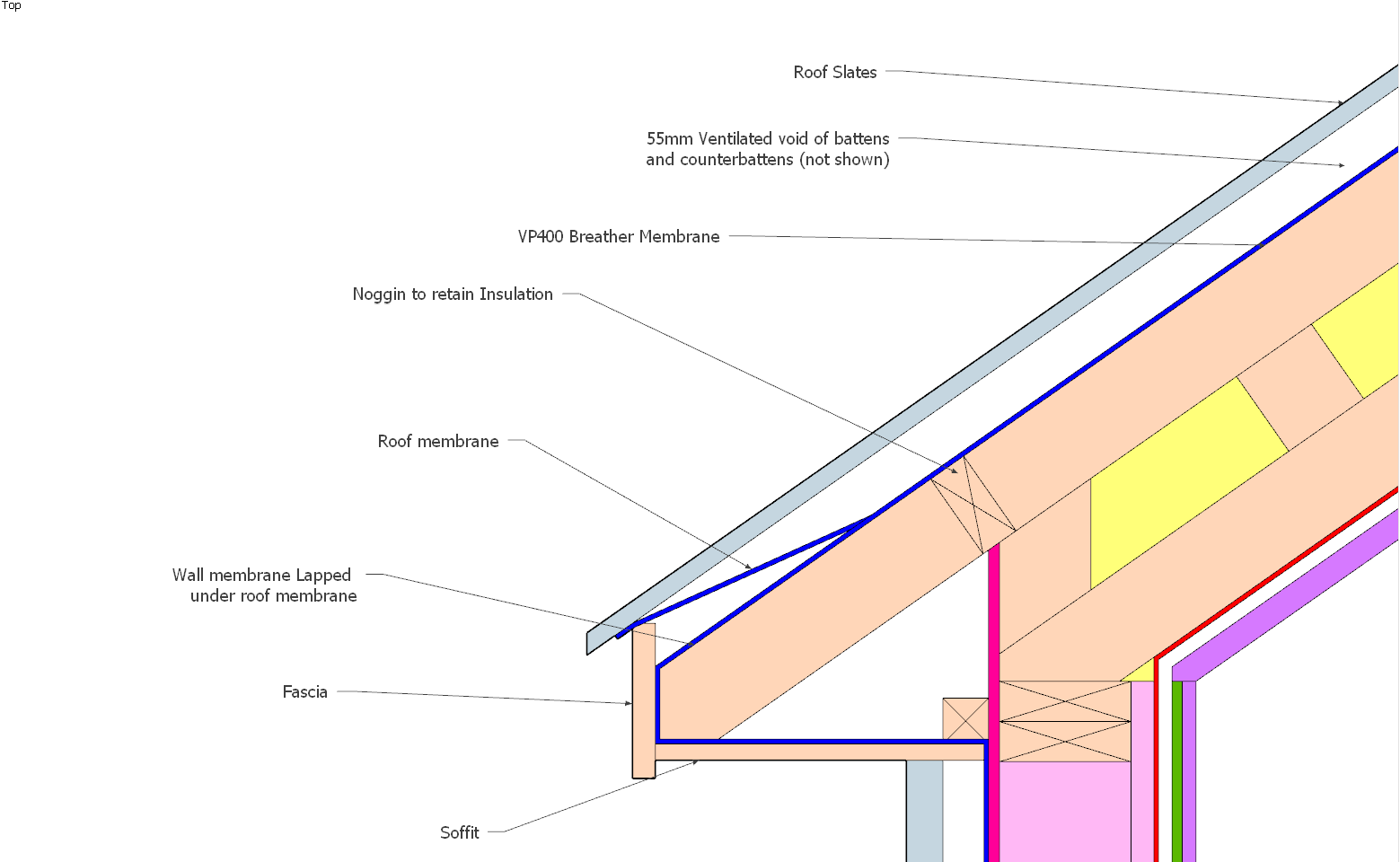
Skipping most of the above..... Sealed attic cold loft is completely fine of you make a good job of the ceiling level membrane. If you don't, it's isn't and you'll have issues. We did it. Raised heal fink trusses in a hip roof. 450mm blown cellulose. Several inspections in all weathers have shown no issues. I was mega careful about the detailing though. 5 wires in the attic, no ducts or pipes. Service cavity below trusses. Got 0.31ACH50 on the blowerdoor. What shape is your roof? If it's a simple pitched roof hung from a ridge beam then a warm loft might be a good option. For anything complex with no vaulted ceilings it's cheaper to do a cold loft. -
That schedule looks fine although theres no need for the screws angled downwards I would say. Do you have a plan to hit the studs through the membrane and woodfiber with screws? It might be worth getting someone to do the calcs on it as it looks almost over screwed. Every screw saved might be up to £1 inc your labour.
-
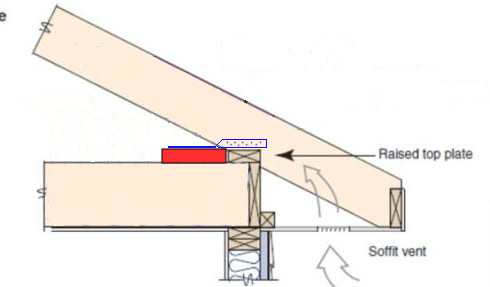
Get a pencil out and do a sketch please for us. I think I have your issue visualised. My suggestion would be to have 2 separate wall plates. You can set the raised top plate back (left in this picture) to achieve your required roof hight. Regardless of the wall construction below and you can have it identical no matter what the situation is with the walls below. Very useful on wobbly buildings. It carries the additional advantage of allowing continuous joining of insulation between the wall and roof insulation in the cavity wall situation. Have you a required timber depth figured out and a targeted U value? I could do a sketch if you have plans.
-
Hi @R O Clarke Cam you post the de-identified architect plans please. Various builds work better with different methods.
-
Seeking advice re Multifuel stove – feeling duped?!
Iceverge replied to Loobyloo's topic in Stoves, Fires & Fireplaces
This is quite an enjoyable book in its own right despite being effectively a set of instructions.
-
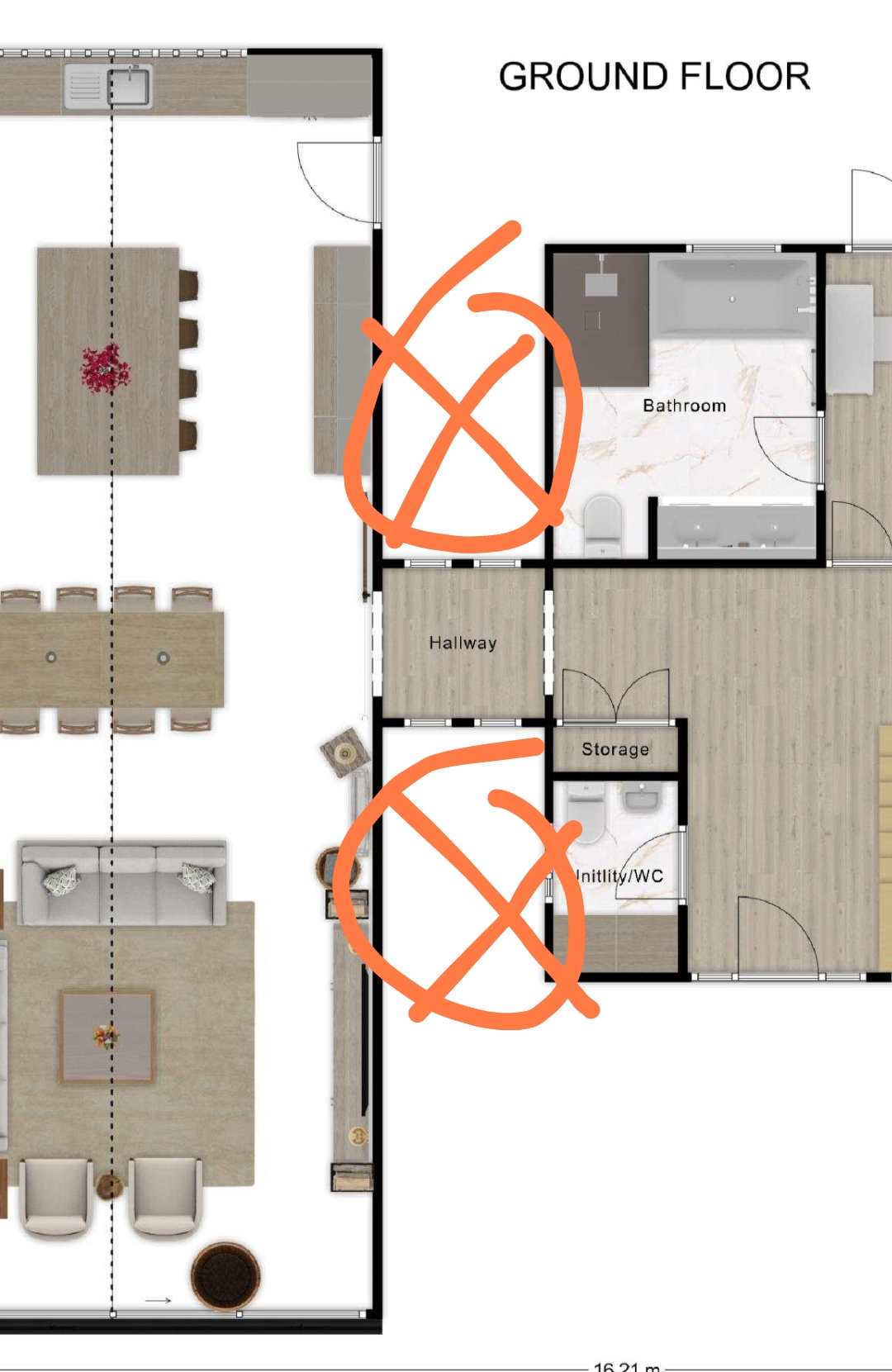
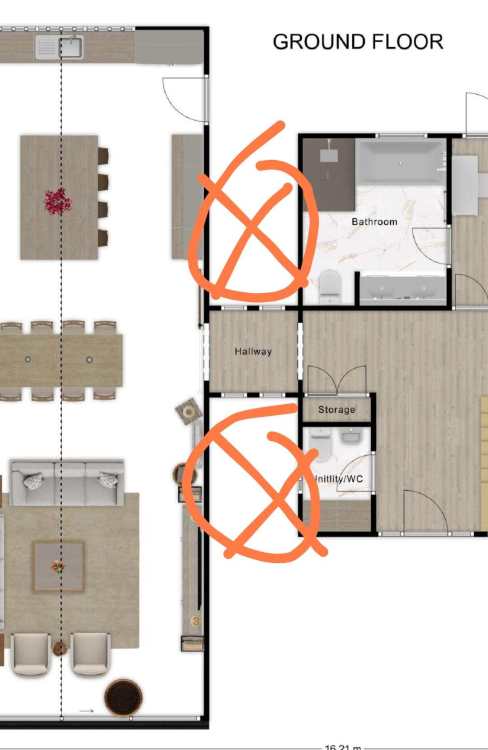
Getting there. Really nice renders. What did you use? For context I'm an un-refrormable passive house disciple and cheap skate. Get rid of these areas. Complete waste of cash and add loads of external wall for no benefit meaning loads of extra heating. What way is south on your site,? The glazing seems very unresolved and not considering of sunlight at the moment.
-
BUS voucher and gas line
Iceverge replied to allthatpebbledash's topic in Air Source Heat Pumps (ASHP)
Is this decision finalised? A new build will often end up cheaper . Carbon emissions often don't obey gut feelings which sadly have been created largely by years of misleading marketing. A passive standard replacement made from stuff that used to be plants might break even in an emission sense far quicker that you realise and will be better over the long term. 300mm EPS would be a good start re insulation. A suspended timber floor with a thin screed like @ProDavewould have minimal emissions. Perhaps with cellulose insulation. Details please. I love this stuff!! I assume you have a narrow old cavity. Do you have a strategy for additional internal insulation? A couple of bottles outside would be fine avoiding the standing charge of mains gas. FWIW a mates who's a professional chef recently threw out his gas hob in favour of induction in his house. Cool, ASHP it is then. Really maximise your airtightness and thermal envelope in that case. Unlike PV and batteries its almost impossible to do practically later. -
When the attic space exceeds 50 sqm of space
Iceverge replied to MariaD's topic in Building Regulations
Hi Maria and welcome from Cork. -
Pre-Filter for Log Burner Smells
Iceverge replied to benben5555's topic in Mechanical Ventilation with Heat Recovery (MVHR)
I used car pollen filters for our MVHR as the genuine ones were a rip off. I got a good deal recently so I switched back and the crappy MDF frame I made to support them with tape was falling apart. It'd be an ideal project for a 3d printer to make a frame for them. They're cheap and carbon versions are readily available. You can search by dimensions here. https://www.mann-filter.com/uk-en/catalogue.html#newproducts -
Seeking advice re Multifuel stove – feeling duped?!
Iceverge replied to Loobyloo's topic in Stoves, Fires & Fireplaces
Do you have any video of it in operation? Sometimes if they're set wrong you can have a gale blowing up the chimney taking all the heat with it. What kind of timber are you burning? Dry spruce split into small pieces will evaporate up the chimney! I think these multi fuel stoves nominal heat output is for coal rather than wood. You could try a bag if you're ok with that kind of thing.
-
BUS voucher and gas line
Iceverge replied to allthatpebbledash's topic in Air Source Heat Pumps (ASHP)
What a shambles. Good luck with your project -
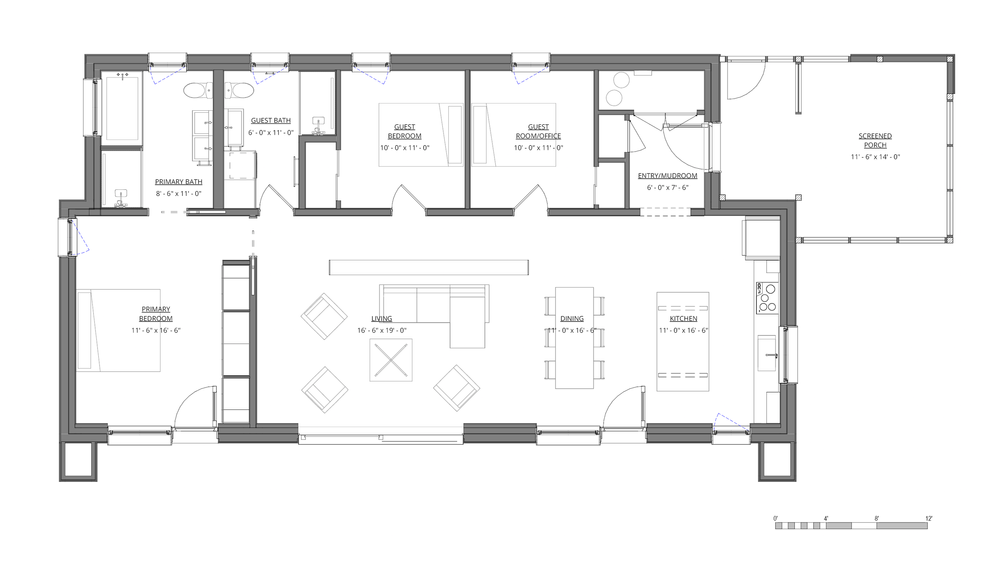
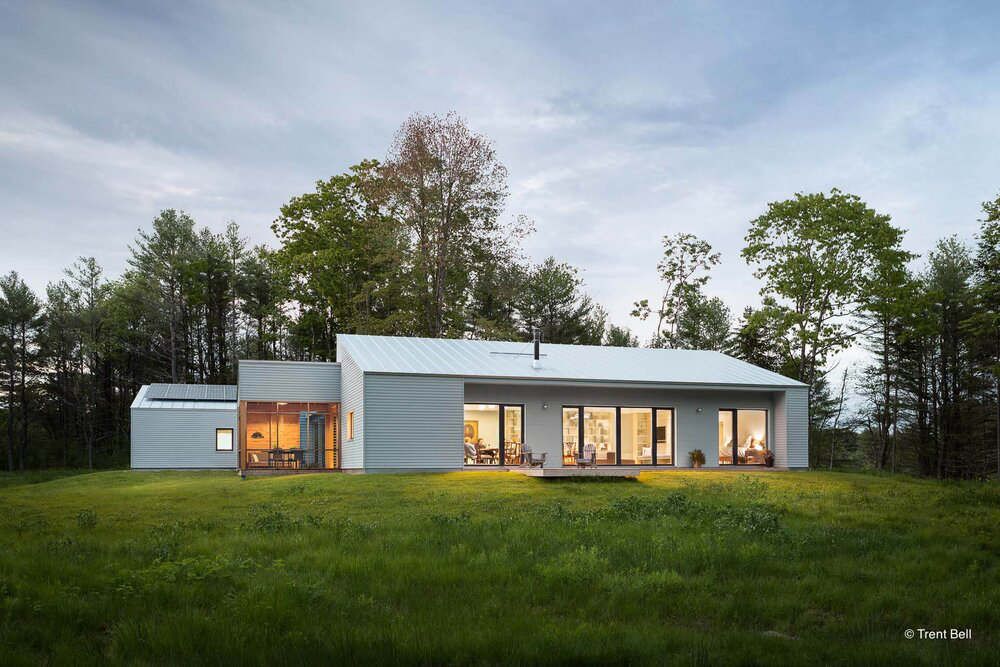
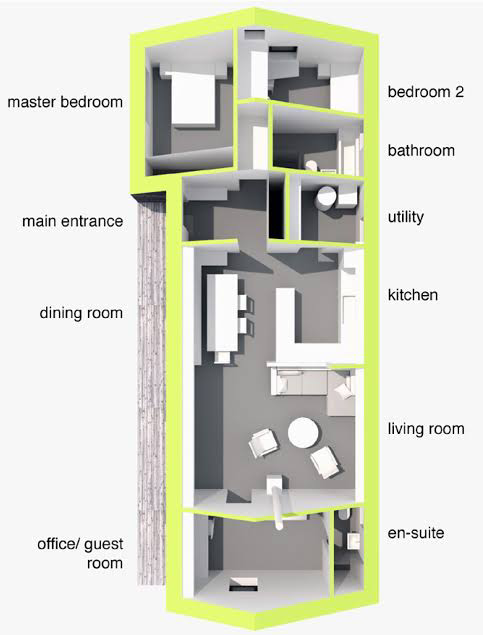
I would certainly contemplate a bungalow after our 2 story house build. Easier to clean gutters and paint the walls. Less hassle climbing stairs and accessable to everyone. You will suffer with form factor though so be prepared for +450mm walls for proper insulation. This one is my favourite. https://oldholloway.wordpress.com/ Really like this one too. https://www.gologic.us/1700-model
-
Amazing what you notice when you start looking
Iceverge replied to Nick Thomas's topic in General Structural Issues
That's strange carry on..... The joist hangers look to be built into brick. I wonder was this to be done just as a staging platform for the ply during the building process. -
I'd be cautious about this. If any moisture was to run down between the woodfiber and membrane it would be directed into the house. I'd cut the DPM back flush with the outsider of the sole plate. It would be difficult to build if you did this. You'd need to be putting the membrane up as you did the woodfiber. In general think always about allowing water to down and out. This might potentially create a pocket that would trap water against the membrane. Something else to consider is that the membrane and cladding may need to be replaced, it might be 100 years but it may need to happen. Ideally for the sake of whoever has to do this it should be removable without damaging the woodfiber.
-
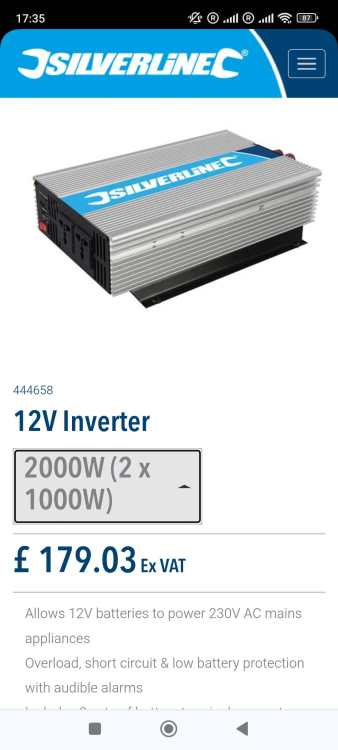
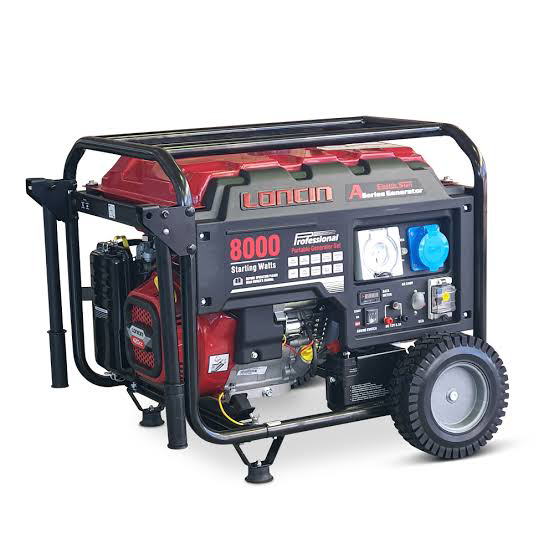
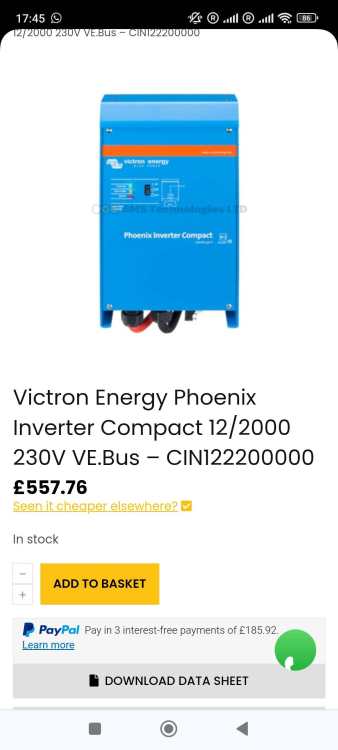
I trialed an inverter coupled to the car battery a few years ago to power the house. A car alternator can be 100A at 14v so 1400w. Plenty for most stuff. It was only a cheap square wave inverter. It worked perfectly for everything with a built in rectifier like TVs and phone chargers. Same for resistive loads like incandescent bulbs, it even made a fair attempt to boil the kettle. However it was not happy with inductive loads like the hob and it didn't play well with LED bulbs. I sent it back and got one for these. I still think a better pure sine wave inverter and quick connectors to the car battery like @markocosic suggested might be a good idea. Maybe add a leisure battery and just charge that from the car a couple of times a day.
-
BUS voucher and gas line
Iceverge replied to allthatpebbledash's topic in Air Source Heat Pumps (ASHP)
Perhaps for a cunning buildhubber who can DIY it but for a replumb and PV install fully paid for I don't know if it is. -
BUS voucher and gas line
Iceverge replied to allthatpebbledash's topic in Air Source Heat Pumps (ASHP)
If I had £15000 to spend in a retrofit scenario and assuming a really good job on the airtighess, insulation and MVHR. I would leave the gas in place. Put in a single £2000 A2A ASHP in the hallway to deal with the baseload of half the space heating. Then stick maybe 6kW pV on the roof and an immersion divert for £5000 and then buy an EV for £8000. CO2 would be roughly, ASHP 220kgCO2/year. Boiler 1200kgCO2/year. PV -750kgCO2/year. EV 750kgCO2/year. Nett emissions 980kg/yr. -
BUS voucher and gas line
Iceverge replied to allthatpebbledash's topic in Air Source Heat Pumps (ASHP)
Numbers always help. I'll try to keep them realistic. The post retrofit DHW might be 3000kWh/anum for a family. Heating say 7000kWh per annum. 10MWh total. Scenario 1. A new ASHP and cylinder, UFH or large rads + 4kW PV making 2000kWh/annum for an outlay of £15,000. A generous COP of 4 inc DHW. Net 500kWh of energy imported at 0.25kg/kWh. 125kg/CO2/annum. Excellent. Scenario 2. Retain the boiler, 0.185kg per kWh so 10MWh*0.185kg/kWh is 1850kg CO2 per year. Much worse. However you could then replace a family ICE car with an EV with the £15000 not spent. Displacing a net CO2e of 2500kg/annum. In scenario 2 the user would emit 2625kg less of CO2 per year by retaining a gas boiler and buying an EV. TLDR. Boiler 1850kg CO2 per year. (£0) ASHP/PV 125kg CO2 per year (£15000) ICE 3200kg CO2 per year (£0) EV 750kg C02 per year. (£15000) ASHP + ICE = 3325kg/year EV + Boiler = 1975kg/year. -
BUS voucher and gas line
Iceverge replied to allthatpebbledash's topic in Air Source Heat Pumps (ASHP)
Sorry if I've touched a nerve. Perhaps a more nuanced post would help. @allthatpebbledash could you maybe explain the lightly occupation patterns of your house and the details of the deep retrofit please. @JamesPa is there ever a case for retaining an existing heating system and diverting money into the building fabric and renewables/EV or is it not an argument worth considering? -
Welcome. Oak frame. It's lovely. Not the easiest to get really well insulated though. You'll need some external insulation over the frame of some sort. SIPs are the norm. Not a huge fan of them through.
-
If anyone has some I'd be happy to help disposed of them at a nominal fee...... (They make excellent farm gate posts)