Iceverge
-
Posts
4485 -
Joined
-
Last visited
-
Days Won
32
Everything posted by Iceverge
-

BUS voucher and gas line
Iceverge replied to allthatpebbledash's topic in Air Source Heat Pumps (ASHP)
Out of interest why an ASHP? Gas is reliable cheap and not too environmentally damaging. You may be better off just keeping the gas, investing on more insulation and solar PV. -
BUS voucher and gas line
Iceverge replied to allthatpebbledash's topic in Air Source Heat Pumps (ASHP)
The standing charge for the gas would make it a very expensive way of cooking. Like said above, just buy an induction hob. If I could find one with remotely mounted dial controls it'd be absolute perfect. Otherwise a simple bottle of propane would last forever if you were just cooking with it. -
My only concern would be the offgassing of the coal tar in sunny weather. The sweet sweet smell of tar might not be pleasant on your patio if you were enjoying a salad. If that's not a problem and they're in a well ventilated environment then I wouldn't be too worried. The country is full of these poles and people aren't collapsing left right and centre.
-
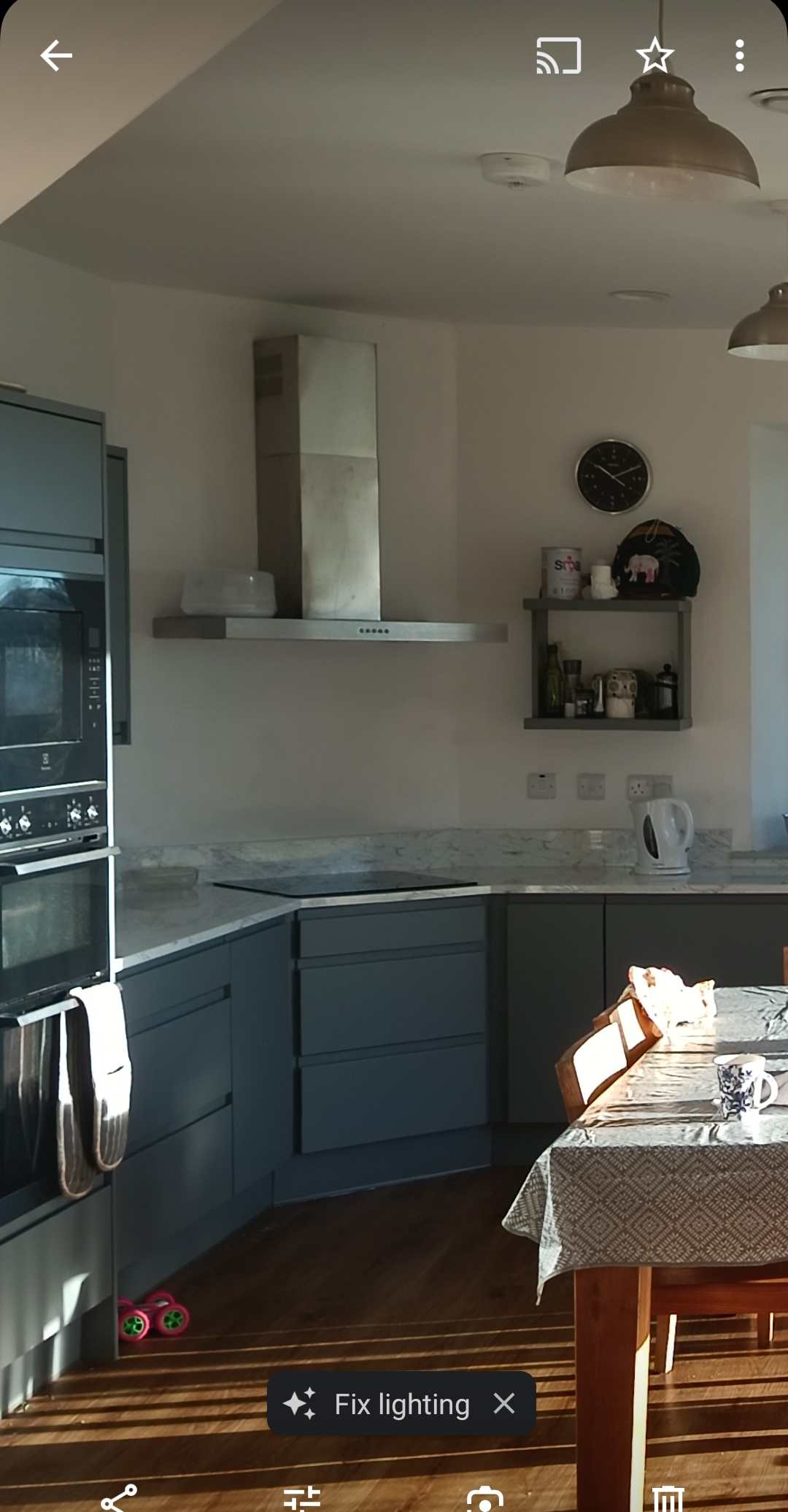
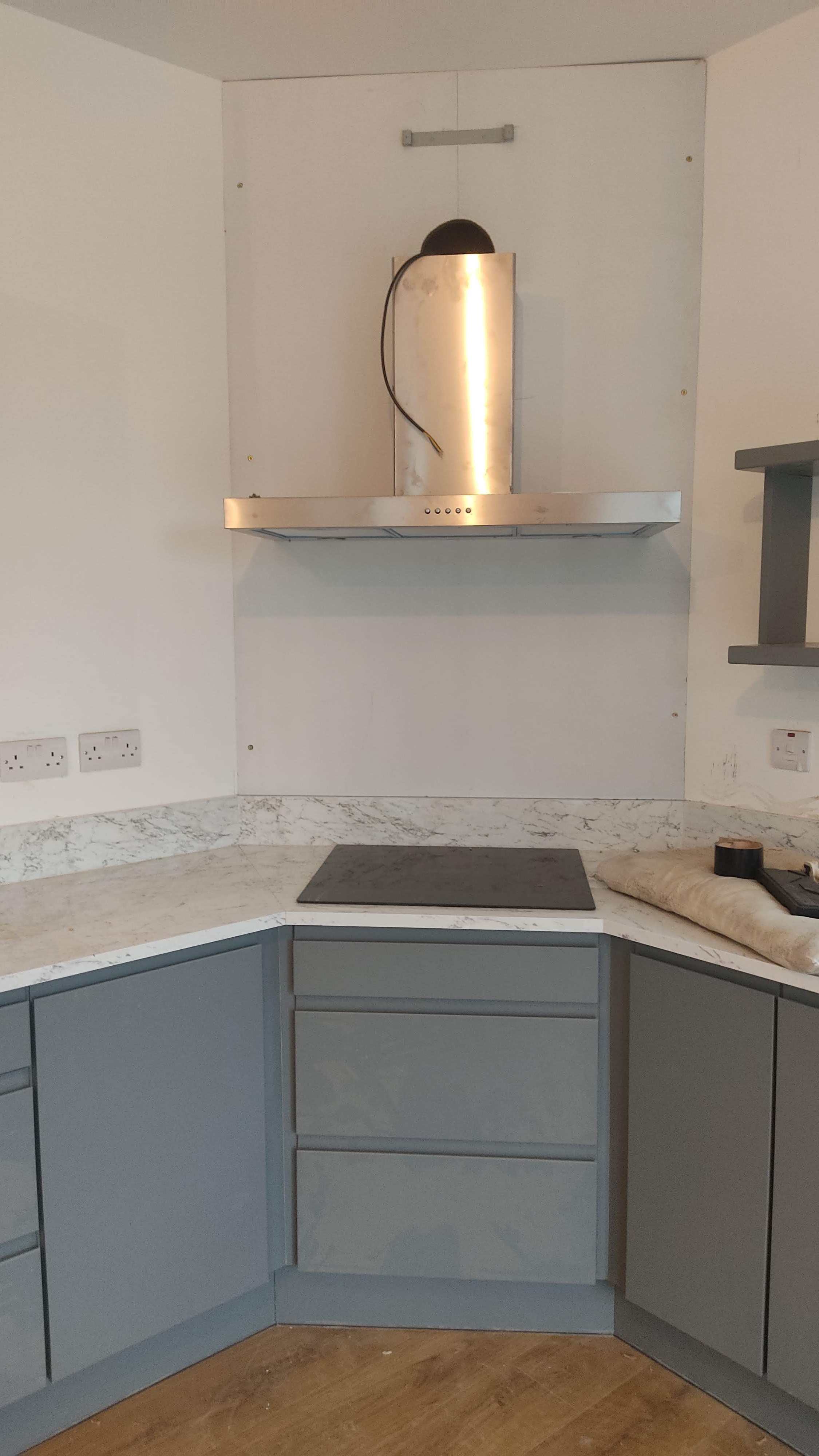
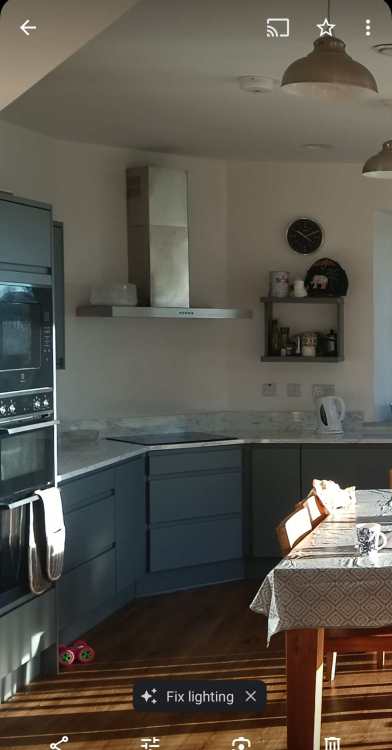
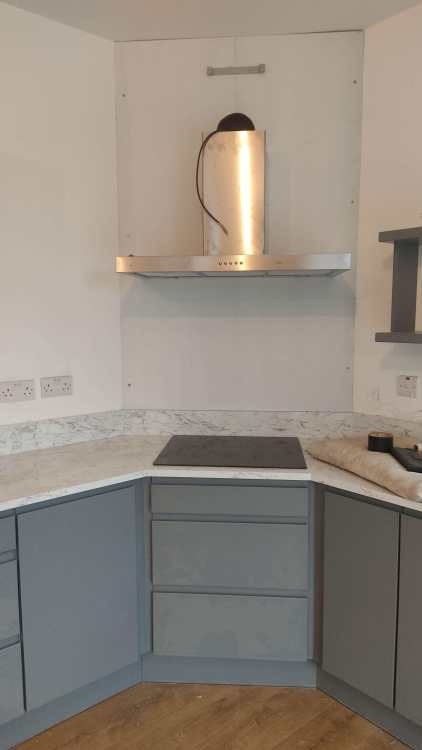
We put the hob in the corner. It works well apart from the extractor fan being mounted on the MDF backing makes an awful racket.
-
Any pics? What do you do with any corners of the kitchen? As shown above they can quickly just get cluttered and unused.
-
Have a really really good look for bad cracks in the wall, ceiling, around windows etc. If they're ok I wouldn't worry in the least about floor. The house is 65 years old and if it's lasted this long it'll last another 650 years if minded.
-
Very Interesting build. I would avoid multi tooling anything. It's too slow and getting a very consistent cut would require too much attention. This would be my solution. Cut say a 300 mm strip of proclima and staple it to the racking board as shown in orange. Then run the breather membrane over the top as shown in blue to below the level of the orange. Tape the blue to the isoquick with an appropriate tape and primer. This will be a safe design if the tape fails, or the external membrane. However getting the external membrane and tape right is your primary objective..

-
In my opinion you can never stop moisture, only manage it. If you apply something like bitumen then it's lightly it'll cause an issue to pop up elsewhere. Cleaning the bricks with acid will treat the symptom but for the ultimate longevity of the bricks and the building i'd be aiming for something that took away the moisture more mechanically like a french drain.
-
Where is this water condensing exactly?
-
What can I use to fill huge hole Garden?
Iceverge replied to Hussein Nurbhai's topic in Landscaping, Decking & Patios
I suspect the soil you're thinking of might be a screened topsoil. I would only use that for the top 300mm or so. Other than that, crushed rubble or muck away below that should be fine in my opinion. -
Not a huge issue with all the insulation outboard as the dew point will never be near the timber structure. The only consideration I would be worried about from that point of view is that the insulation boards are fitted with all joints staggered in 2 layers with a good quality low expansion foam between all joints. Otherwise you might get moist internal air escaping through the gaps and condensation at the render/insulation interface causing render failure. Better in any case to have a ventilated rainscreen in my opinion.
-
Caution with this approach, @ProDavehad a few issues with EWI straight onto insulation. I believe it's no longer accepted as durable enough in Norway with similar amounts of driving rain so I'd steer clear of it personally. However a good layer of EWI on any structure, espically timber frame can only be a good thing in my opinion. You get excellent thermal bridging numbers and total continuity of insulation. Moreover it'll keep the timber itself at a really consistent temperature, well above the dew point so it should last forever if no bulk water gets in.
-
Loft loading limits - strengthening the truss
Iceverge replied to Jawbkk's topic in Lofts, Dormers & Loft Conversions
Had this discussion with a neighbour recently. After some thought we decided that an attic needs a little door in the gable wall directly above a skip. That way you can tell your wife: "It's safe in the attic darling, for sure you're right ,it'll come in handy any day now, it'd be silly to just bin it" and domestic bliss continues unabated. Personally I store lots of insulation up there. The cellulose helps with the noise. -
Horizontal hairline cracks in 45x190 joists.
Iceverge replied to Jawbkk's topic in General Construction Issues
You could resort to caveman engineering and just jump as violently as you could on a joist and then guesstimate if would it break with 3 people doing the same thing. If you think not then it's adequate. -
Never mind passive, you won't need rads in rooms upstairs in any house with just minimal insulation in my opinion. A slight caveat to this is the more area that you can dissipate heat through from the heat pump will allow you to run it at lower flow temp and achieve a better COP.
-
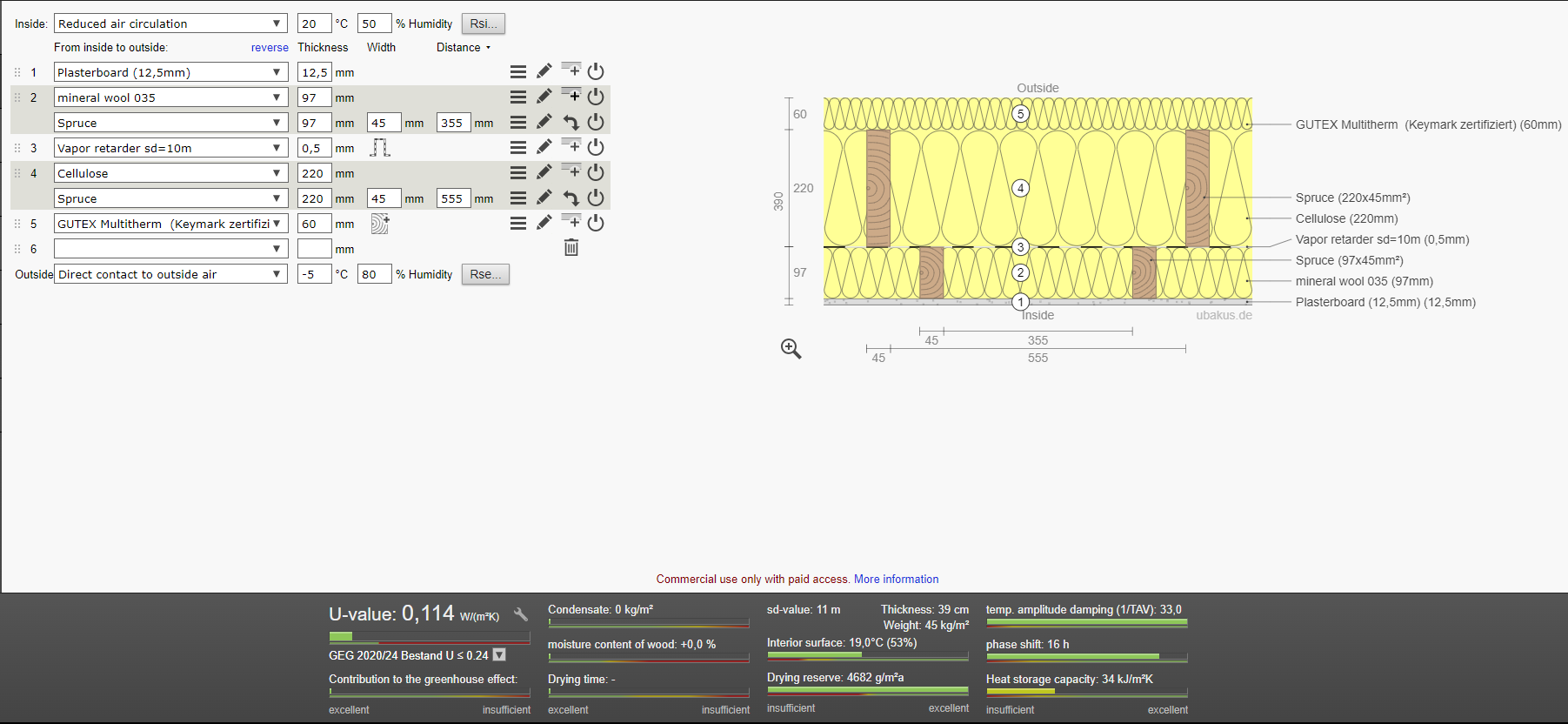
Toe nail them to get them in place, then 150mm screws would be my idea but I'm not a carpenter. I would run them at 90 Deg to the rafters. Alternatively you could just nail gun 45mm service cavity battens. And extend the 220mm rafter by the same on the other side of the membrane and use more cellulose and less mineral wool.
-
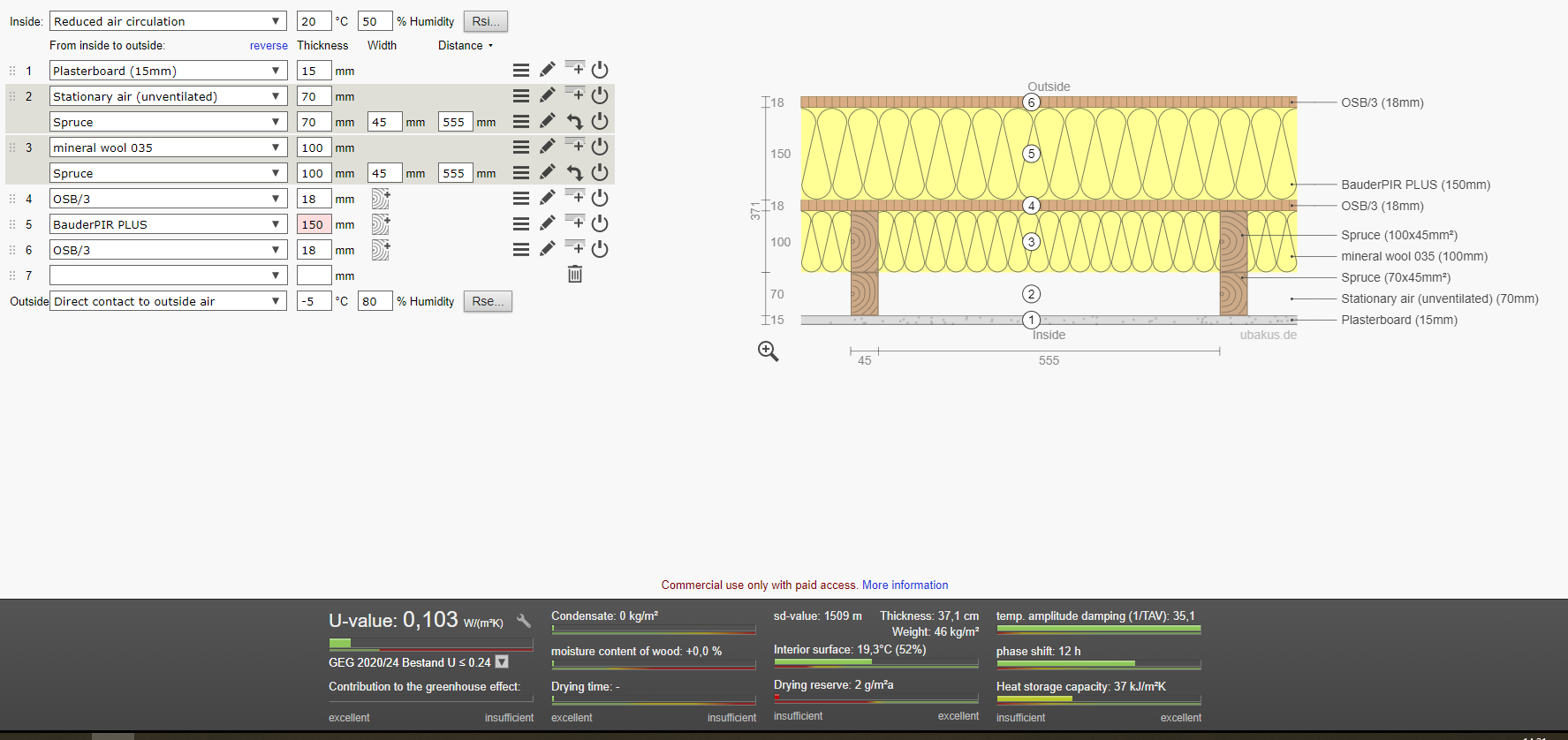
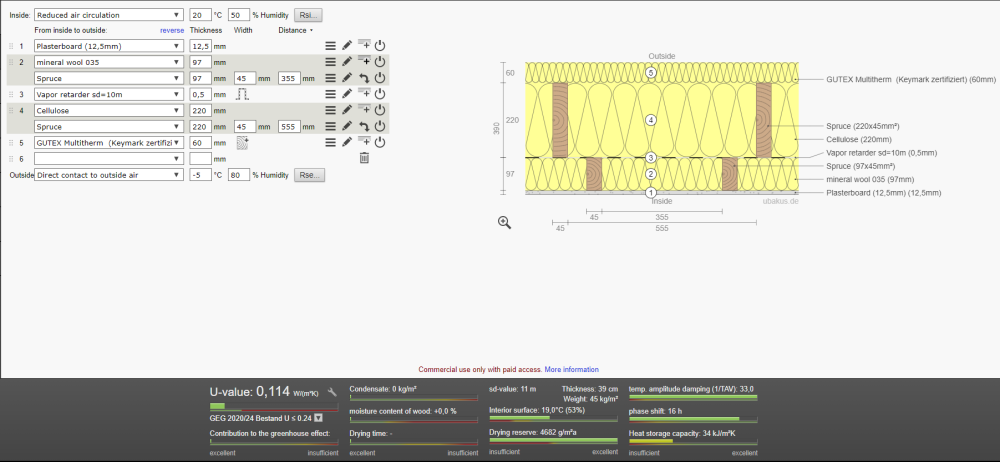
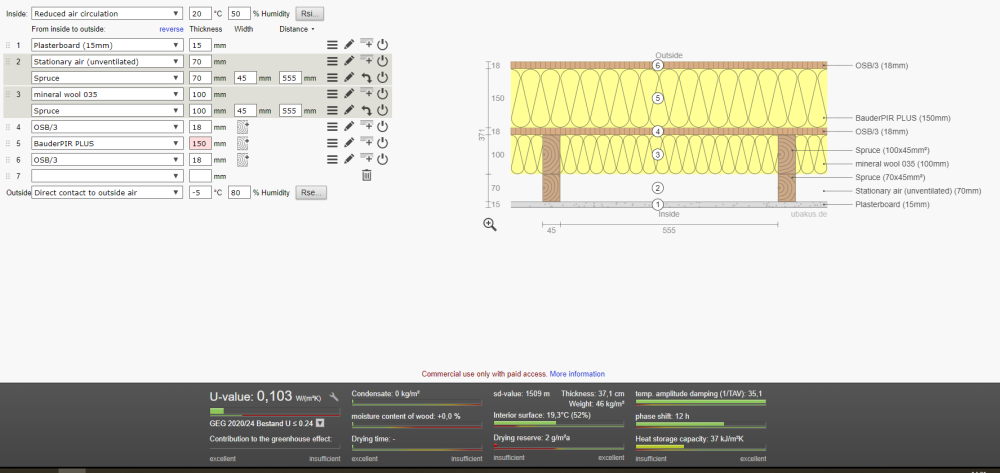
390mm is the depth I'm adding up here from the plasterboard to the membrane on top. How about this. Or a hybrid warm roof as shown below with 150mm above the rafters and 100mm between. You'd need to tape the bottom layer of OSB as airtightness here.
-
Rather than rafter thickness do you have an overall thickness of the roof please? When considering 0.12 Vs 0.13 might be worth sitting down and doing some calcs to really get a handle on the little difference it will make. 0.01w/m²K will really pale into insignificance Vs a little better airtighess or improved COP on a heat pump. Say 100m² of roof, a pessimistic average delta T of 15deg for the heating season of 4 months. About 2900hrs x 0.01w/m²K x 15⁰ = 435Wh or 0.435kWh. Run it through a heat pump at a COP of 4 and it'll cost you about 3p per year.
-
I remember a discovery documentary about rifle barrell design has remained static with 100 years after centuries of constant change. It basically reached an end point. Similarly, now nearly all cars have 4 wheels, wind turbines have 3 blades, every phone is a landscape shaped touchscreen. Unicycles and blackberrys are rare. There is a practical finishing line. Building regulations are a study in slow slow creeping incrementalism. They're heading towards PH and will get there evetually despite the standard being already 3 decades old. Why not skip to the end? Everyone else is trying to sell you one of these.

-
Discourse is very much shaped towards minimising climate change rather than coping with it. I wonder if it'd be a better use of brain power for most of us.
-
What U value do you need and what's the motivation for that particular number? How thick a roof build up can you afford? It sounds like you have some tricky junctions. As there'll be inevitably plenty of onsite carpentry a cut roof from off the shelf lumber would have lots of advantages. Time, material availability, cost and workability. However you'll have more significant thermal bridging (especially that steel) so a layer of continuous insulation somewhere would be helpful. What type is the wall construction and what stage is the build at currently?
-
Air con with a function for heating while you're at it. It'll be far cheaper to run in the winter than electric underfloor heating.
-
Interesting, what was the logic in going in so far? I assumes it was a done deal once the main untampered thread of the screw was gone beyond the inner face of the OSB.
-
The breather membrane is just to make sure that any water doesn't find it's way into the structure. The PIR if taped correctly is keeping the drips out anyway but belt and braces. Correct Intello is for airtightness.
-
This is a massively important point. Good airtighess is hugely hugely important to stop moisture laden simply blowing through cracks and condensing inside the wall. When you have good airtighess and planned ventilation you can get away with murder!