Iceverge
-
Posts
4485 -
Joined
-
Last visited
-
Days Won
32
Everything posted by Iceverge
-
If you look towards the end of the article it shows the wall buildup. 100mm block 50mm vented cavity 50mm PIR Breather membrane 11mm OSB 220mm studs full fill with mineral wool. Intello Membrane 100mm service cavity with mineral wool Plasterboard and skim. Any moisture, even from construction, won't be drying outwards through a PIR sheet with two foil facings. It will have no choice but to go inwards through the Intello. I expect the buildup was approved on the basis that as a passivhaus the membrane sealing should be excellent. I would prefer no condensation in my wall and a continuous layer of EWI is a nice method to achieve this as it keeps the dew point outside the structure. It also makes a tremendous difference to the structures U value by mitigating thermal bridging. Either the house cools rapidly through uncontrolled ventilation in which case there's no differential vapour pressure or else when unoccupied there's no moisture being added internally. I don't see the realistic issue. These calculators assume that there's zero faults in construction and zero construction moisture. I would be wary of the layer of OSB sandwiched between the insulation and the PIR foil facing. In any case PIR performs poorly at low temperatures regarding its thermal resistivity. Some like EPS would be just as good on a freezing winters day. However it's susceptibility to fire has moved me to prefer rockwool or woodfiber.
-
Surely all that matters is that no localised condensation occurs. From this point of view I think EWI is beneficial, even one of low vapour permeability, as it keeps the structure above the dew point, therefore no condensation. In any case if you have a good airtighess layer, no internal vapour of note will get anywhere near the dew dew point of the structure regardless of the vapour permanently of the materials. Moisturise damage through diffusion just doesn't happen, it's all through poor airtighess.
-
I have come across external layers of PIR on TF structures like this one but with an active vapour control layer included. https://passivehouseplus.ie/magazine/new-build/longford-self-build-goes-certified-passive-on-a-budget They in effect dry inwards.
-
Of course it can, otherwise every car and train in the land would be full of mushrooms! Good luck finding a certifier willing to stake their indemnity insurance on the workmanship on a building site and the variable ventilation behaviours of the general public though.
-
Screws for me in this situation. Nails will have very little pull out resistance from an 18mm layer of OSB. Much less than a solid rafter for instance. The only exception I might think of is if you were to glue the battens to the OSB before nailing but you probably (hopefully) have a membrane in the way.
-

Internal Wall Insulation - Solid Masonry Walls
Iceverge replied to James1234's topic in Heat Insulation
Airtighess is the most important thing you will have to tackle in this renovation. Not only for overall energy saving and comfort but for the survival of the building itself. You need to keep the damp air out of the internals of the wall. The largest issue you have is around joist ends and internal walls. I would parge their inside of all walls with a lime/sand/cement slurry. I would use airtight paint or tapes (returned to the parge) to seal around all penetrations, joist ends, doors and windows. Seal to the floor slab and the ceiling membrane. Then DIY blowertest it for leaks. That would leave you free to internally insulate. Something like 50mm (or more) mineral wool batts between battens or studwork. Plasterboard and skim. You wouldn't need an AVCL as your airtighess would be taken care of by the parge, itself of moderate vapour permanbility and some flexibility. Also putting the AVCL where your architect suggests leaves it full of holes from wires and makes it very tricky to join to other ACVLs in adjoining rooms. -
Internal Wall Insulation - Solid Masonry Walls
Iceverge replied to James1234's topic in Heat Insulation
Good luck with falling down this rabbit hole, it's a minefield! The one big principal to remember that over the course of a year "DRYING" must exceed "WETTING" Unless you have lots of driving rain or poor gutters and pointing then almost all of the damaging moisture comes in the form of airborne water vapour from inside. Damaging amounts get into the walls via air leaks, not via diffusion through materials. EG It doesn't get through plasterboard and skim, but rather through poor sealing around skirting and sockets. Total Airtighess (a function of planning and workmanship) is your friend here. As you noted, internal insulation limits "DRYING" but excellent workmanship (ZERO air leaks!!) and MVHR you will massively limit the amount of "WETTING" of the internals of your wall. You could then get away with quite a chunk of internal insulation. Add some vapour permeable materials like mineral wool and lime and you could get a chunk more internal insulation without damage. Calculators can give an idea of the lightly hood of success but in reality no two families generate the same amount of vapour, and no two builders do the same diligent job on airtighess so rules of thumb and even sophisticated simulations are little more than educated guesses. Your BC has to assume poor workmanship and an MVHR that won't be used so therefore specifies a ventilated cavity in the wall to make sure Drying exceeds Wetting in the worst case scenario. -
Airtight detailing at vaulted roof eaves with propassiv
Iceverge replied to SBMS's topic in Ventilation
Just butr as far down the ceiling as is practical and use a strip of membrane to join to the walls should do I would have thought. -
Airtight detailing at vaulted roof eaves with propassiv
Iceverge replied to SBMS's topic in Ventilation
If you're going to spend the cash on a boarded product I'd prefer to put a layer of OSB sarking on instead (rodent protection) and an airtight membrane inside. You could verify that you certainly have a full fill of cellulose then. -
This is taking the P..... surely?
Iceverge replied to kandgmitchell's topic in General Self Build & DIY Discussion
That's bloody annoying for sure. Let them know it's your home and they're expected to treat it with the respect they would afford their own. However there's too sides to the story. Find an unfinished uncluttered room that they can lob a sheet of OSB on a few saw horses as a work bench. £50 buys a plastic table and some chairs and give them access to a W/C with strict instructions that it's to be kept spotless or you'll charge them handsomely for cleaning it. Carrot and stick if you will. -
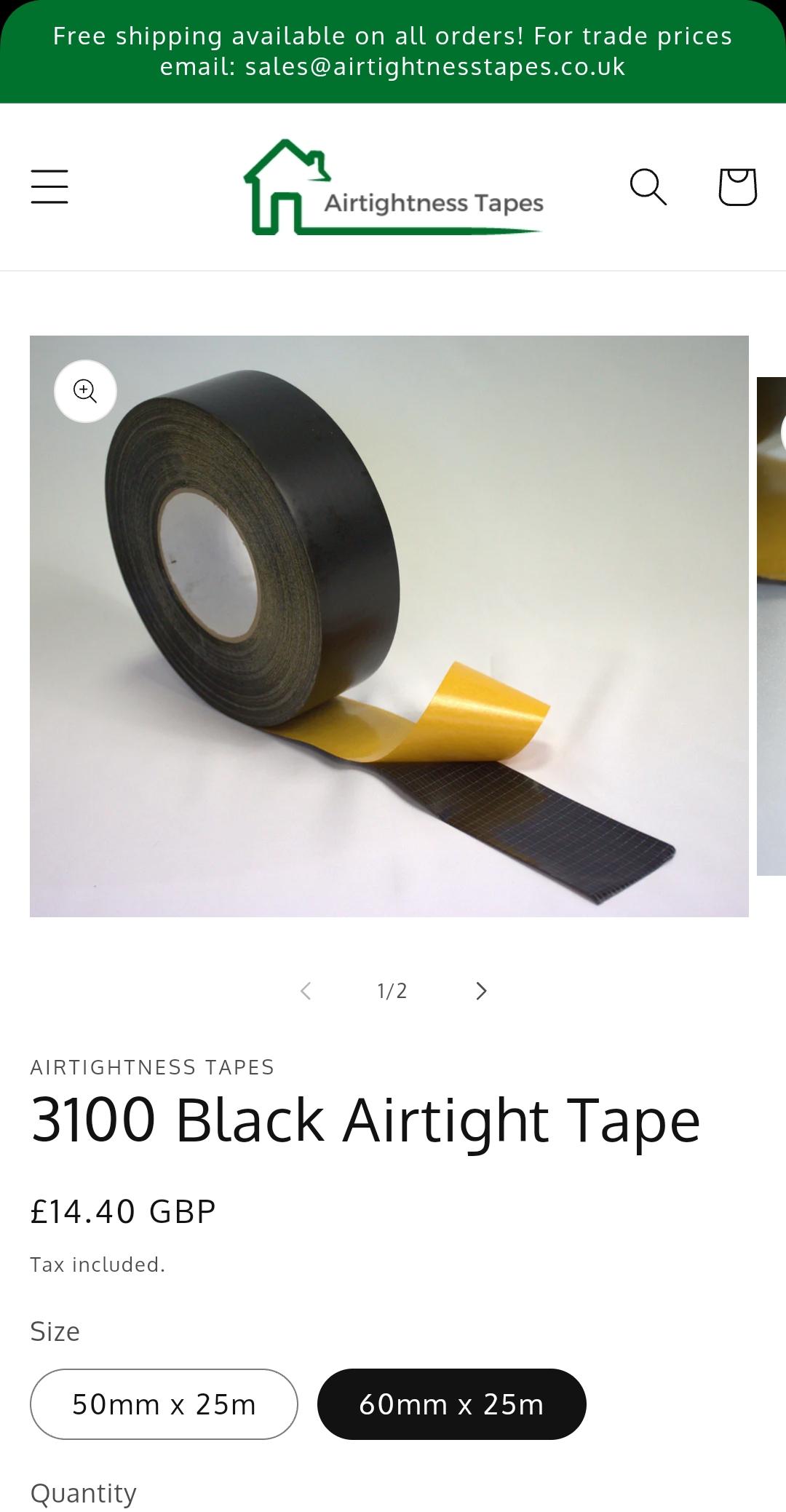
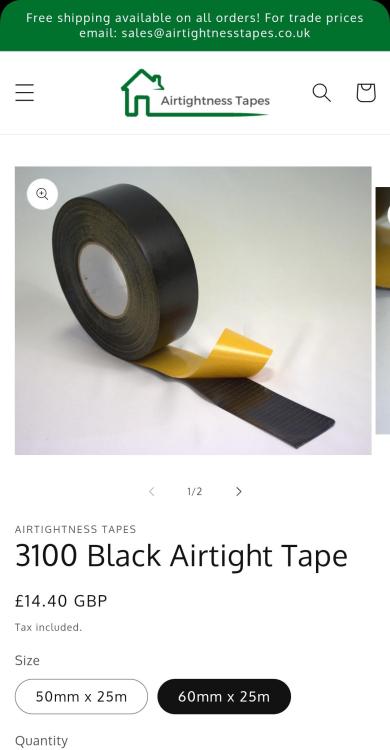
This is what we used. Don't know if they ship to the UK though. I was very impressed, better than the more expensive brands I bought. This one below looks similar but I have never tried it. Might be worth a punt on one roll to try.

-
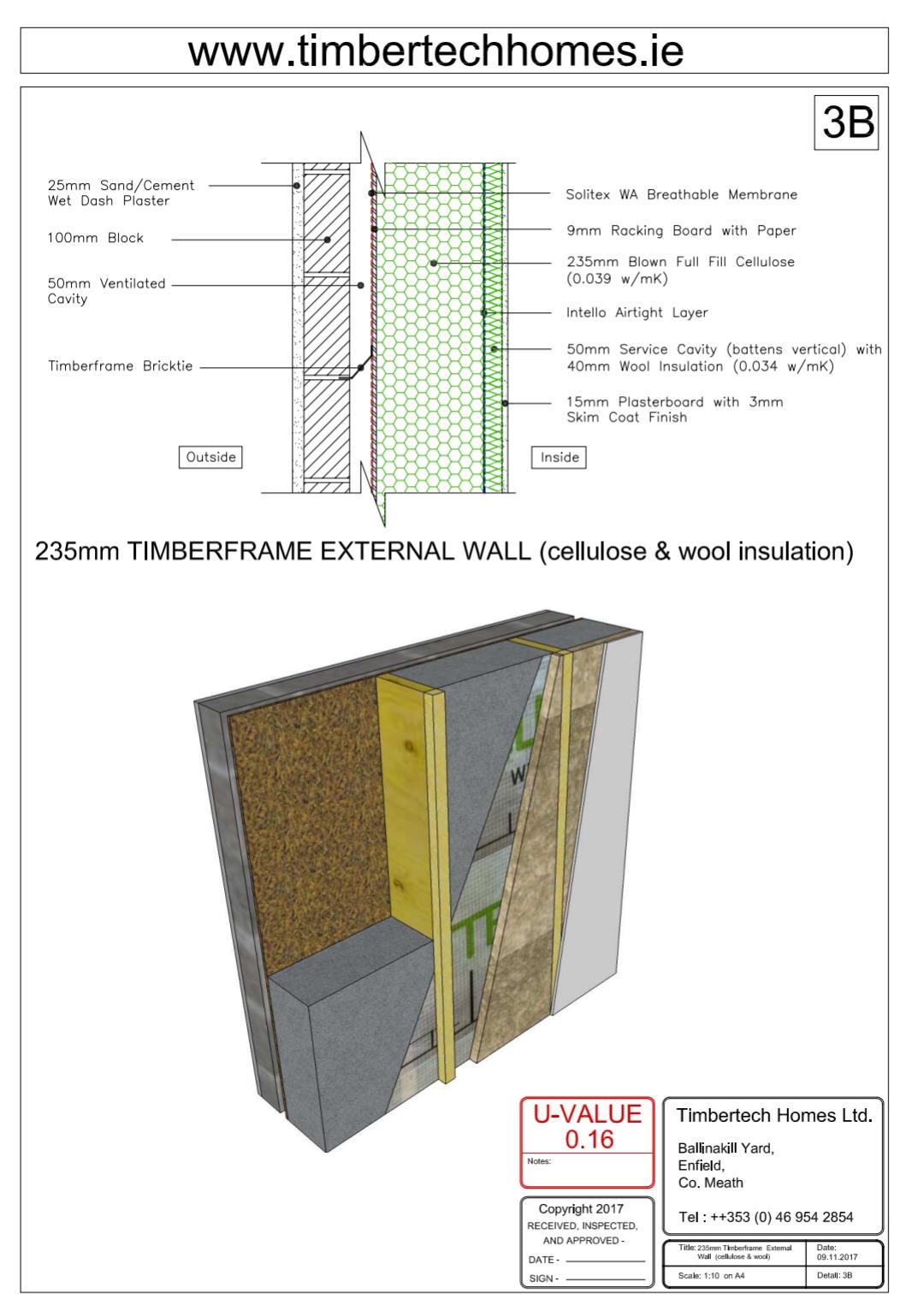
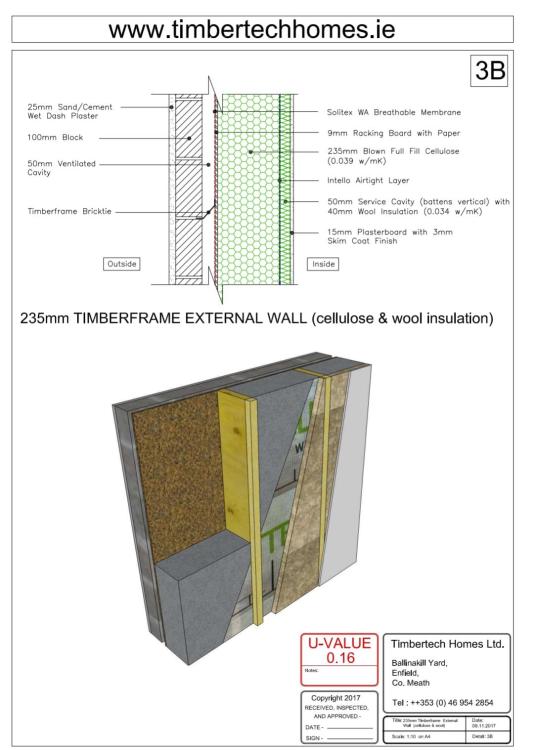
Yes masonry on the outside. Here's a drawing.
-
Timber can work very well in tandem with blown cellulose because it fills all airpaths. Airpaths are critical. For instance it's very hard to get good soundproofing on an interior wall with a door no matter how you build it Cellulose is a relatively dense insulator too at about 60kg/m³ installed. However insulation is a dear way of adding mass (although Rockwool et al will push this angle) Concrete blocks, plasterboard and OSB are all cheaper. Decoupling can be done by a cavity wall but you really need wet plaster with a masonry build for maximum airtighess vs the dreaded dot and dab. A masonry leaf on a timber frame will have the same effect. A layer of fluffy insulation somewhere is good too to stop sound "echoing" through the structure. Mineral wool batts in a wall work well. Better than something like EPS beads. In truth though it's probably your windows and doors that are the weakest link. Get proper triple sealed triple glazed windows that are thermally broken. Install with a flexible seal to the external rainscreen and an airtight one to the continuous airtighess layer. Don't neglect to treat the windows jambs, sills and heads with care too. Add plenty mass in the shape of a thick layer of plasterboard and skim and ensure all connections to the frame are continuous and permanently flexible.
-
1. Block all airpaths. 2. Decouple the inside and outside layers. 3. Add a fluffy layer somewhere to prevent reverberation. 4.ADD MASS!!!
-
Large van or dropside truck?
Iceverge replied to flanagaj's topic in General Self Build & DIY Discussion
In general you'll do better by ordering almost everything in bulk with delivery included. ebay/gumtree is probably only best for higher value small bits and pieces like MVHR units or maybe a nice kitchen tap. I don't think you'll save anytime buying plasterboard or aggregate from there. What you really need to be able to do is drop to the builders merchants and get 1 last sheet of ply or a couple of 6*2s or 20 roof tiles last minute to save your tradesmen taking men off the job. A small 8*4 trailer would be ideal. -
Large van or dropside truck?
Iceverge replied to flanagaj's topic in General Self Build & DIY Discussion
However unless you're bringing lots of aggregate the tipping function is probably not needed. It adds a chunk of weight too so reduces your payload. A normal dropside flatbed gives the advantage that everything can be loaded and unloaded with a forklift but the higher bed can be more awkward to load by hand. I have an 8*4 trailer that a 1200*2400mm sheet will lie flat in but not an 8ftx4ft. Ideally it'd be 50mm bigger in both directions. It's only 230kg unladen though so it's super easy to pull (I used my 1.2l Fiat Panda!) and the ramp makes it simple to manhandle/wheelbarrow stuff in there. Would recommend. Same as this.

-
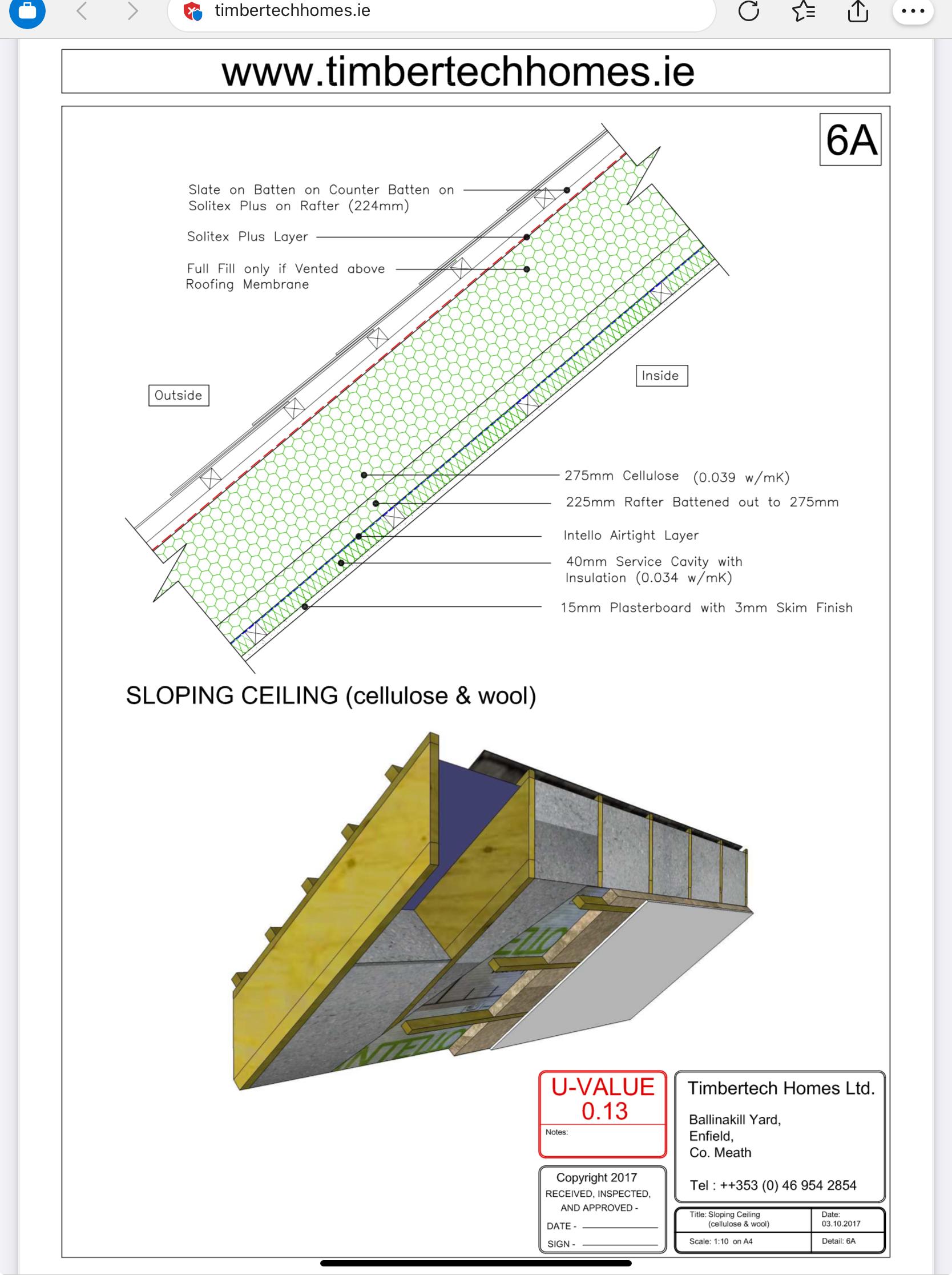
Practically speaking 2 staggered layers of PIR top of the roof and then a membrane would be easy to install but although you're solving one problem you're creating 2. The increased height and the difficulty in making a continuous airtight layer with the walls. What is your preferred roof covering and how much thickness could you achieve? How much below the ceiling are you prepared to loose? Personally I would be tempted to do something like this. 1. Metal profiled roof sheeting. 2. 20*75mm battens to take the sheeting. 3. Breather membrane, all joints taped. 4. T&G sarking as shown. 5. Full fill mineral wool between the joists. 6. Vapour control membrane, diligently taped to the airtighess layer on walls. 7. 45*50mm battens at 90deg to the rafters with mineral wool infill as service cavity. 8. Plasterboard and skim. Given you can guarantee a good job on the workmanship then there'll be almost zero moisture make it's way into the structure and what does can dry to the outside.
-
Very easy to do. It's a poorly understood topic, dominated by hearsay and rules of thumb. Advice comes typically from litigation wary professionals (who must assume terrible workmanship) or sales targeted companies. Airtighess serves two purposes. Firstly to allow airflow within a building to be controlled for the health and comfort of the occupants. Secondly and (equally as importantly) to ensure that no vapour laden internal air can get where it shouldn't. I think this was the driving factor in getting to the 0.6ACH target for passivhaus. Essentially the health of the building itself. In your case if you do want "hole in the wall" ventilation I would still certainly ensure that there is a perfect airtighess layer. You want to prevent the internal air, which will have more g/M3 of water vapour than the external air, from getting inside your walls. Airtighess AND appropriate planned ventilation is the key.
-
Anyway how does this help you..... @The Bear Your as drawn picture would work fine. Principal 1: Keep the damp internal air out of the wall through airtighess. You are doing this as I'm sure you will make a pucker job of taping and foaming all the PIR Principal 2: Make sure the amount of drying inside the wall is sufficient for the expected amount of moisture. You have fluffy insulation between the rafters and a ventilated space above it so you're ok here. AKA plenty of "drying" at the dew point. This is particularly important with lots of insulation inboard (PIR in your case) as your rafters will be frequently below the dew point without the room warmth to keep them toasty. It's one of the reasons I'm not a fan of internal insulations and ventilated external cavities. Cold timber is always more vulnerable to condensation and also the ventilation required can "wind wash" the fluffy insulation degrading it's performance. However it is largely a safe construction.
-
Ubakus is a simple tool, very useful for calculating U values but limited in judging moisture issues. It assumes, for instance, that the PIR layer will be totally continuous with no gaps. This is unrealistic unless you foam and tape all joints. A solid understanding of the core principles of safe layered construction and good workmanship are more important than a calculator. 1. Your primary aim is to prevent any moisture laden internal air migrating to any part of the wall/roof that the temperature can fall below the dew point and condense. This is done by excellent airtighess. Take any material that is airtight, like a membrane, OSB or even plasterboard and make a perfectly continuous layer somewhere in the wall/roof. It can be internal or external but it must not have any gaps or cracks anywhere. This will stop the flow of vapour laden internal air outwards to beyond the dew point. 2. Next ensure that any small amount of moisture that does get in there (through inevitable slips in assembly or construction moisture) can dry readily. This is where your materials of low vapour permanently* and sometimes external ventilation are important. The lightly availability of "drying" at the dew point determines your required materials and ventilation. TBC *Vapour Permanbility is a much better term than "breathable." It has SI units attached and can be accurately measured. "Breathable" gets conflated with "ventilation", it gets used by salesmen to sell everything from anoraks to lime plaster with little intelligent insight. In my opinion the it belongs in the bin along with "thermal mass" and other such terms that are thrown around with little other than guesswork and superstition.
-
They've been behind the bike sheds sniffing aerosols with the "thermal mass" preachers and all the other flat-earthers.
-
A tray at the DPC, what exactly is it achieving? We don't have any, just a DPC on each leaf.
-
Over a lifetime I'd say brick would probably be cheaper then given that you could avoid painting it. Mind you, render does offer excellent protection if you suffer from driving rain and is lightly to be more windtight if you're thinking that far ahead.
-
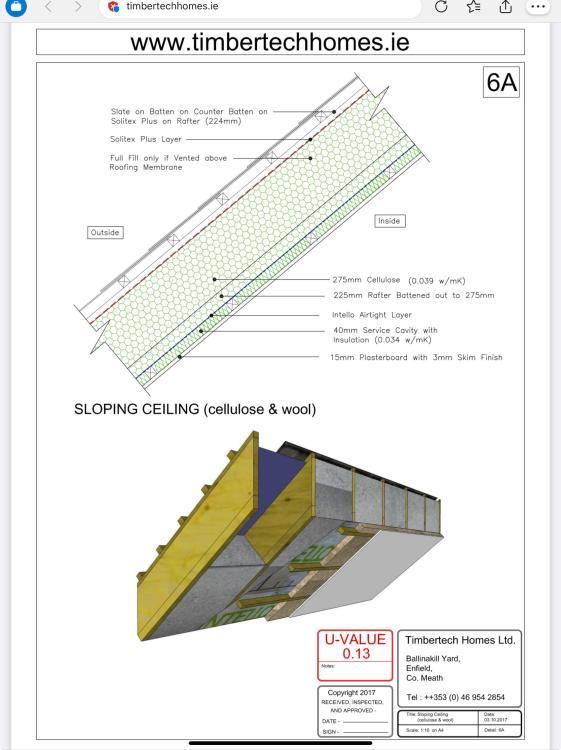
The only thing I would change here is I would add a layer of OSB sheathing above the rafters. For extra noise and vermin protection and added roof strength. Or alternatively a 22mm layer of T&G woodfiber like Steico Universal. You could omit the breather membrane then.
-
Maybe post some sections and we can compete for your affections! Personally I would try to construct something that can be made from off the shelf materials at your local BM combined with blown cellulose. Just because it's "low tech", low cost, and low risk doesn't mean it'll be low performance.