Jeremy Harris
-
Posts
26430 -
Joined
-
Last visited
-
Days Won
360
Everything posted by Jeremy Harris
-

Air conditioner or air source heat pump?
Jeremy Harris replied to MrSniff's topic in Other Heating Systems
FWIW, the core components of an air con unit and an ASHP are identical, and many units can be run both ways quite happily. The only difference is that a heat and cool unit will have a 4 way reversing valve, a heat-only unit will also have a 4 way reversing valve, but a cool-only unit may or may not have a 4 way reversing valve; it depends on whether or not the manufacturer just uses a generic refrigerant circuit for several models in their range. We've been running our ASHP in both heating and cooling mode pretty much since the day I installed it. Cooling mode wasn't advertised as being available by the UK company that badge engineered it, but was there in the control system and just needed to be set up to enable it to work. -
No, our build was designed to have a long decrement delay (as long, probably longer, than a normal ICF build) and has a thermal time constant that's way longer then the diurnal period, so there's not noticeable variation in temperature from day to day. It's also designed to passive house standards, so needs very little heat to maintain a comfortable temperature, which is a good thing in terms of heating bills, but not such a good thing when there's a bit of solar gain. The house only needs about 1.600 W of total heat input to maintain 21 deg C when it's -10 deg C outside, and around 1/3rd of that will come from the occupants plus incidental heat gains from appliances. The thing I overlooked was the deep penetration of low angle sunlight in Spring and Autumn, which dodged under the shading that I'd designed in and penetrated deeply into the house, warming up the concrete slab and causing it to radiate/convect heat into the house. The problem was fixed by adding reflective film to the outside of the big, South facing, glazed gable, though.
-
Will the Tesla Powerwall work in island mode? I suspect that it may not (yet), and so need to be grid tied. There are inverters that will happily work in island mode around for off-grid installations, but I'm not sure how these might be integrated into the Tesla systems.
-
Protecting Your Money
Jeremy Harris replied to newhome's topic in General Self Build & DIY Discussion
My experience was that very few companies, other than big suppliers, had the means to handle credit card payments. With so many now using Quick Books, which seems to default to payment by bank transfer AFAICS, it doesn't seem likely that things will change anytime soon. I've assumed that this is because Quick Books is cheaper than having the ability to accept credit cards, probably because it's been deliberately targeted to undercut the credit card facility charges. Not sure how widespread it is, but around here it seems that a lot of smaller tradespeople have started using it. Seems good for them, especially as cheques are disappearing now. -
What is a sewage treatment plant???
Jeremy Harris replied to Big Neil's topic in General Self Build & DIY Discussion
AFAIK, the preferred option anywhere within the EU, where mains drainage isn't available*** is to use a packaged treatment plant approved to EN 12566-3. *** The preferred option is ALWAYS to connect to mains drainage if available, simply because mains drainage treatment plants have a statutory obligation to meet defined discharged standards and are regularly tested to ensure they are compliant with them. -
Sewage treatment plants
Jeremy Harris replied to Kerron Allen's topic in General Self Build & DIY Discussion
Hard to be sure what the cost was, as it was included in a big ground works contract, but around £1500 to install a pumped outlet Biopure. That included putting an outlet pipe across the lane and into the stream, so no land drains. -
What is a sewage treatment plant???
Jeremy Harris replied to Big Neil's topic in General Self Build & DIY Discussion
The reason that legislation is being tightened to try and reduce the use of septic tanks is because the vast majority of them that are over 10 years old will have leach fields that are anaerobic, and so septic, as a consequence of biofilm build up. The owners will be blissfully unaware of the pollution they are creating, because unless the leach field catastrophically fails, by becoming waterlogged, there will be no external indication that anything is wrong. The easy way to check is to dig down adjacent to a a leach field land drain and look at the colour of the soil (although the stench will usually give the game away). If the soil looks discoloured and dark, maybe even black, then it's fouled and anaerobic and doing nothing at all in terms of tertiary aerobic effluent treatment. Most of the important effluent treatment with a septic tank isn't done in the tank, that only settles out the solids, with some assistance from anaerobic bacteria in reducing the organic solids content. The real treatment takes place in the leach field, where aerobic bacteria act on the effluent to both detoxify it, and more importantly, reduce its biological oxygen demand (BOD). It is the latter that causes major harm to watercourses, when a high BOD effluent discharge quickly reduces the dissolved oxygen content of the water so that other organisms die from lack of oxygen. An aerobic treatment plant removes any need for tertiary treatment, by performing the essential aerobic digestion in the tank itself. -
Fabric and ventilation heat loss calculator
Jeremy Harris replied to Jeremy Harris's topic in Heat Insulation
As @ProDave says, Windows from around Win 7 onwards had a default setting in the file explorer that hides the file extension, probably one of the most irritating and annoying things Microsoft have done in recent years. To change this, so you can see file extensions, then you need to go into a menu (often options) and then select something like "advanced options" where the system deigns to give you the option to actually see the full name of files that are on your system. I can't give the exact instructions for all versions of Windows, but there will be an option to unhide file extensions, and that should then show the full file name and allow the extension to be renamed. -
New build - heat and energy considerations
Jeremy Harris replied to Tyke2's topic in New House & Self Build Design
Our old house (1980's bungalow, with some improvements to insulation and airtightness) just had a programmable thermostat that was set exactly as @Nickfromwales has said, 16 deg C as the unoccupied/nightitme temperature, 20 to 21 deg C for the occupied temperature. Worked OK because that house only took an hour or so to heat up, and cooled down almost as quickly when the heating went off. I never turned the heating off in summer, as the thermostat settings meant it just didn't come on most of the time then. As @ProDave has mentioned, such a system wouldn't work for our new house, which like his takes days to cool down and many hours to heat up. -
Just checked the distance we have to move ours and it's about 28m to the end of our drive. I've also just done a quick-and-dirty check on the distance from the nearest place a fire appliance could park (on our single track lane at the end of our drive - it wouldn't be able to get up our drive due to the change in slope) to the furthest point around the back of the house and it's damned close to the 45m limit, perhaps over it in reality with hoses draped over walls/fences. Interestingly, any fire appliance that did park at the end of our drive would need to reverse back up around 50m of single track road to leave. We are the same local authority as you, and same fire officer...
-
Sadly not, you have to pay VAT on all surveys, reports, investigations etc that are done separately, i.e. not a part of a contract for something that includes some investigation or survey work, like a ground works contract that may include site investigation, laying out surveying etc, along with digging the foundations.
- 1 reply
-
- 1
-

-
VAT on paint
Jeremy Harris replied to vivienz's topic in Self Build VAT, Community Infrastructure Levy (CIL), S106 & Tax
I claimed the VAT on all the paint we used and they didn't question it. I just considered it to be a part of the house, TBH. -
Yes I did, and it works well. It monitors both pump pressure and effluent level (if needed) and transmits the data back to a display and alarm inside the house. Now the bad news. I bought parts to make a few for others, then ran into a major regulatory problem which means I can't even give them away, let alone sell them at cost price (which was my original intention). It's the same problem that the chap that wanted to make the Open Energy Monitor PV diverter kits ran into. I'd need to get the units tested and certified against the LV Directive and also the EC Directive, which would cost many times more than even a few hundred of these things would cost to build. The net result is that I had to just put the whole box of bits away and forget about making them for others. Making a single unit for myself, as a DIY project is semi-OK, in that it's exempt from the need to comply with the LV Directive, but strictly speaking I still should have had it tested to ensure compliance with the EC Directive, even though it uses a licence-exempt radio link module.
-
Internal fit out process Part 2
Jeremy Harris replied to Big Neil's topic in General Construction Issues
I did much the same as @PeterStarck, put all the wiring, plumbing, ventilation ducting etc in first, but I used metal back boxes throughout, screwed to noggins or spacer boards to bring them out so there were all projecting 2 or 3 mm into the thickness of the plasterboard. The guys that boarded the place out and plastered it just placed the boards up against the walls where boxes were, then banged the board on top of the wall boxes to make a mark showing where to cut the holes. All holes were cut before the boards were screwed in place, and then tidied up when plastered. The cables were all just tucked inside the boxes or poked out through holes in the boards where light fitting were to go later. -
Hi Everyone - retrofit (wet) UFH advice required
Jeremy Harris replied to Matt1976's topic in Introduce Yourself
A while ago I wrote this simple UFH calculator spreadsheet that allows the losses and floor temperature to be worked out fairly easily, as long as you know how much heat you need to deliver to the room to keep it at the temperature you wish: Floor heat loss and UFH calculator.txt The file is really a spreadsheet, but the forum software doesn't allow .xls files, so just save the file and then edit the suffix from .txt to .xls -
I would suggest that "reasonable access" in the case of a private drive really means making sure that it's wide enough for a fire appliance to get close enough to be able to fight the fire. Clearly they may need to leave quickly if they get another shout, but that shouldn't mean that there is a hard limit on the distance the appliance can reverse, especially if provision can be made to make reversing an appliance out a bit easier. It seems a bit unreasonable to stipulate that a fire appliance can only reverse a distance of around twice it's length (perhaps less) as there are an awful lot of roads on housing estates where they would have to reverse a lot further than that. A walk around many of the estates in and around the town will turn up dozens of access roads that have parked cars down the side of cul-de-sacs, often with single lane traffic for a lot more than 60m.
-
Worth noting that the Approved Documents are not the Building Regulations, they are just guides that indicate how the Building regulations might be complied with. The title of the table above gives the game away when it says: "Typical fire and rescue service vehicle access route specification", not "Mandatory fire and rescue service vehicle access route specification". The Building Regulations themselves are the law, not the Approved Documents, although many assume that the compliance methods suggested in the Approved Documents are the only way to comply, this isn't the case and there are other options open if you can negotiate them with BC. Ultimately it is BC who have to sign off on whether or not in their view you have complied with the intent of the Building Regulations themselves, not the Fire Officer, who is just a consultee, I believe, and has no authority with regard to what may or may not comply with the regulations, at least as far as domestic dwellings are concerned.
-
I guess it's worth asking the question; what is the likely impact of just refusing to comply with this requirement? Will building control really refuse to sign off on the build? Personally I have doubts that they would, as we had a couple of issues raised during our build that were a bit like this, and on both occasions we reached a compromise (or in one case just ignored it). We had the fire officer mandating sprinklers, on the basis that it was a timber frame house built on a polystyrene raft. That I just ignored, and it was never raised again by anyone. The second was a conflict between the Environment Agency, who mandated a minimum finished floor level, garage floor level and parking area level, above Ordnance Datum, and a Highways Officer who mandated a maximum gradient for the drive of (I think) 1:15. I pointed out that we could have one or the other but not both, as there was nowhere near enough room on the site to have a drive that long, in order to get the gradient within the Highway Officers mandated maximum. I stated that I thought that the EA requirement trumped that of the Highways Officer and stated point blank that the gradient was going to be around 1:6, and if they wanted to kick off about it they were welcome to try. I heard nothing back from the Highways chap, and presume he just chalked it up as a lost cause. I think sometimes it is really worth pushing back with stuff like this, especially if you can try the approach of getting a fire officer out on site for a look around and chat. After all, what's the worst they can do, realistically?
-
I'm afraid I've no idea either, but I did cost up fitting either a conventional sprinkler system or a fine mist system. Both were a lot of money (over £4k for our house, excluding the requirement for a backup water pump and power source, because we have a borehole and pump that could be inoperative in the event of a power failure). A quick and dirty look around suggests that the pipe would be around £50/m and the approved end fitting valves around £200 each. On top of that there would be a mandatory 15 minute pressure test to certify the system, no idea what that would cost. Looks like it could be around £3k though, so around the same ball park figure as a sprinkler system, perhaps. Might be worth trying to get the fire officer to visit the site, so you can have a face to face chat whilst looking at the access. My experience of dealing with fire officers at work was that they were often a bit more flexible when actually walking around a building and chatting than they seemed when exchanging correspondence.
-
But wouldn't a 40m long riser mean that the appliance could park so that it only had a 20m reverse? That's what I was getting at, a bit of lateral thinking to try and resolve what is, in all probability, a non-problem as far as the actual fire crews are concerned. I bet there are loads of situations where they have to back up more than 20m, anyway, in reality.
-
Having re-read this thread, and particularly @PeterW observation that the issue is the 150ft length of a fire hose, I wonder if it's possible to use a version of the solution that's applied to multi-storey or large area buildings? The fix for them is to include a dry riser, which is just a length of pipe with a bore and pressure rating suitable for taking the flow from a fire engine pump, and which has standard fire hose fittings on each end. When a pump appliance turns up it just connects to the dry riser with a short hose, then connects either a single hose or a manifold that can take several hoses, to the other end of the riser. This gets around the length of hose issue. This is most often seen in high rise tower and office blocks, but I know for sure that it's also used in large floor area office blocks, too, with long, fixed, horizontal riser runs. It's way off in left field as far as being a standard solution, so would undoubtedly mean having a serious debate with the fire service, but the bottom line is that the existing dwelling had this problem already, so anything you do to ease that has to be of benefit.
-
Hi Everyone - retrofit (wet) UFH advice required
Jeremy Harris replied to Matt1976's topic in Introduce Yourself
Welcome. A house of that age probably won't have any insulation at all in the floor I suspect, and being beam and block it's not really feasible to lower the floor to allow insulation to be added. Unless your room heights are such that you can accept losing a fair bit of height by raising the floor I doubt that UFH would be a sensible option, I'm afraid. Worth checking to see if you can determine how deep the floor is, just to be sure there's no insulation, but I suspect even if there is a layer it will be so thin as to make running UFH a very inefficient way of heating the house. UFH is always less efficient than radiators, because of the losses down through the floor, even with pretty good insulation underneath it. It does give the benefit of better comfort levels, plus freeing up space on the walls where radiators are, though. -
Welcome. I'm concerned that this work was apparently signed off by a building control body fairly recently, as it's definitely sub-standard and the company that undertook the work must have known full well that they were creating a major defect by doing the job in the way they have. Sadly I doubt that you have any realistic prospect of getting recourse from them, even though the work is clearly not to an acceptable standard. I agree 100% with the above solution, it seems about the only sensible way to fix this. Stopping water vapour from inside being able to reach the cold concrete and condense is really the only way to fix this. Stopping the concrete getting cold by insulating the outer face would be ideal, but is obviously not an option. The only thing I'd add to the fix described above by @Mr Punter would be to try and make sure you lap the VCL down the upper part of the walls and seal it tight to the walls if you can, just to try and make sure water vapour can't find it's way up to the cold concrete at all. You probably need to have a think about any ceiling lights you may have in there and how best to fit any recessed lights you may have. You can get very low profile LED lights that are barely any thicker than a sheet of plasterboard now, that aren't that expensive and work very well when there is only a narrow space behind the plasterboard. They also run cool, so don't present any significant over-heating risk, unlike something like halogen downlighters, that wouldn't be a good choice, IMHO. Be prepared for drilling the fixings into the concrete to be bit of a tough job. If, as I suspect, that concrete roof is around 50 or more years old, then it will probably be close to peak hardness by now, and be hard work to drill. However I'm sure it will be worth it, both to stop the condensation problem and markedly improve the comfort level.
-
You're welcome, and I think you're wise to push your SE to come up with some ideas. My experience with mine was very positive, in that he already knew exactly how to tackle our potential problems, from a mix of experience and good local knowledge.
-
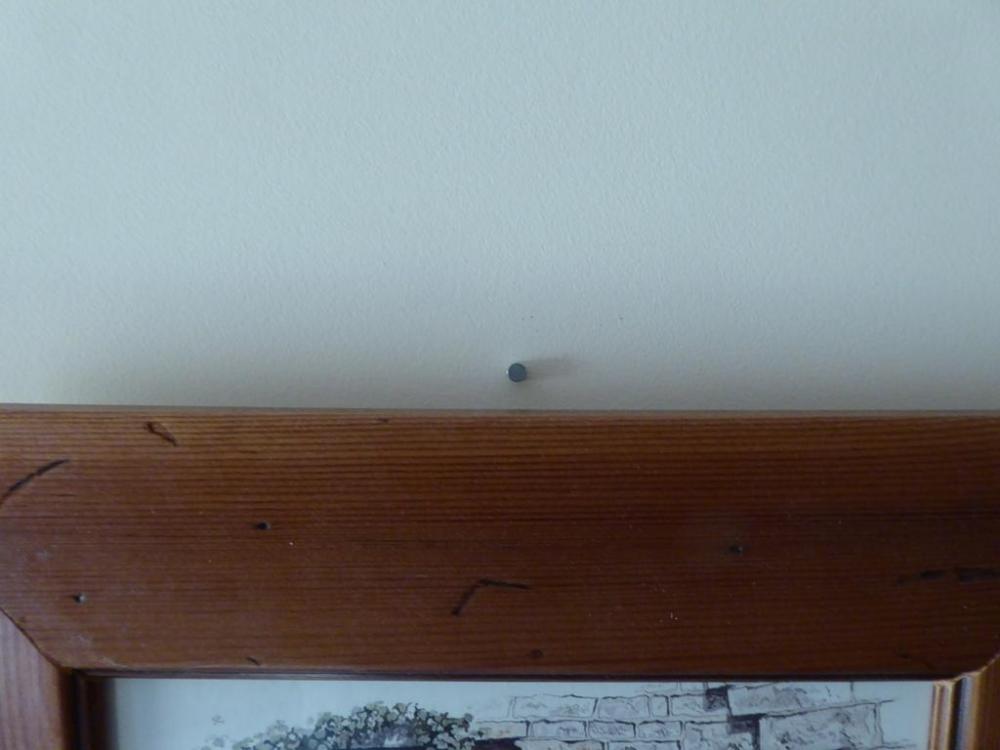
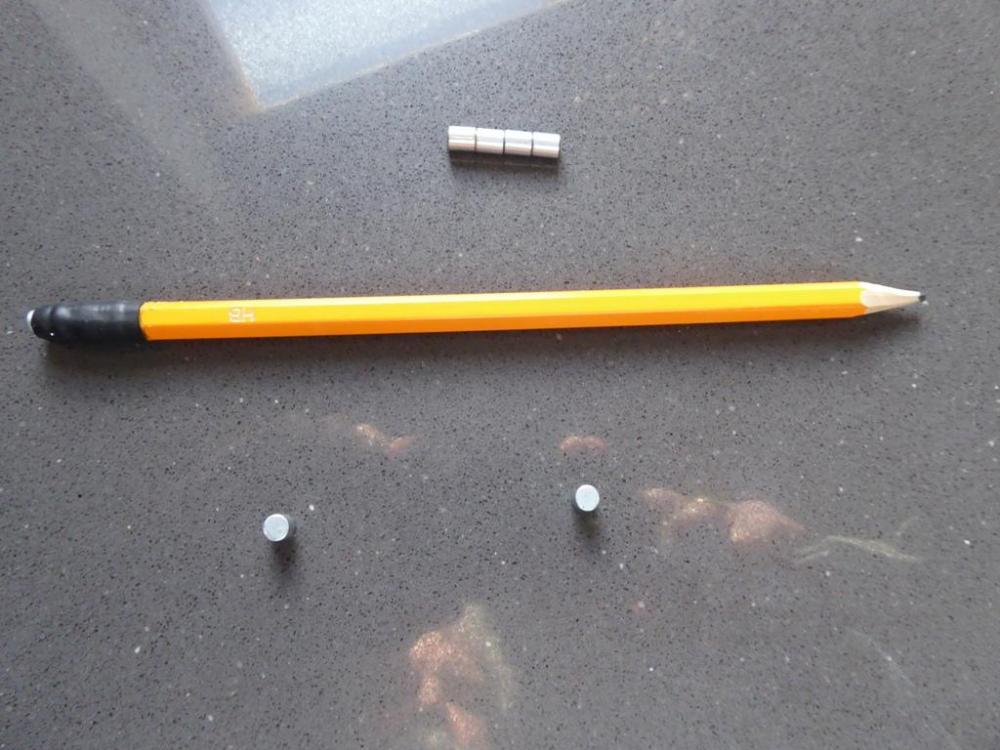
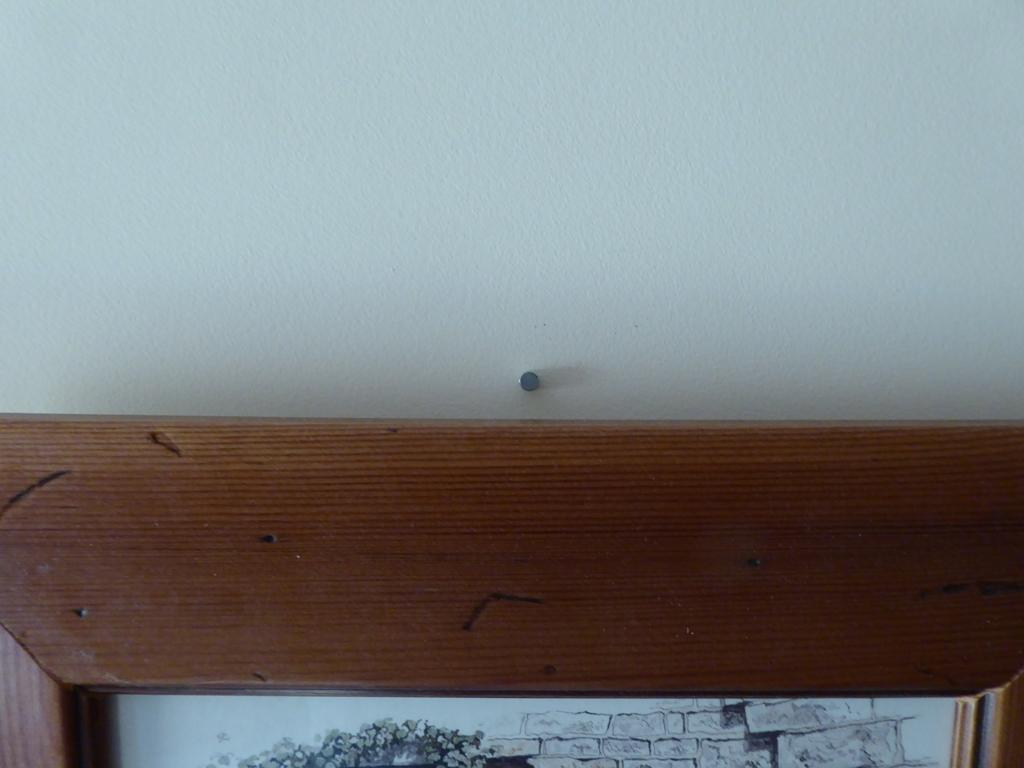
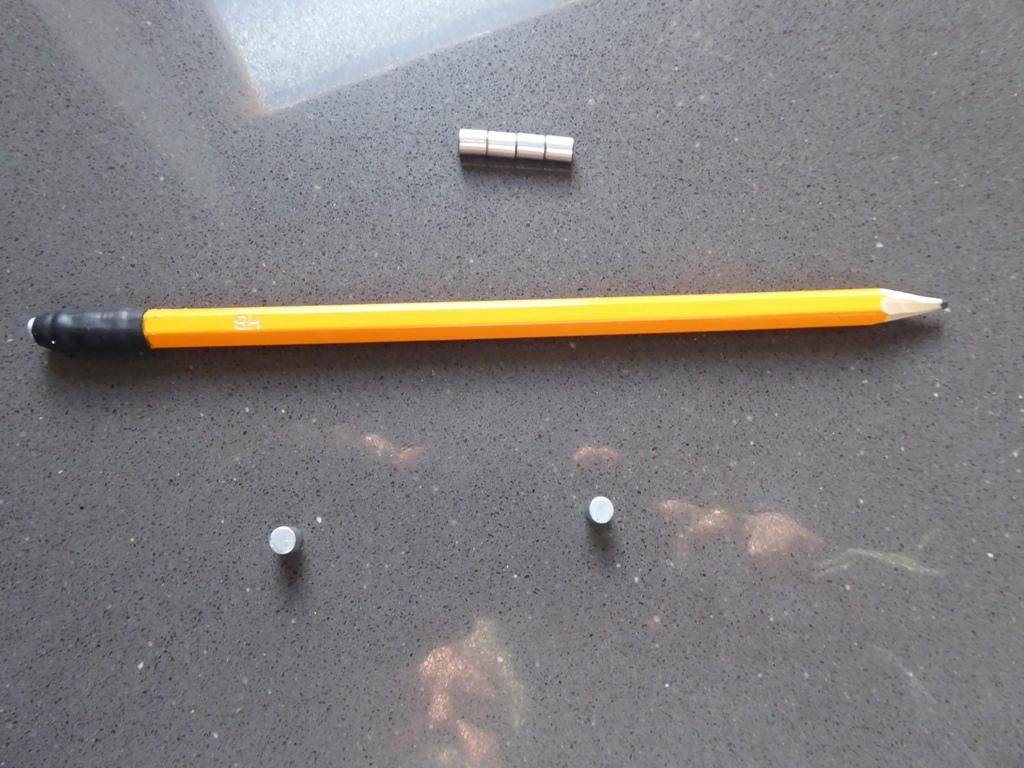
Here are some photos I've just taken showing the small magnets being used to find the centre of a stud: and this is one of the pencils I made up with a magnet in the end to find screws, pick up dropped screws etc, plus some of the small magnets: