Jeremy Harris
-
Posts
26430 -
Joined
-
Last visited
-
Days Won
360
Everything posted by Jeremy Harris
-

Spray PUR foam. Why isn't it popular?
Jeremy Harris replied to Digmixfill's topic in Heat Insulation
The stuff dries out in a day or so, ends up being a solid block much the same as the pressure-blown dry fill cellulose, but doesn't need the pressure blower and is quicker to install as it doesn't need holes to be cut in an inner skin, that later have to be covered over. -
Spray PUR foam. Why isn't it popular?
Jeremy Harris replied to Digmixfill's topic in Heat Insulation
It works fine, and is well-proven: -
I found joss sticks worked OK when I was tracking down air leaks in our old house. The smell did result in me being asked a few searching questions about what I'd been doing, though...
-
There's a lot to be said for running separate switched radials, from a single central location, as an electrical installation topology. It allows for anything from dumb switching with conventional switches, to any one of many possible automation systems, either giving full or part control. It also allows an easy future upgrade path, with minimal disruption to the decor etc, as pretty much any future changes would be made at one central location. By the same token, I've long felt that the UK should get rid of its obsession with ring finals, and return to the radial system used pretty much everywhere else in the world.
-
Looks pretty good to me, around the same as we paid for 3G aluclad timber more than 5 years ago.
-
Optimum U-value - installation cost vs saving on heating
Jeremy Harris replied to Tony C's topic in Heat Insulation
It's definitely the worst case, which is why I mentioned using the aimed for ventilation rate using trickle vents and extraction fans. If we hadn't fitted MVHR we'd have had to install five extraction fans in order to comply with the regs, so I took the view that I'd rather just have two holes through the walls rather than five holes through the walls (plus trickle vents). Using the same ventilation rate with no MVHR as we have with MVHR almost doubles the cold weather heat loss, though, from 1,672 W at -10°C to just under 3,000 W, and that's not allowing for the additional heat loss that would occur whenever one of the mandatory extract fans is running. -
Has Anyone Used Sunfixings In-Roof PV Kits?
Jeremy Harris replied to Triassic's topic in Roofing, Tiling & Slating
Where do the cables go? On the other in-roof systems there are large ventilation holes under the panels that also act as places for the cables to run, and also give space for microinverters/optimisers to be fitted if needed. -
Welcome. The main implication (other than the fire risk) would be that you may well find that failing to comply with the prevention of spread of fire regs affects your insurance. Insurers may well have some small print that allows them to get out of providing full cover if they find out that the fire regs have been knowingly breached. Might well also open you up to prosecution in the event of their being a fire.
-
Boiler help - water dripping from flue
Jeremy Harris replied to Vijay's topic in Boilers & Hot Water Tanks
Does look as if it may be the flue angle to me. The flue is supposed to slope back down to the boiler along its whole length, so the condensate can run back down to the drain. -
Optimum U-value - installation cost vs saving on heating
Jeremy Harris replied to Tony C's topic in Heat Insulation
There's no noise concern; our MVHR is much quieter than the mandatory bathroom/shower/WC/kitchen extractor fans that are needed if you don't fit MVHR. -
Optimum U-value - installation cost vs saving on heating
Jeremy Harris replied to Tony C's topic in Heat Insulation
I'd put in the ventilation rate that you're aiming for using the window trickle vents and mandatory extraction fans, which is probably somewhere around 3 to 5 ACH worst case. With no MVHR the MVHR efficiency will be 0%. Be prepared for this to cause a high heat loss, though. If I change the ventilation rate to 4 ACH and set the MVHR efficiency to 0% for our house it increases the total heat loss of the whole house by about 900% (the heat loss at -10°C outside with MVHR is about 1.672 kW, with no MVHR it rises to about 15.095 kW). -
Fit a trace wire alongside the UFH pipes as you install them. That way you can just use a CAT to trace exactly where the pipes are later. The trace cable will need to come up out of the floor with the UFH pipe, so that the trace signal generator can be connected to it.
-
Moving someones water pipe on land
Jeremy Harris replied to nickw's topic in Party Wall & Property Legal Issues
Any chance that the pipe can be re-routed by stealth? I was thinking along the lines of putting the new pipe run in, excavating where the connection points need to be for the old pipe, getting everything ready and then waiting for them to go out. It would probably only take half an hour or so to make the new connections and cut the old pipe out. With luck they may be none the wiser as to what you've done. For safety's sake it would be best to connect the new pipe at the incoming supply side first, flush it through, then connect it to their supply pipe, that way there's much less chance of any muck getting washed in to their pipe. -
Gravel gets my vote. I rather like the clean lines of a Zen garden, and it's what I wanted to do where we have our small lawn. I was overruled, though.
-
Did I mention that I HATE trying to keep lawns looking neat and tidy? I've been outvoted at home, but I would far rather have a garden that had no grass at all, especially as our garden is (deliberately) not very large.
-
We have had much the same problem. I spent a small fortune on top quality sieved and sterilised top soil, had a really good chap level the area for the lawn and turf it with good turf, and within a year it was lumpy and full of weeds. I'm constantly doing battle with weeds that look like some sort of thistle, the problem being that no matter how I deal with them they end up making holes in the lawn. I've found that the least problematic way to deal with them is to use the Bayer lawn weedkiller that @PeterStarck recommended some time ago. If I had my way I'd concrete the lot and cover it with Astroturf...
-
Varies between 6 A and 32 A. My (home made) charge point can be switched to "solar mode" where it varies the max current available control pilot signal to the car so that the charge rate tries to match the amount of excess PV generation. It can't go below 6 A, because that's the minimum that the car will accept. The unit has a threshold for switch on, so it doesn't start charging the car until PV export exceeds 1500 W. It then maintains the charge to the car, allowing it to use more power if the PV system is still trying to export to the grid. It never gets as high as the 32 A maximum in this mode, as maximum from the PV system is only around 25 A or so. The unit can also be switched to fast charge mode (32 A) if I need to charge the car quickly and am not concerned about using excess PV. This fast charge mode can also be set on a timer, so that the car fast charges overnight, during the E7 off peak period.
-
If they just allowed the current deemed/metered export payments for all new installations, without the MCS premium (which adds nothing worthwhile, IMHO) then it would be a bit fairer. We generate around 6,000 kWh/year, and don't have metered export (although I'd have no problem with an export meter being fitted) so receive the deemed export figure of 50% of generation (as recorded on the generation meter). Ignoring the FiT subsidy, the 3,000 kWh of deemed export that we receive payment for gives us about £157/year, which seems reasonable to me. Added to the value of the 3,000 kWh that we generate and use gives a net annual saving of around £600 a year, so not to be sniffed at. I particularly like being able to charge my car for free for more than half the year.
-
How much should it cost to install windows?
Jeremy Harris replied to Triassic's topic in Windows & Glazing
Certainly our windows and doors were a supply and fit contract and as a consequence the whole invoice was zero rated. Had it not been, then we'd not have been able to reclaim the VAT, as once you've paid VAT for labour it cannot be reclaimed, I believe. -
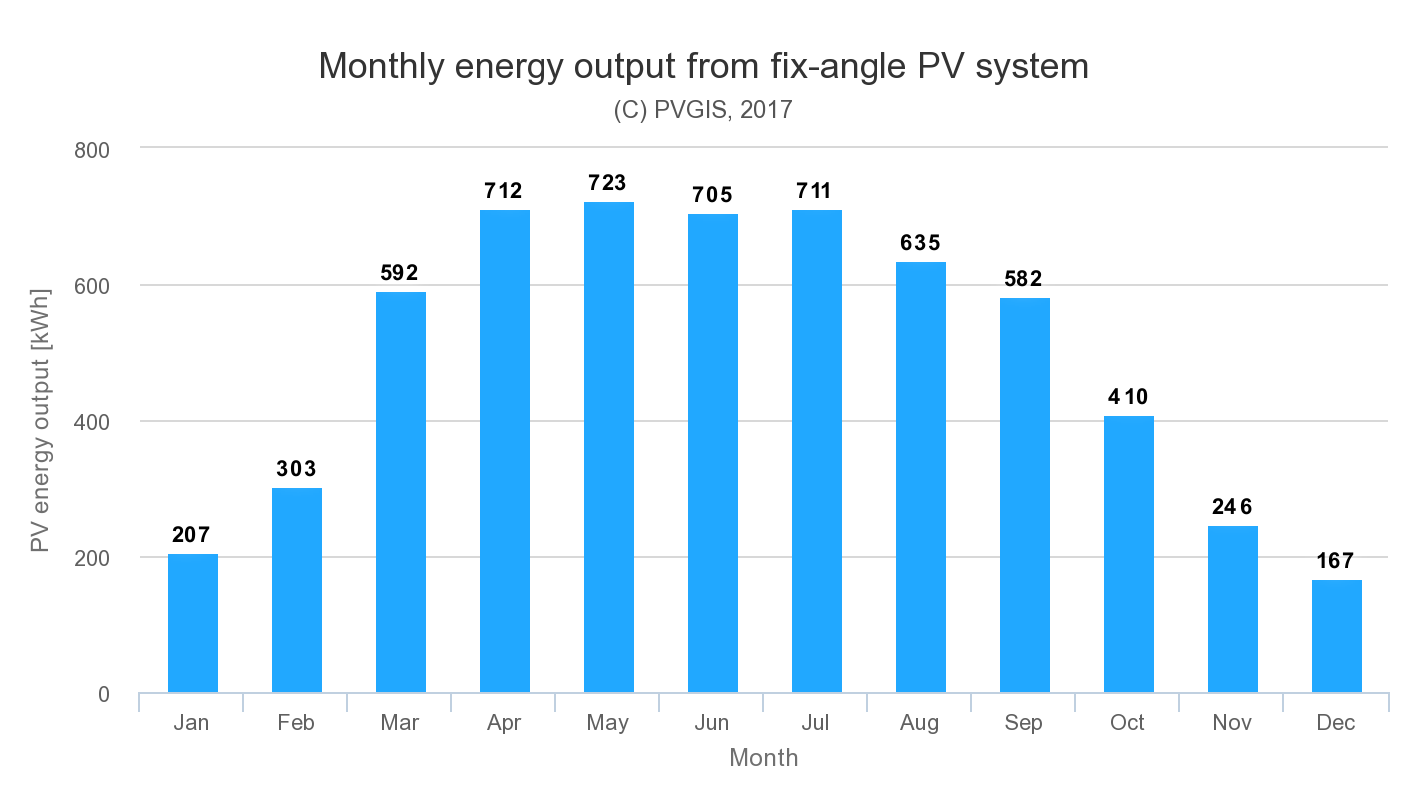
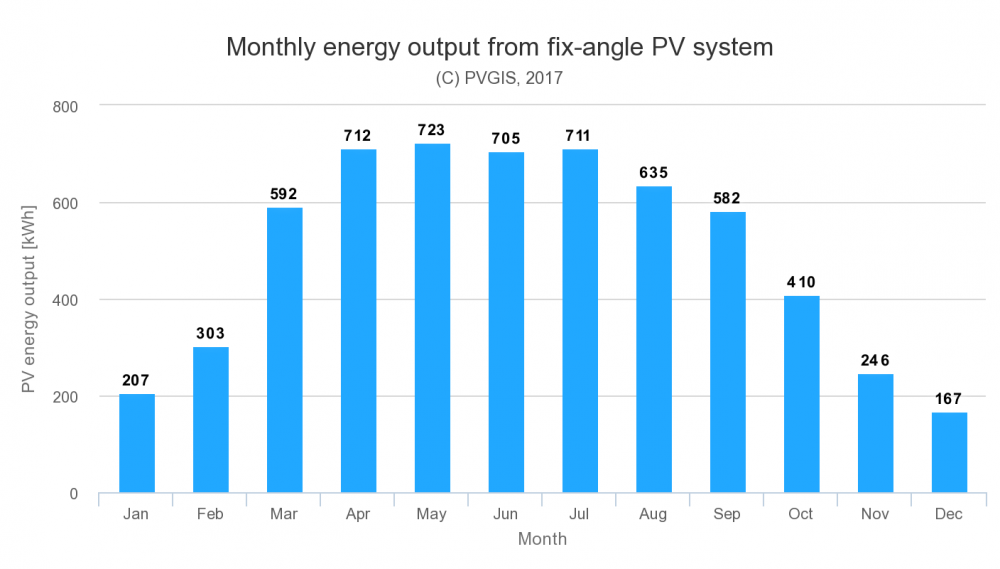
Our system has 25 off black PV panels set into the roof using GSE Integration in-roof mounts. These are rated at 6.25 kWp and feed a 6 kW Aurora Power One inverter. Because the maximum power is over the 16 A per phase allowable for connection without consent, we had to get consent from the DNO (in our case SSE) to be able to install this system. I have a home made excess PV generation power diverter, that senses when we are exporting electricity and switches a variable amount of power to the water heating system. The water heating uses a Sunamp UniQ eHW 9, which uses phase change storage to allow up to about 10 kWh of heat to be stored in a small volume (roughly half the volume of a washing machine). The heating element in this system is very like an immersion heater, with the same power rating. The Sunamp controller determines when the Sunamp heating element can accept power, and the excess PV diverter can then just heat the element as required. In winter, when we have periods of several days with little or no useful PV generation, I have a boost time switch, which comes on in the early hours, during the E7 off-peak period, to charge the Sunamp if it hasn't been charged during the day. This ensures we always have hot water, even during cloudy periods. The Sunamp heats the hot water rather like a powerful combi boiler. It only heats water on demand, as it has an internal heat exchanger that can deliver over 30 kW to the incoming cold, mains pressure, hot water, delivering hot water at around 55°C. We have a TMV on the output to mix this down with cold water to about 45°C which we find is about right for hot water from the taps etc. Out of interest, here's the PVGIS plot for our 6.25 kW system, which faces SSW and is at 45° roof pitch (it delivers about 6,000 kWh/year):
-
That's fixed, and the problem was that we were storing a couple of days worth of heat, but the phasing of when the thing would charge and when we were drawing hot water off was skewed badly by the high hysteresis in the firmware in the original control box. This resulted in us running out of hot water because the thing hadn't taken advantage of a charging time window. The new controller seems to start to accept charge when about ~20% discharged, I think (early days, still trying to evaluate exactly how it behaves). BTW, to put the hot water cost into perspective, since last November we've used around £36 worth of grid electricity to heat our hot water. I doubt we'll use much grid electricity for hot water between now and this November, so at a rough guess I'd say our hot water cost might be around £40 a year. I can live with that, TBH.
-
As above, I think I just used the wood blade, like this: BTW, I've found Saxton blades to be good value and better quality than the blades that came with my Bosch multitool.

-
We store around two to three day's worth of heat for hot water, so about as big as we can reasonably go. In winter we're lucky to get enough excess PV to charge that. If we went for a bigger store than we'd probably end up with higher losses, I think, as there's a balance between being able to best utilise excess PV generation and the heat loss. If we used hot water for storage, rather than the Sunamp, the losses would be higher. The bottom line is that you can't magic up energy that isn't there, and in winter it's not at all unusual to go a week or more with no meaningful excess PV generation.
-
I started monitoring energy use both on the grid power to the water heating and on the solar power to it last November. At the moment, just over half the hot water energy in that period has come from from excess PV generation, the rest from the grid. At guess, I'd say that it seems likely that we will be around 75% PV, 25% grid over the course of a whole year.
-
used water softener: harvey twin tank worth a risk?
Jeremy Harris replied to oranjeboom's topic in General Plumbing
Failure of the fill valve at the side was fairly common on the early models, I believe. There's a replacement upgrade kit available from Harvey. My spare unit has the older style fill valve (looks like a tube on the side, between the two tanks) and that's cracked too. I believe that you can get the unit refurbished for around £350 or so, so if you can get this cheaply it is probably worth going for. Refurbishment involves replacing the resin and the fill valve, plus servicing the (hellishly difficult to reassemble) water meter/valve assembly. There are (I think) either two or three different water metering heads, to deal with differing water hardness. All that changes (I think) is the volume of water that runs through before regen is activated. Ours are both set to 750 litres before regen, and that's written on the internals, I think. I don't think this can be changed without changing the water meter head, but I may be wrong.