
Nickfromwales
-
Posts
31390 -
Joined
-
Last visited
-
Days Won
346
Everything posted by Nickfromwales
-
Advertise it on the Marketplace here
-
You cannot use a DPM as they whole floor will need to be bonded. LVT cannot be floating in a bathroom for obvious reasons ( any gap will fill with water / damp by capillary action, even when bonded, so seal, seal and seal again! ).
-

Fitting a stone resin shower tray on plywood
Nickfromwales replied to George 3G's topic in General Plumbing
Drill a series of holes and pump full of gap-filling expanding foam is my normal solution there. -
Fitting a stone resin shower tray on plywood
Nickfromwales replied to George 3G's topic in General Plumbing
Push the Wedi. If it moves you’ve still got work to do -
Fitting a stone resin shower tray on plywood
Nickfromwales replied to George 3G's topic in General Plumbing
Is there any timber behind the bottom of the Wedi panel eg directly above that timber? Push against it and see if it moves inwards. -
The tanking?
-
UFH installer is just unfamiliar with anything low energy, it’s a common issue tbh with most not knowing what they’re quoting for. There will be next to zilch downwards heat loss over 325mm of EPS!! And the 50mm plus 50mm will mimic the 100mm concrete slab which most have in their passive raft foundations. Carry on as you are, it’s completely fine. How do you intend to fit the UFH onto the 50mm of concrete, and what exactly is making that ‘structural’?
-
The second inspection chamber can be smaller, 300mm iirc. They’re both “inspection chambers” aka “manholes” For main junctions they’re 600mm round or the brick rectangular existing ones as in your pic. Runs from any IC to a black or grey source need to be straight lines, or as near as damnit. BCO’s, usually, will not allow a 45 and much prefer straight line of sight. They won’t fail existing, so if toilet 2 is existing with the 45 before the manhole that’s fine, but they won’t allow you to add more to that afaic as there would be no access upstream. Where you wrote “soil vent pipe”, is that outdoors? Odd space? If so, can you take toilet 2 existing feed and carry that on in a straight line? Then have the new 300mm IC between the buildings, outside, with toilet 1 feeding into that IC in a straight line.
-
I routinely fit humidity sensors in each bath / shower room, above the door on the inside of the room, so that is not only automated, but also runs on until the humidity has deffo completely dropped / dissipated. Boost button in the kitchen, humidistats as above
-
If going through building regs, toilet 1 and toilet 2 will need to go to that inspection chamber, and that will go to the ‘manhole’. You cannot ‘daisy-chain’ from item to item, as it all needs rodding access at each foul connection eg you need to be able to rod from an IC to each vertically rising SVP ( to a W/C / kitchen sink / ( black or grey waste discharge ) basically anything which takes ‘solids’ or food waste. The rule doesn’t always apply where it is just a shower / bath / basin. Why are the runs shown in the footprint of the build and not going outside ( around the building ) to the manhole? Access issues?
-
Best wet room system on the market?
Nickfromwales replied to ashthekid's topic in Bathrooms, Ensuites & Wetrooms
The diamond is a clever “offset centre”, so if you lift and rotate 180 degrees you’ll miss the joist -
Yes, that’s fine. Where you show the vent, I assume you realise that will need to be an inspection chamber?
-
Best wet room system on the market?
Nickfromwales replied to ashthekid's topic in Bathrooms, Ensuites & Wetrooms
OK. So Wedi Fundo may be a solution. Just looked at solutions for current clients 2 wetroom showers, one whole of room, another most of the room, and the Fundo sloping board may be what you will need to get that area. https://www.wedi.net/uk/products/building-systems/floor-level-showers/fundo-sloping-board/ You’ll need to work out backwards, from the room entrance door threshold in, to work out how much depth you’ll need for the tray former section to go in and allow you little to no step at the doorway. NOTE that the Wedi is soft and absorbs point of impact poorly, so either large format tiles or a mosaic with minimum size of 50mm x 50xx will be the only finish you can go with. If tiling with large format and the tile diminishes down to nothing, you may have issues there too eg when stan=ding on heel at that point you will get movement. You can mitigate by building up a couple of additional layers of reinforcing mesh and tile adhesive, b it be aware that this Wedi product cannot take LVT etc, only tiles as above. FYI, I’ve done loads of Wedi installs, with absolutely zero issues, so as long as you understand the gotcha’s you’ll be fine. -
Best wet room system on the market?
Nickfromwales replied to ashthekid's topic in Bathrooms, Ensuites & Wetrooms
Diamond do an 1800x850 which i then used tile adhesive and cement board to extend to 900. Do you really need a 1100mm wide tray, or is that your intended wet area? https://diamondwetroomsandbathrooms.com/index.php?route=product/category&path=151_142 -
Yes, different instances get different responses here, so be mindful to look at the OP comments to see if the “shoe fits” The above info for same pipe size is because the system I’m advising on there is a “district” system servicing satellite dwellings from a central plant source, so if the HRC return pipe is smaller than the delivery ( supply ) side, the rate off delivery to the point of consumption will be extended somewhat, but, as per my advice in other threads, in a domestic ( small ) installation this is fine. How far away are they? And are you plumbing with a radial setup, or regular series plumbing? If radial you may get away with just having the HRC running a loop for the large bore delivery side, eg from UVC > DHW manifolds > UVC and not then bother / need to run the HRC pipework throughout, all depends on frequency of use and how you control the pump. I’ve implemented many different control types tbh, but my favourite is still to trigger with the burglar alarm output relay, so if the alarm is fully armed the HRC goes off, when you return it comes back on when you disarm the alarm. Cheap as chips home automation lol. A second relay can be installed for when the alarm is only part-armed, eg sleeping plus guests etc, where the kitchen and utility / downstairs cloakroom basin etc ( that you know cannot be used at night ) are shut off by a zone valve on the HRC manifold. All depends, as I say, if you go radial or series plumbed though, as with series plumbed you’re stuck with all or nothing HRC in most instances as the whole houses large bore pipework will get warmed through even if just one basin is used for a few seconds for hand wash or a quick squirt under the kitchen sink tap is needed to rinse a dish off, with those ‘calls’ for HRC flow seeing a significant amount of time delay and losses ( as with series plumbing there is usually a lot more large bore primary distribution pipe which the DHW has to replace before premium temp water arrives at these high-frequency / low volume outlets ). An occupancy switch ( motion / PIR ) allows a single burst if it detects movement at night, but daytime I just say to leave it running as the water going warm in the pipe is a dead leg, and if you need full temp DHW to wash a dish, you’ll still leave the tap run to get the warm water to run hot again, so still a waste of time, water, money and effort AFAIC. A couple of solar PV panels will easily offset moats of the years energy bill for running this, if detailed and insulated well, so point the purse-strings at more PV instead of complex controls which give mediocre results is my 2-cents. All this advice differs from instance to instance, so if yours is one where you just have a kitchen and utility loop, I’d just allow their HRC to run on the larger bore primary stuff, to only keep the ( very well insulated ) point of origin / distribution pipework hot, and just wait for premium temp DHW to make its way to you, that’s if the pipe runs are sub 25m? That option only needs a time clock and negates any sensors etc. FYI, I always run. A 10mm feed to ants wash basin hot tap that is NOT on HRC. Buy some 10mm pipe ( Hep2O is what I use because of the quality of the fittings and how small the inserts are ) and mimic the run to the kitchen and utility. Buy the kitchen tarp now, and hook it up and test it. If you are happy with the flow rate ( pipe size vs length of run ) then work out the volume of water in the pipe and how long it will then take to discharge the cold water and decide if you actually NEED an HRC first . I treat each of my M&E clients uniquely, so cater for what they want / need / how they live / number of occupants / PV or not / radial or series plumbed etc etc and so forth, so picking off info here can be a bit ‘random’ tbh, but if you read up here there’s a shed full of discussions from various members installations and what they’ve done successfully ( and unsuccessfully ).
-
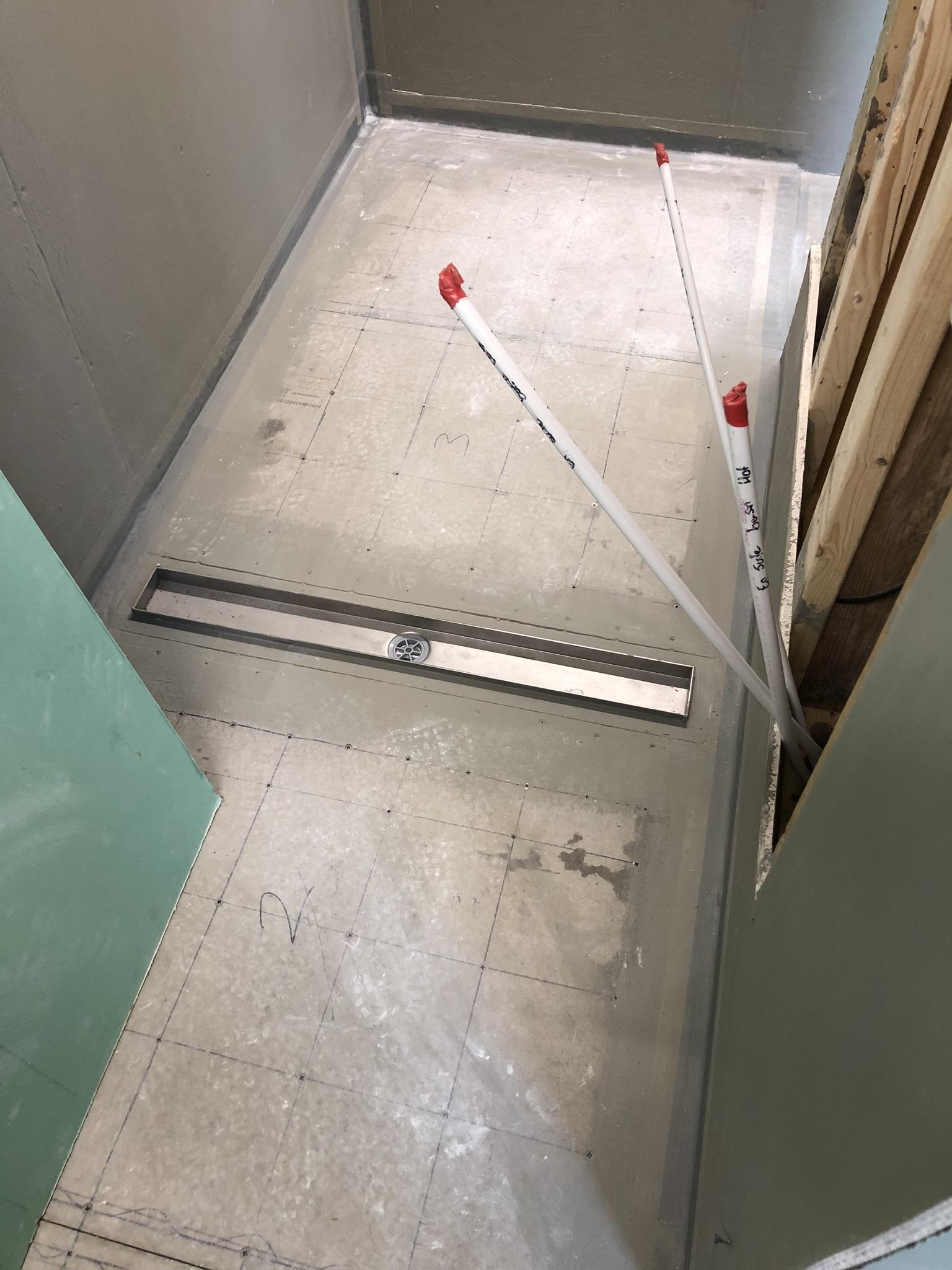
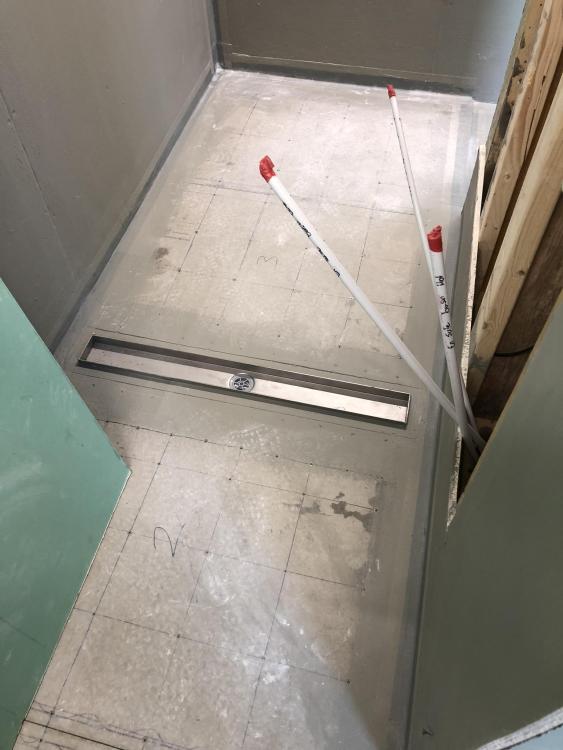
Link Theyre all much of a muchness tbh, and made from the same stuff. No need to spend mega bucks and I’ve been using these types of products for decades. Impey do a system, as do Roman etc, but that “liquid membrane” from Mapei is plenty good enough and had never let me down. Hand made this bespoke shower ‘tray’ ( 2700mm x 900mm ) falling to a centre drain. All tanked in the above product, walls and floor. 👌.
-
1930's Suspended Timber UFH options?
Nickfromwales replied to RedMango's topic in Underfloor Heating
Does the house have a basement or crawl space down below? If not, have an SE work out if you can do away with the ventilated floor void. I’d dig out, and fill with Insulaton and pour a concrete slab. Cold ventilated floors are the biggest enemy. You can have loads of insulation, but a few draughts will instantly negate it. Heating by low temp UFH has been done wrong in these types of dwellings, more things than done right ( correctly / comprehensively ). If on gas, consider nice rads, as this type of property requires a LOT of effort and cost to get up to a standard that allows low temp heating. -
Neither will ‘do well’ if getting routinely soaked / heavily wetted so just lay the P5 and tank it all if you’re expecting water to be getting to the subfloor with any frequency. The issue should be mitigated against at source, eg don’t install the bathroom with flaws. If tanking, just check with the LVT fitter about compatibility of the glue vs tanking. FYI, with LVT you should be installing a thin plywood sheet atop the P5 and using a feathering compound to fill screw holes / perfect joints before the LVT goes down or you’ll see the P5 joints through the LVT.
-
Damon….it’s time to reevaluate
-
Pressurized system not filling after draining
Nickfromwales replied to Bemak's topic in General Plumbing
You can treat the system with a leak sealer if it 1000% is NOT a primatic system. -
Fitting a stone resin shower tray on plywood
Nickfromwales replied to George 3G's topic in General Plumbing
Yup. I’d go with that. The guy is a cock for not having the Wedi drop to the floor. Terrible detail there. 610 is good stuff too. -
Pressurized system not filling after draining
Nickfromwales replied to Bemak's topic in General Plumbing
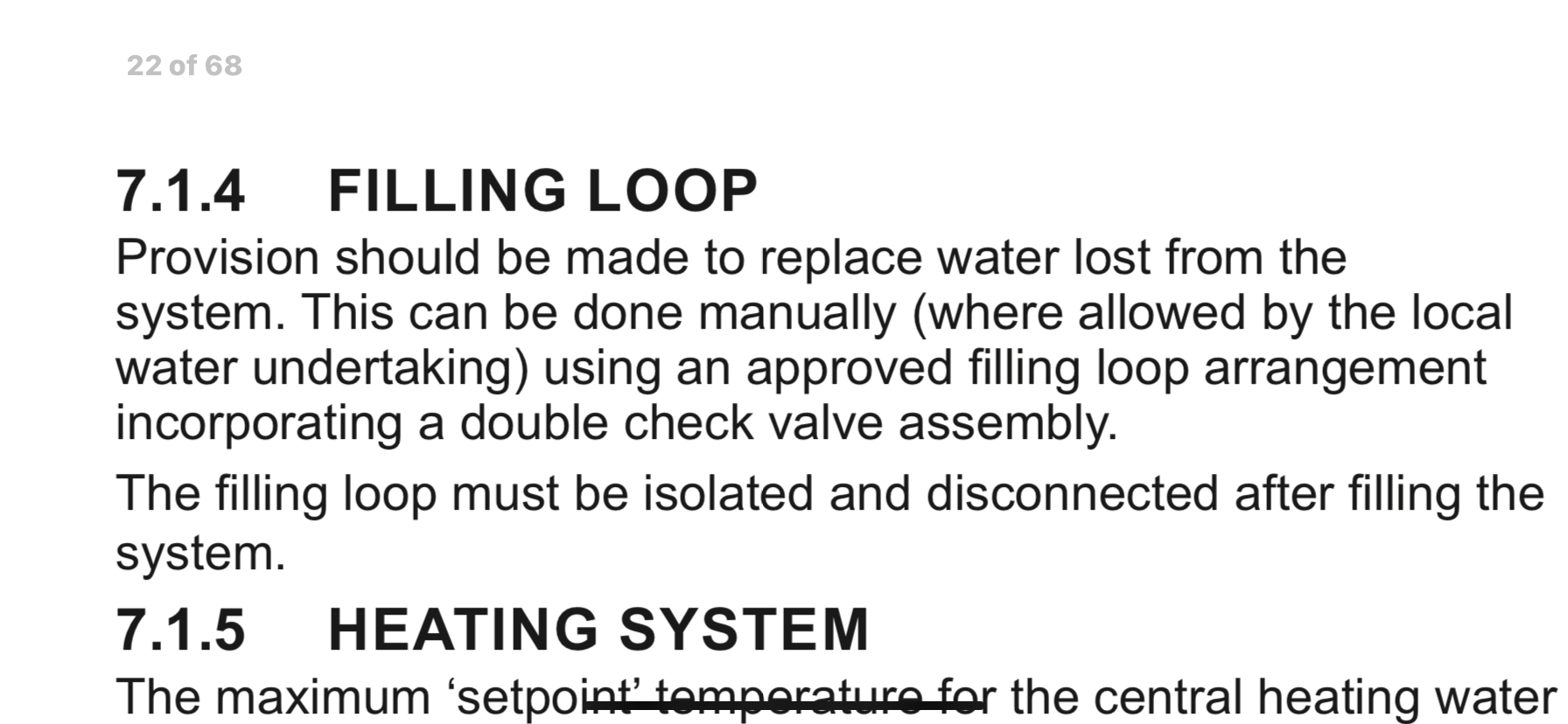
Ring GP and ask him whether you’re sealed and pressurised or not. I assume if he told you to fill / top up then it is sealed and pressurised by conversion. Tell him he’s instructed you to invalidate the warranty and you want him to come back and fit the correct 3rd party filling loop or you’ll get someone else to do it and send him the bill. -
Pressurized system not filling after draining
Nickfromwales replied to Bemak's topic in General Plumbing
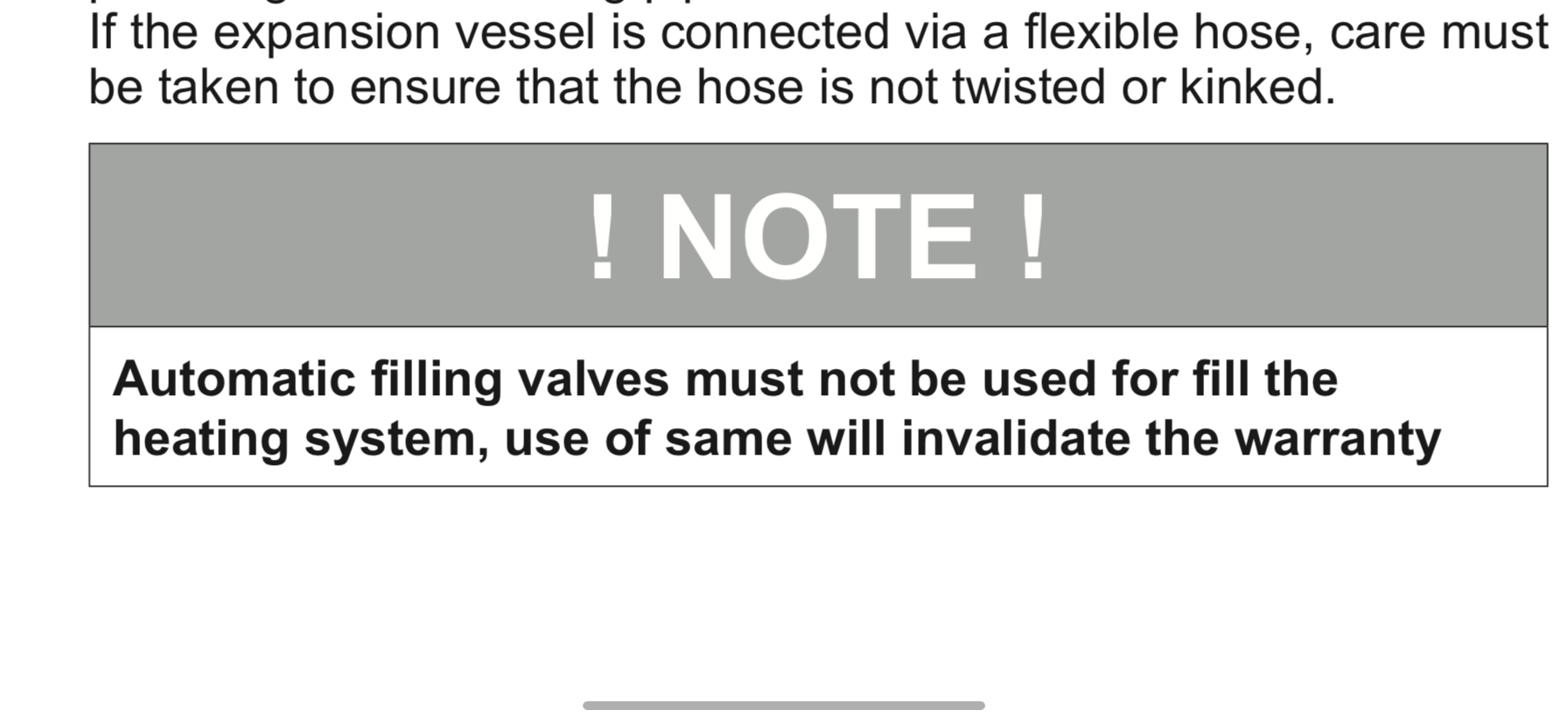
Right. Well, as above, he is a gigantic penis. It states in black and white NOT to do that. Get him to come back in person and recommission the system. The single tank ( in the attic ) could mean that your hot water tank is a bloody old ‘primatic’ cylinder which fills the heating system via a one way diaphragm inside the cylinder. We cannot rule that out. What is the highest pressure you’ve seen on the gauge? -
Pressurized system not filling after draining
Nickfromwales replied to Bemak's topic in General Plumbing
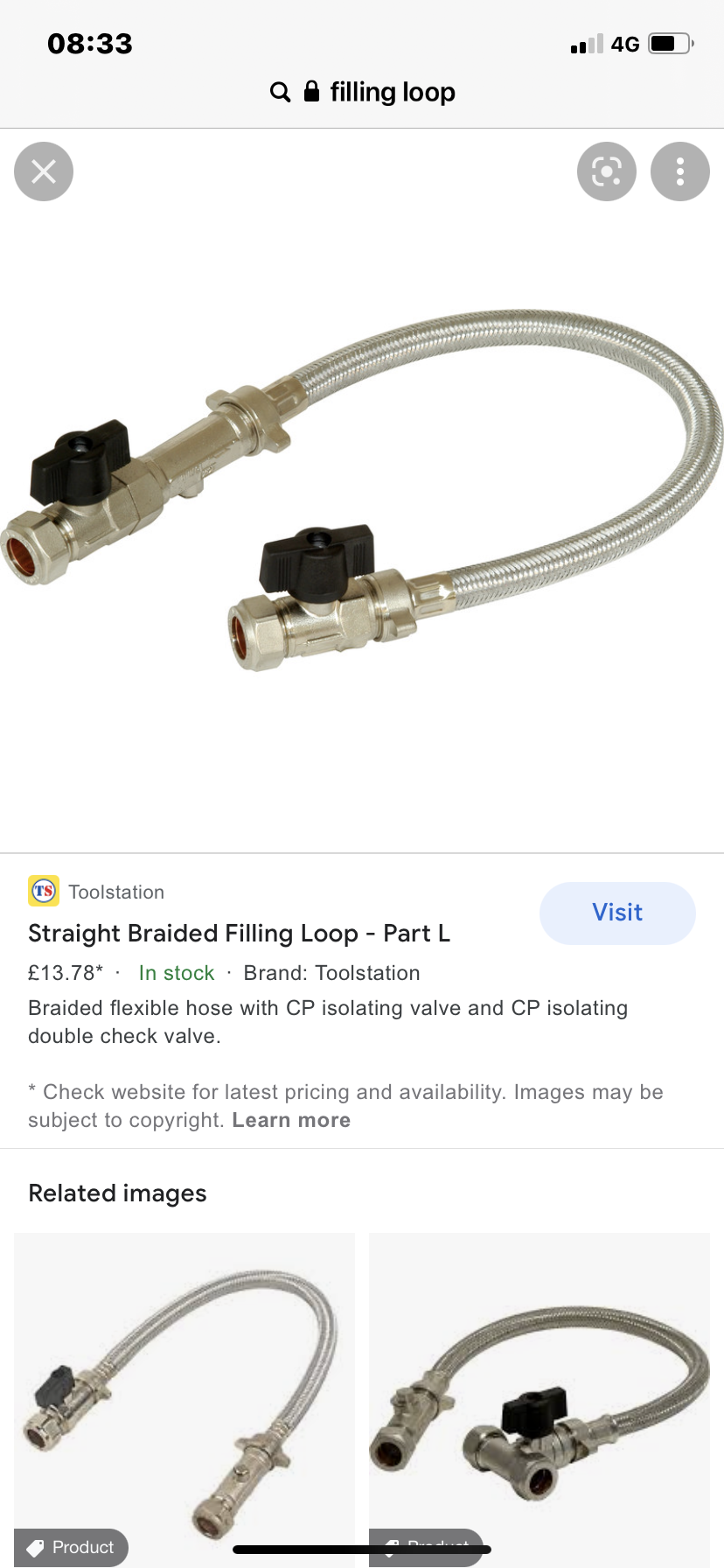
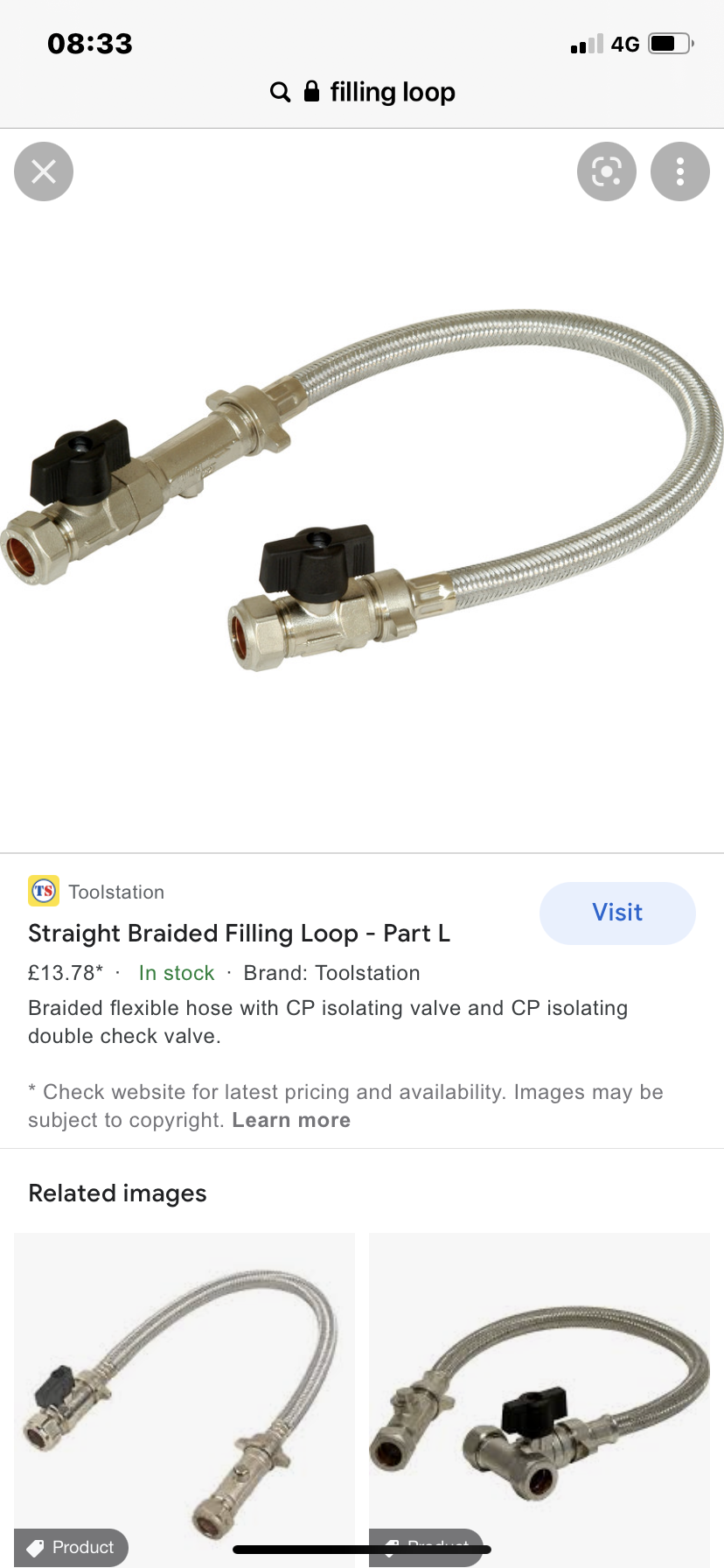
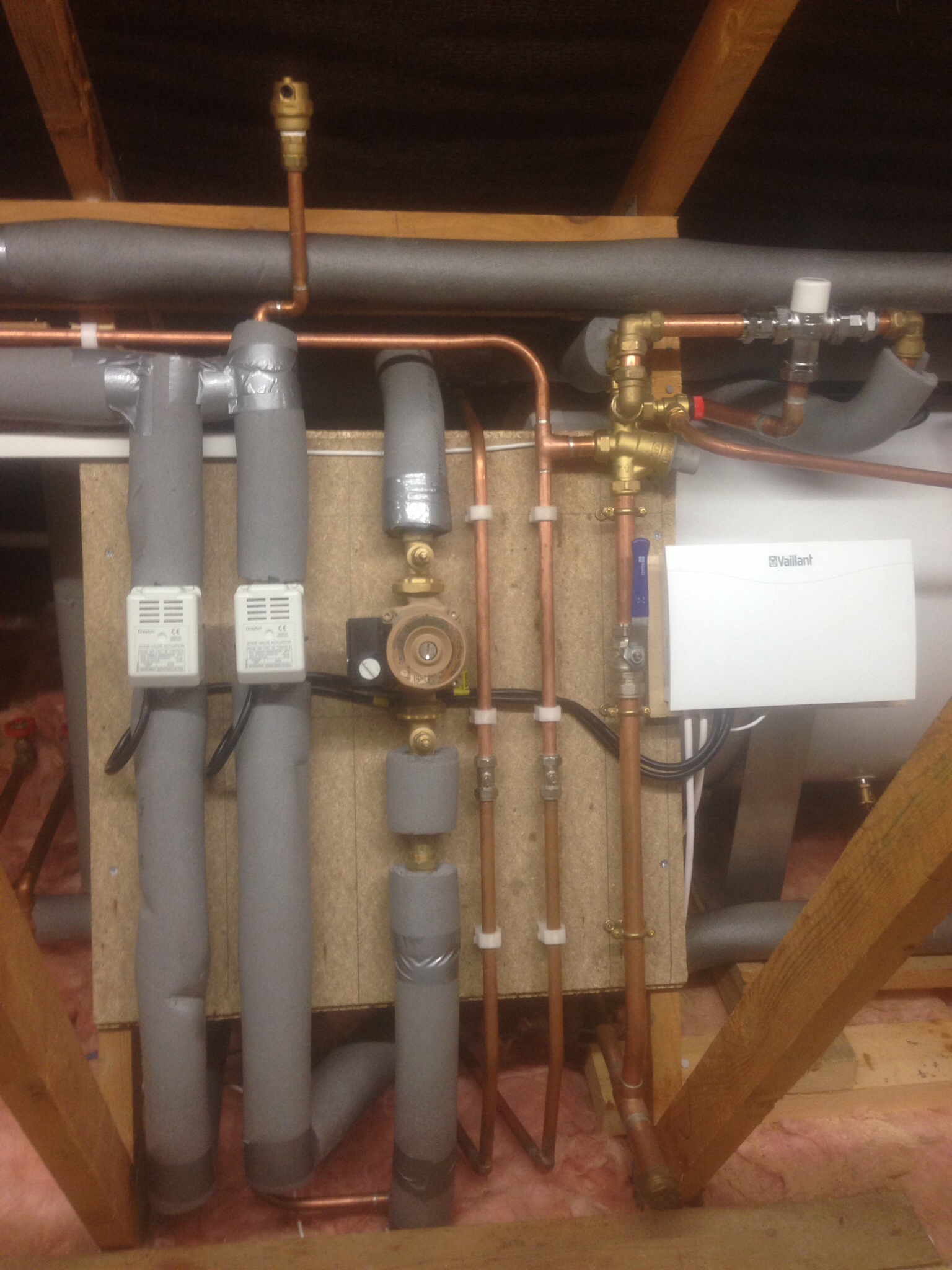
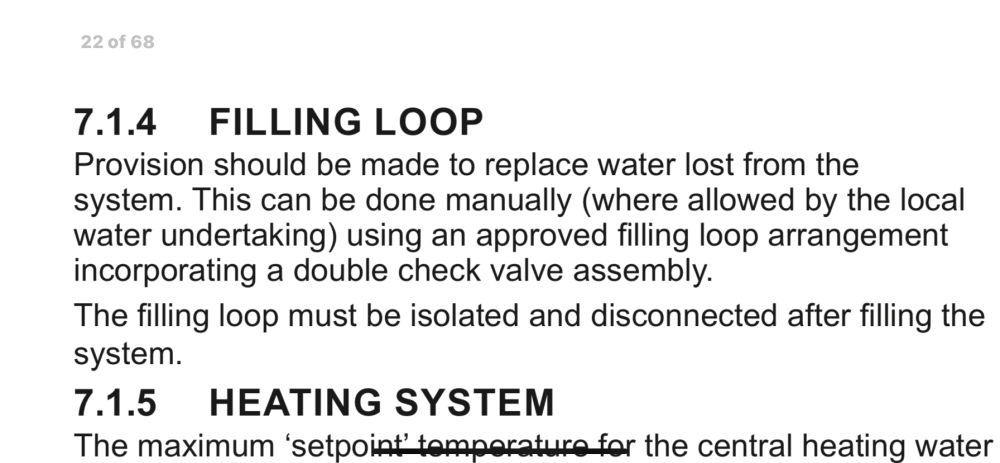
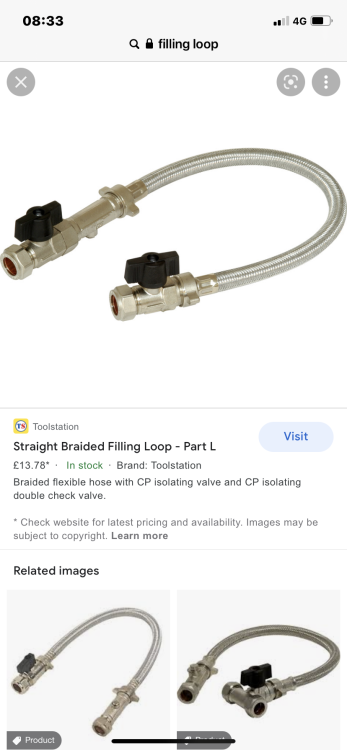
Thanks. OK, the valve you’re fiddling with…..STOP! That is an automatic filling valve which allows the system to self-maintain pressure in the system to a pre set value. Not seen one before, but I have installed these before by buying the components and forging them in. Interfering with that valve is BAD. So, You should have an external filling loop, OR your system is “open pipe” and gets filled by a header tank aka F&E ( feed and expansion ) tank usually up high or in attic space. You need to look for a silver flexible hose with 2 chrome valves either end with taps on one or both. We need to know if this is a sealed and pressurised system or not. Having the automatic fill valve and a pressure gauge does not mean that you have a pressurised system. The plumber is a cock if he didn’t fully explain all this to you. 😑🙄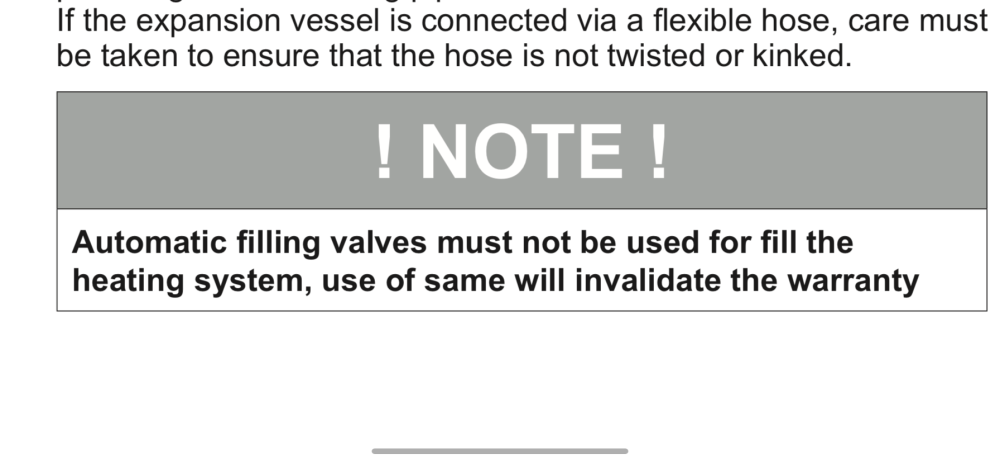
-
Pressurized system not filling after draining
Nickfromwales replied to Bemak's topic in General Plumbing
Relax, stay away from the light! Ok, which model EXACTLY do you have. I’ll google the MI’s and see wtf is going on here.