
Nickfromwales
-
Posts
31388 -
Joined
-
Last visited
-
Days Won
346
Everything posted by Nickfromwales
-
Leave it alone, and mummify it with HT neoprene insulation. Same result, less iffy behaviour. Go to pub.
-
If there’s glycol, drain down into buckets and pour it back in. And don’t let the dogs drink out of them ☠️
- 28 replies
-
- 1
-

-
- ashp
- hot water and cooling
- (and 1 more)
-
😂. “You got this” as the kids say….
- 28 replies
-
- 1
-

-
- ashp
- hot water and cooling
- (and 1 more)
-
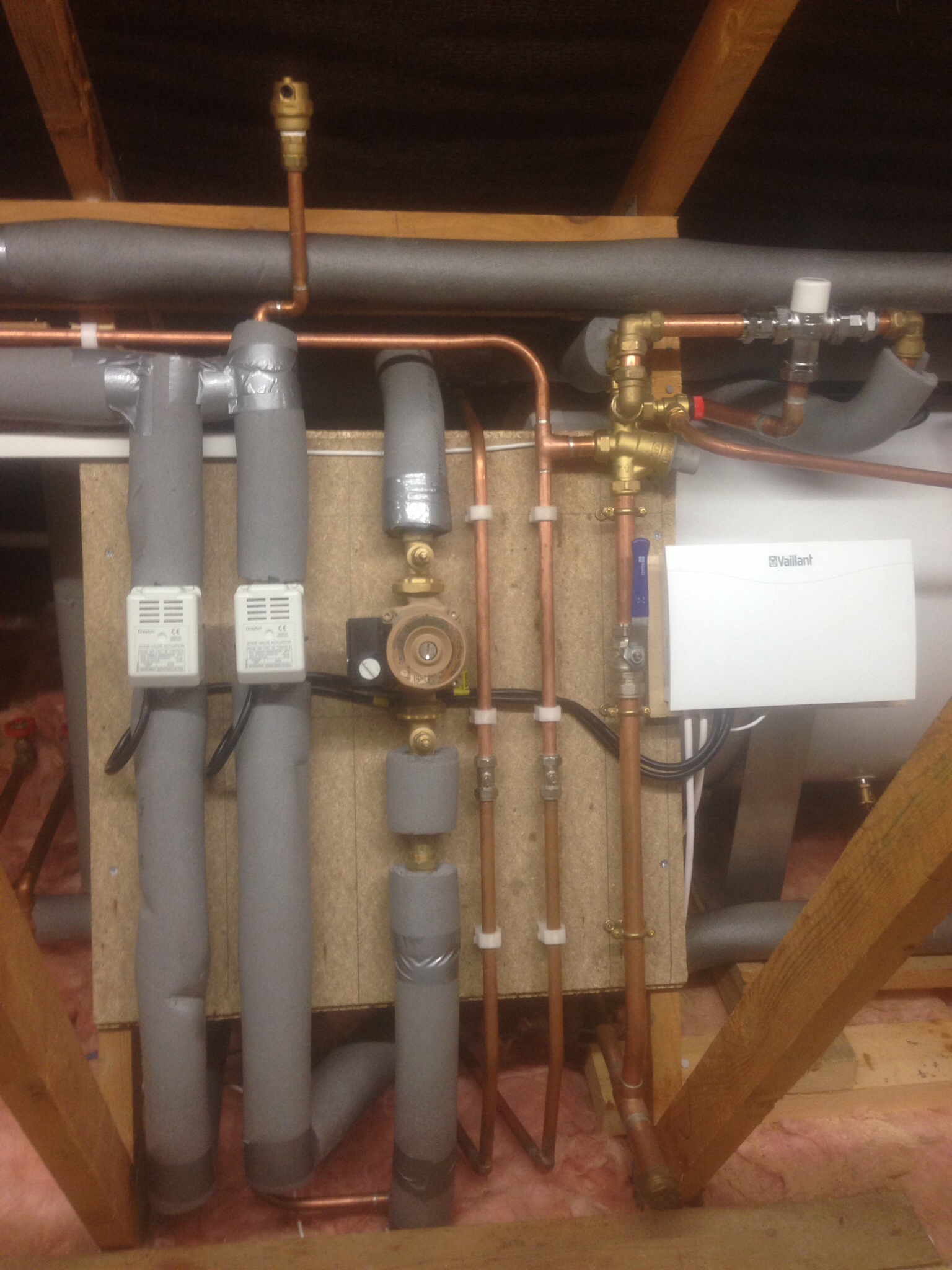
Does your ASHP cycle the heating after a bout of cooling? If not, I’d say the 3-port valve is passing when ‘closed’. Installing a 28mm anti-gravity valve may also help as that is quite an adverse arrangement in terms of mitigating against such a problem, eg it completely relies on the zone valve to stave off 100% of the reverse flow. You may benefit from a zone valve on the return of the buffer to resolve this long-term. Are there gate valves ( isolation ) on the buffer? If so, try closing the return one and see how that goes.
-
 It just gets tacked on with a few nails / screws and the plasterboard screws go through both and into the studs. An online example ( random grab ) LINK so you can check out their website to give you some ideas of the different products that are available to tackle this problem.
 -
Passivhaus window suppliers to UK - recommendations
Nickfromwales replied to markharro's topic in Windows & Glazing
I will ask again. Was defo the case with the french doors. Thanks for that. -
Passivhaus window suppliers to UK - recommendations
Nickfromwales replied to markharro's topic in Windows & Glazing
Rational windows are fully factory-bonded, which I learned recently. Smash a window ad you’re into removal / replacement of the entire unit. Anybody know if this is practiced by other manufacturers? I am told Velfac are not factory bonded units. -
Yup, and that’s why we use the string where there may be a risk of it dropping / slumping over time.
-
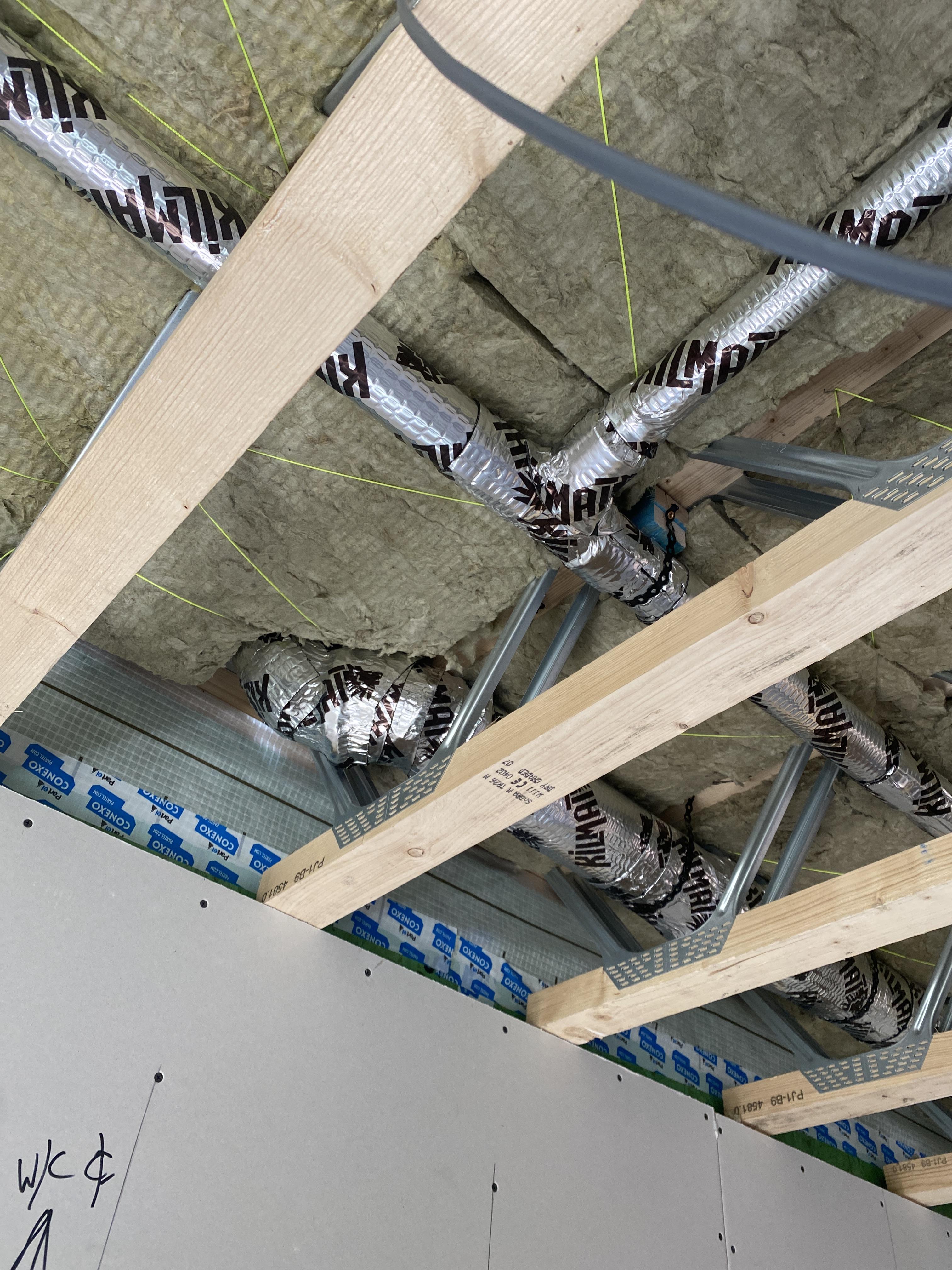
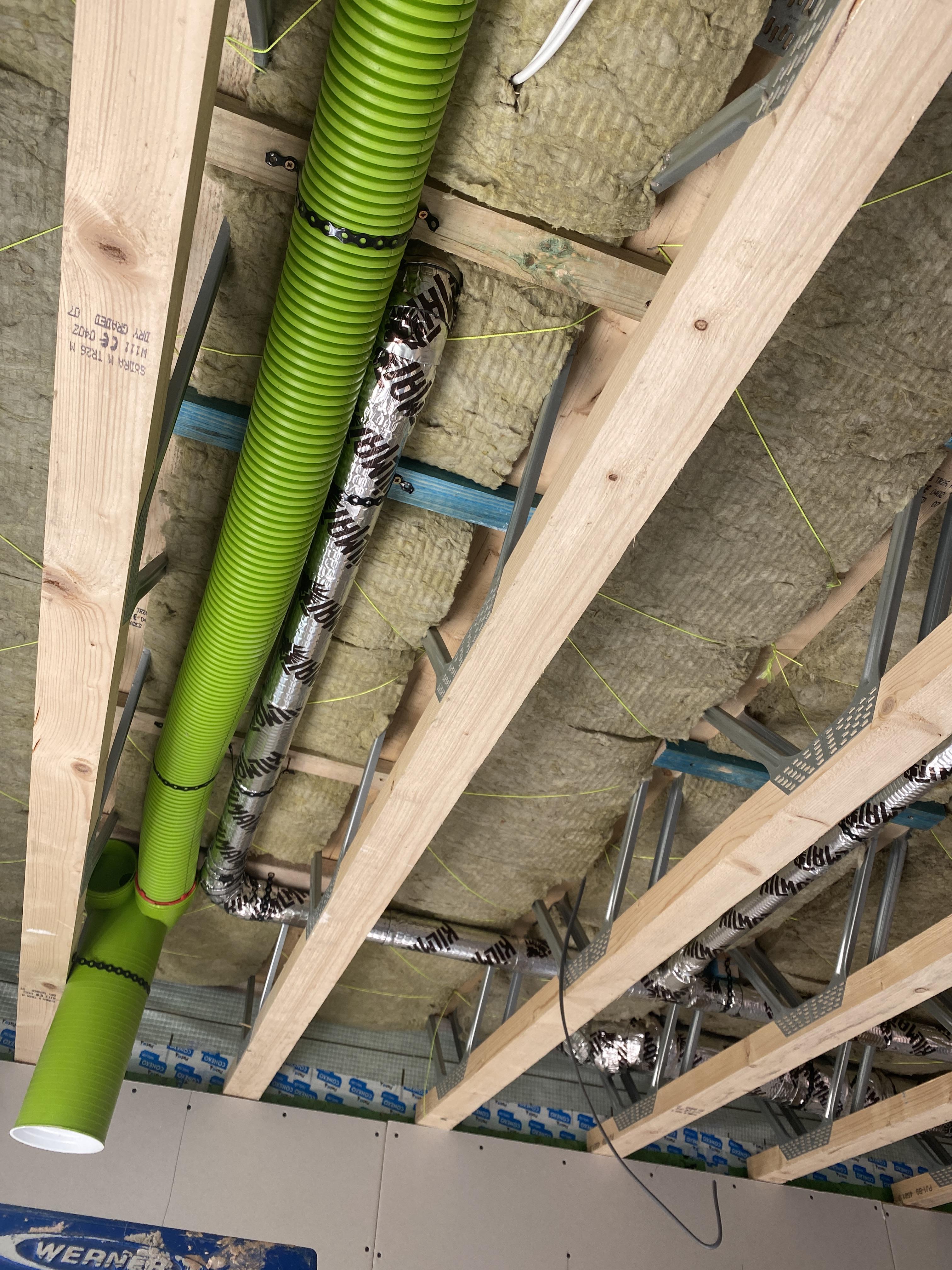
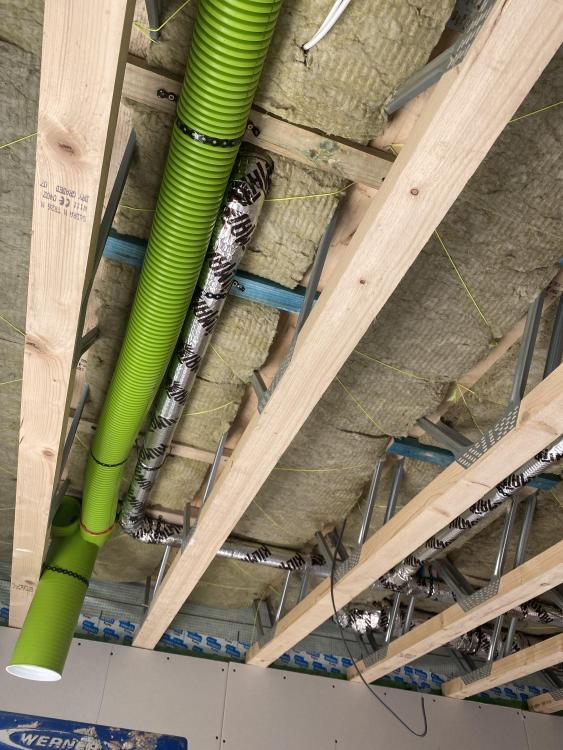
The rubber makes a huge difference. I now use Killmat on any waste pipes over ground floor bedrooms / snugs etc as it works so well with the high frequency stuff, like water splashing etc.
-
Resilient bars are defo the wrong product, so I think you’re on the right path with your thinking. There are sound block rubber matting type solutions available, and I’d install that at the 6mm thickness, or 10mm if you can manage that, eg instead of the ply.
-
Off grid requires prediction / human intervention, that will never be out of the picture. Controls are only complex when you don’t understand them. Yes, ASHP direct to heating at first, and when the slab is up to temp ( satisfied ) the ASHP can run over into the TS / buffer for absorbing every drop of sunlight via that energy multiplier. Diesel genny would obviously not lose its cooling fan, just a 3-port motorised valve to toggle between that or the TS. Heat from the genny is incidental, not routine, and it’s waste heat if not captured. Can be further diverted into a solar coil in the UVC ( if it ever runs in the summer ), as ever, each instance is unique.
-
Absolutely. Apologies for the lack of info, has been a very long and arduous day…… EPS is cheaper than shoplifting so no excuses for not achieving as you suggest, eg 300mm all round aka passive raft / similar ethos.
-
You just wouldn’t go for a TS with an ASHP for both heating and DHW as the CoP would be out the window trying to get the stored temp up high enough to producer DHW. ASHP option needs to be at lowest possible temps for maximum CoP, so the PV in winter ( sub 25% of the same kWp in the summer ) remains effective. For every 1kWp of PV you should be aiming to produce at least 3kWh of heat energy, ergo a 4kWp array should be worth 12kWh of heat energy ( so installing a minimum of 12kWp of PV should get you, albeit conservatively, through a winter ) I would look to the slab as my thermal store, and incorporate a huge amount of thermal energy buffering at very low temperature. DHW should be via an UVC without a shadow of a doubt. Heating and DHW need to be segregated in an off-grid design IMHO. Generator for winter deficit should be a water-cooled unit, with that waste heat fed into a second set of UFH coils, or, if room for it, fed into a buffer cylinder that is shared between the ASHP and the generator. The buffer should really be a huge cylinder ( 1000L+ ) for bridging grey days where there is little ‘spare’ solar revenue. I aim to be ‘off-grid’ by next simmer, but grid tied for reliability / fail-safe.
-
Will I be eligible for ASHP Grant?
Nickfromwales replied to richo106's topic in Air Source Heat Pumps (ASHP)
Could I ask how you are eligible for this, as a new build? -
If it’s just you, the plot, and a machine…… get stuck in Just keep doing a head-count of wife and kids. There would be very little excuse needed for me to hire a BFO machine and get cracking, and it’s got to be therapeutic too. Crack on, it’s not as iffy as it looks, just find out where the services are and go slow there.
-
+1 You‘d fit a thermostatic bypass aka Laddomat arrangement which lets the heat source recirculate back over until the device is up to a set temp. Only then does the heated water get sent to the store You may need a plumber who better understands this system, as that is quite basic knowledge in the world of wood-burning for heating. Eg; https://www.ebay.co.uk/itm/Laddomat-11-100-for-wood-boilers-up-to-80kw-Biomass-Wood-heating-Burning-/163652025906?mkcid=16&mkevt=1&_trksid=p2349624.m46890.l6249&mkrid=710-127635-2958-0 Water will heat very quickly from the WBS, and that will likely not absorb all of the heat created by a burn, so beware of your thoughts there. If you’re going to fit an ASHP ( I’d defo not install a GSHP unless it’s a huge property ) then you’ll get an UVC anyways for DHW. Do away with the thoughts of getting DHW from the WBS then, as you sound like you’re not true “off-griddy” folk and want some life away from cutting, storing, drying and conveying wood to burn? If using wood for winter heating, you should budget about 1/2 a wheelbarrow a day, possibly 3/4, so would you be able to source and process that amount anyways? For DHW and heating you could just do away with LPG / oil auxiliary heating and just put all that money into PV and batteries to run the ASHP for heating snd hot water. Is the slab down with UFH pipes cast in? Is it a decent chunk where you can load shift heat energy into it?
-
Hi. Which manifold do you have? Not very good failure rate at all!! I have UFH manifolds that I fitted for clients which are coming up to their 20th year anniversary's and zero issue / failure / complaint.
-
100x100 porcelain tiles, 6mm thickness
Nickfromwales replied to LinearPancakes's topic in Floor Tiles & Tiling
If they are buttered before being laid onto 100% solid notched bed ( of adhesive ) then they will be as solid as lots of small 6mm thick tiles. 6mm is a thin tile, so think twice before going for that tbh. 6mm tiles on a solid bed of adhesive will be safe to lay, but if there are any voids under them, where the adhesive is not continuous, those areas will be where any cracks ( point impact damage ) will occur. -
Just look at what happens when some cock buries a disposable BBQ on the beach
-
I would fit one immediately outside the galv housing, as I do with all external oil installs. As you state, there is no immediately apparent requirement for fire valves for an external boiler, but a bit of sense must prevail when the boiler is attached to the outside wall of a residential dwelling It's not meant to be pretty, it's there to stop a catastrophic fire.
-
This is what I do with every slab penetrations design, as it's just sooo much easier to not have smaller bore waste pipes traversing the walls / cutting units etc.
-
Led 2 way lighting for vaulted ceiling and stairs
Nickfromwales replied to James94's topic in Lighting
That sucks. Pull them into line early on, and remind them that you’re the customer. If you don’t gel with them, it’s time to get rid. For control, I’d go with something dead simple and robust, like Phillips Hue. You can put one of these…. https://www.philips-hue.com/en-gb/p/hue-tap-switch/8719514440999?origin=p70750597731&gclid=CjwKCAjwwo-WBhAMEiwAV4dybbII5hoxKPkNnTbYT7B8JOgZ_6bYAIChcNuD258EG2g72nzzeUJsshoCMJ4QAvD_BwE&gclsrc=aw.ds at the top and bottom of the stairs, or anywhere else, are fully wireless and can do scenes and dimming plus basic on / off. Plug n play, job done. As far as getting cables around, it’ll be a simple job of drilling holes and fishing cables here / there. A thin ‘ribbon’ type cable will be ample, but will all likely need soldering and gear-shrinking. A good electrician should do this in his sleep, but you may also do well to check with the staircase manufacturers to see where it’s best to do this. May save a lot of unnecessary labour / time if you snd the sparky have some help / insight -
Lighting Design - Vaulted Ceilings
Nickfromwales replied to bob the builder 2's topic in New House & Self Build Design
Yup. I bet there is little to no ‘glare’ off those. Nice lights btw. Less of a PITA to fit compared to the sink-in plaster lights, but they are worth the extra effort imho. -
Lighting Design - Vaulted Ceilings
Nickfromwales replied to bob the builder 2's topic in New House & Self Build Design
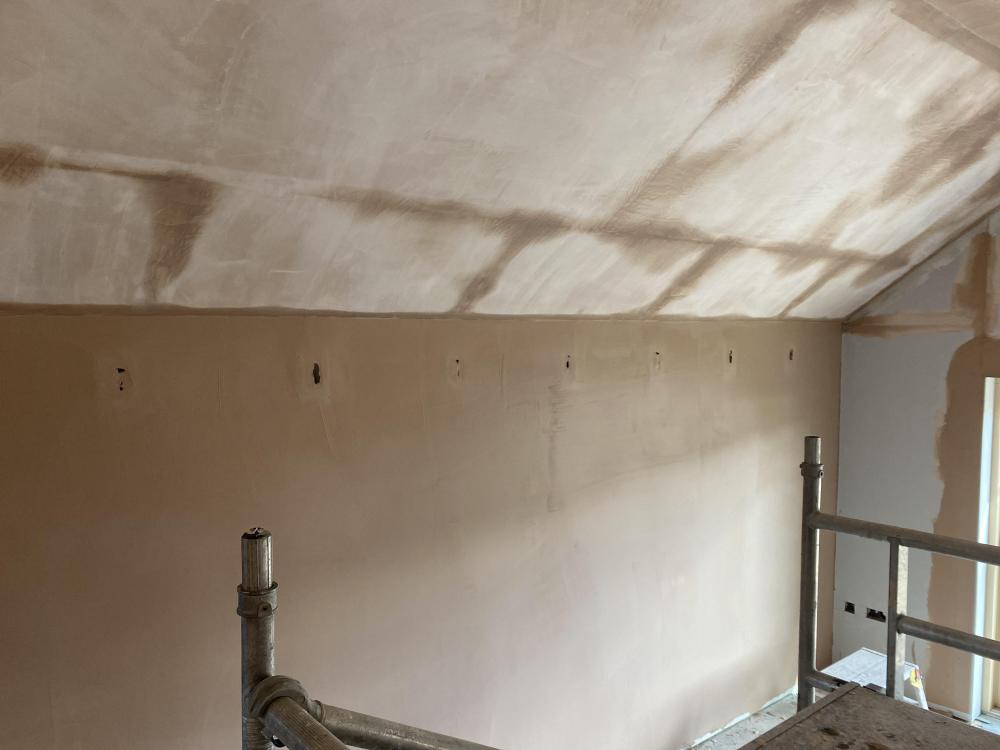
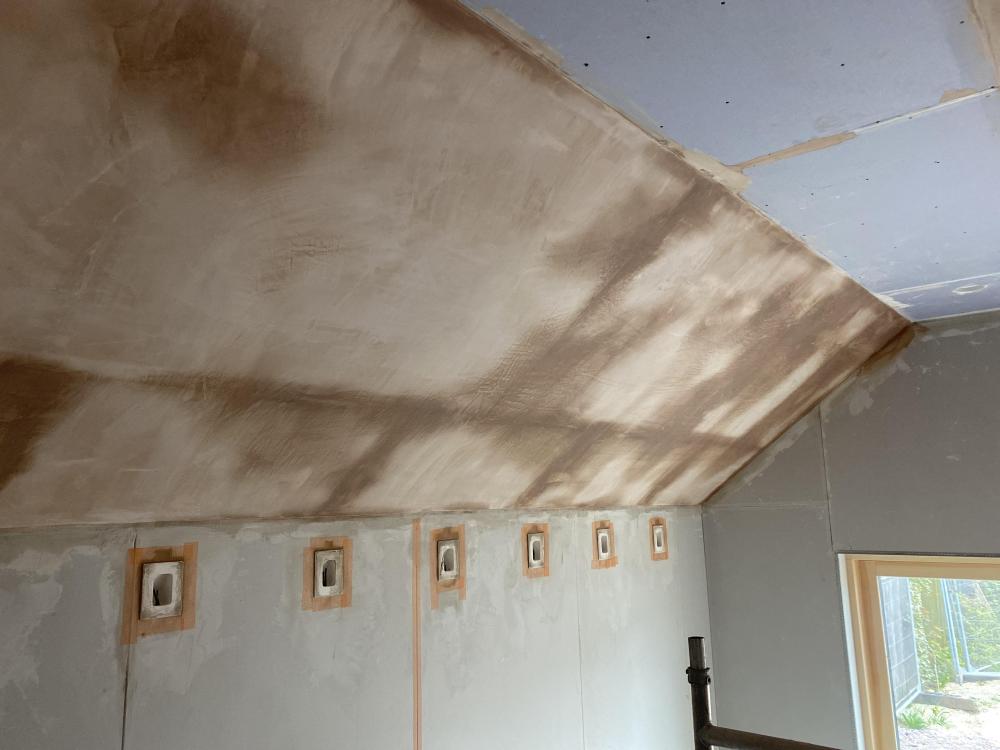
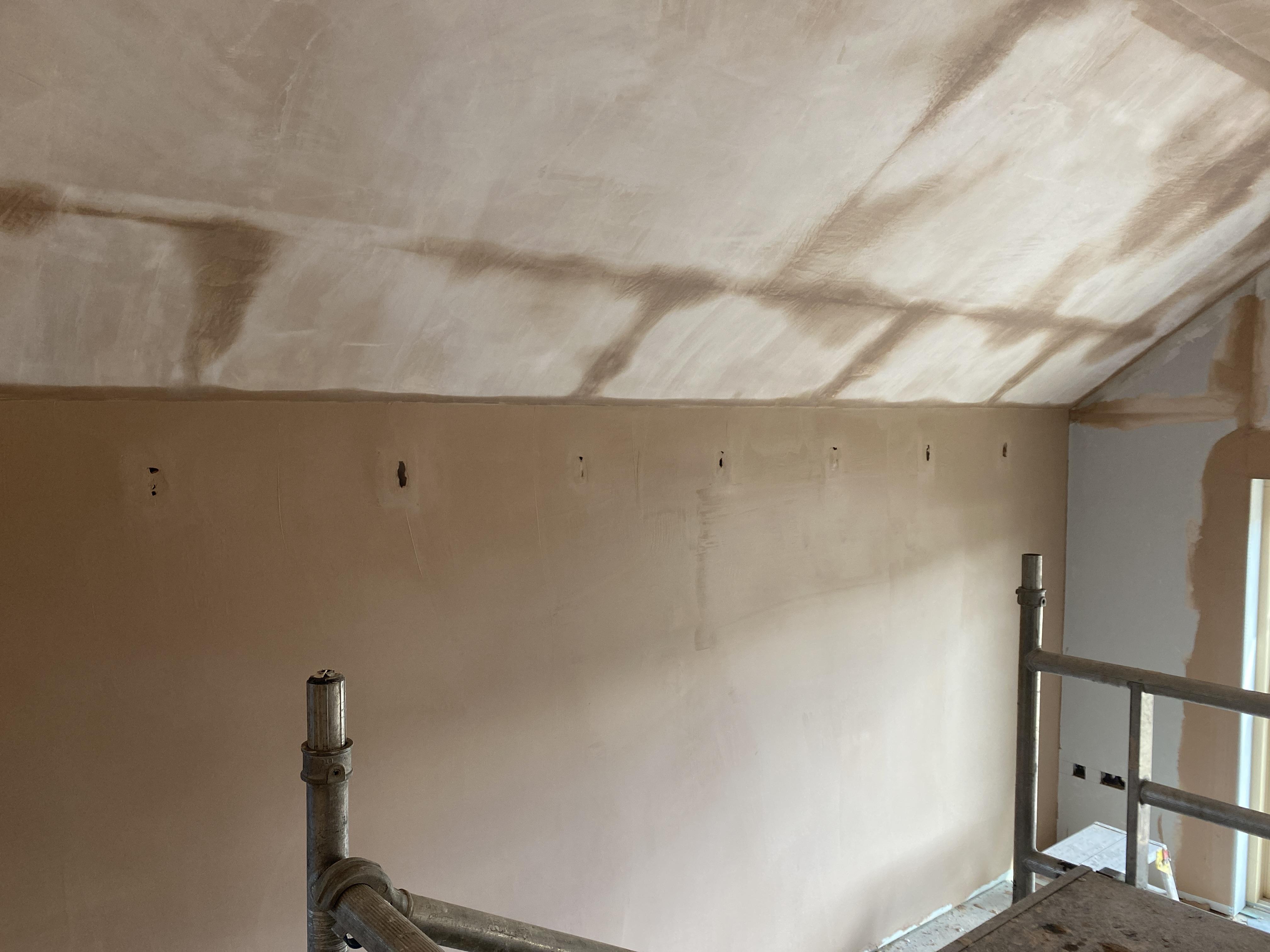
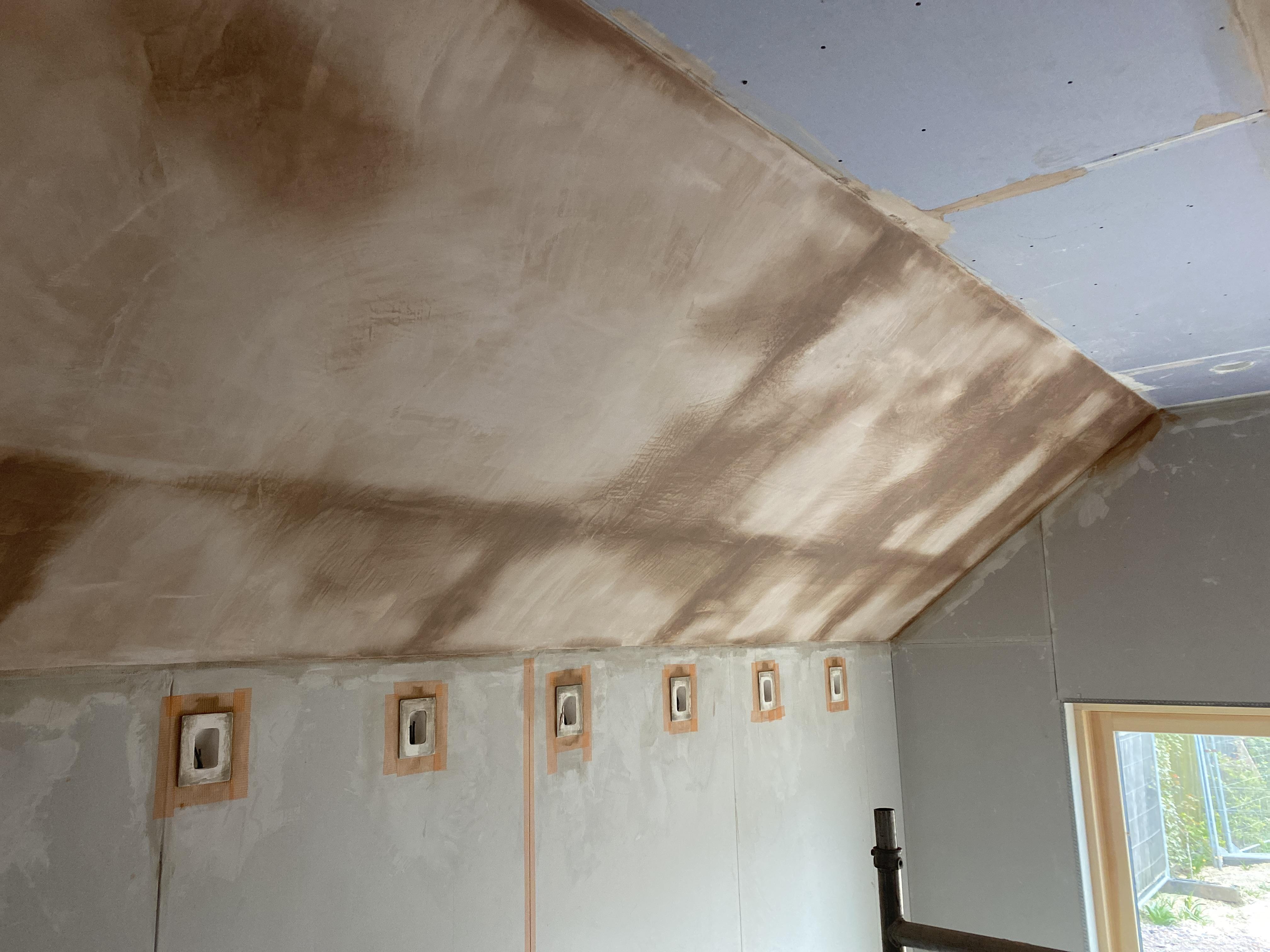
These have the lamps in the base and cast a nice soft spread up the ceiling. OCD on centres, height etc is essential so the ‘fans’ of light are all the same on the vaulted areas 👍.