
Nickfromwales
-
Posts
31387 -
Joined
-
Last visited
-
Days Won
346
Everything posted by Nickfromwales
-
Thought we’d already spoken about removing the mirrors?
-
So, another evening grooming men then?
-
Times must have changed! Last time I left there I was spitting feathers.
-
Jewson are ridiculous for pricing. I’ve used them twice in 20 years.
-
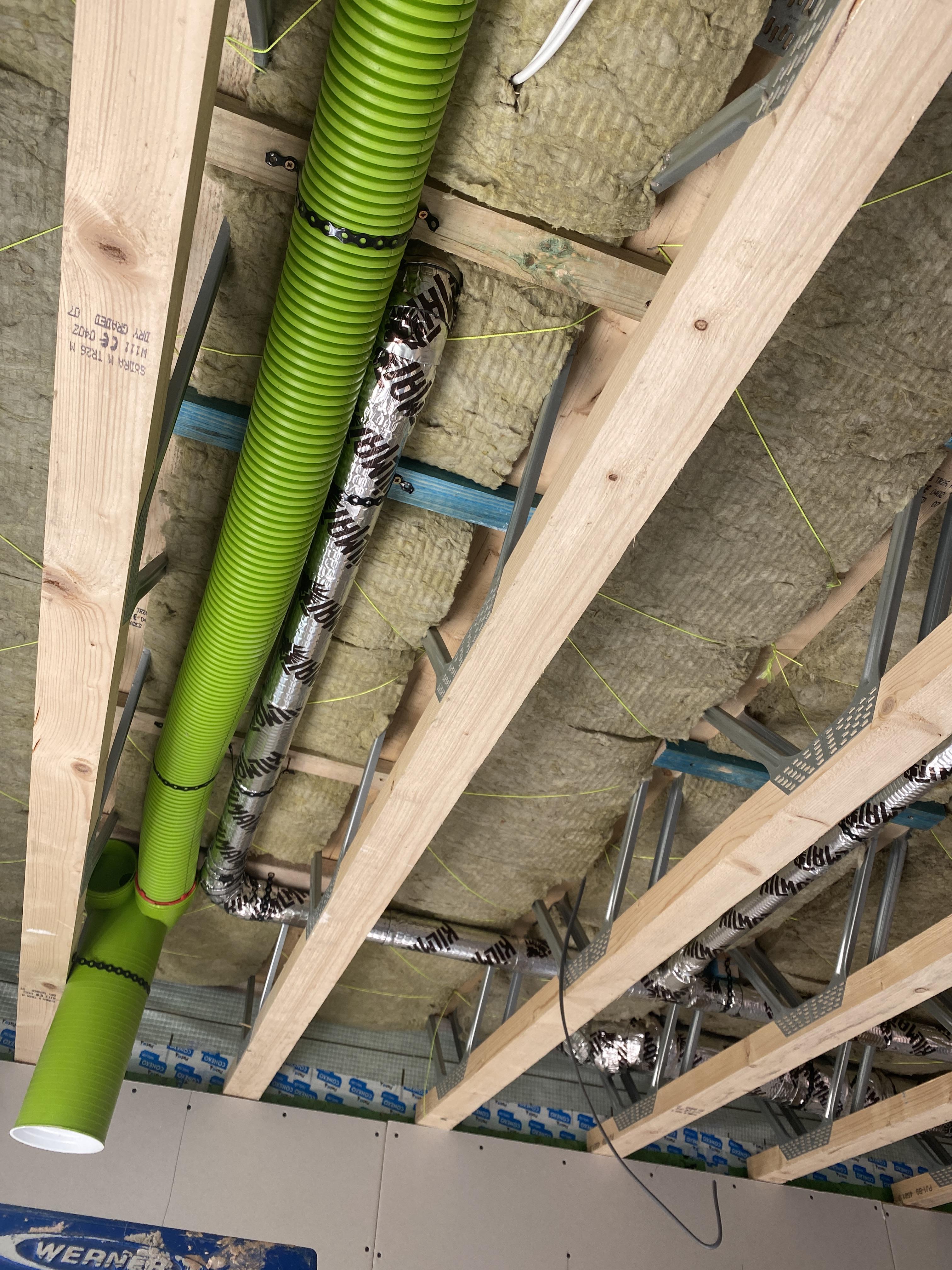
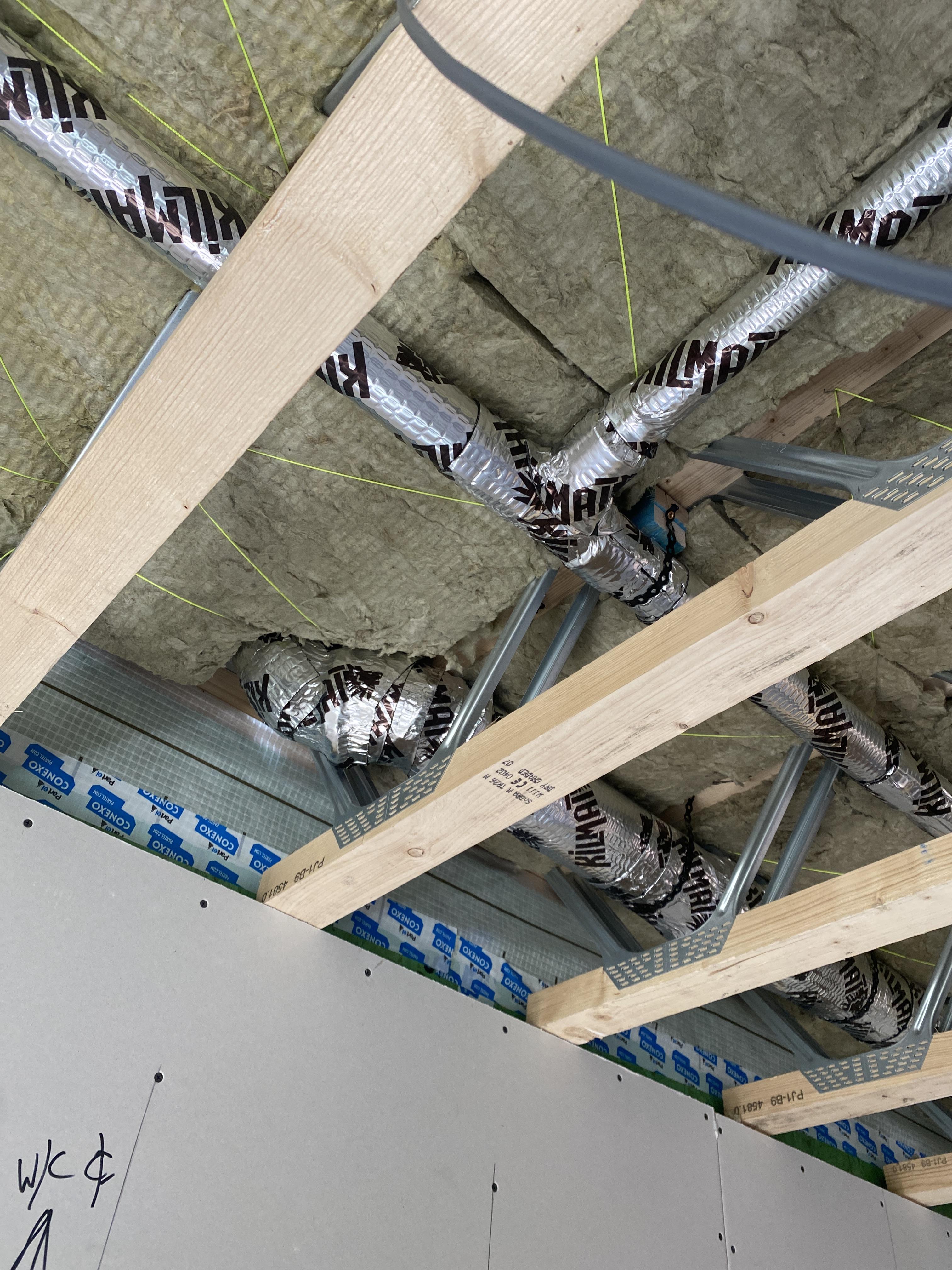
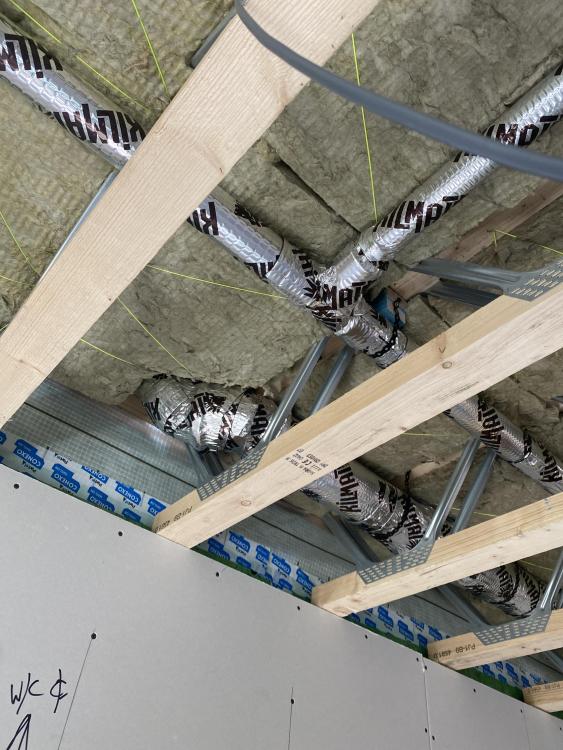
The weight in a blocked up horizontal pipe run is crazy. The way we used to install in anything other than domestic short(er) runs was to fit a metal bracket protruding horizontally, with the pipe suspended underneath, eg so there was little to no shear forces on the fixings. Agree with getting it fixed well in a domestic setting, but I’ve never done anything other than plastic coated all-round band ( horizontal runs through posi-joists ) or plastic clips for vertical. All-round band is a joy as you just tighten / loosen the screws to raise / lower the pipe and set the fall. Tres bien. The rule for frequency of fixings is dictated by whether or not its a solid continuous piece of pipe, or broken up with joints. A rising branch, for eg, would get a fixing immediately either side of it, and then around every 800mm, or less if you come to another fitting sooner. Remember not to tighten a fixing where a fitting is captive, eg the pipe and fitting are not free to move together, as that can cause the rubber seal in the fitting at the bottom to be under very little pressure, and for it to be badly compressed at the top. A situation which can cause a weeping joint at the lower ‘relaxed’ part of the seal. If the pipe enters a captive fitting, put the band of that fitting and not the pipe immediately prior to it. For sound deadening; Kilmat deals with a lot of the higher frequency stuff, but as that lot was over a bedroom, I had my guys install an additional layer of acoustic insulation between the joists at plasterboard level, adding more where the spotlights are to go.
-
I am proceeding to site on foot…….
-
A 50mm is nowhere near as big as I thought it would be. 35mm only marginally bigger than 25mm tbh.
-
 There is the money statement. Optimal. Too many folk looking to put a crown on an unicorn imho, and things will work, life will go on, just not at the 100th percentile. It’s perfectly acceptable and with merit to strive for the 100th, but at what cost? And I mean that literally. Installers will give you practical advice based on results, manufacturers will offer 2 free unicorns with each system purchased, and you, without divine intervention, are supposed to decide what / which is best. So; The best place to be, is, on this impartial forum, where the good, bad and ugly are aired and those who have installed and have experience provide their “watrs ’n ’all” feedback. A lot harp on about their opinions about vents on opposing elevations, but not many recount where they both reside on the same adverse elevation…..but it was fine. Pinch of salt time
 -
All you have to do is imagine yourself as the mouse. Where Mickey can invade, rodent barrier. Simples. You can keep the little blighters out, but it requires effort an attention to detail. Same ethos for airtightness, where you study where a ‘molecule of air’ would travel to infiltrate your airtightness measures. It’s enough to make you lose a day just thinking about it, but try explaining this to a builder and he will have you certified. “They” just don’t get it…. I do try educating, but it’s a bloody uphill struggle.
-
Which is why you’re still a member of this forum We’ve sworn a pact to keep you from fecking yourself up….. Admittedly it didn’t appear robust with the grouting….
-
Long time to heat up 250 liters unvented cylinder?
Nickfromwales replied to Question's topic in Boilers & Hot Water Tanks
Interrupting the gas supply means a new gas cert MUST be issued!! An appliance moved today should have a printed CO2 PPM ticket from the flue gas analyser to prove it’s burning clean and efficiently. Ask why this has not been done. What they wrote back in the day would have been rehearsed and not measured btw Standard practice back then sadly. Why is this boiler connected to the solar coil?? That is a direct deviation from the MI’s ( manufacturers installation instructions ). The solar coil, drum roll please, is for the solar to be connected to!! That’s why the recovery time is so huge, you’re heating via the wrong coil What is connected to the boiler coil? Get this is changed and then you’ll see the difference. The info you quote for 30 mins reheat ( recovery ) time will not be by anyone using the wrong coil. You also need to check that the flow temp is high enough to comply with he MI’s. Sounds like your plumber is of questionable pedigree if they’ve left this install this way and not done you a new gas cert. BTW, you’re probably not currently insured with your building insurance if this is not in your possession. -
Go with what your electrician recommends, sounds like he’s belt and braces
-
That’s the kick-ass stuff I use to do swimming pool setups. You have learned well, my young crapprentice, and hopefully it’ll only be the knowledge that sticks
-
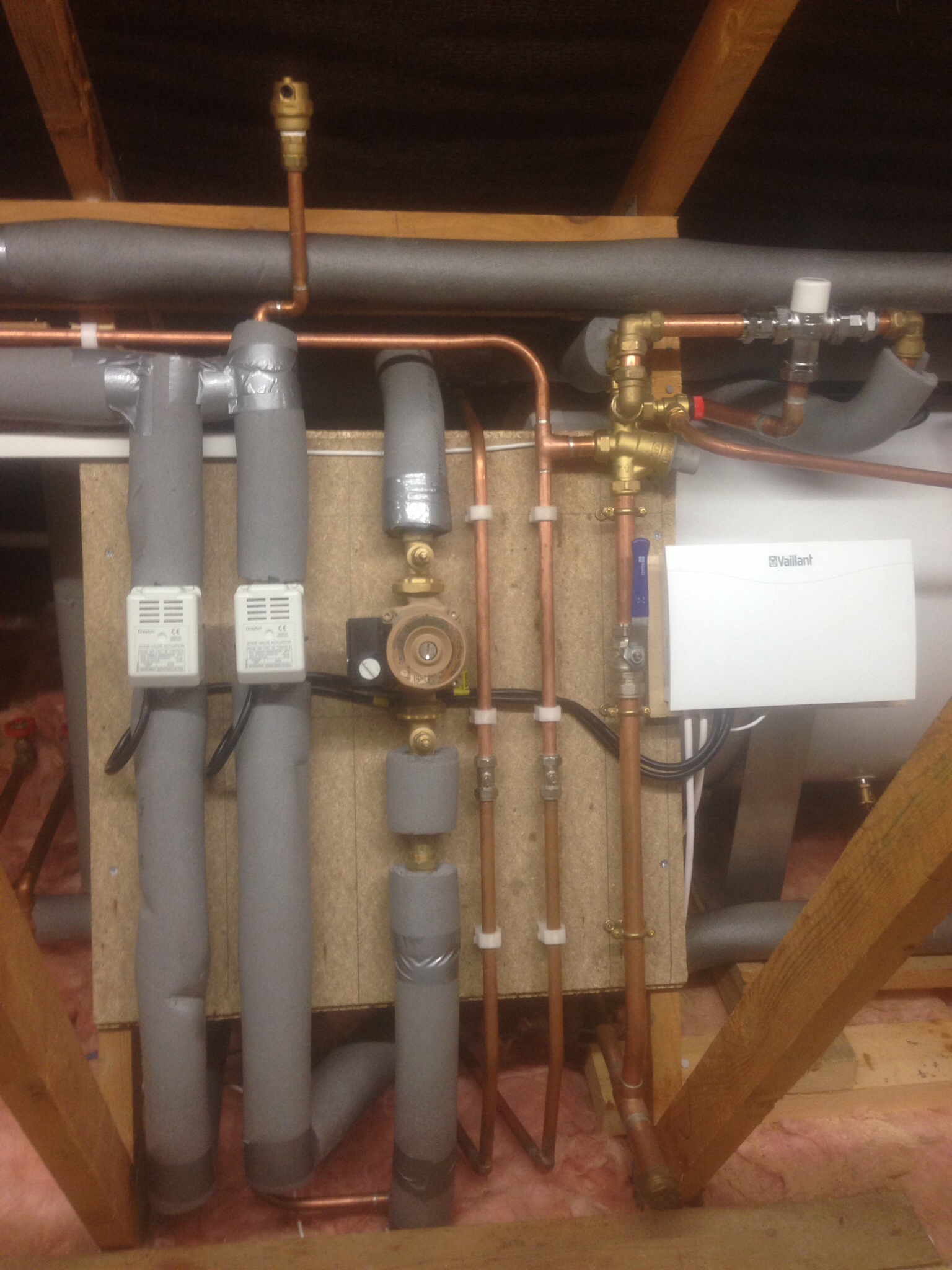
There are usually 2 blending / pump sets for each floor, so you can select the flow temp per floor ( heat crises etc ). Different emitters in the same house ( slab downstairs and aluminium plates upstairs for eg ) perform very differently so you need that function to set and commission correctly. What you have is the most basic and tbh crude system available today, which, looking by the age of the installation, is exactly what I would expect to see from an UFH install of ‘yesteryear’. The boiler will cycle up and down and never give the exact same flow temp, and that will become even more coarse / erratic as the zones start to switch of flow and the heat load becomes very low. The hysteresis of the boiler stat is not at all ideal to be used as a master control for managing the injection ( flow into the floor ) temp and I would certainly be upgrading all this if it was in a house I adopted. If this is your long term residence then I would make some improvements / updates to make the system more refined. For eg, the black manual valve that you’re using for governing the flow temp at source is wholly unreliable as it uses the differential of flow and return. Plus the yo-yo boiler flow temp to dictate its sum output, and that will be less than reliable compared to a thermostatic blending valve like the Reliance one posted earlier ( red control knob ). Two UFH manifolds sharing the output of one primary circulation pump will also suffer from imbalance of demand, as it is dynamic, and will mean certain higher resistance loops ( longer runs ) will become neglected in favour of shorter loops ( path of least resistance ) so not having pumps and blending valves on each manifold incurs a host of problems. I’ve been doing these types of installs for over 25 years now, so have a bit of an idea of what to do to improve things, if that’s what you’d like to do? Failing that, you can buy pipes stats on eBay for the price of a coffee, and stare at them as often as you like
-
@Dreadnaught These are the ones I use / specify now. Just had 4 of the 500mm ones fitted on my current clients project, quite a big house so a double-unit install, and the guys from CVC Systems persevered to get them in, in what can be described as a “not large” plant space under the second stairwell. Didn’t help that I also spec’d a Brink Air Comfort for heating / cooling of the open spaces and bedrooms which took up the last few mm’s of space available . I’m sure the installers will forgive me over time……
-
Yup. Get it ordered. That’s an order.
-
1st Floor Wet Room - Timber Frame
Nickfromwales replied to bob the builder 2's topic in General Plumbing
FYI. I had another layer of acoustic insulation installed between the posi joists before the plasterboard went on, so 150mm total between the 2 layers. For your instance, there likely won’t be much sound escaping ‘sideways’ so best focus on where the issue actually resides. -
1st Floor Wet Room - Timber Frame
Nickfromwales replied to bob the builder 2's topic in General Plumbing
The majority of the ‘nuisance’ sound / noise will be from the water hitting the tray / floor. Acoustic insulation under there is a good idea, plus any discharge pipework can be sound deadened if over a bedroom. Current clients new build, where I used Killmat over the waste and soil pipes. Takes a lot of the high frequency noise ( sound of water tricking ) away. As I’m doing a turnkey whole of house service I know I’ll be on the hook for any “issues”, so I’ve gone belt and 2 braces on the 1st floor bathrooms and the music / piano room to keep things as ‘quiet’ as possible. 🤞
-
Aim the pipe at ‘er next door and shout “fire in the hole”.
-
Nope. Look for a longer section of 50mm silicone rubber hose and double up on the jubilee clips. Make it so, No.2. 👊
-
Just tighten them until you feel you aren’t really pushing or pulling on the spanner. A larger spanner will offer more torque so go with your gut feeling and pinch up afterwards if necessary. I just put a bit of spit on the rubbers of the inserts tbh.
-
https://www.builderdepot.co.uk/flexseal-50mm-58mm-flexible-straight-coupling?gclid=CjwKCAjwhNWZBhB_EiwAPzlhNkWMZAgml2fWx4zggaPrdhIFWmBdJI4qMMdRpPG2ATdI0qk5WPq4FBoC85oQAvD_BwE
-
I think I’d want a rubber coupler with say 2x stainless jubilee clips either side to do that transition. If that spigot ever shears you’re up………ahem………💩 creek.
-
Do they say ABS vs PVC? Or PVC? I’ve fitted a few swimming pools, and the vibration / pump pressure has commanded ABS. What pressure does the pump operator at?
-
1st Floor Wet Room - Timber Frame
Nickfromwales replied to bob the builder 2's topic in General Plumbing
They wont be “sunken” unless you have specified the posi-joists accordingly. Removing the deck board 22-24mm typical for P5 or Egger, and fitting an insert wetroom former will bring you flush to the existing floor. If you do not use the Waterguard system then you’ll need a 6mm ply binder to tile onto. Just remember to fit the same thickness ply under the former to raise it up to suit