Temp
-
Posts
10684 -
Joined
-
Last visited
-
Days Won
43
Everything posted by Temp
-
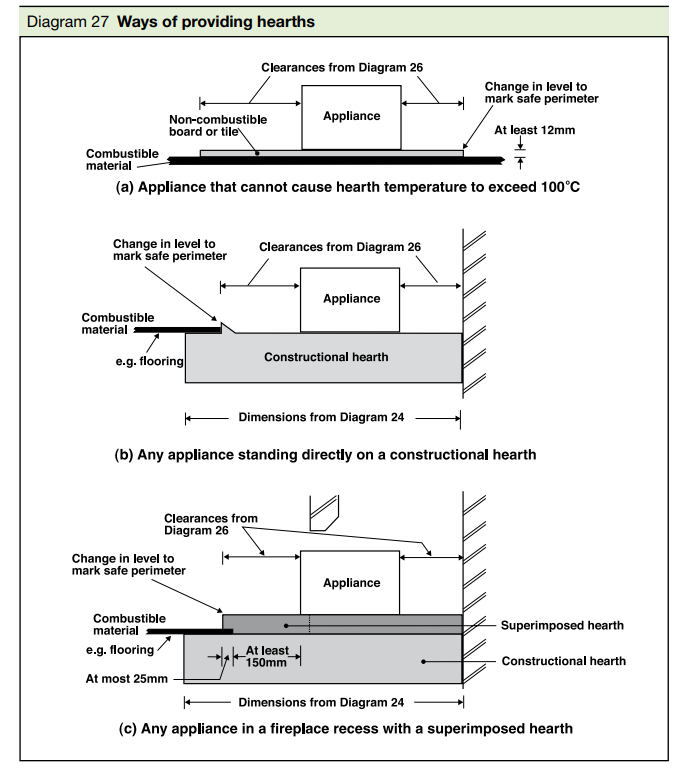
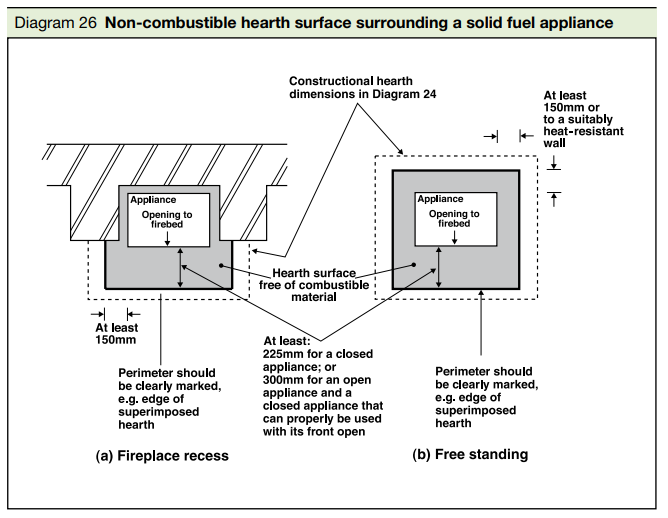
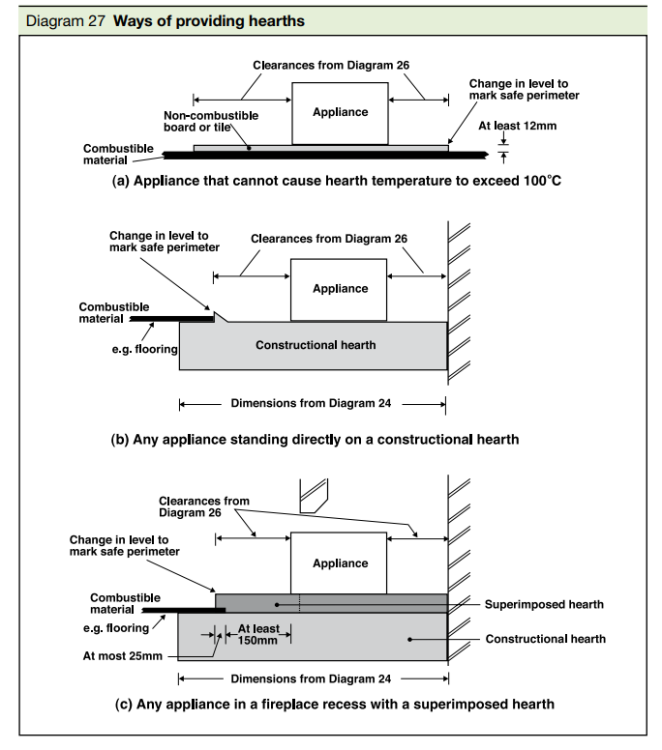
The legs look a bit short on the stove... @GrantMcscott Is the stove designed so it cannot "cause the temperature of the upper surface of the hearth to exceed 100°C" ? If the hearth can get hotter then 100C then Approved Doc J requires a thick concrete "Constructional Hearth" - Diagram 27b or c. If the hearth wont get hotter than 100C then you want Diagram 27a. So that would be a minimum of 300mm in front and 150mm either side of the opening. It should be 12mm taller than the FFL. We made a template and took it to a local monumental stone mason who had some offcuts of black granite work top in the yard. He honed off the gloss finish and it looks great.
-
I'd paint the ceiling with one of the Zinsser primers. Either the Bulls Eye 123, Bulls Eye 123 Plus or B-I-N. Think the BIN is possibly their best but that ones not water based. They also have "Allclean - Scrubable Interior Matt" top coat but I've not used it yet. They have several others worth a look. I was recommended Zinsser paint a few years ago when I had issues with paint peeling off a ceiling over a steamy shower. Its worked brilliantly for that despite frequently having water droplets hanging from it.
-
Planning permission for kitchenette in Garden room?
Temp replied to Lloyd Adams's topic in Planning Permission
That's not exactly wrong but I think assumes what you are building is capable of separate occupation. If there was a bedroom in there then adding a kitchen might/would be sufficient to make it capable of being occupied separate to the main house.- 20 replies
-
- 1
-

-
- planning permission
- outbuilding
- (and 1 more)
-
I think most 100mm SS screws are going to be around 5-6 mm diameter which should be fine. Experiment with some scrap to see what pilot hole you need in oak.
-
Planning permission for kitchenette in Garden room?
Temp replied to Lloyd Adams's topic in Planning Permission
The rules for planning permission are different to those for Building Regulations Approval. There is a detailed tech guide here which spells out what you can build without planning permission.... https://www.gov.uk/government/publications/permitted-development-rights-for-householders-technical-guidance There isn't a 30sqm limit for planning permission but check the complicated height limits if near boundary. All buildings should comply with the Building Regulations but that doesn't mean you must always make a Building Control Application. My understanding is you wont need BCA under 30sqm and no bedrooms. Not all of the regulations apply to all buildings. BCA is required for the drains and electrics although your electrician should do that for you. -
Not about house building but about making other things.... Cutting Edge Engineering (big lathes, milling machines, welding etc) https://youtu.be/KswiJrYhEbY?si=Dg8VU9tH1f4LCS8K Blondihacks (makes steam engines etc) https://youtu.be/yiAWsopdr0A?si=YFpUSzTGx2cLMeGC Tally Ho (4 years into rebuilding a famous racing yacht. Amazing museum quality workmanship/woodwork. Nearly finished now). Starts here.. https://youtu.be/4FhTu3aGM60?si=qlTHrnyRadox3Gqy
-
Stainless steel screws around 100mm. Recess heads about 15mm. So 35mm in the horizontal and 65mm in the vertical. Might get away with slightly shorter. Quite a generous pilot hole as stainless steel screws not as strong and can shear if too much torque needed.
-
Starting with a simple rectangular opening (as you would for a door) you just add a rectangular frame/bead, then the glass then another bead. One side the bead can be glued and pinned in place. The other side just pinned in case you need to replace the glass. You can run a sealant around before fitting the glass to stop daughts and rattles. The shape of the bead can be a simple square/rectangle or a moulding to match elsewhere. Ideally mitre the corners but not essential. If it's going to be a double glazed unit the vertical thickness of the bead needs to be sufficient to hide the seal and some extra to allow for the fact the glass needs to be cut slightly underside and then packed to centre it in the opening. Both panes should be supported by any packing. Beware fire regulations. For example if this new wall is separating stairs from habitable rooms in a 3 storey house (inc 2 story with loft conversation). Might need to limit size of glass, and change how it's fitted. Possibly even wired glass? Think it also needs to be toughened glass as below ?? mm from floor level. Same for door.
-
What do grey bars mean? There are some grey and some orange the same size. Does grey mean no data received or similar error?
-
My guess is a dodgy connection... Does that 24.48kwh come after a time slot with apparently zero usage ? My guess is the meter wasn't able to update the system for awhile even though the boiler was running. So when it was able to send an update the system incorrectly assumed the calculated change in consumption all occured in the previous time slot instead of say averaging it over the time slots that were missed. I guess the same might happen for longer outages?
-
Secondary glazing + double glazing: sound insulation?
Temp replied to Garald's topic in Sound Insulation
Some interesting info at this page. Particularly the notes about using different thicknesses of glass. Sadly no figures for the combination of double and secondary. Perhaps ask them? https://www.kjmgroup.co.uk/products/windows/soundproofing#:~:text=The best sound reducing gap,or external) is not important. -
The ruling in this case effectively puts most of their gain into the period after the house was occupied and therefore exempt. But what about the gains made before the house was finished? For example the planning gain when PP was granted? I wonder if the ruling means HMRC will argue that gain is taxable because the ruling says your ownership of it as a PPR only begins when you move in?
-
This court case changes the rules regarding CGT relief on self builds. It appears that in the past you wernt entitled to Principle Private Residence Relief until you move in. https://www.telegraph.co.uk/money/tax/capital-gains/hmrc-capital-gains-rules-wrongly-58-years-homeowners-refund/
-
The government seems to blow hot and cold on self builders. Perhaps next time they decide to encourage self building everyone should write to their MP and suggest the frame companies be encouraged to set up a low cost escrow scheme. Perhaps in partnership with lenders?
-
Documents required for building control sign off
Temp replied to Moonshine's topic in Building Regulations
Drainage pressure test? Bco may want to witness the test. HETAS for any wood burners. Unless BCO is happy to inspect himself. Check internal glass partitions or glass on stairs etc has required marking. BCO may still refer to it as a kite mark but thats out of date. I forget which standard is has to say. -
Secondary glazing + double glazing: sound insulation?
Temp replied to Garald's topic in Sound Insulation
When the M3 was built next to our house in the late 60s my father fitted secondary glazing with a narrow air gap. Can't remember the exact width but it was on the inside of the wooden single glazed windows so probably 30 to 40mm. Then the government offered to fit secondary glazing. My dad ask if we could just have the money as we already had secondary glazing. They said no because the gap on what we had was too small. So my dad got them to come fit another lot. This was fitted to the inner face of the wall so a gap more like 175mm. It opened so you could still put things on the window sill etc. So we had a sort of triple secondary glazing. -
Kinda surprised it's not registered. T Your solicitor should advise what this all means. If necessary he should consult an expert. Covenants and similar are difficult area of law. I wouldn't like to speculate. Some turn out to be worthless/unenforceable. Others a gold mine. A comma here or a word there can change everything. Dont septic tanks need emptying every 3 to 5 years? I would ask the seller when that was last done and if he has any evidence they paid up. You could always knock on the neighbours door to introduce yourself, tell them you are thinking of building a house to live in yourself and ask if they know anything about the local schools, Internet, drains...
-
Page 1-10 has the parts list just for the jack. .part 6 is P70072 but Google could only find that in the USA at $160 !
-
Think that's what I would do.
-
Is a gym considered a habitable room for planning purposes?
Temp replied to Loz100's topic in Planning Permission
I'm sure that even the 1m from the boundary "rule" is a guideline and not mandatory. Its to discourage building even closer giving a "terraced" look. To successfully argue with the planners you need to find written copies of local planning policies and check every letter of the wording. Even then if you find the proposal would breach the guidelines the wording might allow the planners discretion. Can you afford to hire a planning consultant? If so ask one to look at the plans and possibly quote to submit an objection for you (if the consultation is still open). I believe this argument is wrong. I don't believe you need Planning Permission to change it from gym to office so they should take into account its current use as an office which is considered a habitable room. Make sure they are aware it was "converted" from a gym to a home office x years ago and therefore should be considered a habitable room. -
Is it possible to expose ceiling beams while meeting fire regulations?
Temp replied to MattD's topic in Floor Structures
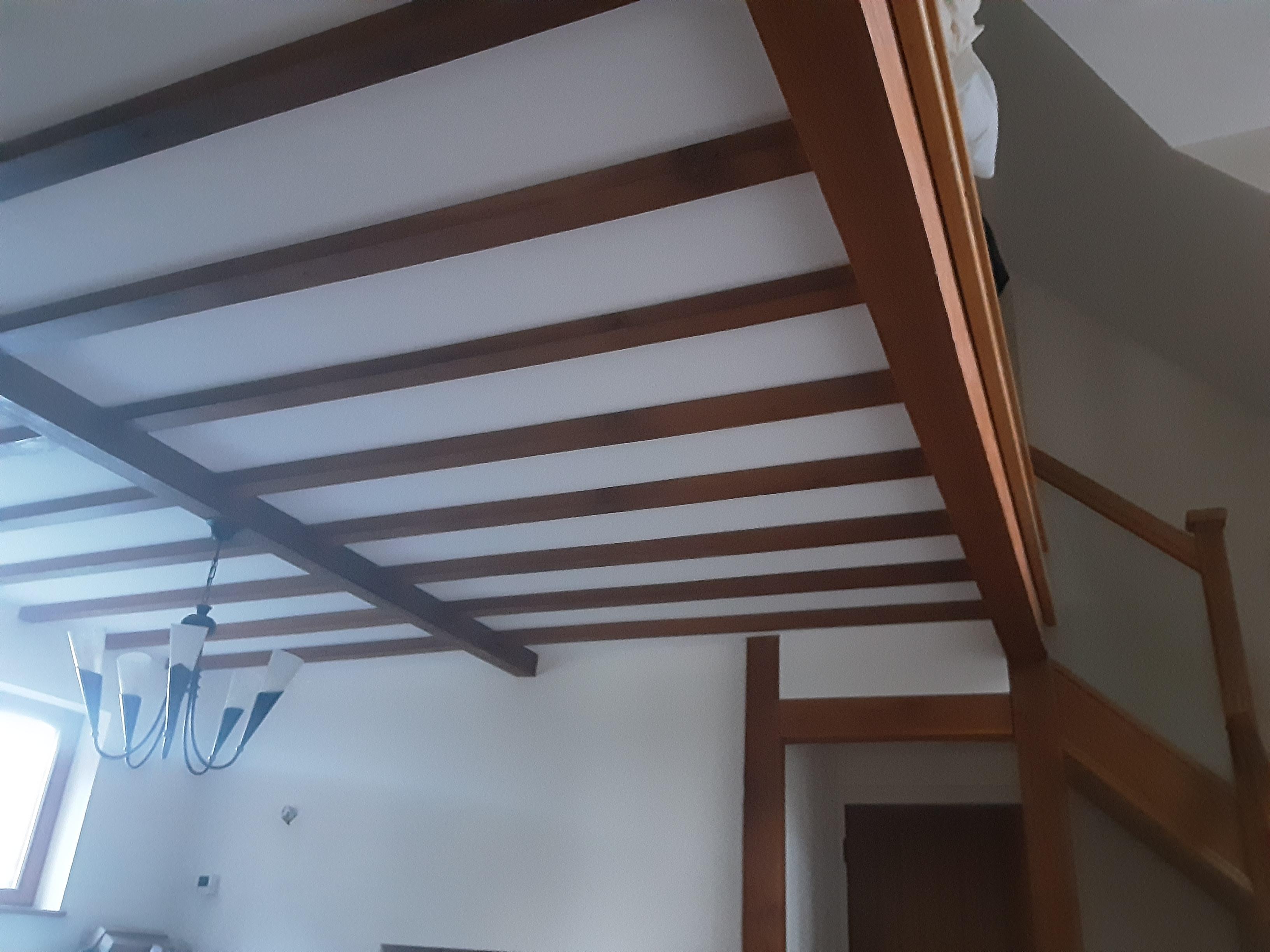
Sorry for not posting sooner but this is our dining room ceiling. Hope the cobwebs don't show. The smallest beams are 75mm wide and 60mm deep. Yes all decorative. The only exception being the big beam on the right which supports part of the stairs landing. The floor upstairs is beam and block.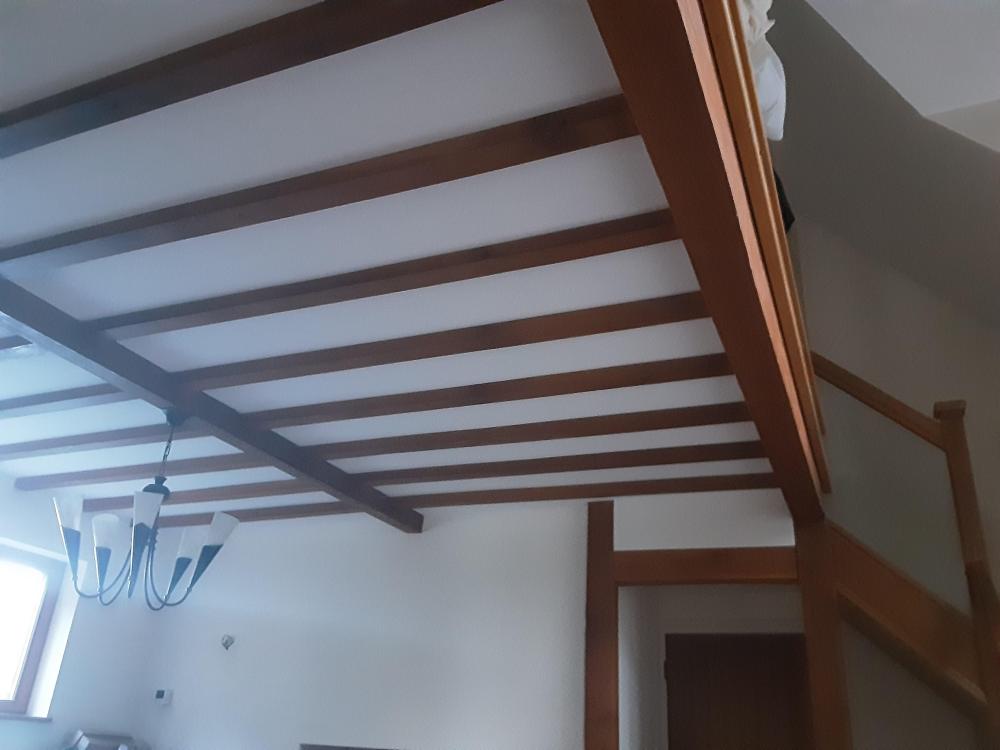
-
Is it possible to expose ceiling beams while meeting fire regulations?
Temp replied to MattD's topic in Floor Structures
You can't just leave regular joists exposed because it's unlikely that would meet Part E Sound transmission. We opted for a beam and block first floor with oak beams below it. They look ok. Will try and post pic later. -
I think I would want that post resting on the existing foundations if possible in case there is any movement of the new relative to the old. But perhaps I worry unnecessarily
-
If money no object Perrin & Rowe or Swaddling if they still exist. Their thermostatic mixers are serious lumps of finely machined brass. But take a heart pill before you Google the price.
-
+1 We are on clay (not the really stick stuff) and even with some drainage it's an issue. The ride on mower leaves tyre tracks when the ground is wet which it is from now until late spring. Depends how much this bothers you but you might want to look at putting in a serious drainage grid and getting advice on soil improvers from local lawn care company. Might need quite a few ton bags worth.