


Temp
-
Posts
10690 -
Joined
-
Last visited
-
Days Won
43
Everything posted by Temp
-
Well that's a poke in the eye with a pointed stick
Temp commented on LSB's blog entry in Little Stud Barn
In case it's not obvious you can normally do something like meters 1,4,7,10,13,16 etc all at the same time. Then do 2,5,8,11,14,17 etc at the same time. In three or four iterations (not 25) you have done it all. I haven't read your whole thread but did you get a ground condition report done? Test pit etc Have you exposed the existing foundations to see how deep they are? Ask the BCO for his view pointing out the building has been there 10+years with no movement and you aren't increasing the loading? -
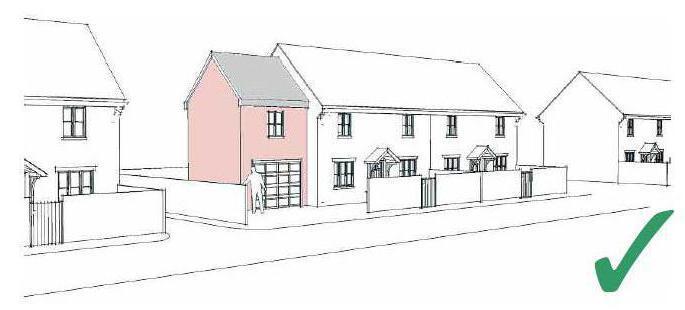
I'd just apply. Wouldn't mention the building line. Would cite house 5 as a similar local example. Planners sometimes like extensions to be subservient to the main house and this can be easier to build as you don't have to touch the existing roof/verge.
-
As I recall they are only needed in walls over 11m long. Thought they were normally put in the middle of the wall. We have one. Looks like its sealed with a foam sheet similar to perimeter insulation used around concrete floors.
-
difference between a panning officer +santa claus
Temp replied to scottishjohn's topic in Planning Permission
Santa wouldn't demand you carry out a flying reindeer survey on the 26th of December. -
If there is no air lock, flow rates are ok and flow and return temperature are similar to other rooms then I think it can only be an issue with the installation. Is the return temperature similar to other loops? Higher? Lower?
-
Take the chipboard up, insulate, lay WBP (two layers staggered joints?), seal according to tile adhesive makers instructions, UFH, tiles. Floor must be rigid enough for tiling contractor to warranty his work so discuss thickness of WBP with him.
-
Sick Building Syndrome? Airplane colds?
Temp replied to puntloos's topic in Mechanical Ventilation with Heat Recovery (MVHR)
We love our MVHR system. Air feels a lot fresher, no condensation anywhere, towels dry quickly. Only possible downside is dry air in winter but we don't find it a problem. -
Sick Building Syndrome? Airplane colds?
Temp replied to puntloos's topic in Mechanical Ventilation with Heat Recovery (MVHR)
Do you mean she gets travel sick or catches a cold? Travel sick is caused by motion. Cold symptoms take 1-3 days to appear (more normally 2-3 days). You catch colds from other people not AC systems. Although I guess office AC may help spread colds if they recycle a lot of air. Not an issue for MVHR. -
https://www.gov.uk/guidance/goods-and-services-you-can-claim-for-under-the-vat-diy-scheme Sheds are disallowable so don't call it that. Summer Houses aren't mentioned. Home office?... https://pjharchitecturalservices.co.uk/portfolio-item/self-build-vat-reclaim/ Would be nice to find another reference to confirm that.
-
Would you be allowed something like... Decorative cladding Fire barrier/SUPALUX Ventilated Cavity Panelvent DWD Timber frame Ventilated cavity would allow breathability but would that meet fire regs?
-
I think there are special renders approved for use below DPC but i've not used them.
-
Good catch. I thought it had to be done by a Vat registered builder. I can't edit my reply now or I would.
-
Where are you measuring the pressure? I think that suggests there is still a restriction somewhere in the system. The pressure should not drop that much down a 32mm pipe when when the flow rate is "1 tap". Check any valves are fully open including the main stopcock. If no problem found with those try and measure the pressure at the following two points both with nothing running and again with a tap open... 1) Near to the main in the road as possible. If this varies a lot with tap on/off then the problem is in the main not on your site. 2) Where the new 32mm pipe comes into the house. If 1) is constant and 2) varies a lot there might be a problem with new 32mm pipe or the meter or anything else in it. Small stone? If 1) and 2) are both close to 2 bar and don't change when the tap is turned on/off the problem is in the house somewhere.
-
Firstly they MUST charge you 5% on labor and any materials they supply (eg the electrician if he supplies wire). If they charge you 20% your claim may be rejected by HMRC. You cannot reclaim VAT incorrectly paid. HMRC can tell you to go back to the contractor for it. Officially you don't need to give them a letter they should just do it. The letter is actually a certificate and you can write it yourself. I think officially only charities need to provide a certificate but it can help smooth a problem with a contractor if you give them one. There is a template in VAT708, section 18 about certificates. You may need to reword it a bit. PS: Any materials you buy in your name from a builders merchant will be charged at 20% and you can reclaim that. In some cases a contractor might be happier for you to buy materials and free issue them to him to fit. Particularly if he's not VAT registered.
-
How do the pipes connect to the rads? Diagonally opposite corners? Both in and out at the top?
-
Neighbour 'pressuring' me to not object to application
Temp replied to JKami84's topic in Planning Permission
You should also consider what implication their plans would have on any extension you might want to build. -
Notification of Statutory Undertakers?
Temp replied to Tracey Gardner's topic in Party Wall & Property Legal Issues
Planning Permission is not a guarantee you can build the approved development. There can be a number of things that prevent you building what has been approved. I don't think the planners check you even own the land. They rely on you filling in the forms correctly regarding ownership. I'm a little surprised the builder didn't know about the gas main. When he purchased the bungalow his solicitor will have done searches and I think it should have shown up on those if not in the title deeds. I've not used this site but perhaps worth bookmarking... https://lsbud.co.uk/ -
An air lock is also a possibility. I think you can still have good flow rates with water flowing faster past the bubble.
-
Double check that the stat in that room controls the floor loop in that room. In our case the electrician had swapped two over so the stat in the cold room was actually controling the loop in a different room. That caused one room to go full hot and the other full cold. We only noticed the cold room. Once I figured it out what was wrong it was easy to swap the valve heads on the manifold. Perhaps you have same?
-
Seems you may need both PP and Highways Consent... https://www.essexhighways.org/applications/vehicle-crossings-dropped-kerbs https://www.centralbedfordshire.gov.uk/info/56/request_a_dropped_kerb_h_bar_or_skip_permit/589/dropped_kerb_-_applications_conditions_and_limitations/3
-
Failed percolation test, not allowed to connect to sewer - options
Temp replied to RichyC's topic in Surveyors & Architects
In our case there was a partly "piped ditch" along/under our side of the road. We proposed connecting to that. The EA said they "wouldn't want us to make flooding worse". So we proposed a rainwater recycling tank with overflow to the ditch. Planners approved it without going back to the EA. My builder also said that in the past he had turned the trench for the foul drains into one large soakaway that conveniently runs off site. He said the main sewer was also beded in gravel so the whole village became a soakaway. A soakaway mound might also be an option if there is enough space and the ground isn't totally impermeable. -
Yes and no... There are three ways to get things zero rated... 1. Build a new house on an empty site or do a knock down and rebuild. If the latter you have to demolish pretty much everything with the possible exception of the front wall if the planners want it retained due to its architectural value. Labor is zero rated to you (nothing to reclaim), materials are standard rated to you (and you can reclaim it). 2. Refurbish a house that's been empty for 10 years. The property must be refurbished by a VAT registered builder. He can zero rate everything to you. I don't think there is an option to do any DIY and reclaim the VAT on materials. The builder must start before you move in even if only by a day or two. Move in first and fails the "empty for 10 years test". There is also a scheme for houses that have been empty 2 years. 3. Convert a building from something else like an office or agricultural building. You pay 5% VAT but can reclaim it at the end.
-
Libel/defamatory comments on planning application
Temp replied to Omnibuswoman's topic in Planning Permission
We built in a small village/conservation area. Before we submitted our planing application I called up both neighbours and the chair of the parish council. I asked if I could drop in one evening to introduce myself and show them our plans. I arranged to visit each individually at their house as I didn't want to be out numbered. In the end everyone was welcoming and we spent more time talking about our families and the local school and village life in general. Even then one neighbour objected. The plot already had PP for a house and our proposal moved it further away so i've no idea why they objected. -
CIL implications
Temp replied to Deejay_2's topic in Self Build VAT, Community Infrastructure Levy (CIL), S106 & Tax
The CIL rules don't cover every eventuality. Some cases/situations will have to be resolved in court. I'm not sure we can predict how it might go. The council might argue that as you didn't finish in accordance with the approved plans you are in breech of planning. They might suggest you make a retrospective planning application for a refurb instead of a knockdown. However the CIL exemption is NOT available for a retrospective planning application. https://www.pallantchambers.co.uk/blog_post/july-2021-cil-payment-exemption-is-not-available-for-self-build-houses-granted-retrospective-planning-permission/ Have you calculated the CIL liability? -
Welcome. Did you consider the options for getting it zero rated for VAT?
