Temp
-
Posts
10690 -
Joined
-
Last visited
-
Days Won
43
Everything posted by Temp
-
We have a dual cylinder arrangement feeding our hob. The regulator/changeover device on ours came with instructions for testing for leaks. These basically said to turn off the appliance. Then turn the cylinders on to pressurise the pipe, then turn the cylinders off again. Monitor the pressure gauge overnight to see if the pressure falls. I find cylinders smell a bit even when there is no leak, but that's only close up. Shouldn't be able to smell it yards away. It could just be the cylinder connection leaking. These have a left hand thread so have to be turned the other way to tighten. The mating surface of the fittings must be clean before assembly.
-
Extending a replacement dwelling with no PD rights
Temp replied to Laurawh's topic in Planning Permission
I suspect they think they can do that because the replacement isn't complete yet. -
Indeed it's a worse case. Which council is it? We might be able to find any guidance they have online.
-
Get a big phone that supports wireless charging?
-
Some form of WBP plywood. A good timber merchants may stock several grades. To be honest it ranges a lot in quality and price. I got some from a chain beginning with W that was junk. Some places call their best "Marine Grade" but I'm not sure thats an official term.
-
I don't think you can do OTG and charge at the same time. I think OTG allows the tablet to power peripherals like an endoscope camera where as charging requires power to flow the other way. Googling "OTG and charging at same time" finds mixed opinions as to the feasibility and this vid but I've not tried it.. https://youtu.be/Ld6LjVe-Xo0 Some comments say it worked for them, others that it didn't. Depends on phone/tablet.
-
This bit suggests it's part of the Brexit agreement?...
-
Not sure I believe it's only 75mm long. That's two bends in little more than one diameter? I suppose it might be possible if both ends are male so they are inside the pipe. Will need good sealing.
-
One option is a pipe stat on the loop so the pump runs until hot water returns to the cylinder. Then switches off until it cools down. Ideally you want to be able to control the hysteresis (temperature at which it switches on/off).
-
There is some info on visibility splays in the "Manual for streets" around page 91 to 93.. https://assets.publishing.service.gov.uk/government/uploads/system/uploads/attachment_data/file/341513/pdfmanforstreets.pdf Typically you must be able to see a point on the kerb y meters down the road from a point 2.4m back from the kerb in the centre of your entrance. The distance y depends on the speed limit of the road. There is a table on page 91. Diagram on 93. If these distances are a problem if might be possible to get them relaxed. Eg 2m back for light traffic roads etc.
-
Some of them are so strong they could probably pull the nails out:-)
-
Anyone got a recommendation for a decent stud finder or similar attachment for mobile phone? I need to pinpoint some joists above a plasterboard ceiling. The one I have isn't working well.
-
Worth checking that two of these can be joined together. You might need a short length if pipe between the two?
-
I believe that's correct but not done it myself. I suspect the same rules that apply to a new build apply to a conversion or reinstatement. Eg Demolition is reduced rated. Trees and plants only reduced if part of a landscaping plan required as part of an approved planning permission. I would ask someone to quote to "Demolish concrete hard standing, level and prepare ground for turf and lay turf" get them to charge you 5% and reclaim it. You will probably have to pay VAT on any replanting/new trees.
-
Can you use two 68mm 135/45 degree bends to make a joggle.. https://www.drainageonline.co.uk/above-ground-drainage/guttering/marley-guttering/marley-68mm-circular-downpipe/68mm-downpipe-bend-45deg?gclid=Cj0KCQjwjN-SBhCkARIsACsrBz6lrolbqgHfEB3hTP0Anx-fuIeZX_cCeveF10yIZfpobwoD5VDYQ7waArQUEALw_wcB#fo_c=2925&fo_k=d6e2b0c96d9fb450c75225f7696a8559&fo_s=gplauk
-
I haven't tried yet but they felt suspiciously strong when I was putting the wedges in.
-
Ours hob extracts to the outside and is pretty powerful. If it over powers our MVHR it hasn't complained 🙂 It clearly bypasses the heat exchanger in the MVHR so must reduce efficiency but its probably only used a few hours a week so the effect would be small.
-
How close when face to face buildings?
Temp replied to Post and beam's topic in Building Regulations
This would be a Planning policy issue not a Building Regulations issue. See page 35.. "Privacy and scale" and the table.. https://democracy.stevenage.gov.uk/documents/s28817/Design%20Guidance%202021.pdf I note its a draft policy document so might change. It suggests 20-25m is the minimum back to back separation recommended. However planning inspectors are allowed to bend/break rules if the benefits outway the harm. This is how wind farms get built close to houses. -
How long has he been AWOL? He's not just on holiday or down with Covid?
-
You can also see the reclaim form here. Search it for "10 years". It asks you to provide evidence its been empty. Try council tax dept? https://www.gov.uk/government/publications/vat-refunds-for-diy-housebuilders-claim-form-and-notes-for-conversions-vat431c Some other things to think about... VAT: I know you plan to live in it but if circumstances change, do not rent it out without seeking tax advice. If you let out the property you may have to repay any VAT you saved under the scheme. This is because letting income is VAT exempt not zero rated. The difference may seem trivial but if something is exempt it means you can't reclaim so called "input vat" on your costs. House sales are zero rated so you can. Its not clear if this also applies to something like a property let via AirBnB. CIL: You mentioned a loft conversion. If this is big (close to or over 100sqm) you should check out the CIL rules. If they apply you might be exempt but only if you claim the exemption before work starts. The 100sqm rule is the total increase in floor area so it might apply if a small extension and loft conversion together add more than 100sqm.
-
In short.. If you buy materials from a builders merchant you pay 20% and reclaim 20%. If a tradesman supplies and fits materials then they charge you 5% on both labor AND materials and you reclaim 5% on both. In detail.. The important thing is to pay any trades you hire the correct 5% rate. If you pay 20% VAT on labor you can't reclaim it later as HMRC won't refund VAT paid in error. So when you get quotes make sure they say VAT at 5%. If not ask for them to be amended before you accept them. Some trades may question this if they aren't familiar with the rules. It may help if you give them a "certificate". This is essentially a letter from you stating that the work they are to carry out is on a property being reinstated after 10 years empty. Include your contact details, the site address and any planning permission reference numbers. There might be a template in VAT 708 or someone here can probably post one they wrote. If someone quotes to "supply and fit" then both their labour and materials should be 5% rated. Some trades may not like this as they pay 20% when they buy them. This should be sorted out when they make their VAT return but some trades still worry about it. If any refuse to 5% rate your only option is to buy materials yourself paying 20% and reclaiming 20% later. You can then "free issue" the materials to the trade to fit. The downside is the trade might get a better discount than you. Under no circumstances must anyone live in the building before work starts as that resets the 10 year clock. However i believe you can move in a few days after work starts if necessary. T
-
I'd never heard of this but Google found.. https://www.cohesivehomes.com/rebar-grounded-or-grounding-rod#:~:text=Rebar on its own doesn,be a touch potential hazard.
-
Could you cut up a work top to make upstands? A 3m worktop would probably only make 12m or so of upstand because the saw kerf will make some narrower than 20mm/
-
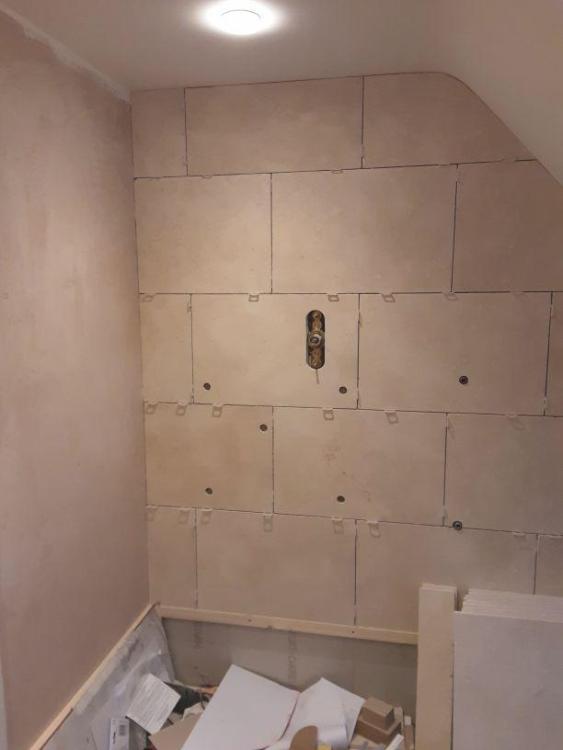
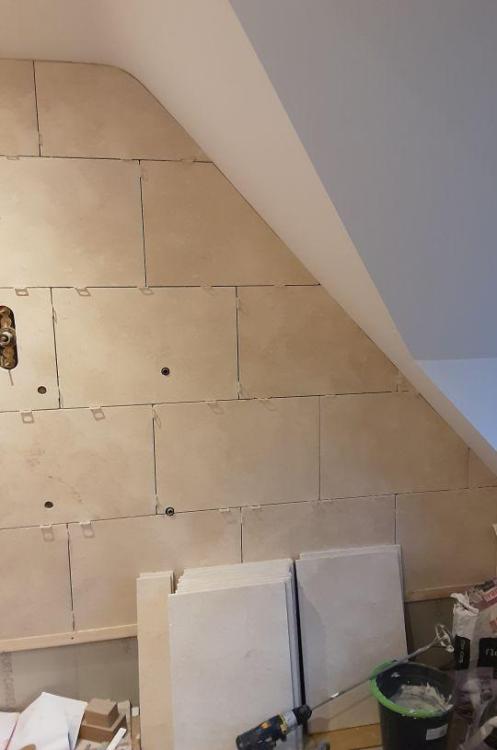
Getting there slowly. The bond pattern is working out ok. Main issue I'm having is that the stone isn't a constant thickness. The difference between thick ones and thin ones is 3mm. Overall I don't think its great quality stone but it will look ok when done. Lucky I have so many to cut I can cut off defects. Any tips for removing these levelling spacers?