


Temp
-
Posts
10690 -
Joined
-
Last visited
-
Days Won
43
Everything posted by Temp
-
If you decide to buy a cheap circular saw make sure it has a TCT blade and the hole diameter is reasonably standard so you can easily get blades.
-
No consolation but in Gibraltar I've been watching them resurface the outside of a building that's probably 100s if years old. They are using some sort of fiberglass mesh and a paint/render on a roller to stick it to the existing tatty render. Seems to be doing a nice job and smooth.
-
Loft conversion and load bearing walls
Temp replied to Leroy's topic in Lofts, Dormers & Loft Conversions
That sounds fine. There are span tables that tell you what size joists you would need for a 4.2m span. I'm away from my computer or I would look them up for you. Just check if there are any openings in the wall that might need reinforcing to carry the load of a joist above. -
I made an LED edge lit mirror. Got a mirror made to my template then cut about 30mm off the template all around and later glued it to the back of the mirror. I found a thin transformer and remote control LED driver on Amazon that fitted in the thickness of the template and glued a waterproof LED strip around the outside edge of the template. The slight heat from the transformer keeps a small patch of the mirror steam free. The remote allows you to change the brightness and colour which is cool.
-
Many power supplies that have a current limit can't be used in current limiting mode continuously or they overheat and shut down further.
-
That looks cool.. Quote:.. The SolShare unit is placed between the inverter and the main switchboard. Receiving one three-phase AC input from the inverter and outputting up to 15 single-phase or 5 three-phase AC outputs (or a combination of both). Outputs are wired on the load side of each unit’s meter, at the building’s common main switchboard.
-
The usual recommendation for insulation is as much as you can fit in or afford. Perhaps 250-300mm in this case I think I would fit a vapour barrier (plastic sheet) below the insulation and then plasterboard.
-
On our house we used roof slates for the under cloak. They are fitted to the top of the "ladder" which supports the last rafter. The battens extended over the slates but not quite to the edge so they are hidden by the mortar. Been good since 2007.
-
Door linings: narrower than the opening
Temp replied to Post and beam's topic in Doors & Door Frames
This. I would hold the lining in place flush one side then run a pencil using the wall itself on the protruding side to mark the lining for cutting. That way if you have walls that aren't uniform thickness it's taken care of. -
Stamp duty and Council Tax
Temp replied to IanB's topic in Self Build VAT, Community Infrastructure Levy (CIL), S106 & Tax
You might be able to find a rental that includes Council Tax but they are rare. My son is currently in a shared house that includes Council tax in the rent and the landlord is listed as responsible for paying it. -
Can we ask what your total budget is for the bungalow, both what you would like to pay in an ideal world and the absolute maximum? Also how many square feet/meters the approved bungalow has? If possible post your approved plans/elevations. Is the roof "complicated" with lots dormers or just a simple pitched roof? Have you considered selling some of the garden to a developer or is it totally impossible to get planning for a other house to finance yours?
-
Washing Machine waste - options for a pipe at height?
Temp replied to low_and_there's topic in Waste & Sewerage
Could you fit a trap to the right of the "fixed" section? I'm not sure of the rules on tun dishes but ask your plumber if it can be to the right of the tun dish for the heating. If so that would stop smells getting in via the tun dish as well. -
What's the existing house like? Would it make more sense to renovate and/or add an extension? Move house to a bungalow?
-
Perhaps you've seen it but there is quite an extensive guide here on what you can/can't do without planning permission.. https://www.gov.uk/government/publications/permitted-development-rights-for-householders-technical-guidance See page 41 onwards.
-
Paving slabs... cleaning and filling gaps
Temp replied to Kells's topic in Landscaping, Decking & Patios
Until yesterday my India Stone patio hadnt been cleaned for 15 years and was worse than the pictures in the OP. Some were completely black. My small pressure washer would hardly touch it so I looked at renting a big one that would do 3000psi. Ended up buying a Pollor brand 7HP petrol model for not much more than they wanted to charge to hire one. After washing of the dirt with the pressure washer there was still loads of black, white and even some green patches Then hit it with 15% Sodium Hypochlorite diluted 50:50 with water. Instructions said to apply it to dry stone so I waited overnight for it to dry after pressure washing. That made an amazing difference. There are still a few black spots but it's come up great overall. Following day after the Sodium Hypochlorite had dried I hit it with Wet and Forget (Ammonium Chloride based) diluted 5:1 with water. Apparently that stuff helps stop it come back. Time will tell. -
The gaps are wider at the top than the bottom. So either... a) The area where the cracks are has risen or b) One side of the crack or both has sunk. Where are the trees in relation to the wall? Removing trees can sometimes be as bad as leaving them. Its not unusual for builders to skimp a bit on the foundations for garden wall, although the existence of a expansion gap suggests the builder has some knowledge or can follow plans. After 10 years I doubt you have any call on the builder or NHBC. I'd take @George's advice.
-
How to restore 12 year old laminate floor tiles?
Temp replied to David001's topic in Wood & Laminate Flooring
You might be able to sand or scrape the paint out of the grooves but go carefully. That might well leave the fibre board exposed which will need some form of sealing. This American video mentions a sealer for laminate floors but that will seal in anything you leave on the floor. I've not tried it. There might be a similar product in the UK. -
Even "without" sleeping accommodation things like the electrics and possibly the plumbing (?) are notifiable. Typically your electrician will notify LABC about the work he does on it. When the BCO visits to check on your house best tell him the pod just being used as a site office and hide the airbeds 🙂
-
I'm not @Nickfromwales but.. Typically you set the top of the dishwasher stand pipe as high as you can under a worktop allowing room between the under side of the worktop and downpipe to hook the washer hose in the top. Then run a horizontal pipe from the bottom of the stand pipe along the wall to the outside with the appropriate fall. Somewhere along that pipe you insert an upside down T and vertical pipe for the sink. Normally the trap for the sink is close up under the sink.
-
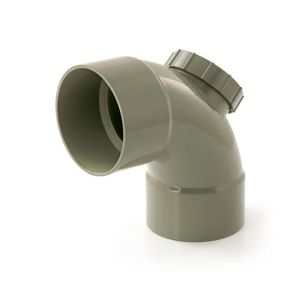
This. You can get bends with access.. or make a bigger access out of a Tee and screw cap.. and
.jpeg.f8ba80740e642395a0200070afd19036.jpeg)
.jpeg.814eb586e9003c0dad078775663793fa.jpeg)
-
If its got a bedroom I believe Building Control Approval is required. https://www.labc.co.uk/news/does-my-new-outbuilding-need-building-regulations-approval Note Mobile homes and caravans don't need Building Control Approval but this doesn't sound like it will meet the rules for mobile homes?
-
ChatGPT says.. So yes if you built during Covid they are still your responsibility unless adopted.
-
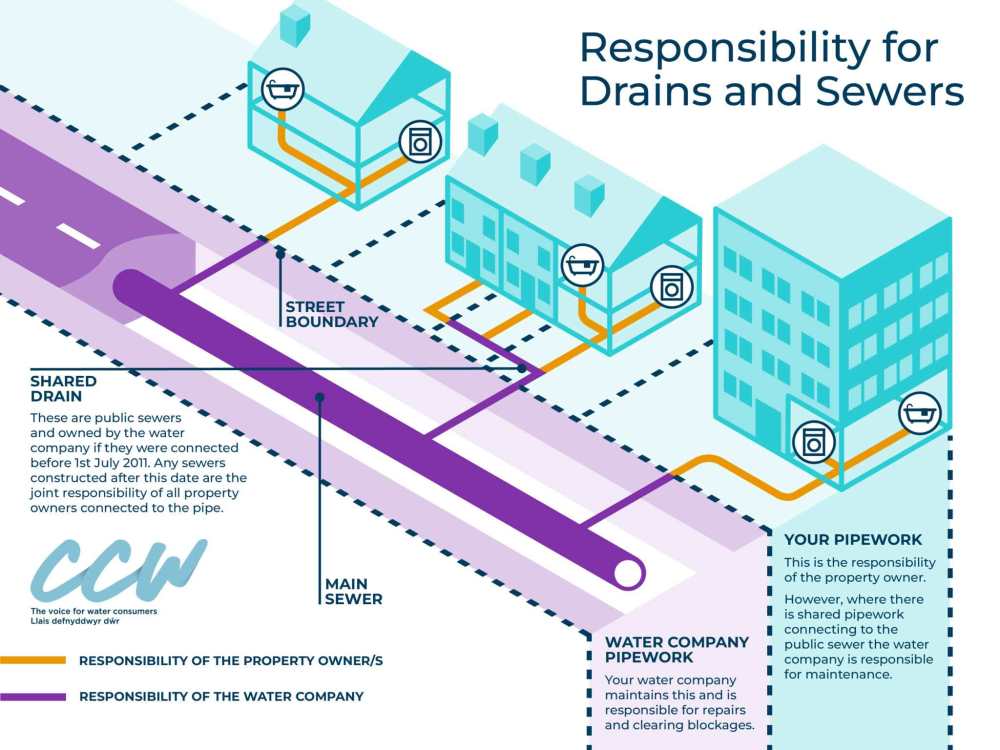
I believe the water co is now responsible for "shared drains". In this case the bit from the inspection chamber to the main sewer and from the Inspection chamber to your neighbours fence. However some sites like this one in Wales says this only applies to sewers connected before 1st July 2011.. https://www.ccw.org.uk/faq/who-is-responsible-for-my-drains-or-sewers/
-
If the walls are already up to height I'd put the rafters on top. You can fit joist hangers to a wall but they normally require a minimum number of brick courses on top of the hanger (to prevent the forces prying the hanger out) so this is normally only done for the first floor in a two storey house or two storey extension. Alternatively you can bolt a wall plate to the side of a wall and put rafters either on top or flush using hangers. Again I'm not sure it's wise to bolt so close to the top of a wall? Another option would be to notch the top of the wall with an angle grinder to allow rafters to be inserted at the right height. I mentioned headroom issue because Permitted Development rules limit the eaves height of an extension or outbuilding near the boundary. Think its limited to 2.4m?
-
Yes sure you can put the rafters on top of the beams if the headroom isnt an issue.


.jpeg.f8ba80740e642395a0200070afd19036.jpeg)
.jpeg.814eb586e9003c0dad078775663793fa.jpeg)
