AliG
-
Posts
3211 -
Joined
-
Last visited
-
Days Won
11
Everything posted by AliG
-
Window Design & MVHR
AliG replied to Oz07's topic in Mechanical Ventilation with Heat Recovery (MVHR)
@ProDave is right. Really there isn't that much difference, so a lot comes down to how much you like to open your windows. -
Window Design & MVHR
AliG replied to Oz07's topic in Mechanical Ventilation with Heat Recovery (MVHR)
I don't find that you need openers in bathrooms with MVHR. The only exception is if you have an actual bath in the room. If you like to have long hot baths the room can get quite hot and stuffy and it is nice to open a window. -
Window Design & MVHR
AliG replied to Oz07's topic in Mechanical Ventilation with Heat Recovery (MVHR)
Ah, I think a downstairs room that has a door that opens into another room, not the hall (main means of escape) needs its own escape route. So a TV Room with a door to the kitchen would need an opening window, but by not having a door they would be considered all one room with a door to the hall. -
Architect Fee - Is this expensive
AliG replied to Internet Know How's topic in Surveyors & Architects
That's below the architect's scale of charges I would say. That will only be the start of the fees. You will need soil surveys, SE etc, easily another £10k. -
Hello! Completely inexperienced and probably out of my depth!
AliG replied to Ellkell's topic in Introduce Yourself
Decision notice here https://pad.renfrewshire.gov.uk/NorthgatePublicDocs/00419042.pdf Handling report here https://pad.renfrewshire.gov.uk/NorthgatePublicDocs/00419043.pdf Have they shown you the layout that they gave to the council? One of the sites the council say would probably have to be single storey. Just reading the reports it seems like it would be quite hard to meet the conditions without applying for the whole site at once. I think that this makes it somewhat more complicated than normal and I would want legal advice. I would think that the sites are worth more like £100-125k if you reckon that my value for a finished house is correct. -
Hello! Completely inexperienced and probably out of my depth!
AliG replied to Ellkell's topic in Introduce Yourself
Although the theoretically correct way to price a plot up is to remove a developer's 15-20% profit from the price, the reality is that self build plots often go for a price that means they are around breakeven. So the plot plus house build is roughly the value of the finished house. Self builders seem happy with this as they benefit from getting the house that they want. I suspect that developers look at it in a much more hard nosed fashion as well as having volume/experience benefits, so their build cost would be 15-20% less and that is where their profit would come from. I found the planing site and planning application. It is not a conservation area and it looks like other houses have been built in garden ground nearby in the 80s. I thought 500sq metres might be small sites but nearby they have allowed houses to be built taking up most of the site, the houses are described as 4/5 bed with double garages. So you could probably build a 200ish sq metre house plus double garage valued at around £450,000, guessing from values in the area. This makes the site a little overpriced depending on build costs. Reading the planning permission there are a number of conditions re landscaping etc. I think it might be quite difficult to buy and build on one only and they probably want to sell it as a whole to a developer. It is also not clear how access would be shared between the three houses if you just bought one plot. No site plan was available on the council site. -
Window Design & MVHR
AliG replied to Oz07's topic in Mechanical Ventilation with Heat Recovery (MVHR)
Only upstairs -
Window Design & MVHR
AliG replied to Oz07's topic in Mechanical Ventilation with Heat Recovery (MVHR)
I did this too, although I was disappointed that opening windows were only slightly cheaper than fixed. However, fixed windows have slimmer frames, better U-Values and less to break/maintain. I would caution, however, that if your well insulated house starts to overheat it is good to be able to open a window. So I would want at least one opener in every room. We have only one room with no openers in the whole house and of course it is the hottest room in the house. -
ASHP- struggling to warm house in the cold weather
AliG replied to Jude1234's topic in Air Source Heat Pumps (ASHP)
It looks like @Jude1234 hasn't been on in over a year, but if they see this I wonder if they go this sorted? -
What do you have to hide?
-
Thanks @Mr Punter. I am getting a price for Fermacell and plasterboard and once I know the difference I have the option of using plasterboard. I did look at the Soundshield Plus you mentioned.
-
Thanks, that is useful. Luckily the difficulty in installing it will be MBC's problem
-
I am doing a timber frame on a raft from MBC. I just got a quote for the SER from my architect's preferred SE. On their estimated build cost of £375k it was £1850 + £68.40 for the certificate, all plus VAT. This seems high to me for juts signing off. They also quoted to design the drainage outside the house and liaise with Scottish Water re the connection. This was £1925+VAT. Again this seems very high to design drainage and a soakaway. Does anyone have any names they would recommend that I should try for alternative quotes? Probably best they are in Scotland considering that the SER is a Scottish BC thing and they would be dealing with Scottish Water.
-
I am happy that we can get the U-Values we want to achieve depending on the thickness of the PIR. Previously I would have been concerned re PIR not fitting well but factory fitted PIR should fit tightly and not cause any issues. I am more considering other things that are lost in the focus on U-Values. PIR is lighter and stiffer than Frametherm so transmits sound better and has lower decrement delay. Really wondering if in the real world anyone has found this an issue or by the time you consider all the elements of the wall this concern goes away.
-
We had a building width restriction so can’t use the 300mm wall. I tried to use sone frametherm 32 in my current house and couldn’t get it at the time. PIR is more expensive so I’d get more insulation for the same price. I’m just wondering if there will be any issues.
-
This will change a lot as you refine it. The most obvious thing is at the moment you have marked no storage at all. Even moving the utility room next to the garage, what would you do with a 5.4m long utility room. I would split it into a utility and plant room. Personally I would rather the toilet was not stuck under the stairs in such a large house. It is a room a very high percentage of visitors will use and so I think people don't give it enough space often. I agree with most of the already made points re bifolds, better master bedroom etc. I would add, double doors into a cinema room is not a good idea, they are normally glass, you want to be able to make it dark. All those little areas where the ground floor sticks out past the edge of the roof will require lots of steel beams and little flat roofs which will be awkward/expensive to build. Especially that bit at the side which creates an almost 10m span. It kind of looks like a side extension. As hinted at 8.2m is too long for a lounge, you will end up with large gaps at the end. It also has so many windows and doors that you would struggle to put furniture in it. It is often useful to think about the furniture you want and how it would fit.
-
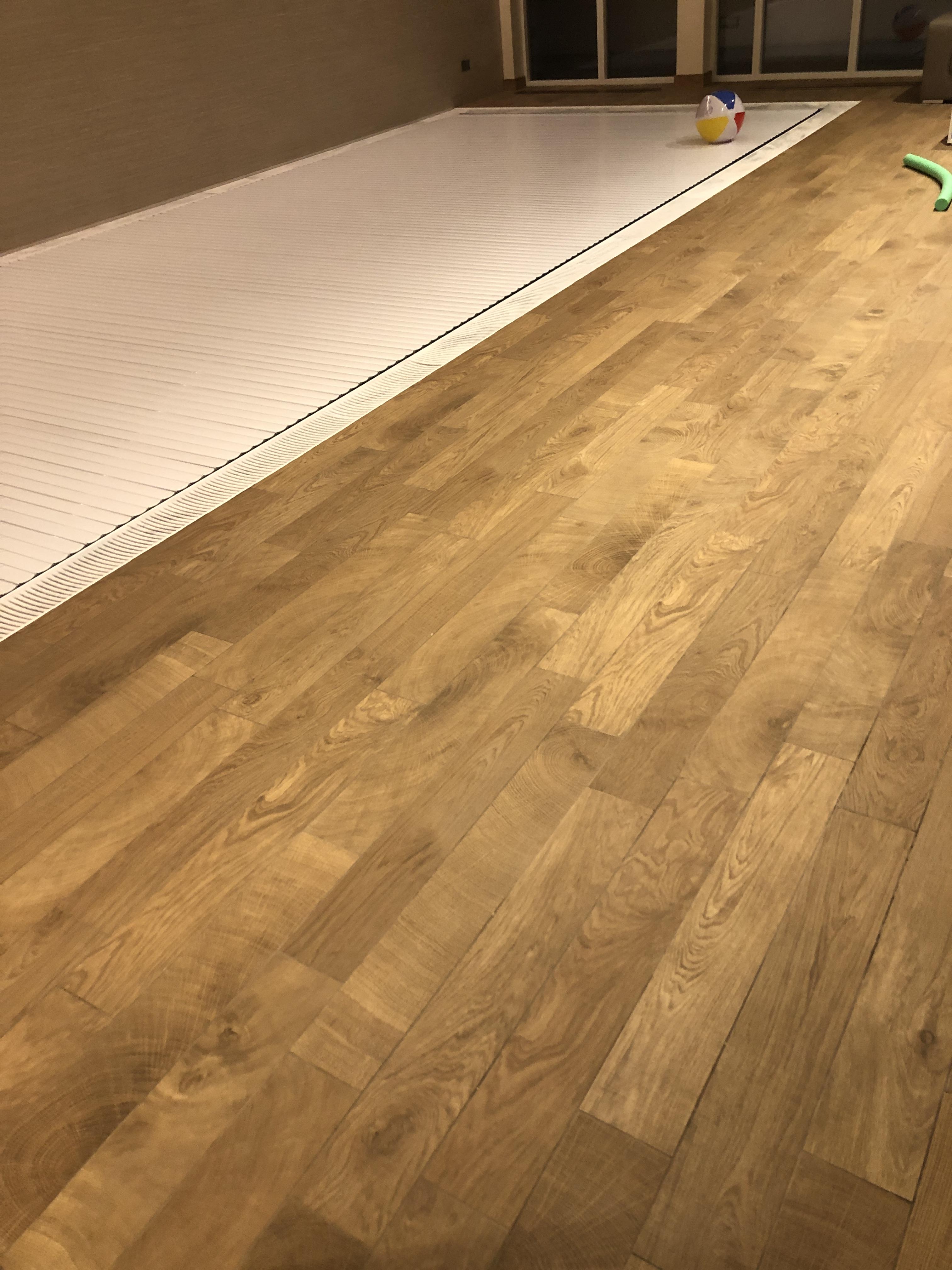
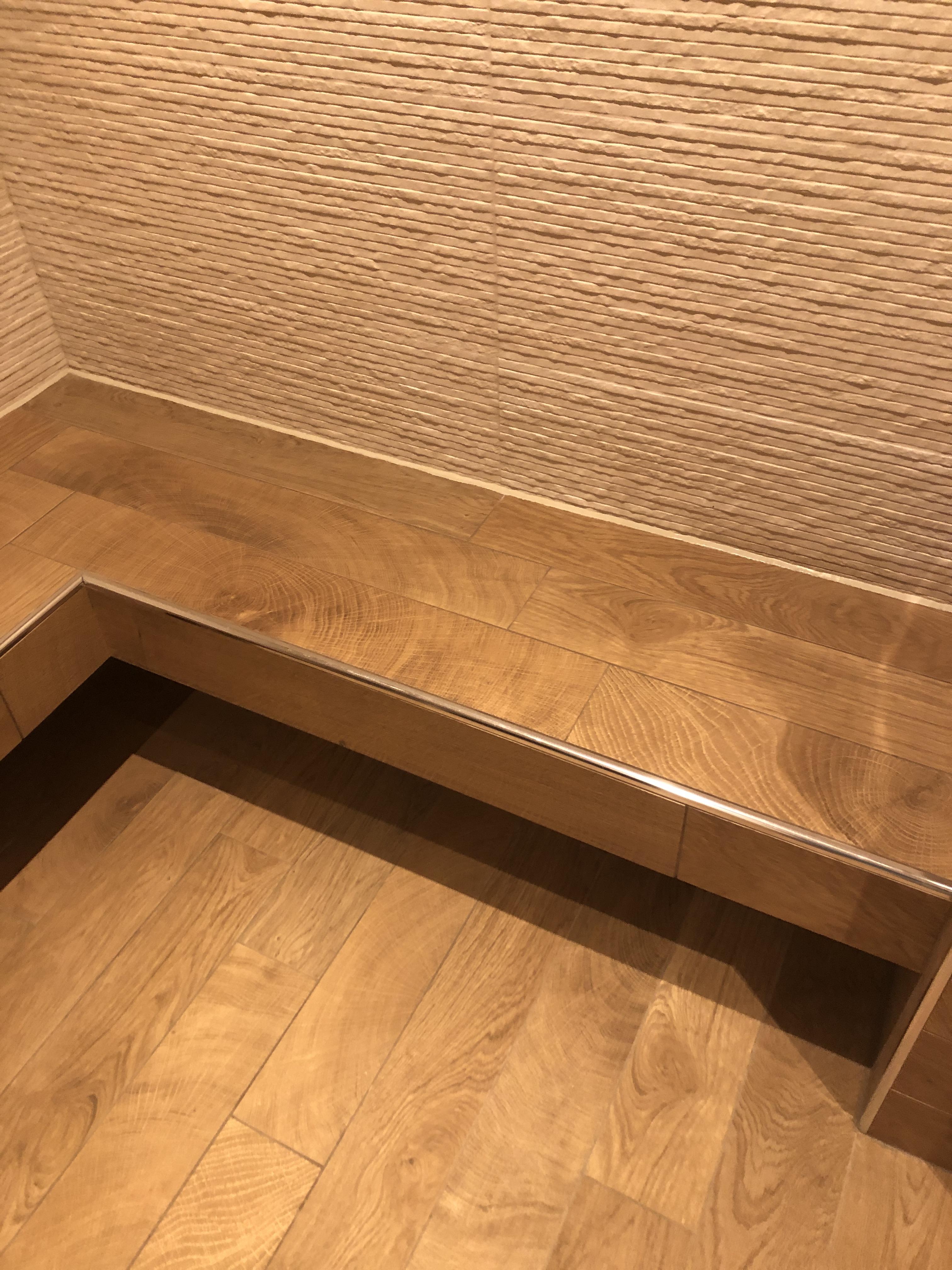
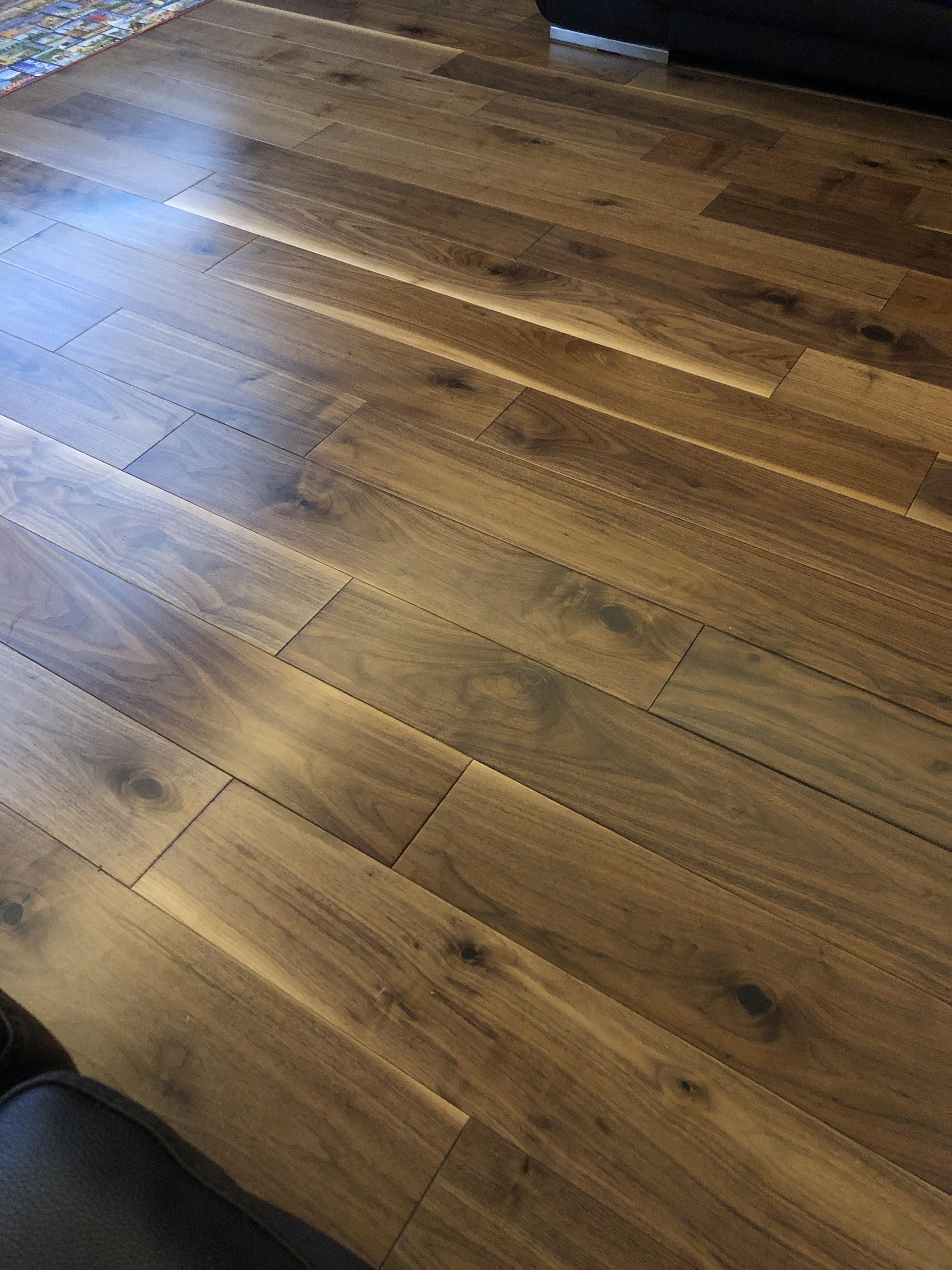
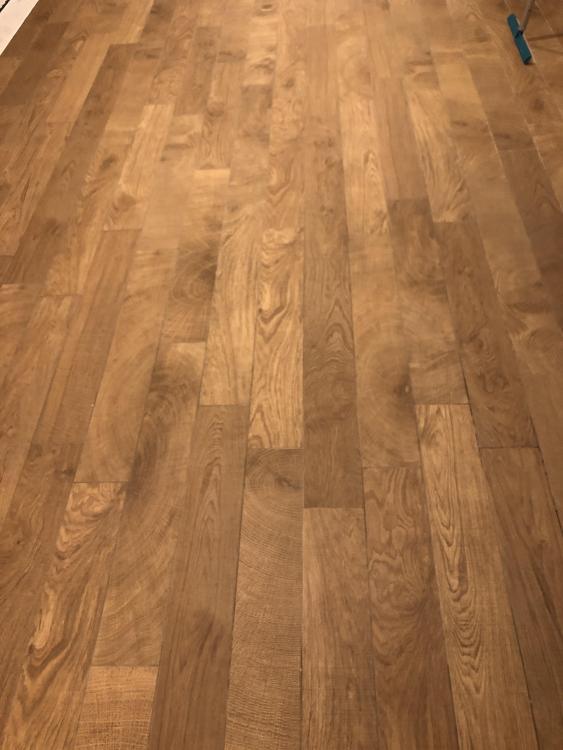
Most of our house, including all of our bedrooms is engineered walnut. We do have lots of the plank tiles which we had no problems with at all. We even used them to build waterproof benches. Personally I would prefer the feel of wood underfoot in a bedroom. It is softer and warmer. The key thing to watch is that people don't scrape furniture across it (or leave their laptop on a bed so that when their wife grabs the duvet it flies across the room and lands on its corner on the floor! MacBook Pro undamaged, floor large gouge) Three tile pictures and one engineered wood picture below
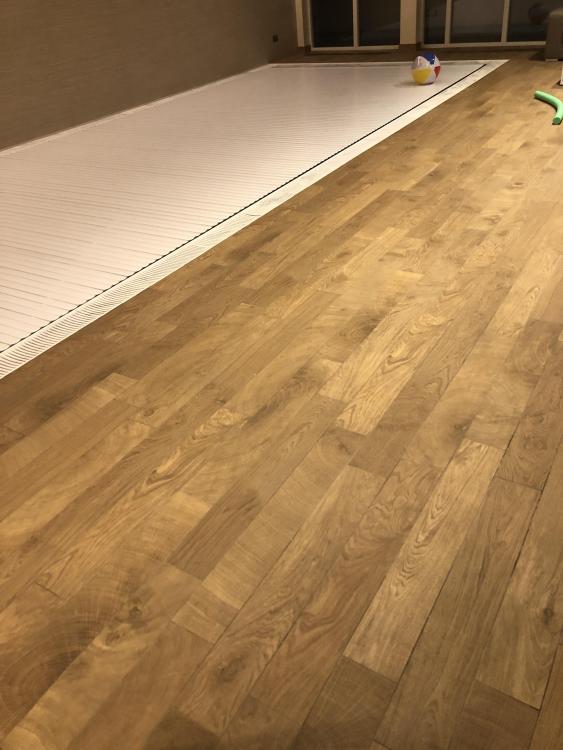
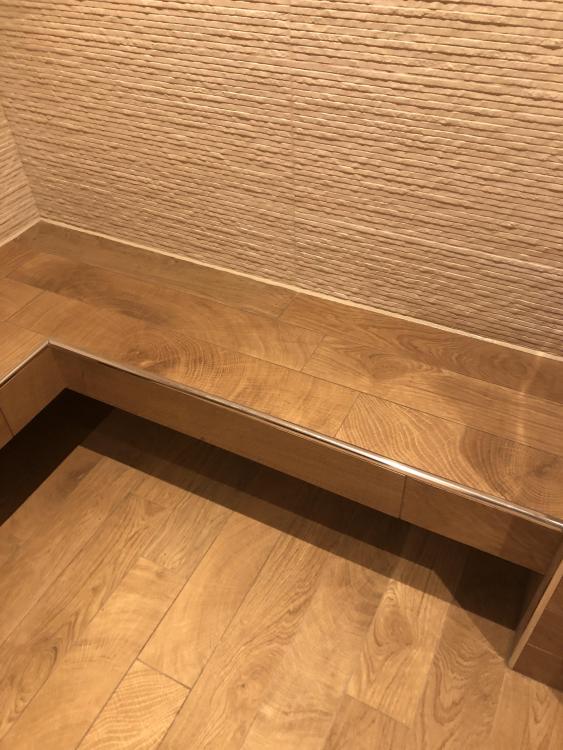
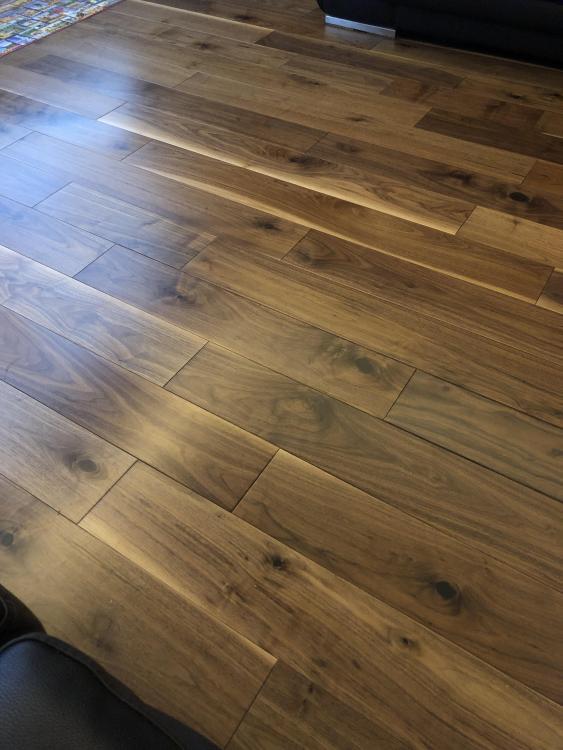
-
Washing Machine / Dishwasher Cleaner
AliG replied to Onoff's topic in Kitchen & Household Appliances
A good place to check this kind of stuff is often Amazon reviews. Both get a very high score from lots of customers. WPRO seems a little cheaper as you can buy large boxes for less than £1 a go. Considering they are cheap and well reviewed I am not sure it is worth looking elsewhere. It is amazing the effect hard water has on machines. I have never used one of these products ever up here with no obvious issues. -
Thanks guys. I was literally about to sign the contract when I noticed the change from Frametherm and PIR to PIR only. I am sure some people have PIR only frames I was wondering if they found any issues with it. I then thought we could just put acoustic insulation in the service void if I wanted a combination of different insulation with different properties. I don't know if anyone has done this? The proposal is just to use standard Fermacell with the FST. It won't be going on until next spring so can be changed, but it seemed from various threads that people like the finished product even if it is hard to work with. A lot of the issues are weight and if you have a team doing a whole house this should be less of an issue.
-
There have been quite a few threads where people reckon it is a better product installed. The builder said his guys will install it if I want it. Is it just working with it you found a problem or something else?
-
I would do it in stages, try simple easy fixes first and they don't work you need to try something more.
-
Something like this https://www.screwfix.com/p/diall-insulation-board-tape-silver-45m-x-50mm/4806v
-
The first obvious thing to try is foaming or taping between the rafters and insulation and also the joints between the boards. Other wise cold air all be blowing in those small gaps between the boards and the rafters. Looking at it they fit pretty tightly so you probably just need to tape them. Do you think cold air is coming in elsewhere, like at the bottom or tope edges of the insulation or through the floorboards?
-
The roof will be a flat roof with insulation over. In Scotland you pretty much have to use a warm flat roof construction like this. BC do not like insulation between the joists and a ventilated space above, they like a fully sealed roof here. This causes an issue as the height of the roof parapets is already set and so there is a limit to how thick the insulation can be. The architect specified 175mm, I think we can take it up to 190mm which is 0.12, although again this makes hardly any difference. The windows account for over half of the fabric heat loss. It is an MBC frame, as we cannot use their standard cellulose roof insulation we have not yet specified air tightness, but I would expect we can get a figure below 1.
-
If you can get your hands on a FLIR camera and attach it to your phone it is great for checking if insulation is missing in between the rafters and where cold air is getting into a room. I went all over our house using it to highlight cold air leaks. Depending on the roof build up, it may be ventilated at the eaves so they cannot be closed off. If you can get into the eaves behind the plasterboard and seal and insulate the plasterboard then that would probably help. Thinking of the doors as like an outside door and properly draught excluding them, as you have already tried, will also help. Certainly this is an easy starting point to see if the draught is the issue or there are other issues. But if you cannot seal off the eaves space from cold air then the eaves insulation is pointless and you need to insulate the room walls instead. We have spaces like this in our house, but they are sealed and insulated. However we too have MDF doors into these spaces which I have been trying to seal and insulate. I have been looking at air tight loft hatches, but I am not sure that they will look right. I put external door draught seals on them yesterday to see if that makes a difference.