AliG
-
Posts
3211 -
Joined
-
Last visited
-
Days Won
11
Everything posted by AliG
-
You just need a dimmable LED power supply like these. https://www.ultraleds.co.uk/led-components/led-drivers/12v-dimmable-led-drivers.html Most LED strips are dimmable but worth checking.
-
PD Rules https://assets.publishing.service.gov.uk/government/uploads/system/uploads/attachment_data/file/830643/190910_Tech_Guide_for_publishing.pdf PD applies to the "original" house. You cannot build to the side on a corner plotter more than half the width of the original house if the extension extends past the side wall of the original house under PD so you would fail PD under two rules. They can also remove PD when they give you permission.
-
I attach the SPD for the area https://www.pendle.gov.uk/downloads/file/5489/design_principles_spd_-_adopted_spd The problem you have is that corner plots allow the extension to be less than half the width of the original house whereas other plots allow the full width. I do wonder if you had a hedge like the house across the road so you couldn't see the site if that would help. The SPD says the width of he extension is relative to the "frontage" of the house, if you include the utility type area, I am not sure if you have increased the width by more than half. A diagram showing the current width including this might help. You might also want to reference the double garage across the road which I think is as wide as the original house. The windows are a tough one. They do make a few references to retaining street scenes and using similar windows. I personally am not a fan of the insistence that everything has to look the same but it does seem that almost all the other extensions have done this. Maybe changing the ground and first floor window to have three elements instead of four and match the width of the windows on the lounge side would be a decent compromise. Although for some reason looking at it I am not sure if this will look worse. I think you could also argue that the front of the current utility area does not match the front of the rest of the house anyway and this is an improvement. It also has a flat roof which they don't seem to like, so again you are improving this. I always think that if you are willing to compromise a bit it helps, but you might just have to ignore them and see if they refuse it. You can appeal that, you would have a good chance of winning, and the worst situation would be you lose and then make a new application more how they would like it, not the end of the world.
-
I checked and it is not a conservation area. This really seems to me to come into personal opinion of the planning officer. What exactly did he say, did he say no bifolds or no window? Bifolds and a window look the same and is not a planning issue that I can see. If he said a window was OK I would just change the plans to a window and put in the bifolds. If he is saying no window or bifolds, ask him what planning policy is driving this reasoning. I doubt there is one and if he stocks to his guns I agree with @ProDave just put in the applciation and take it to appeal if he turns it down without good reason.
-
You can get 30mm thick trays. If you ply and then tile the floor it will be almost exactly level with it. Just seal the front edge of the tray with silicone as you would he other edges to the tiled walls.
-
The plans you have shown the council would really help. Sounds like they are being pretty awkward though, hopefully you can go back to them with a robust argument. Google street view is also useful for people to see why the council may or may not have an issue.
-
Total no brainer with the waste already there to put the WC at the right. We have wet rooms and the only thing I will mention is they are much harder to keep clean with all the grout in the bottom of the shower. The positive is that it tends to be a lot less slippery than a tray. I had to put stickers on the bottom of my parents tray as they found it a death trap. We have ordered rougher stone effect trays for their new place which I hope are the best of both worlds. I would be tempted to use a tray still as it it a lot less likely to leak and easier to look after, but with the walk in screen.
-
Is this normal on a new build roof...?
AliG replied to tmcb1234's topic in Roofing, Tiling & Slating
It is going to be pretty hard to insulate the area without opening them up. Sounds like there might be no insulation in there if it is that cold, or they have accidentally ventilated the whole space so it is filling up with cold air from outside below the insulation. The one quick fix is If there is a strong draught in the storage area you could tape up the cupboard doors which will stop cold air getting into the room. Hard to stick insulation temporarily to the outside of a wall or ceiling and not worth it if is going to get properly fixed. Without drilling holes into walls you can remove light fittings or sockets and fell for draughts behind them and look for insulation. there must be some kind of lights in the room below the master bedroom, if you remove these you will be able to feel if there is cold air blowing through the ceiling. I would remove sockets in the master bedroom to ascertain what kind of insulation if any is in the walls. I have a wifi inspection camera, £30 from Amazon, but you still need to cut holes in the plasterboard if you want to see what is going on unless there are holes already there you can pass it through an opening already there. -
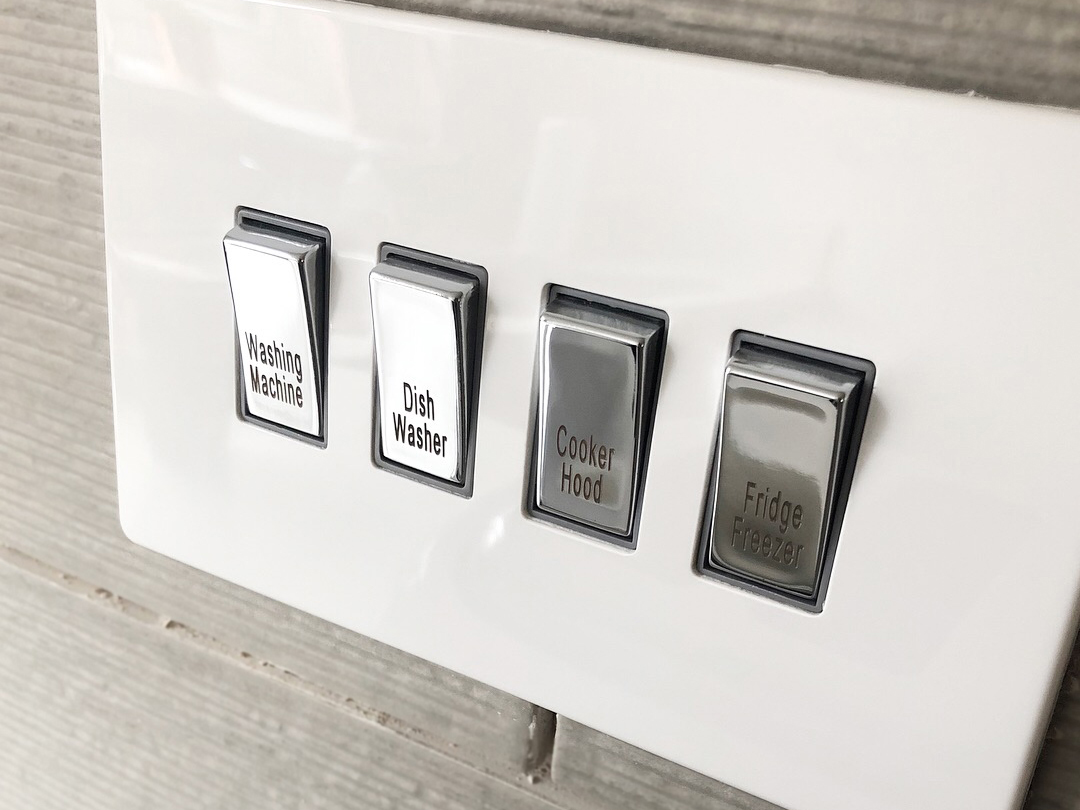
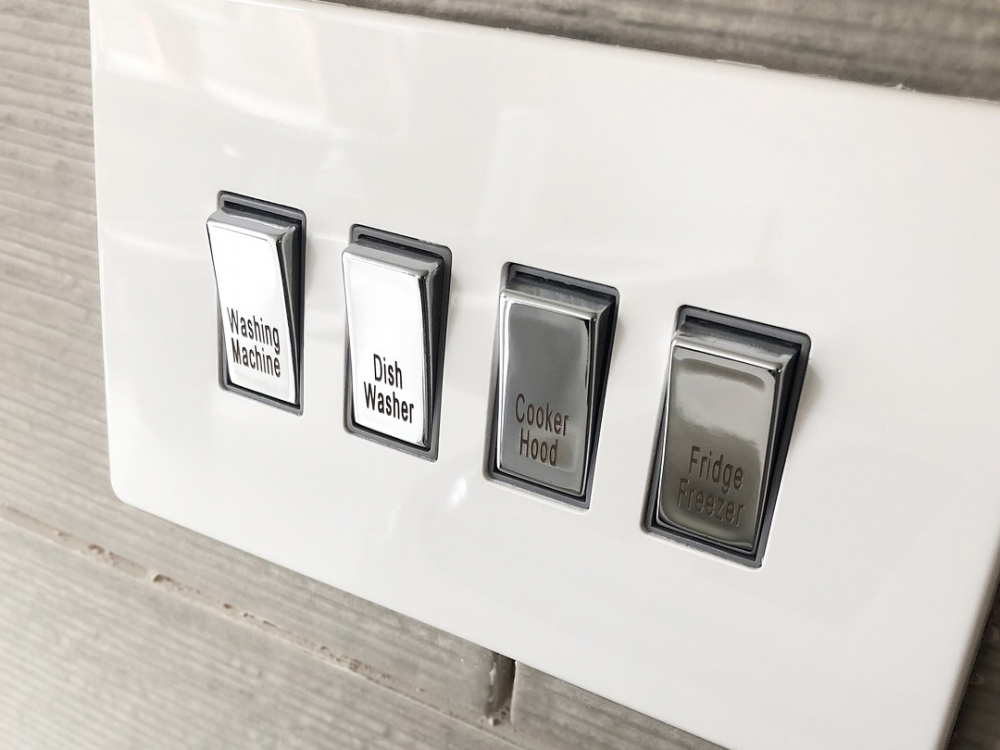
All the sockets in a room would probably be on the same circuit and all the lights on a different circuit. In the kitchen, ovens and his will be on their own circuit with their own RCD. You could install a multi grid socket that allows you to turn things off in the kitchen as below. Things like the dishwasher and washing machines which are plugged in behind them need to have accessible switches according to the regs. We just have all of ours inside ne kitchen cupboard to keep it tidy.
-
Is this normal on a new build roof...?
AliG replied to tmcb1234's topic in Roofing, Tiling & Slating
If the ceiling below the loft is warm and the ceiling below the master bedroom is not, then that is almost certainly due to cold air getting into the ceiling below the master bedroom. This will also make it hard to heat the master bedroom as it will come up through the floor. Are there ventilation grills in the eaves hat you can see from outside> You said there are eaves storage cupboards, if the inside of these is not plasterboard can you go in there and take a picture of the underside of the roof and the wall between the cupboard and the the bedroom as then we might be able to tell you what kind of insulation is in there. Also if those storage cupboards are next to the dormer then a picture of that from inside the cupboard. -
Is this normal on a new build roof...?
AliG replied to tmcb1234's topic in Roofing, Tiling & Slating
Just looking again at the picture. Is there less snow on the roof above the room in the roof? That suggests that it is not well insulated compared to the area with a loft. -
Most issues would probably be electrical which should trip the circuit breaker. If someone puts their hand in a blender then Darwin's Law applies. I have put some items on WiFi switches where they need reset sometimes, like the Sky Box and it saves me having to go and root around for the switch. IF there is anything you are worried about I would just make sure you can access the normal switch.
-
Is this normal on a new build roof...?
AliG replied to tmcb1234's topic in Roofing, Tiling & Slating
That looks pretty normal. The insulation should ideally be 3-400mm deep. IT is what is known as a cold loft. The insulation is at ceiling level and then it is cold above that. Was the house built by a developer? Have you spoken to them about it? If you have rooms and storage in the eaves then it will have to be insulated at the rafter level, i.e. up close to the membrane that you can see here. Can you tell how thick the roof in these areas is? If it has PIR (Solid foam type insulation) I would expect the insulation to be 150-200mm thick and the roof to be 200-300mm thick in total. Can you see how the roof has been insulated in the eaves spaces? You might have a few issues - 1. The roof is not properly insulated in the areas where there are rooms in the roof. I would also be suspicious of how well insulated the dormer itself is. The walls of that dormer again would need to be at least 150m thick to be well insulated, the roof of it also. Is there much wall either side of the windows on the inside, you could estimate how much insulation there is from that. 2. If you have insulation at roof level then things need to be air tight below it otherwise the insulation is not going to work if cold outside air is blowing below it. In the eaves storage cupboards the roof of them should be sealed somehow to the insulation. It should be taped or have some kind of air tightness covering. 3. Cold air is presumably getting into the ceiling if it is sitting at 10C below another heated room. It will be trickier to figure out where this is coming from as you don't have access. Are there any spotlights in the ceiling. If so pull one down and see if you feel a draught. You will need a bit of a breeze outside. A cold loft like you have may be ventilated at the eaves. That is fine as it is above the insulation. But if this ventilation is in place at the eaves where there is a room above it then it would be ventilating your ceiling instead. 4. Can you see the wall of this room from up in the loft? The loft is effectively outside space so the room should have insulation on its wall facing the loft as they are effectively exterior walls. Similarly depending on how the roof is insulated the walls facing these space could need to be insulated. Pictures of the inside of the dormer, the eaves spaces and the loft facing this room would help. -
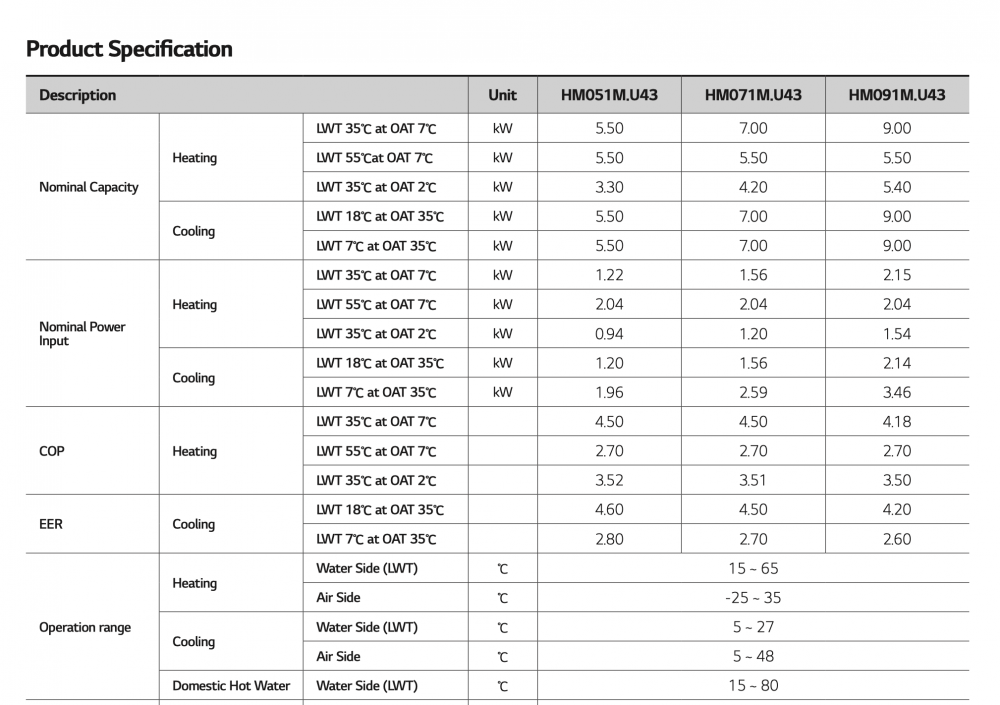
I just checked this as I had noticed when looking at heat pumps that some of them see a notable drop in output as they get away from ideal conditions. You have to be careful of this as non ideal conditions are often when you need them most. After a lot of work on Google I found the full specs of LG heat pumps. It seems to me that they suffer from this issue more than others I have looked at. The figure isn't given here, but with a flow temp above 35C and an outside temp below 2C it would seem likely that its max output drops to less than 5kW which would indeed make it undersized. Notice that with a 55C flow temp, the max output of the 5, 7 and 9kW pumps is actually the same!
-
Bad Airtightness Test Result
AliG replied to AliG's topic in Mechanical Ventilation with Heat Recovery (MVHR)
They depressurise the house, so if there are any holes the outside air gets sucked in. When we did it, the outside temp was about 3C, so you could very easily feel the cold air. It would have been a lot harder in the summer. The guy had a puffer that puffed smoke/chalk dust to detect air movement. I have tried smoke matches but they do not work anywhere as well, they produce too much smoke. It was noticeable that cold air was drawn in through lots of very small gaps where I had never felt a draught at all so it is a pretty severe test. -
Bad Airtightness Test Result
AliG replied to AliG's topic in Mechanical Ventilation with Heat Recovery (MVHR)
Have you DIY rigged a blower door fan? For less than £50 it's like a 6th sence when you're draft hunting. We had an airtightness test done and spent a couple of hours looking for issues. Tbh a lot of them were places I had guessed were going to be an issue. What was surprising though was how much air was coming through some of them. I am hoping that half a dozen large holes and issue areas were the majority of the problem. Sadly I think it was correct. I did notice he had missed one or two of the mvhr vents afterwards though. That's interesting. There is a school of thought that is convinced that there are huge radiative losses via glazed areas, "because it radiates to space". Our hall is almost entirely glazed to the north side and double height. It doesn’t seem to take any more heating than other parts of the house (suggesting it is fact the air leakage that is the problem in the WC) I think that the benefit of triple glazing is larger than the u-values suggest. It may simply be that it removes cold areas and people end up over heating their houses to compensate for the coldest spots. I might get the IR camera out later this week when it is forecast to be -7/-8 as it will be interesting to see the impact. -
Bad Airtightness Test Result
AliG replied to AliG's topic in Mechanical Ventilation with Heat Recovery (MVHR)
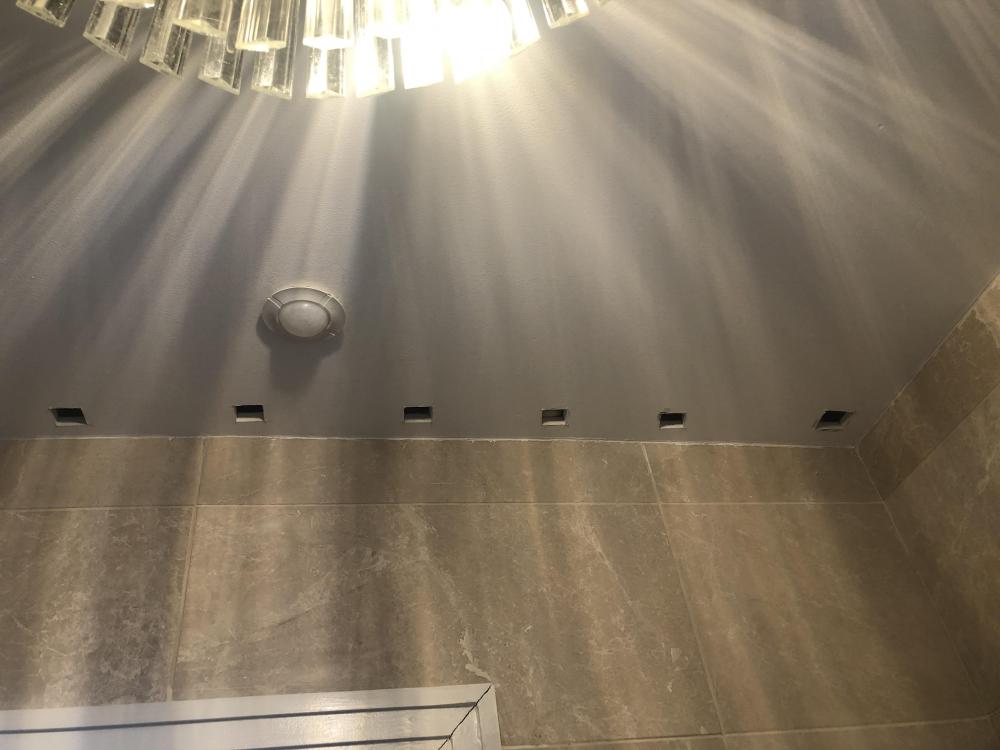
Funnily enough I was thinking of posting a thread earlier today about how people's houses feel in the cold weather. It is very noticeable that you cannot really tell from inside the house how cold it is outside. I think that 3G windows are a big part of this as you don't feel any colder next to them than next to a wall. I remember my parents had a house built 30 years ago where the front door was part of a large double glazed screen. The whole area around the door was absolutely freezing when it was cold outside and we had to put a curtain over it to try and reduce the impact. A friend of ours posted on Facebook the other day that it was -2 outside and their heating could not keep the house at a comfortable temperature, I think their house was built in the 70s. Despite the airtightness we don't have any draughts except in the WC. Almost all the places I have been fixing have been unheated and ancillary rooms like the laundry room or eaves storage. Luckily it is often a problem of bad detailing, I think. I do, however, notice doors will move when it is windy outside and this seems to have fallen since I filled the big hole in the cupboard in. I suspect that if I get the rest of the gap here filled in and then the plasterboard back there will be a further improvement. The WC suffers from a perfect storm. It is almost entirely outside walls as it juts out from the house. It is on the north side of the house with a small obscured window so no solar gain. It doesn't have insulated plasterboard as it is not rated for the weight of the tiles and it is entirely tiled which makes it feel cold. I still knew there was an airtightness problem here, I just couldn't find it. The flush plate cannot be perfectly sealed to the wall and the cistern is boxed into an area that is open up to the ceiling, I could feel cold air coming in here and the small lights in the wall alcove. But ultimately the whole area is less than 1% of the house so it probably wasn't impacting things too much. -
Bad Airtightness Test Result
AliG replied to AliG's topic in Mechanical Ventilation with Heat Recovery (MVHR)
Absolutely, this would have made things much simpler. Luckily most of the problem areas have been in places I can get to with a bit of effort. I think a lot of the areas were probably not impacting heating bills much. This one was though as often this was the only place in the entire house where the heating was on. Indeed I had to put an extra wireless thermostat in the WC as it was on the same thermostat as the hall as was often cold when the hall was fine. This is more an impact in spring and autumn. I have one big job which I hope the builders will tackle, insulating the study wall, but I cannot get them in due to COVID. After the WC the study is the next place where the heating is on the most and as it is a bigger room it might be more impacting heating bills. The one other place that could be improved is the chimney breast in the kitchen, but I just cannot see how I can get the access to do it. If the ceiling fixes nicely in the WC I might have to do the same thing in the kitchen. It does not seem to be having the same impact on heating as I think the cold air is mostly contained within the chimney breast. Then I will get the air test done again and see what difference it has made. It will be interesting to see if a better air test result actually corresponds to lower heating bills. -
Bad Airtightness Test Result
AliG replied to AliG's topic in Mechanical Ventilation with Heat Recovery (MVHR)
The big hole is all filled in, but there was still a bit of air getting in from somewhere. If you look at the plan I posted the issue continues to be the interior cavity spaces. Basically the roof of this area is a single concrete slab.The builders have sealed what they thought were the three outside edges. But the inside edge between the hall and the cupboard/WC is open to the cavity between the two layers of Porotherm. As they considered this an inside wall they didn't seal the edge of the slab. In the cupboard I have filled it between the hole I cut in the corner and the hole the MVHR duct comes through. No ready made hole in the WC, so I have peppered the ceiling with holes and sure enough as soon as I cut the first one I could feel the draught. There is around a 10mm gap between the Porotherm and the slab all the way along above the doors. In the very corner I knew the water pipes came through the wall into the WC and this was sealed. The frame that holds the ceiling sits in front of the gap and in some places there is only a 6 or 7m gap. So the 8mm PVC pipe I have been using attached to my foam is too thick and I will finish it off when some 6mm comes. I was almost done in the cupboard when I got a bit too enthusiastic with the foam and blew the pipe off. Do you like my new designer shirt? As I think I said this little area has always been the coldest part of the house but I didn't know what the problem was. I even got the builders to take down the WC ceiling, but they still didn't figure out the gap to the hall side was the problem. I will be very happy to have this fixed.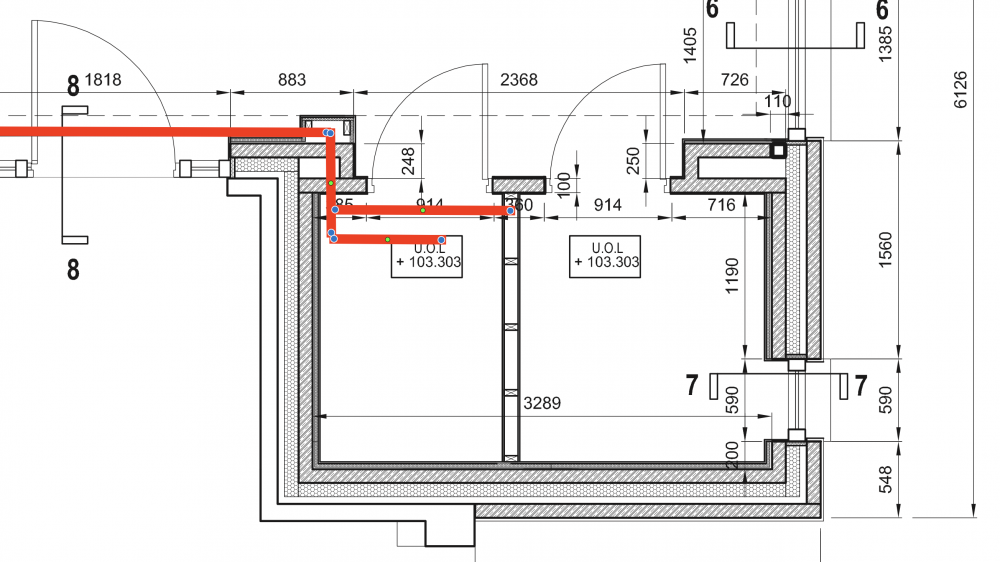

-
Takes less time, but is more expensive?
AliG replied to GC1's topic in Insulated Concrete Formwork (ICF)
The more I look into it the more I think ICF is the right way to build. This is especially true as houses get larger and more substantial. So for a modest house in timber frame ICF might be more expensive and offer few benefits. But for a larger house built in block with concrete floors etc, then ICF has many benefits to the finished house in terms of insulation, air tightness, noise and so on. I think many of these benefits will only show up with occupation and this is why ICF isn't more popular. When people price ICF and masonry I am not sure that they price like with like, there are many extra costs in masonry that may be missed in initial forecasts. You will likely need more steel and lintels. Pipe stacks can go inside the ICF walls instead of needing to be boxed in inside rooms. There is a lot less need for air tightness tape, expanding foam etc. I think a lot of the small sundry items add up and often don't make it into initial costs. A lot depends on how complicated the masonry build is. We have a load of steel in our walls supporting concrete upper floors. I suspect this might not have been necessary with ICF. -
You would probably only need a 5-6kw ASHP for heating, but you might want a slightly lager one to heat up your hot water faster. The stats are almost identical to my parent's house and we went for a 9kw for the hot water, especially with 5 occupants. You will probably also need a 300L hot water tank. You could use a larger than necessary manifold with an extra output for the summerhouse that is capped off until needed. However, if the summerhouse is much worse insulated than the house the flow temperature probably won't be high enough to heat it fully or quickly. You would probably be better off having a fast acting heater in the summer house, it depends how much you plan to use it.
-
Choosing MVHR - energy consumption angle
AliG replied to Olf's topic in Mechanical Ventilation with Heat Recovery (MVHR)
With 3G windows the condensation is usually on the outside which is a little surprising to see at first. The inside of 3G windows should be barely any colder than your walls which makes a considerable difference to interior comfort. Indeed it is almost impossible to tell what the outside temperature is whereas with poorly insulated windows you feel it as you walk past them. -
I have the slightly cheaper lower powered one. Much quieter than the switch it replaced. https://www.broadbandbuyer.com/products/38329-netgear-gs316p-100eus/ Replaced a much more expensive Ubiquiti one which blew after only about two years and didn't have a separate power supply. Apparently a regular fault. It is smaller and quieter and cheaper than the Ubiquiti one and has a separate PSU. I have a 24 port non PoE and 16 port PoE switch. Non PoE switches are a lot cheaper if you can figure out what doesn't need powered. No issue spreading things across more than one switch.
-
I did think that without the window there is more room on the right hadn't side opposite the sink as opposed to the toilet. It is certainly doable to waterproof around the window, I have seen it done. It just looks a bit not quite right. Our shower heads are set 2m above floor level, which would put you in the middle of the window. You could set one above the window, but thinking about everything maybe a better solution is to put the valve whee the door is and then route the pipework up into the ceiling and mount the shower head there. Is there access to the ceiling above? You could then take another pipe across and down past the window to mount the handheld head under the window. This way you don't lose any space where the block wall is.You could chase that into the wall but if you are going over the top anyway this seems more straightforward. If your dad already has to use a frame to get up off the toilet then he presumably might need help getting up off a shower seat. I found some advice here, but I do think @Ferdinand is right. If you are already at this stage things will probably continue to get more difficult and you need to consider what might be needed. At 800mm wide you are tight for width for seats and I would make sure it all fitted together. I would seriously be considering a total wet room and no screen which would be much easier to move around in. This would still be the shower area and most of the water would be there, but glass showerscreens and unsteady older people is something t think about. I know my parents are now quite wary. https://www.nrshealthcare.co.uk/articles/buying-guides/choose-right-shower-seat-2
-
Very good point, would the toilet be better closer to the wall so a grab handle could be installed if necessary?