


Miek
-
Posts
396 -
Joined
-
Last visited
Everything posted by Miek
-
Look like they don't fit. Not very good at all. If they were supply and fit then they should sort it out. If you measured up yourself then that's on you. A bay window is a bit trickier to measure but still run of the mill stuff for a window fitter..
-
How to match build materials and insulation
Miek replied to Swampy's topic in House Extensions & Conservatories
If you are doing EWI on the old house you could build the extension as a solid wall ( block on flat for example) and use EWI on that also. This would make the cold bridge detailing a lot easier IMO. Then thin coat the whole lot. -
Usually the 6x2 would have been removed while the concrete was wet after the slab was level, and made good by hand. This is the easy way to do it. Removing it afterwards is the hard way. Whether you leave it in depends on the use, I would break it out with a pick/bar/lever of some sort and make good with concrete.
-
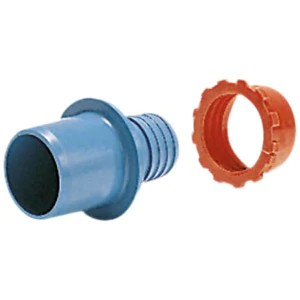
If its old 3/4 pipe the bore might be small. You can get an adapter kit to suit the old pipe bore, this puts the seal inside the old pipe and allows a standard 25mm straight coupling to join the two. You do need to get the right kit though as the old pipes had different bores. Searcy for 'plasson adapter'
-
Keystone lintels how much !! Alternatives?
Miek replied to Ronan 1's topic in RSJs, Lintels & Steelwork
Originally it was to be a concrete lintel, but the SE decided on a steel due to the span. I'm sure the wood packers will be fine. -
Thermal bridge on ground floor under load bearing partition
Miek replied to davejura's topic in Heat Insulation
Foamglass perinsul. Also expensive 😞 -
Keystone lintels how much !! Alternatives?
Miek replied to Ronan 1's topic in RSJs, Lintels & Steelwork
What's a 'Hit and miss plate' ? Just wondering what is considered best practice to cover a steel lintel on the external leaf of a block and render build. My drawings show treated timber packers in the void with cement board over but i'm not quite convinced that timber is a good idea on the external leaf. Fine for the inside... -
Keystone lintels how much !! Alternatives?
Miek replied to Ronan 1's topic in RSJs, Lintels & Steelwork
I just had delivery of a length of 254 146 31 UB 5.1m length for £285+vat. FYI. Fair bit cheaper -
3M VHB Tape to affix Corten steel cladding
Miek replied to thefoxesmaltings's topic in General Self Build & DIY Discussion
Depending on how flat you want the panels, welding could warp the 2mm sheet. -
Oversizing lintels/steel to ensure minimum bearing
Miek replied to BadgerBadger's topic in RSJs, Lintels & Steelwork
Longer bearing on longer spans is a good idea IMO, my building inspector had the view that longer is better too. I've gone for 300mm bearing on the steels spanning my patio doors at 4.9m . Sometimes your SE will specify bearing requirements for structural members in your calculations. -
a column would be UC (universal column) but maybe it reads as VC because its done in handwriting!
-
I'm not an expert. But from the notes B14 & B15 are '203 VC 71' So steel columns
-
Usefull to know. I have 5l of acetone which I use on the wet foam for cleaning but it won't touch hardened foam.
-
Will this dissolve hardened foam?
-
Ah OK, that's a better pic. As you say, not ideal, let us know what the SE says
-
Siberian larch vs sweet chestnut cladding
Miek replied to PeachyBeechy's topic in General Construction Issues
From a durability viewpoint do not use ash, it great indoors and very strong but rots very fast outside. Larch and chestnut have good durability, I've used Welsh Larch local to me and its only cupped slightly, just make sure not to use any planks with sapwood in as the sapwood doesn't have the same resin content and rots more easily. Chestnut was traditionally used for roofing shingles and fences so it's well known to last a long time.. -
The 100mm block is a very small pad to support a structural steel IMO, its not even a pad stone or lintel, I think if you ask your SE they won't like it. support using a steel column would be a good solution provided the foundation under that column Is adequate for the loads, again you SE will help with that.
-
The R value is meaningless without a thickness. Id call BS without knowing the lambda. I think a lot of salesfolk either don't understand this themselves or they assume the person they are talking to doesn't understand. R-values can be calculated by dividing the thickness of a material (in metres) by its thermal conductivity (k-value or lambda value (λ) in W/mK). R-values are therefore expressed in m2K/W (or ft2·°F·hr/Btu in the USA
-
What's the lambda for the foil your talking about? A datasheet would help.. there is no magic insulation solution , but there is a lot of misleading information...
-
Lol. When i was younger working in a builders yard it was standard practice to send out all the crap twisted timber stock on deliveries, as no one would come in to the yard and buy those pieces.
-
Wood prices are mental, I am glad I'm not doing a timber frame build right now..
-
Looking at your drawing it looks like you could drill from inside to blow the beads below the tray. Did BC want to see weeps at the bottom of the tray? Are you in a radon area? The DPM detailing needs to be continuous through the cavity tray as I understand it. The tray will be a fiddly thing to retrofit but if BC are happy with a 5mm chase ' bodge' then that's at least pragmatic of them.
-
You might have ' one pipe circulation ' going on, but more likely the NRV is not working correctly The best solution to reverse circulation from the tank coil is to have the pipe from the top of the coil turn downwards to the bottom of the tank before heading back up to the roof. Effectively a Ubend so that the heat can't rise. This is better than a NVR as it can't fail and makes no noise ( sometimes an issue with the low flow rates on ST)
-
Twin line has panel return temp I think. All you really need is the filling loop, flow setting valve and pump. Maybe a non return valve on some systems. Keep it simple IMO. Are you going pressurised or drainback?
-
Limestone is used around here as that's what our quarries have lots of. Try JJaggregates or GDharries . They are hauliers i have used for bulk loads tipped in the past.
