SteamyTea
-
Posts
23850 -
Joined
-
Days Won
200
Everything posted by SteamyTea
-
As usual, you have changed the meaning of a word to suit your ego. 'Often' does not mean 'always' and 'may' does not mean 'will'. So either learn to understand, and keep it within context, or (expletive deleted) off. Anyway, haven't you got a world class IT team to manage, or you been 'released' to troll on the internet. Weekends are so peaceful when your mum stops you playing on the computer in your bedroom.
-
Yes, and most of them are your errors (amongst many others). But then you think that a word can have an polar opposite meaning when it suits your fantasy argument, you even disagree with people that agree with you. Bet you were fun to teach at school, held up the whole class I suspect.
-
Had a girlfriend whose parents lived in Aintree. One day, when they were out in the back garden, they heard a noise at the front of the house. Went in and some bloke was robbing their TV. when asked what he was doing, his reply was 'nicking your TV', walked off with it, put it in his van and drove off. Not sure if Alan Bleasdale was a neighbour.
-
Timber is a man well worth listening to. Not sure if he still posts. One advantage of pouring after the studs are in, is that the cast area is smaller, so probably less chance of shrinking causing cracking. Just put a break in by all doorways.
-
Depends, lots, or none on a PFI.
-
Not been there much since the 1980s, cost you a new set of car wheels every night visit won't it. Look up GSE Integrated PV, not that ugly silver bolt on stuff.
-
No need to be smugly and nitpicky over a general concept you have only just discovered. Makes you act like a teenage WOKE.
-
OK. The title of the thread becomes more appropriate.
-
We may find out as someone on here DIYed and failled to notify their DNO.
-
No, now wash your mouth out with soap.
-
I suspect that the DNOs have to look at a much bigger picture. If there proportion of micro generation gets too large, grid stability issues may arise. I suspect that the 16A per phase is vert much on the safe side. Would be a worry if on a scattered cloud day an extra MW of poorly unregulated PV caused a 3 GW nuclear power station to go off line. We saw what two independent faults did in August 2019.
-
Poetry is easily done Just take a Bob Dylan song And rearrange the words https://www.bobdylan.com/songs/i-dont-believe-you-she-acts-we-never-have-met/
-
You would need a BMS, hopefully with MPPT to charge the batteries. Is there any reason to just spur off the DC side, before the inverter, to a BMS. Not sure how the load sharing will work, but if the BMS takes less load than the inverter, then charging is reduced, and visa versa. You can also tap of at a more suitable voltage for the BMS. Don't think they like 600V+.
-
Misread blue tops. Down here, there is a group of female, cold water swimmers. They are called The Blue Tits. I wish the ones that park in the road, blocking in legitimately parked cars, would fail to rise.
-
Maybe @joe90 has a similar problem.
-
https://en.wikipedia.org/wiki/William_McGonagall
-
Yes, you can get what they call 'islanding' systems, and purely stand alone systems. How would you switch between your stored energy and grid energy for when you need extra power that the PV/battery system cannot supply i.e. 3 to 4 months in the winter. You also, when it come to calculating the cost, need to put a price on lost generation i.e. system losses, unused generation potential.
-
With limited testing/development, then send the bill to the MOD for £13bn. Unless you have a mate in the government, then up the bill o £37bn.
-
20 years ago, my night rate was around a third of the day rate. Now it is over half the day rate. E7 was designed for nuclear power, which did not happen at the scale first envisioned. I am not sure that there will be an E7 system continuing for much longer. More going to be dynamic pricing, which will be fun as people struggle to grasp the concept of E7. Think my E7 time window as changed recently, must check.
-
 This is one of my concerns, especially as my house is tiny. The two places I have been in with them, I never noticed them at first. Both were good size rooms, probably 40m2. Which is about the liveable area of my house.
 -
Yes, got the storages on, probably put 13.5 kWh into them this morning. I had just been cleaning the house, so I probably put in another 0.25 kWh.
-
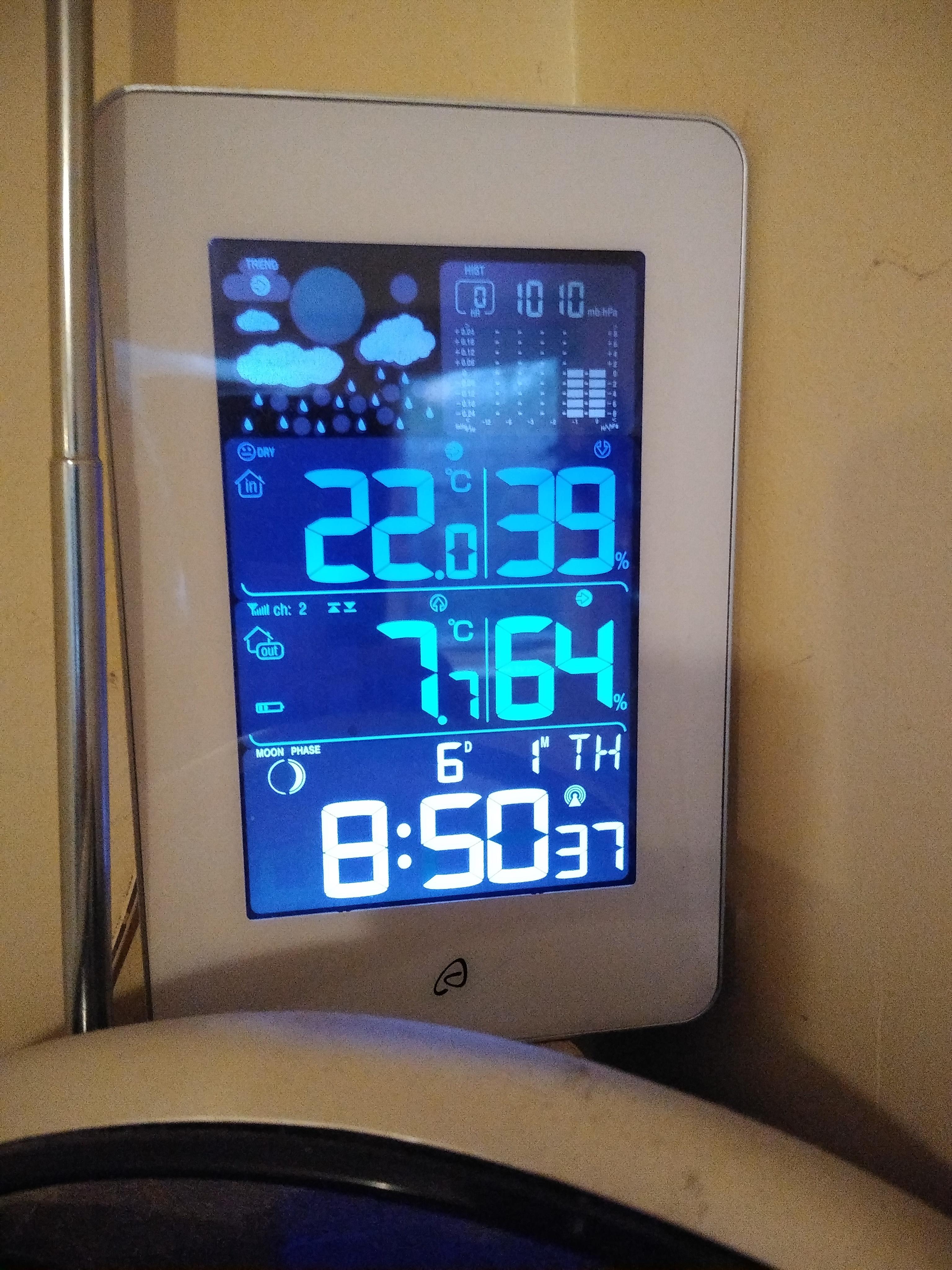
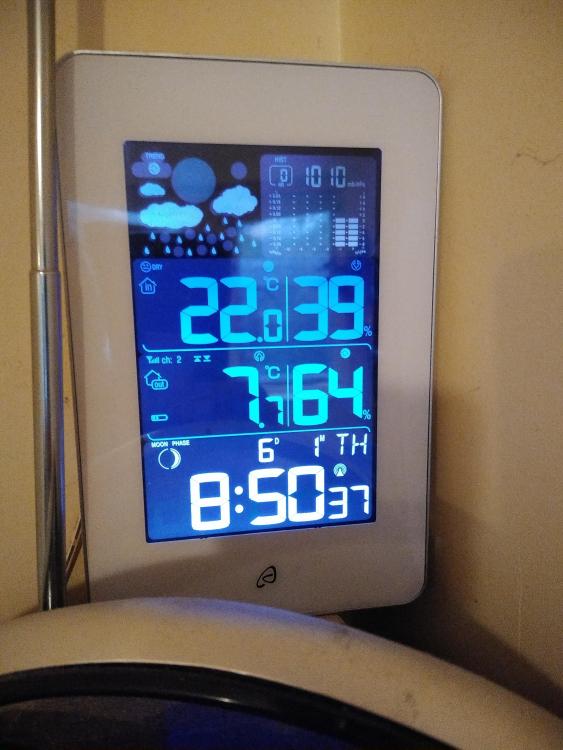
Just noticed my house is at 22⁰C, no wonder the RH is low today.
-
Alexa speaker in the bathroom?
SteamyTea replied to Adsibob's topic in Electrics - Kitchen & Bathroom
I have a radio in my bathroom. Hardly spend long enough in there to take much advantage of it. -
Welcome. When you say a 'new roof', do you mean just new slates, or a complete new roof? Have you considered roof integrated PV, PV modules are often cheaper than slates, so may work out cheaper and you get some electricity.
-
Do you know how much you use at the moment? If not, find out, it will help no end and take most of the guess work away. There may be a condensation problem if the PIR restricts vapour transmission too much. Have you considered Air to Air Heat Pump/s. Depending on the house layout they may be the cheapest option for space heating, and as they do not get RHI, it takes the time pressure off you. They get a better CoP than a wet system. You say you use little DHW, but have you thought of using a PV diverter to the cylinder to optimise self generation usage?