Mr Blobby
-
Posts
616 -
Joined
-
Last visited
Everything posted by Mr Blobby
-
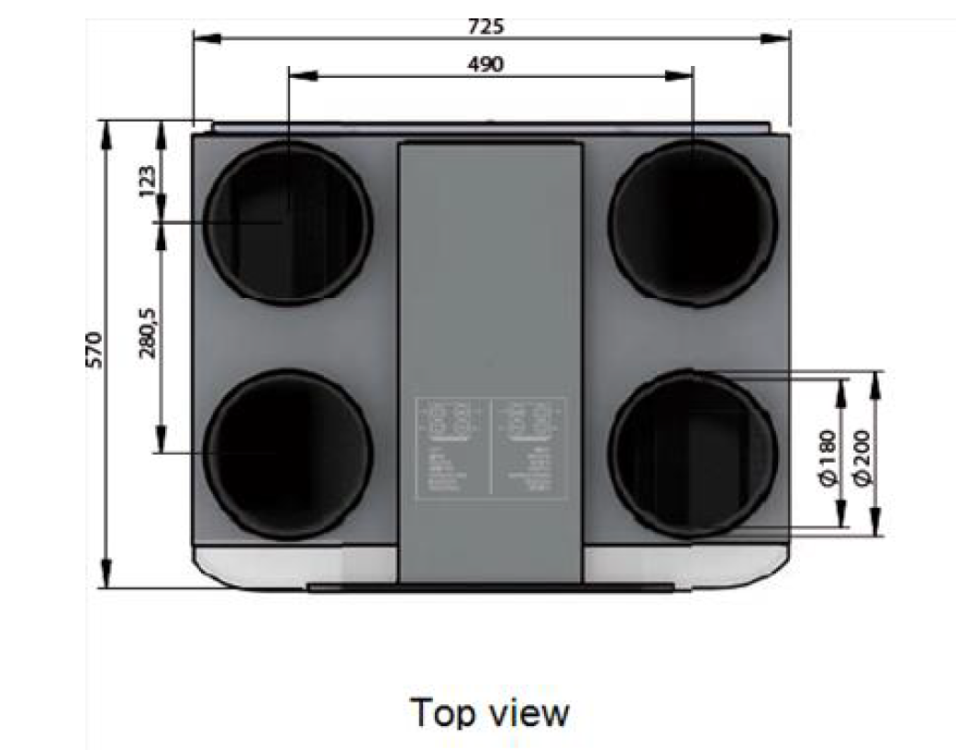
 Apologies if this has been covered elsewhere. I did look, honest. MVHR unit is going into warm loft. What ducting to the outside? Should it be insulated? If so what type is best? This stuff? ... because it looks a bit too bendy, surely rigid ducting would be better. If so then what insulation? Also, the external vents all seem to be 180 diameter, the Zhender unit is like this: ... what size duct do I neeed to the outside, 200 or 180? I do have a package quote from BPC but none of this stuff is clearly described. I'll give them a ring I think....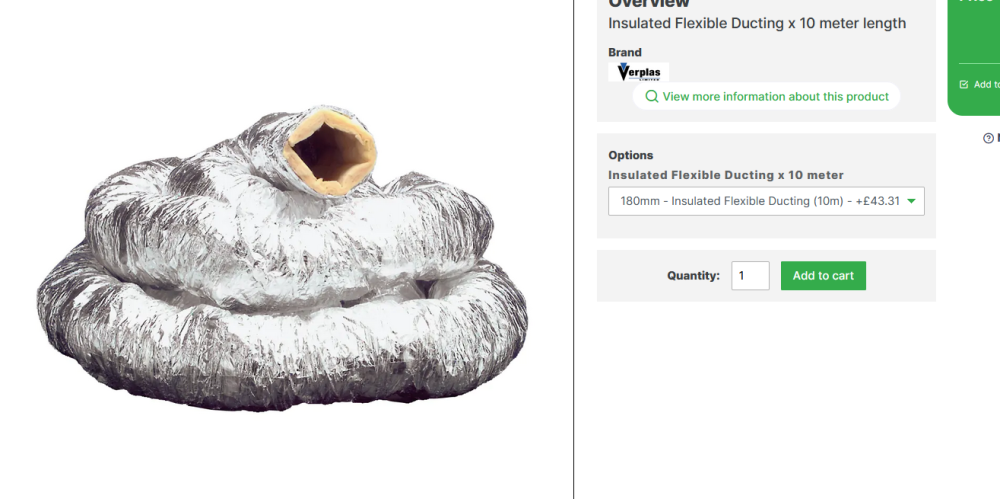
-
Who did the core drilling for you? I need the same for big holes for the MVHR intake and exhaust through dense clock wall. The fitter said he'd kango through and patch it up. I dont think so!
-
Yes we fitted one (the largest size SK06 114x118cm) in our build just before Christmas and I think its great, although I'm no expert on velux windows. It was heavy, perhaps because of the extra (5 in total) panes of glass. These windows need the additional (BDX I think) fitting kit so the size of the opening needs to be increased by about 10mm but check with Velux for the exact size. We didn't fit the Velux airtight collar, we just taped intello plus to the frame and that seems to be ok.
-
Sadly yes. The installers are supposed to the best metal roof installers in Northern Ireland. A big well known firm that came recommended with a supposedly very good reputation hence I am surprised at the state of the work. I am awaiting their reponse to the rusty screws issue. They are supposed to come back to do some cladding in a few months time. That might not happen.
-
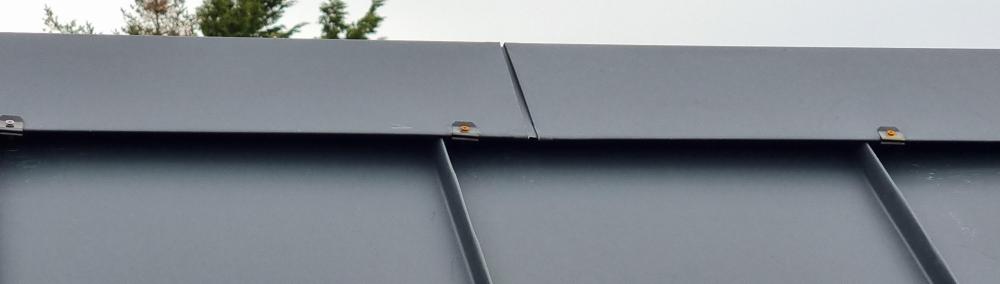
I'm glad my scaffolding is still up 🤪 Damn, they could gave pushed that peice in to close that annoying gap 🤪
-
Im pretty sure the black foam stuff is there, I saw it on site and we poked some conduit through it for the PV cable. I haven't checked the whole roof of course. I don't like heights.
-
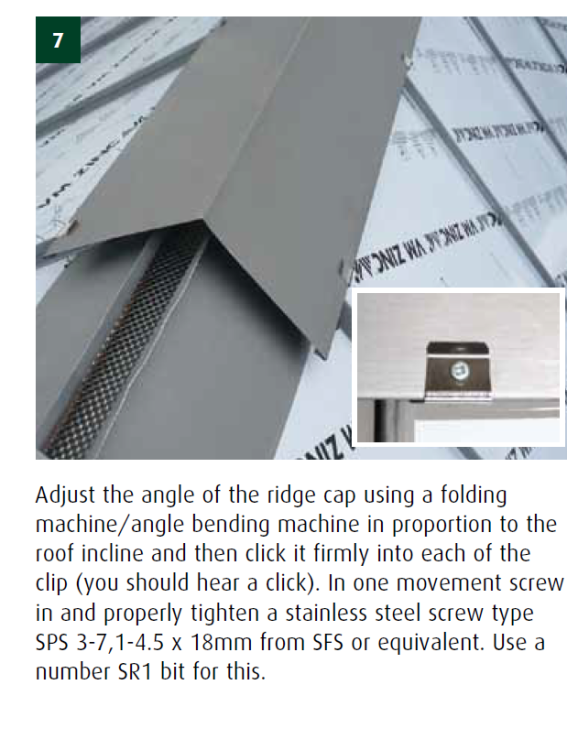
On the VMzinc directions (that appear to be the way my aluminium roof was installed) there are screw details that mean nothing to me...
-
Agreed, definetely the wrong screws. Yes the gap in the ridge annoys me too. Totally avoidable had they tried to do it properly.
-
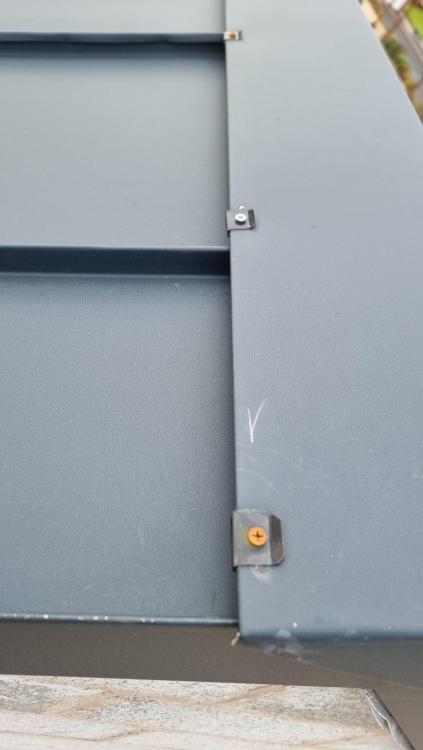
You're quite right about the galvanic corrosion. What are the options here then if not stainless steel screws? Aluminium screws look like the only choice. At least it will be easy to check with a magnet if the right screws are being used 😆 I have a bad feeling that standard VMZ stainless steel clips may have been used to fix the aluminium panels. There are some spares kicking around on site to check. Interestingly enough, however, the prefa site lists stainless steel fixings for the aluminium panels. I'll email Prefa for some guidance.
-
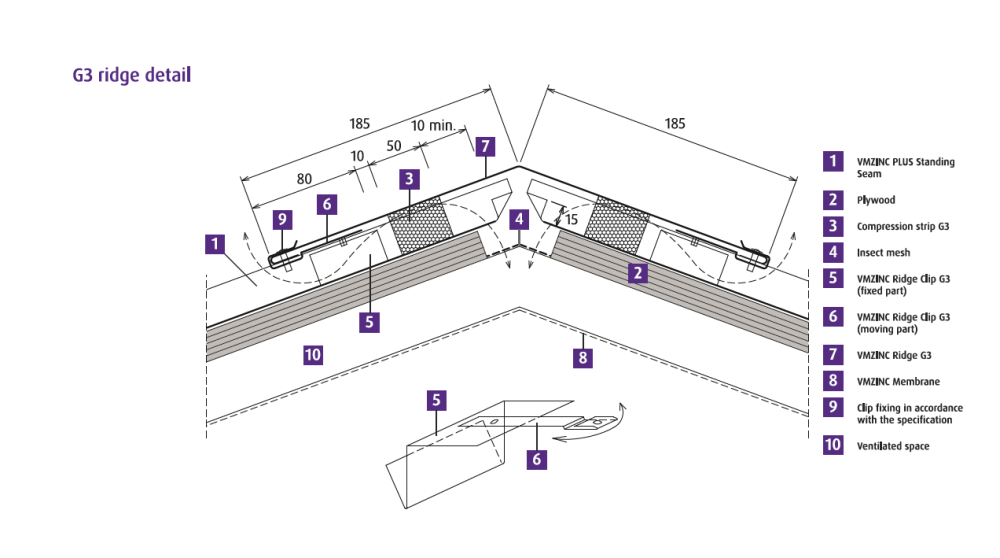
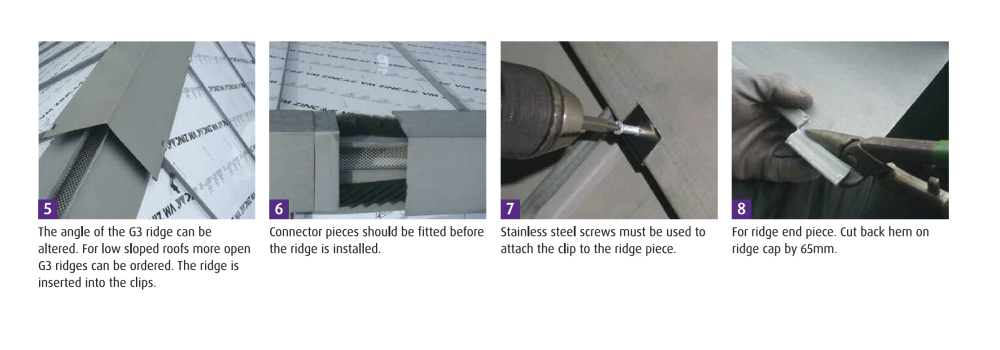
So I found the ridge construction and its the G3 standard ridge construction for zinc roofs. Which I'm ok with. In theory. Looking at the G3 roof installation, I recognise this as exactly how our roof was installed. The G3 ridge detail is described very nicely here https://www.nealroofing.com/wp-content/uploads/2018/10/Ridge-Installation.pdf This is the bit I like best at square 7. Stainless Steel screws Must be used. I think our metal roofer will be replacing the screws soon. That'll learn him to try and save a few quid.
-
It annoys the hell out of me already. And all to save a tenner on screws. Its so obvious that screws here should be stainless that you shouldn't have to check. Which is difficult anyway. How do you know for sure if a screw is stainless before it starts rusting?
-
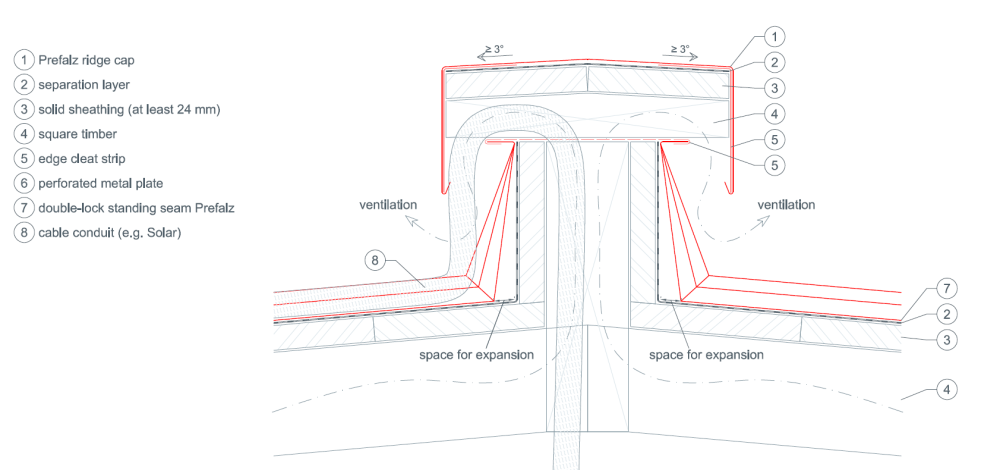
The ridge vent, yes. Aluminium. Prefa. I don't think so. https://uk.prefa.com/fileadmin/user_upload/_EN/Downloads/Technische_Zeichnungen/Details_Roof_PREFALZ_PREFA.pdf I'm pretty sure its not like this... Me neither. In fairness, it's hard to see the fixings unless on the roof but I can see the rusty screws from the scaffold easy enough because of the colour difference.
-
It looks like the metal roofers wanted to save a few quid on screws when installing my very expensive metal roof. Am I right to be a bit naffed off?
-
Single zhender 600 unit, 90mm ducting. 8 extracts. 9 Supply. Voids designed in to new build house for ducting so there should be no routing problems. I've been quoted £1500 to install only. Is this a good price to save me the hassle? Or save the money and do it myself? * *I have no idea how to install this but reading the posts on here its just fixing the ducts with metal strap to the holllow core slabs. How hard can it be 🤷♂️
-
Has anyone used tile.expert website to order tiles?
Mr Blobby replied to leemkule's topic in Wall Tiles & Tiling
We've not bought our tiles yet but our architect says some of his other builds had floor tiles from Tile Expert and they were ok. -
Thermal bridge ? Screeding tomorrow
Mr Blobby replied to bmj1's topic in General Construction Issues
Cancel the screeding -
Steel Beam Thermal Break Alternatives?
Mr Blobby replied to bildbildbild's topic in General Structural Issues
Where's the steel? -
MVHR intake and exhaust separation
Mr Blobby replied to dnb's topic in Mechanical Ventilation with Heat Recovery (MVHR)
There has now 🤨 -
Void and Pantry and More
Mr Blobby replied to Mr Blobby's topic in Mechanical Ventilation with Heat Recovery (MVHR)
I get a sense of deja vu here 🤦♀️🤦♀️ -
Void and Pantry and More
Mr Blobby replied to Mr Blobby's topic in Mechanical Ventilation with Heat Recovery (MVHR)
Please tell me more. What's good about them over the 5 quid vents? Need to decide this quite soon 🤔 -
Anybody used ultra wide monitors
Mr Blobby replied to Adsibob's topic in Networks, AV, Security & Automation
Whatever you do don't get a 4k monitor at 27 inches. The font's don't scale right at 4k on a 27" monitor and it looks awful. I use two 27 inch monitors at 2560x1440 on an amzon basics dual mount and that works great for me. As @Conor mentioned, multiple monitors with a single app maximised on each is a lot easier than messing around resizing windows on a single big screen. Before doing anything, make sure your desktop/laptop can support monitors at the desired resolution with the proper port(s). Which may or may not need to carry audio as well. -
Void and Pantry and More
Mr Blobby replied to Mr Blobby's topic in Mechanical Ventilation with Heat Recovery (MVHR)
They've had other problems with their build, including leaky plumbing, so you are probably right that the root cause of their pantry condensation is not the ventilation. -
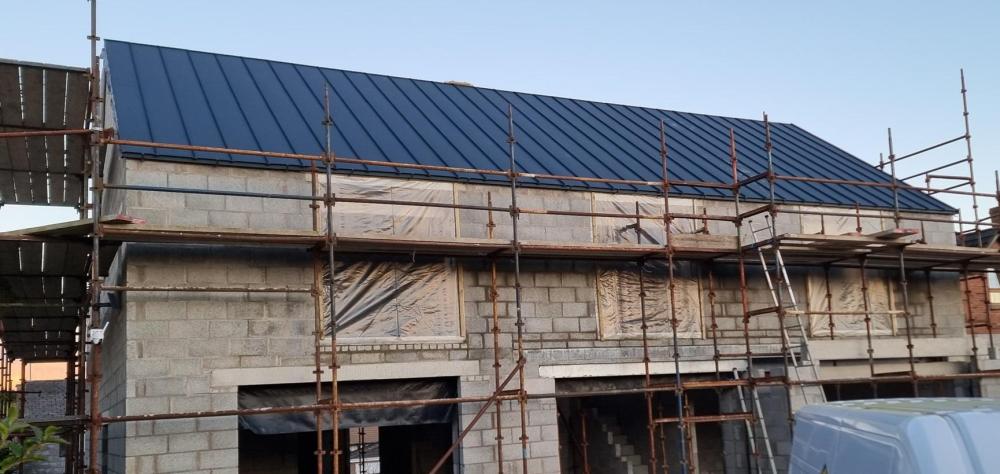
Hi Conor, yes, I remember you were putting JA Solar panels on the roof when I visited your build some time ago. Your panels are nicely integrated with GSE frames and look bang tidy. We have a standing seam roof. Our panels will be mounted on S5 clamps so not quite so invisible, hence the desire to get pretty panels. We can get 20 panels on the NE and SE elevations at the back but the biggest SW elevation at the front, where the sun shines, is I think too nice loooking to spoil with PV panels. That;s our problem and our reason for looking at fancy panels. I had thought that maybe if I install the prettiest panels on the rear then they may not spoil the aesthetioc of the roof too much. I can experiment to see how they look on the rear and then make a final decison about the front. Our builder is horrified that I am thinking about spoiling the front roof with panels. I think he is probably right. I'll test out the rear first to be sure to be sure 🤨
-
Void and Pantry and More
Mr Blobby replied to Mr Blobby's topic in Mechanical Ventilation with Heat Recovery (MVHR)
This is a really good point. I hadn't thought of it this way, that a supply would stop the warm air from the kitchen entering the pantry but it makes complete sense now you explain it. 🤔 Supply in the pantry it is. Thank you. That's the answer I hoped for. So no supply/extract in the void then. A freind of ours who lives in a new build down the road with MVHR complains of condensation in their unventilated pantry so I naturally want to avoid the same. A large ventilation company in Northern Ireland, who did our neighbours ventilation plan, also drew up a ventilation plan for us and similarly excluded any pantry ventilation. On our ventilation plan this company also omitted an extract from the plant room (where the DHW tank sits) but has added an extract on the landing at the top of the stairs. Which we won't be implementing. Agreed, it would be impossible to reduce the temparature in the pantry with the sort of insulation we have, we just want to keep the kitchen humidity out. 👍 -
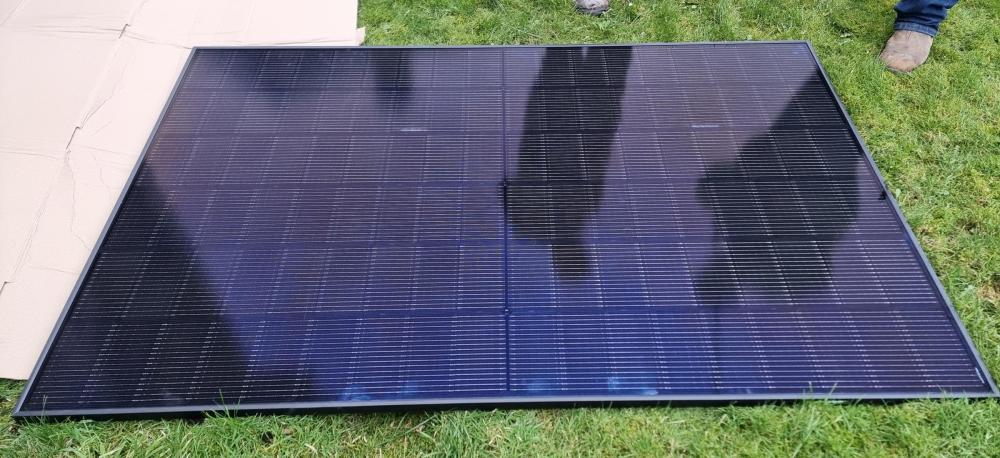
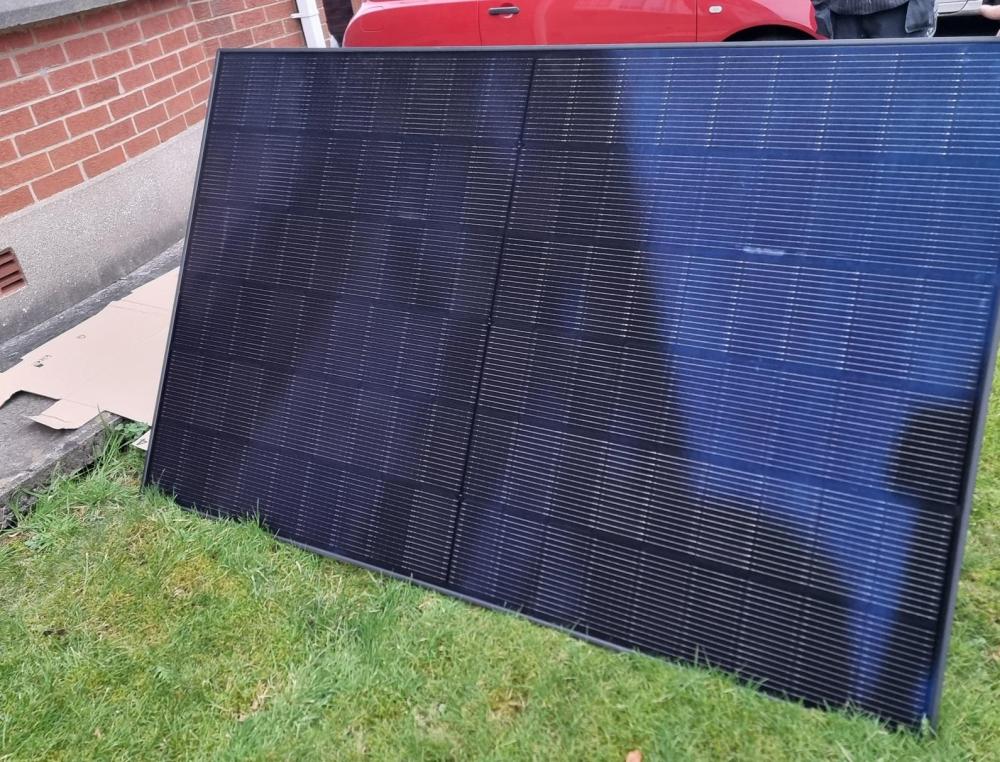
This week I need to decide on solar panels. I will be installing about 20 on the roof, and maybe a few on the garage too. This afternoon I got to see a JA Solar deep blue 4 series panel. This is, I think, typical of the "all black" panels, with wires visible on the face: Its a fine 435 Watt N-Typw panel but its not really "all black". AFAIK most black panels use this same technology except for Maxeon/Sunpower who recently released a new black panel with a glass face and no visible wires. Which looks great (although I haven't seen it in the flesh of course) but is three times the price https://www.renugen.co.uk/sunpower-maxeon-3-420-blk/ Aiko sell something similar for less https://shop4electrical.co.uk/panels/12211-aiko-a-mah54mb-mono-glass-n-type-abc-black-hole-series-photovoltaic-solar-panel-450w but look like they are being sued for patent infringement https://mediaroom.maxeon.com/2023-11-15-Maxeon-Solar-Technologies-Files-Patent-Action-Against-Aiko-in-Germany I like the look of the Aiko panels but are they worth the extra dosh or should I save my money and stick with more tested technology like the JA solar? Will anyone ever see them on the roof apart from me anyway? What other panels should I consider?