


Mr Blobby
-
Posts
616 -
Joined
-
Last visited
Everything posted by Mr Blobby
-
To my surprise and delight, SOLIS have actually completed the G98 Northern Ireland tests for the new series 6 inverter that is unique in having 4 MPPTs. The G98 NI certificate is on the ENA website. 😀
-
 This week its all about MVHR. Most of the plan is sorted and I've read all the topics on here but a few stupid questions remain. Please help... 1. Voids From our ground floor kitchen we have a void that runs up through the first floor and into a vaulted ceiling with a velux. There are no openings in the void above GF so it is effectively airtight to the rafters. The void sits above the dining table and between the kitchen and living space. There will be kitchen extracts on one side and supply valves to the other side of the void. There will therefore be some passage of air across the bottoom of the void, but what about higher up where there is no ventilation? Should there be a supply or extract valve near the top? Would there be a condensation risk without ventilation? Would natural convection currents control humidity and I don't need to worry about this? 2. Pantry Should the 2m sqaure pantry have an extract or supply valve. The pantry has a single door to the kitchen with an extract about 2.5 metres away in said kitchen. 3. Fancy valves I quite like the look (and claimed acoustics) of some of the outragously expensive supply/extract valves like Lindab airy or Frankische or ergovent. Are they worth the extra dosh? Does anybody on here have them? 4. Balancing at the manifold I read on here somewhere that its better to balance at the manifold because there is less noise. Is that true?
 -
You can now get sky stream, no dish and freedom to get a decent tv set instead of the glass TV. The TV with sky glass is pretty crap. Its LED. A decent OLED TV (LG) will be far better and weigh far less. That's what we'll be doing and with sky streaming so no dish. In my experience a cheap stereo HiFi amp and two speakers is cheaper and sounds better than a soundbar but some prefer the looks of a soundbar. Which isn't really the point. Our TV will be on a cabinet.

-
Thanks @Marvin, that's what I thought, it's the costs of bailing out the failed suppliers that we all have to pay for now. It's not a green levies thing it's a privatisation blunder. Privatise the profits and nationalise the losses 🤦
-
Do you have a source for this?
-
In theory. In practice too many people where I live get the garage to remove the DPF and 'fix' the sensor. A lady in her 70's who recently told me her diesel golf goes much better after the garage removed the DPF was confused by my dissaproval. She couldn't see anything wrong with it at all.
-
Ah yes, I forgot the carbon (aka soot/particulates) 🤦♀️
-
Don't forget the reality will be an incomplete combustsion to release a bit of NOx and CO. (Just like the unwanted emissions from our petrol and diesel cars) 😉
-
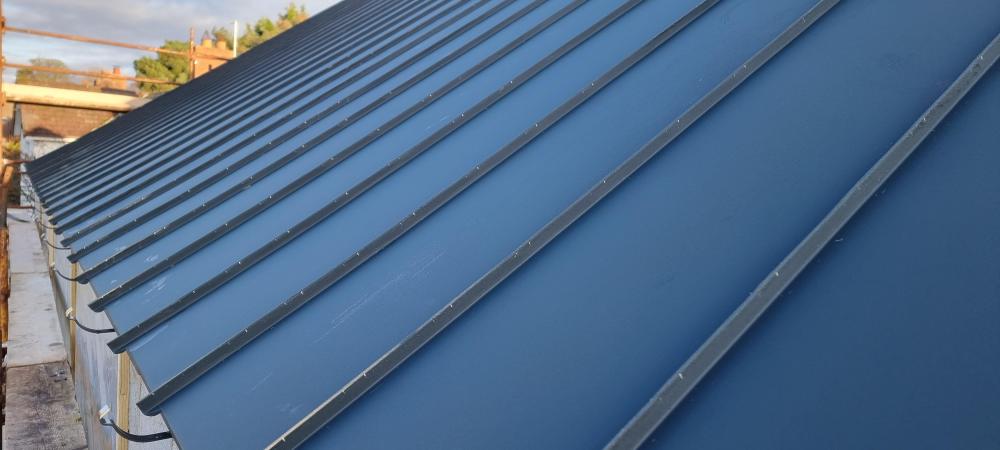
My aluminium statnding seam roof is currently being installed. It looks great from a distance. Up close however every seam is scratched at the crimping point. The crimping tool is bare metal with no rubber edges to protect the roof. The metal roof installers are not on site today hence I've not had a chance to discuss this with them yet. Is this acceptable?
-
I finally got a copy of the G98 certificate for the whizz-bang 4-MPPT inverter I want to install. 😀 Solis have been good at replying to my support tickets and emailed me the certificate. Its not on the ENA database yet but, AFAICS it is permitted to submit the G98 decleration with a copy of the G98 certificate even if it is not yet listed on the ENA database. So if anybody wants it, just ask. The problem for me now is of course that Northern Ireland have their own G98 NI certificate and NIE wont accept the GB version😫 I have asked Solis for the G98 NI certificate but am not hopeful. The market is so small here that its hardly worth the effort for the manufacturers to be NI compliant.
-
Big nails is a good guess. My understanding is the ridge board is not structural, just a guide to make it easier for the roofers to fit the rafters so hopefully nails is not a big deal. There are purlins half way down supporting the rafters as well. Yes 150 rafters. 50mm ventilation gap above rafters then 150mm glass wool between rafters and 130mm PIR underneath rafters. Then VCL. ... as others have said, the heat loss throught the ridge board is not terrible as timber is a good insulator. I'm just naffed off that I overlooked this detail. Thank you for the calculations but my brain struggles with the size of the board and u-value. So the board is 0.04 wide, as included in the calculation, and about 0.17 high. Why is the 0.17 high not included in the calculation, surely the heght of the board would affect the heat loss?
-
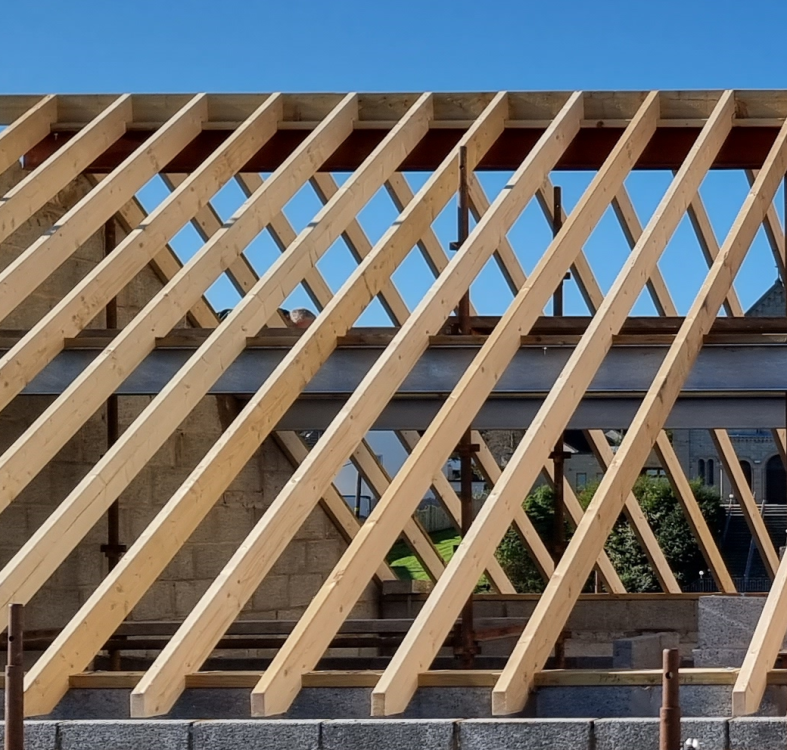
The construction detail from the architect had the insulation between the rafters connecting over the top of the ridge beam. Being clueless about the potential to deviate from this construction detail, I thought it unimportant. Oops. My roofers have of course installed a ridge board above the beam. Which isn't really their fault, they were not given the ridge detail I thought unimportant. The ridge board is the bit bewtween the rafters on top or the steel, like this: ... which is a bit of a shame because the ventilated roof sits on top of that ridge board. The loft is warm (or should be) and so the ridge beam sits inside the heated envelope. That steel is now connected to the cold roof along its full length by timber instead of the planned insulation between the rafters. 😫 Short of getting a bunch of trained otters from the zoo there's not much I can do now that the roof is covered. So just how bad is the cold bridge created by the ridge board? Should I be naffed off to have missed this? Please someone cheer me up.
-
Interesting how that link says the laps should be taped. That peice of good practice is news to the roofers around here. My breather membrane (Tyvek supro) is labelled as all-zones so is ok in theory but if I was choosing a membrane again I would look at something a bit stronger like solitex plus. Our membrane, where exposed and not taped, is going to be getting a good battering in this storm today 😫
-
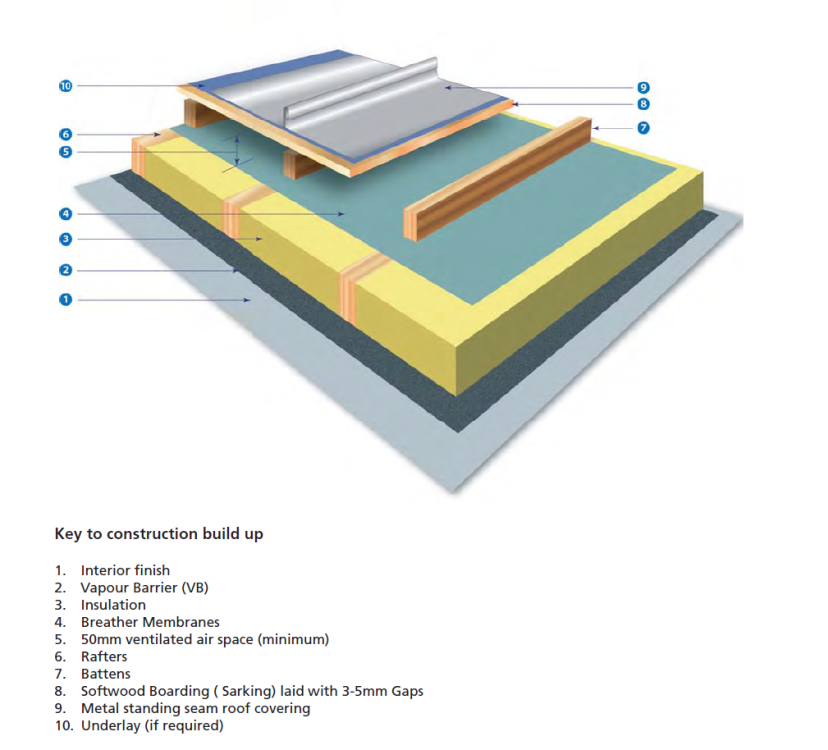
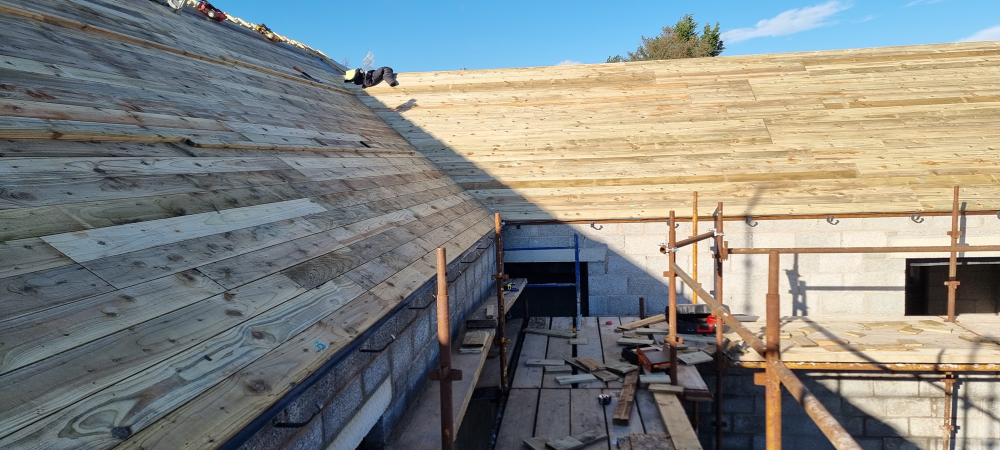
Our roof buildup is like this: ... which is from the good practice guide for metal roofiing (FTMRC). The standing seam company have understandably requested same buildup from our roofers. Instead of using ply on top of the battens we are usaing timber sarking board, but this came from the metal roofers as they think it is a better option than ply. The sarkng looks great, almost a shame to cover it up. Like this: I have been told that the membrane that will go between the sarking and the standing seam will be waterproof. Not just a debonding layer. I hope so because right now storm Debi is pulling those un-taped laps away from the nail holes 😫
-
Any recommendations for a videocamera for site?
Mr Blobby replied to CalvinHobbes's topic in Project & Site Management
The Vodafone smart sim (I think it was called the V-SIM) is now discontinued. At least I couldnt find it for sale anywhere. I think its probably discontinued because it was such a good deal they weren't making any profit from it. The best deal I could find was an O2 mobile data only (no calls or texts) pre-paid, at £50 for 120GB data for the year. Which is pretty good I think. And O2 have a mast in town and the best 4G signal at the site. The reolink camera is working remarkeably well, I would definitely recommend it. Prices on the Reolink site are better than Amazon. There seems to be a new 20% off deal running each week. -
The sarking is required for the standing seam. Good point. Yes it would make absolute sense. Why didn't I (or my roofers) think of that? I guess its because most roofs are tiled and so this is how they always lay the membrane.
-
Oh no, I wouldn't do that. Drop it vertically straight into the ground to minimise pipe on the wall. No. If you need to vent any then its usually the furthest from the sewer connection. If you vent that one then you should be ok with AAVs on the rest which means no holes in the roof if you box them in internally. Our architect had drawn all our soil pipes as internal but then our M and E people had specified them all as venting with a hole in the roof. Neither of these was a good solution for us. I think you need and IC on change of direction and junction, but I'm no expert on this. It's to do with rodding the pipes. I would think you'd need 2 or 3 IC installed. I think the top of the pipe needs to be 900 mm above the top of the window. ... on a completely seperate issue, maybe lose the chimey? Your neighbours won't like the smoke, and if you insulate and airtight then you'll never need the heat from a log burner.
-
If the soil pipe is internal and terminates in the loft (or even lower) then it must have an air admittance valve on the top. An AAV is a one-way air valve to stop stinky air leaving the pipe into the house but allows air down into the pipe to so that big stools go whoosh into the sewer. All good. But AAVs are not always possible. Afterall, the sewer needs to vent and this is why venting pipes go through the roof (if internal) or run outside attached to the wall. You may need the pipe furthest from the sewer to be vented. It is worth finding out if this is is the case. If that wall next to your lounge is near to the boundary and not too visible and venting at the top, then I'd put that one outside. That's what we did. Avoids a hole in the roof and untidy boxing. External pipes at the front or back are not good. When hidden away at the side they can be ok. Sometimes.
-
Just for some balance, we are running one external pipe, two internal. Our reason for this is that we must vent the pipe furthest from the sewer while the other two can have AAVs. Also the external venting pipe is on the hidden side of the house so nobody will ever see it unless they go looking for it. And it would have been even uglier to route the pipe from the FF bathrooom down through the kitchen below. And I didn't want a hole in the roof. Also, there is some evidence that a venting soil pipe loses more heat if it is installed internally than externally. Something to do with the column of cold air running the height of the house if it is vented where an external pipe holds cold air only from the wall to the water trap. Do you have AAVs on all your pipes?
-
Any recommendations for a videocamera for site?
Mr Blobby replied to CalvinHobbes's topic in Project & Site Management
What sim card did you use for these cameras? (Like how much data, how much cost, contract or PAYG) -
The breather membrane is now in place on our pitched roof. Roofers haven't taped the overlaps of course. Is it worth getting it taped now? Roof structure like this: 1. Standing seam 2. Membrane (yet to be installed by standing seam company) 3. Sarking boards (to be installed this week) 4. 50mm ventilation gap counter battened (installed) 5. Tyvek supro breather membrane 6. Rafters + Mineral wool between rafters (part installed at eaves) So the vertical laps are ok, they are next to the batten. The horizontal laps, if blown by the wind will not lift up any tiles because there will be sarking board above. However, any wind blowing up the ventilation gap from the eaves will blow straight into my insulation, and that can't be good, can it? Is it worth telling my roofers to tape down the horizontal laps between the vertical counter battens as they install the sarking board, or do I just put this down to experience and move on? At the two valleys of course, there are a nuber of overlaps. Maybe this area should be taped even if the rest of the roof isnt? Of course, the taping should have been done before the battens went on but too late for that now. There also appears to be some leaking, which is disappointing. The end of the rafters at the wall plate are wet. Water may be getting in at the nail holes, but its not obvious. The membrane is wet to the touch underneath, but no drips, as if there is condensation or tenting. Also, I suspect the membrane may be too tight without sufficient dip beteween the rafters but this is not helped by full-fill insulation limiting the sag. If I could turn the clock back then I would probably have PIR between the rafters (the springy stuff with Z-cutouts) with a gap above. And sealing tape for the nail holes. And taped before battened. Every day gives a new lesson in how to build better 🤔
-
Today I have been painting regular dense concrete blocks with this stuff: The above is probably the same as blowerpoof and the soudal product. It is very tempting to slap it on nice and thick with one coat. Is one coat ok?
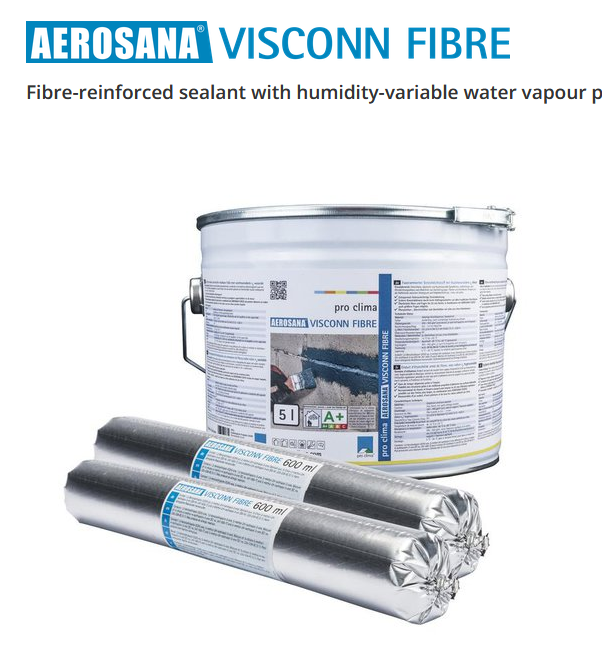
-
My builder likes to talk in old money (which seems common over here) so its 6 by 1. When pushed he did translate to 22 by 150 which sounds lilke the decent stuff you used, which is good. The roofer said the gap is one nail. They place a nail between the boards as a spacer and thats about 3 mm 😆
-
The standing seam installer said that ply is ok, and he would get membrane on site to cover the ply immediately to protect it from any rain before the standing seam is installed on top. That would rely of course on my roofers working in dry weather and covering as they go. The standing seam supplier did say, however, that if it was his roof then he would use sarking board. Thank you all for your comments. Very helpful and reassuing. Timber sarking board is now ordered 👍
-
Today's decision is whether to use traditional sarking board or ply under the standing seam. Buildup is : standing seam - membrane - ply/sarking - battened ventilation gap - membrane - rafters - insulation. 35 degree pitch. Sarking board will be timber with 3mm gap between. Laid horizontally on vertical batten. Builder tells me the real timber sarking will last longer than ply. Cost is about the same. I guess its easier to leave the sarking up in the rain during the build without damage so cynic inside me suspects this is guiding builder's recomendation. Timber sarking or ply? Which one's best?





