-
Posts
12183 -
Joined
-
Last visited
-
Days Won
41
Everything posted by Ferdinand
-

Manly mower vs flyweight flymo?
Ferdinand replied to Crofter's topic in Landscaping, Decking & Patios
We just applied Occam's Razor and banished the lawn, to be replaced mainly with a "grass garden" of exotic shapes and colours, which the cat now eats and sits on in turn each morning as a digestif aperitif before breakfast. -
Manly mower vs flyweight flymo?
Ferdinand replied to Crofter's topic in Landscaping, Decking & Patios
Off-topic. Slightly. I quite like the sound of scythes, but I have a few problems with this particular gentlemen, Simon Fairlie, who seems to have a habit of campaigning for extreme versions of causes that only the rich world can afford, then coming somewhat to his senses years later when he has done quite a lot of damage. For many years he was a vegan campaigner who then decided it was acceptable to eat sustainable meat. Now he is happy to support anti-GM campaigners, who have imo a *hell* of a lot to answer for in terms of making it more difficult to feed the world. Fortunately the only continent where this madness has really taken hold is Europe; most of the others are rather closer to reality by dint of not being able to afford the luxury of those opinions. >" Scythes are an ideal tool for making it clear to sowers of experimental GM crops that the majority of UK residents do not want them in this country. I am happy to loan scythes for anti-GM protests. " I will not do business with people who promote the commission of criminal damage, particularly when I think the relevant opinion is squarely based on conspiracy theories. And I hate to think what such protestors could be charged with; you can probably cut a leg off with a well-sharpened scythe. is there a recommended alternative source? Ferdinand (PS If anyone wants to debate the politics of this I suggest a new thread in the Housing Politics forum.) -
Cheers. Best of luck. Think the Range can be zero rated if you build it out of bricks so it is part of the house :-o , eg a Fachongle Furnace.
-
> due the overun on our budgets we can't stretch to a Britania (although I am sold on it for the built in rotissiere) Where are you on your budget, and what is the price of that Britannia? Can we help you save some money? Take the "Britannia RC-11XGI-DE-S Delphi XG 110cm Electric Range Cooker With Induction Hob" I mentioned above. Price at Curry's (2 year guarantee included). Currently priced at £4799: http://www.currys.co.uk/gbuk/household-appliances/cooking/cookers/britannia-delphi-110-xg-electric-induction-range-cooker-gloss-cream-stainless-steel-10025652-pdt.html Currys currently offering £300 cashback on Briitannia Delphi range via this page: http://www.britannialiving.co.uk/currys Worth £300. Quidco currently offering 3% cashback plus free delivery on Range Cookers at Currys. (Perhaps Currys do free delivery anyway) See: http://www.quidco.com/currys/ Worth £130 or so. Pay for it with Currys Gift Vouchers purchased under Morrisons Petrol Saver: http://www.morrisonsfuelsaver.co.uk/gift-card-partners/currys-pc-world That scheme gives you 1p a litre off fuel for each £10 of gift cards you buy at face value=, and they stack up to 100% of the fuel value. Spend £1000 on gift cards and you get £1 a litre off up to 100 litres of fuel. ie a bonus of up to 10% of the value of the gift card. For 4k of gift cards that would be worth up to £400 plus a bit more if you have a big fuel tank (or the max allowed amount of cans), depending on the exact price. Yuo need to be in the Morrisons loyalty scheme, but for £4k of gift voucher purchases (buy in £500 or £1k batches with some groceries), you will probably get £40 or so of shopping vouchers back in due course. Worth £400 plus £40. Buy the Gift Vouchers with a cashback American Express card or other reward card. Morrisons take Amex I think. The right Amex Card will give you 5% cashback on the first £2-2.5k of purchases as a golden hello, then 1.25%. Worth about £140. (With a different card that would take you most of the way to a "free companion" air ticket plus 8000 air miles, which could be worth thousands cashed in on long haul business class). There is also a £100 off Range Cookers voucher code floating around at the moment until late May: http://www.dealslands.co.uk/stores/currys-discount-code/ Worth £100. I make that £1120 off, or reducing the price to £3679 if it all stacks, and I think 80-90% at least will stack. Is that cheap enough? You would probably need to "click and collect" to make the Quidco cashback track. And because most of it is your side of the transaction not theirs, there's nothing to stop you price matching them to another website as well if you can find one. Others more versed in financing self-build may have a route for having it zero-rated for VAT, or some more ideas. Perhaps you can do that as well? Ferdinand
-
Don't know about the links from Peter, but mine has 67 110cm wide induction hob electric range cookers on their website :-). The price for the Britannia Rotisserie jobby (probably Britannia RC-11XGI-DE-S Delphi XG 110cm Electric Range Cooker With Induction Hob) is £4798.97. Ferdinand
-
If you are in that neck of the woods, add Appliances Direct at South Normanton. http://www.appliancesdirect.co.uk/st/range-cookers-with-induction-hob Though I got mine from Currys in a 30% off Christmas Sale. Ferdinand
-
I've done a test with a floor sponge, and I think it will work with tap water x 20 or possibly mild detergent mix followed by many rinses. The next step is to obtain an appropriate cleaning device. I'm thinking about one of these water fed extending mops for window cleaners: http://www.hgpromotions.com/products/6/Solar_Panel_CleanerIdeal_for_removing_salt_spray_seagull_mess_in_coastal_locations_Water_Fed_Pole Just need to decide on the 17ft version or the 26ft version :-). Both cost roughly the same as one and a bit cleanings of all the solar panels. Ferdinand
-
PV Panels: Black with Silver Solder Lines OR All Black
Ferdinand replied to Barney12's topic in Photovoltaics (PV)
I was going to say that I can't see the solder lines on mine without binoculars. But having looked I reckon they are the other type :-). Ferdinand -
Incidentally, do we need the terms "Rip (down-grain)" and "Cross-cut (cross-grain)" in the Glossary. Ferdinand
-
One problem with Rough Sawn is that I think it is not graded, either Visually (VSG) or by Machine (MSG). Amongst other things, that means your building may not stand up, and may not be insurable or be able to be protected by guarantee, or you may use more or better timber than you actually need. Obviously rough sawn would be fine for something cosmetic like a floor or wall finish (!) or non-structural. Ferdinand
-
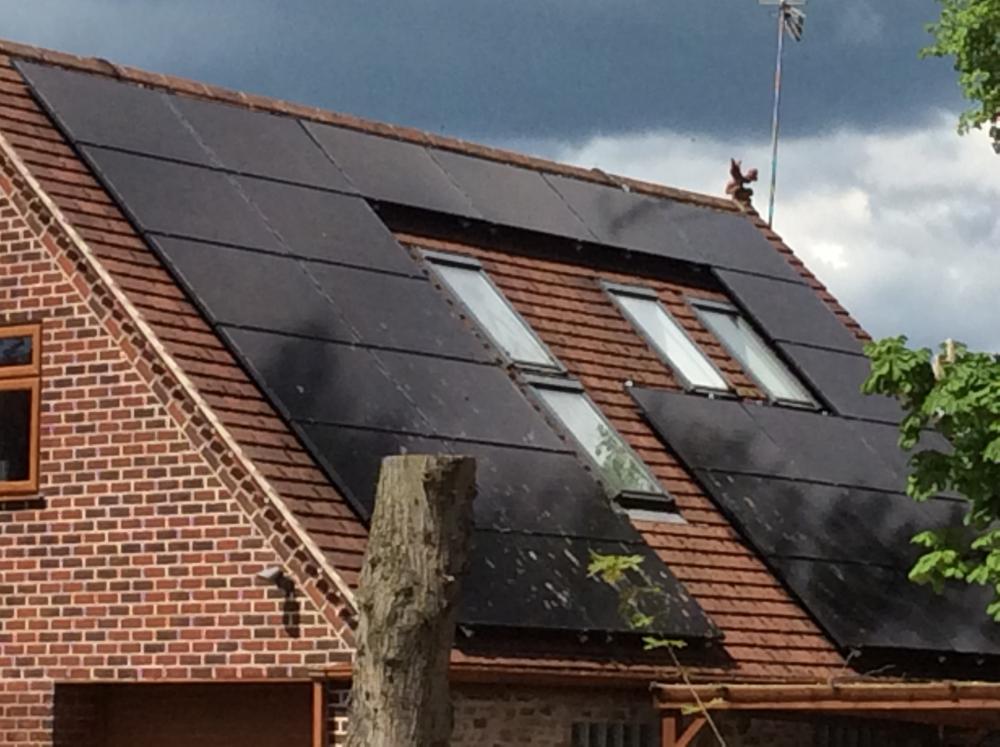
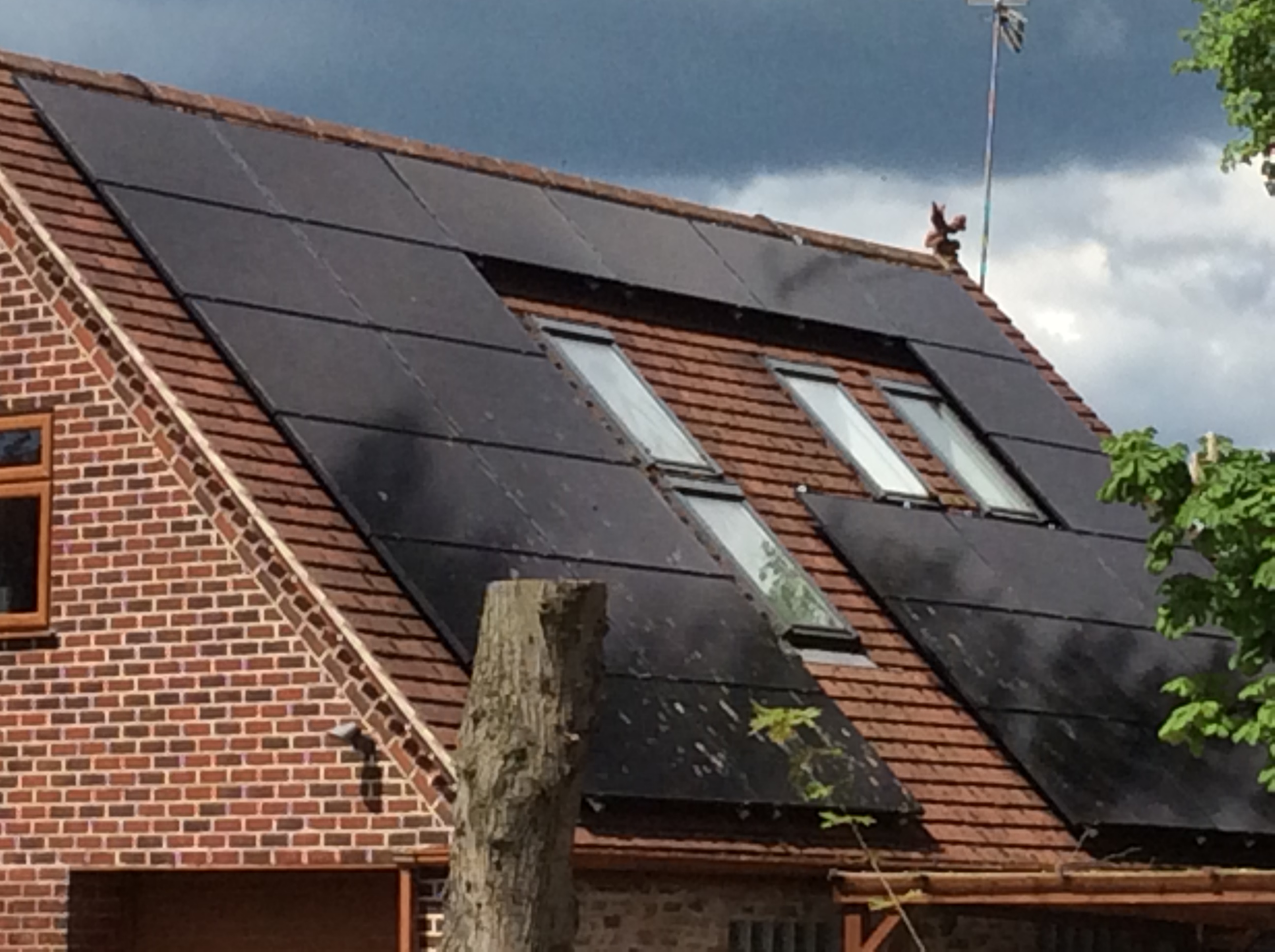
Some of the trees shading our solar pv have now been removed or pollarded. Now I can see better that some of our panels covered in pigeon productions. How to clean them? What do people here do? Our window cleaner offers a service using an extended wand, but his price is £2 per panel for a warm water clean, and for 35 panels that is a lot - even for the 15 or so with pigeon poo it is a lot. Suspect his prices are set for 8 panels on a house roof - ours are effectively on a bungalow roof and easier to reach. My current thought is for some kind of extending telescopic sponge mop following up a hose or power jet spraying an arc to avoid spraying under the tiles. Ideas would be most welcome. Thanks. Ferdinand
-
I have an Erbauer wet tile cutter and it is fine. Cost just under £100, and has now done 4 rooms with porcelain tiles. i would not be daunted by the 30m of cuts; you will have to do almost that amount around the edges anyway. For me the laser line on that is a waste of space, and I just use it with the top guard off - the main problem is that you can get very wet that way. I would not use the edges exposed at the top of a skirting, because with porcelain tiles there is always minimal chipping - though others may know better. For your setup I would only used the original edges at the top, or possibly get "string" type tiles for a row along the top to give a highlight. Height of skirting is a design choice, but with those big tiles I would draw up the layout so you can get your skirting out of the cut tiles round the edge. I think the "cut tiles into strips" thing will use more tiles, not less. If you work symmetrically and the edge tiles are all under 400mm, by definition you have your full 150mm skirting from the offcuts with a manufactured edge and without buying any more, since by definition there is almost exactly the same length of skirting as floor edge. Technique - I would do the skirting after the other has set. Ferdinand
- 56 replies
-
- skirting
- floor tiles
-
(and 2 more)
Tagged with:
-
Checking in again. Well done all. Delighted that it seems well enough organised that there is no need for me to stick any oars in; vodka and holidays beckon. A few questions and notes: 1 - The organisation seems set up exactly as other long lasting online associations I am inviolved ni have been set up. Good. 2 - Is there an account somewhere of what actually happened to Ebuild; I would like some more understanding and here should eb looking forward. PMs are fine. 3 - I'll copy across my various pinned articles, where I had written them as subject references, and the blog. 4 - Has the potential IP issue on "BuildHub" been dealt with vs the other self-build portal called "The Build Hub"? We wouldn't want to lose the domain in 2 years time. 5 - A simplification of the topic hierarchy would have been useful, but not getting involved I naturally had no say (!), and perhaps there are more routes to find content on the new new platform? 6 - Could a high-up recreate my "God is in the Details" blog, please? Cheers Ferdinand
-
Space Efficient House Means Cash Efficient Budget
Ferdinand posted a blog entry in God is in the Details
Having seen and debated Calvinmiddle's 120 square metre 2 bedroom bungalow, I was musing on how large a dwelling actually needs to be in floor area - intending no particular critique of Calvin's decisions here.In these days of £1500 per square meter build costs and soaring energy prices, should we take Occam's Razor to all those (possibly) extra bits we are adding to our self-builds? Rather than learning creating larger rooms and learning to do that one extra building trade ourselves, to save budget, is it possible to make different decisions and simply build less house instead?Let me bring some personal experience to open a conversation about efficient use of space, as I think I have a good example of a well-designed and well laid out 2 bed bungalow, on quite a difficult site. Here is an aerial view and site plan, which is fairly tight, and built to the boundary on the North and West sides, preventing insertion of windows in those walls. The history is that in 1960 this was a cowshed. In 1970 it became an architect's studio. By the 1990s the architect had moved out, and it was extended and became a 2 bed studio (literally) bungalow.I don't, unfortunately, have a formal floor plan to hand, short of scanning in an architect's drawing, but the total floor area is 70 sqm, or 750 square feet, measured by adding up the floor areas of each room. So here is a very rough sketch plan from my log book: Now 70 sqm is not very much area to most of us; but the place is surprisingly spacious, and everyone who has lived there loves it. This is the accommodation in detail, with brief notes: Entrance Hall: 3'11 x 11'11 (1.18m x 3.62m) Kitchen: 11'11 x 10'6 (3.64m x 3.19m). Space for dining table. Lounge: 14'8 x 14'9 (4.46m x 4.48m). Velux roof lights. Master Bedroom 1: 14'6 x 11'4 (4.42m x 3.45m). Bedroom 2: 10'4 x 11'9 (3.16m x 3.59m). Inner Hall: 3'10 x 7'6 (1.16m x 2.29m). Boiler/washer cupboard. Cloak cupboard. Shower Room: 6'7 x 6'9 (2.00m x 2.05m) plus 4'0 x 3'0 (1.23m x 0.92m). Velux roof light. Walk-in shower. If I compare that with the "London Space Standard", which is the document about suggested reasonable minimum house sizes that politicians are currently rabbiting on about, we are quite close to the recommended minimum areas for 2 bed single storey homes: Space required for 2 bed 2 person single storey dwelling = 61 sqm. Space required for 2 bed 3 person single storey dwelling = 70 sqm. Space required for 2 bed 4 person single storey dwelling = 74 sqm. The document, which is based on mapping out what furniture is needed for the number of people in each room, is well worth a read for self-builders wanting to explore how layouts can be organised.Where then can self-builders save on space, and budget?I'd suggest the design of my bungalow is efficient in these areas, and that two ideas to use are double use of space, and illusion to make spaces feel larger than is the case: Saving on circulation space - ie corridors and hallways. The Inner Hall and Entrance Hall total around 4.6 sqm, which is under 6% of total floor space. Since there is no wall between the entrance hall and the kitchen, part of that is also perceived to be part of a larger kitchen/dining area. The space budget is spent where most time is spent - the lounge, at 20sqm, is generous and square, with what amounts to a glass wall non the south side, and no dark corners due to Velux roof windows at the north side. A perception of space is helped by middling high cathedral ceilings (13ft) in the principal rooms. There are mistakes as well - in this case the lounge is a little to open to view by passers by on the pavement if they look in a particular direction.What have you done well or badly in your own project? How much dedicated circulation space did you create?And there's a whole conversation to have about changes in circulation space from early times (no corridors) to 20C (corridors to avoid draughts) to 21C (no corridors since doors are now draught proof). I'll start a conversation about that another time. -
I've just run across the concept of the "Solar Loft", as proposed for a new 'Eco' development at Bickleigh Village in Plymouth, by Bill Dunster's ZEDProjects operation and Social Investment Company Cornerstone.This is a space outside the superinsulated perimeter on the top storey of a house, with insulation in the floor, and polysolar panels for the roof. These are less efficient than traditional solar panels, but also let a proportion of the light through, and have been suggested elsewhere as a way of mitigating the roast-freeze cycle which occurs in many conservatories.The development is a high density development on the majority of a somewhat larger site - 91 houses in 3.06Ha, with 0.63Ha of woodland left untouched. Most of the houses are 4 or 5 bedrooms. The 5 beds currently advertised are £350,000.I like that strategy, though it leaves teeny-tiny back gardens. The Planning Reference is Plymouth Council 12/01504/FUL and 14/00135/FUL. The latter is currently under consideration, and would increase the proportion of larger homes in response to market demand.There are also live-work units and a building to provide employment for local people as a mini assembly plant for the buildings on the site, which will hopefully roll over into some sort of eco-construction hub for the future. They have done quite well in negotiating a good reduction in the various Section 106 obligations while leaving a notional 20% profit margin.I have not tracked down whether Community Infrastructure Levy will apply, though in most of Plymouth that is only £30 per square meter for residential anyway.I have attached detail of the solar loft for one house type, as included in the Planning Application. As shown, this drawing is copyright the ZEDfactory, and is excerpted here for critique and review.A Solar Loft is a way of using the "low" part of an asymmetric (for South Facing Solar reasons) roof for a benefit without having to add the extra height required to give a fully recognised useable room. The brochure for the development describes it in marketing-ese:At the top of the house a semi-transparent PV roof creates a stunning ‘solar loft’, allowing atmospheric dappled sunlight to flood into the highest room with the best view. The room is designed with good levels of cross-ventilation to avoid overheating and provides an ideal growing space for keen gardeners, or a relaxing sunspace for those more inclined to putting their feet up with a cup of coffee.(Ed: From that, you'd expect it to come with a built-in elf riding a unicorn through the velvety green fields of Arcadia.)It's also an ideal growing environment for your own heat demanding, high humidity requiring crop for quiet sale on the local market. I wonder how many of the people will insulate the roof to stop the heat showing, use the power on tap from the panels, and put something else in there to grow that is not tomatoes?At least that would reduce the number noisy helicopters circling overhead with thermal cameras, since the technology will no longer work.I like the idea, but I think that in the circumstances, I might be more inclined to hoick the whole part of the roof up by about 600-900mm to be level with the ridgeline, and gain a semi-sun-sheltered roof terrance, with the solar panels divided into two sections.If there were privacy concerns for neighbours, then I'd perhaps put a vertical piece of polysolar "window" down the top 1-2m of the wall too.It could be like a balcony in a seraglio; more complex to build than a solar loft, but perhaps more attractive as a foil to the small garden.What do you think?(Photo quoted from Bickleigh Eco Village brochure.)
- 1 comment
-
- solar loft
- bill dunster
- (and 4 more)
-
I think that the pleasure of living in a house is at least as important as its design and performance. The ability to get that right in advance from mere conversations with a client seems to me to me to be the core skill of a good architect.This ebuild blog is a conversation around this theme, named for a famous quote from Ludwig (really) Mies van der Rohe.My conversation starters will be details of buildings, but also details of how things are built, that I find interesting or attractive. My hope that others will respond with their agreements and disagreements.I have started the blog after a pointer from an article "Whither Fashion" by Caliwag from July 2013 to a book "A Garden and Three Houses" by Jane Brown and Richard Bryant. The book is about a small scheme called Turn End by an architect - Peter Aldington - who was unknown to me. Peter and his wife Margaret built their house themselves in 1963, and have lived there for half a century.My own project is to find out how to build an energy efficient 2 or 3 bedroom studio bungalow as a viable build-to-let, which is also a home prospective tenants want to live in. I have one that works well already, which I will write about in the future, but can one be built for a reasonable budget in 2014, and how? This is also a process of finding the right details and setting them in the right context.To add some meat to the first post, here's Peter Aldington himself talking about the house he and his wife built in 1963 and have lived in for half a century.Watch out for the discussion about sun and light, but also their perspective on sleeping in your living room for 50 years. And that hanging staircase goes to a storage loft.Here's a frame from the video. Yes - those are bifold doors 1963-style. Ecclesiastes was right, there is nothing new under the sun. (Note: I will embed the video if I subdue the technology, but for now please follow this link).
- 3 comments
-
- peter aldington
- turn end
- (and 6 more)